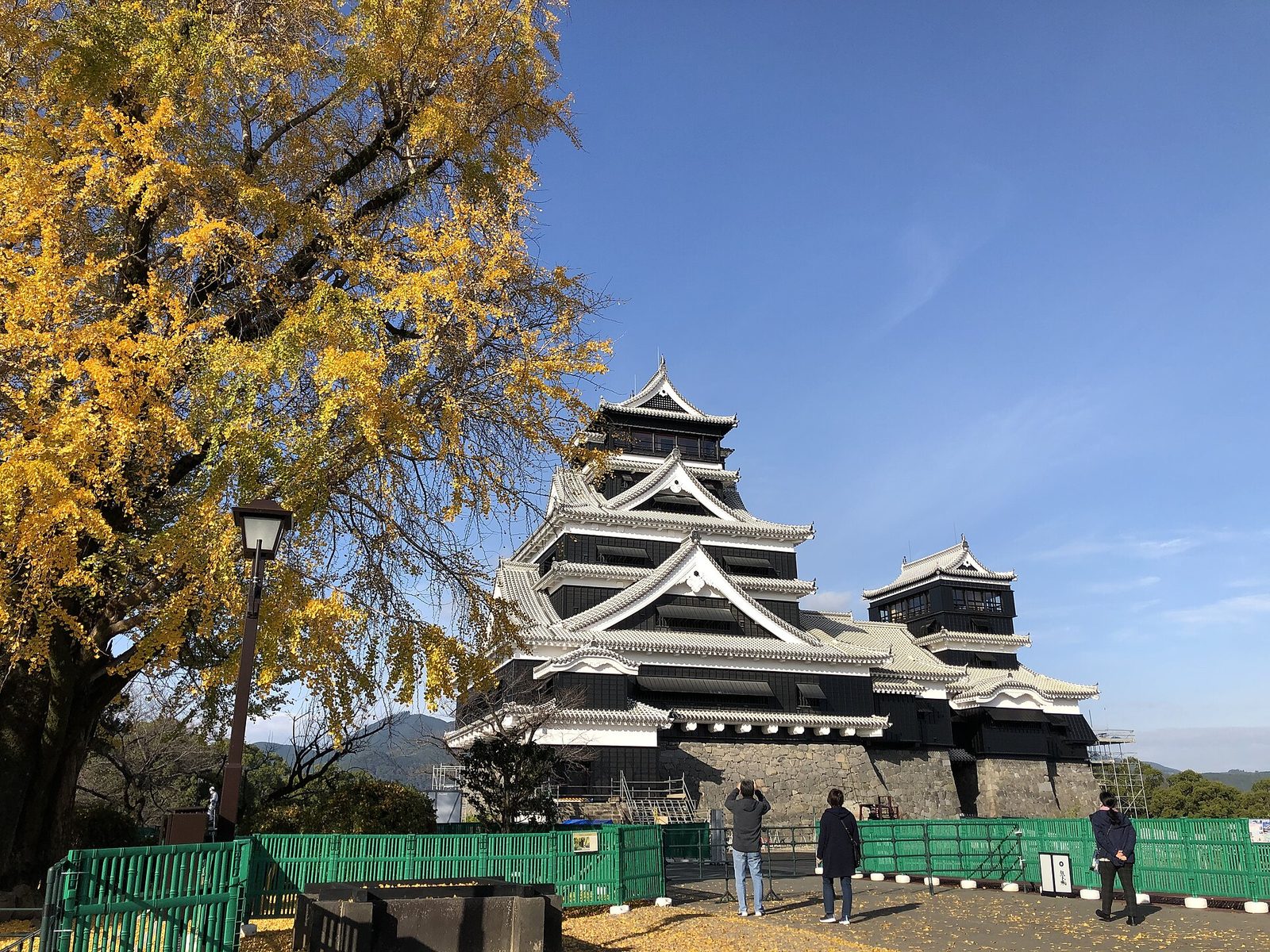
32.8° N
Kumamoto
Kumamoto, Japan
A castle town on the Kumamoto Plain fed by groundwater from Aso, mild enough to walk between the castle and its gardens in winter. Higo zogan inlay and karashi renkon in old Shinmachi and Furumachi, with vessel shops, coffee and local sweets around Kamitori, Shimotori and Suizenji: the editors’ picks.
Kumamoto, on film
6 sights and 14 places, each checked open in 2026, in 49 seconds.
Found somewhere you like? The map and the list below have the address, hours and official site.
Tap for sound
What to eat in Kumamoto
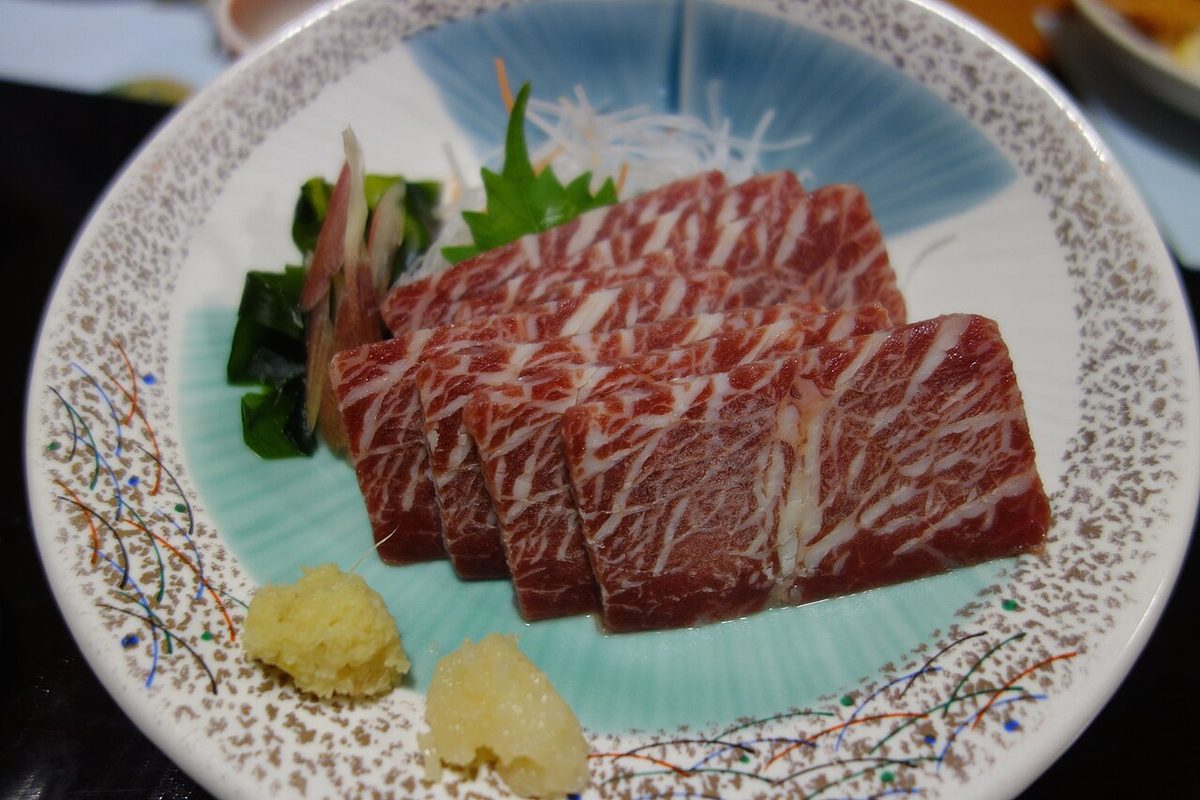
Photo: pelican from Tokyo, Japan / CC BY-SA 2.0 (Wikimedia Commons) Basashi (horse meat sashimi)
馬刺し
Thinly sliced raw horse meat served in cuts ranging from lean red akami and marbled loin to white mane fat. Kumamoto produces the largest volume of horse meat in Japan, a local food culture rooted in the Aso horse-breeding region and associated with stories of feudal lord Kato Kiyomasa.
Dipped in sweet regional soy sauce with sliced onions, grated ginger, and minced garlic at specialty restaurants and izakaya.
Where to eat it
- Umasakura, Ginza-dori ↓
- Sakura-anWebsiteMap
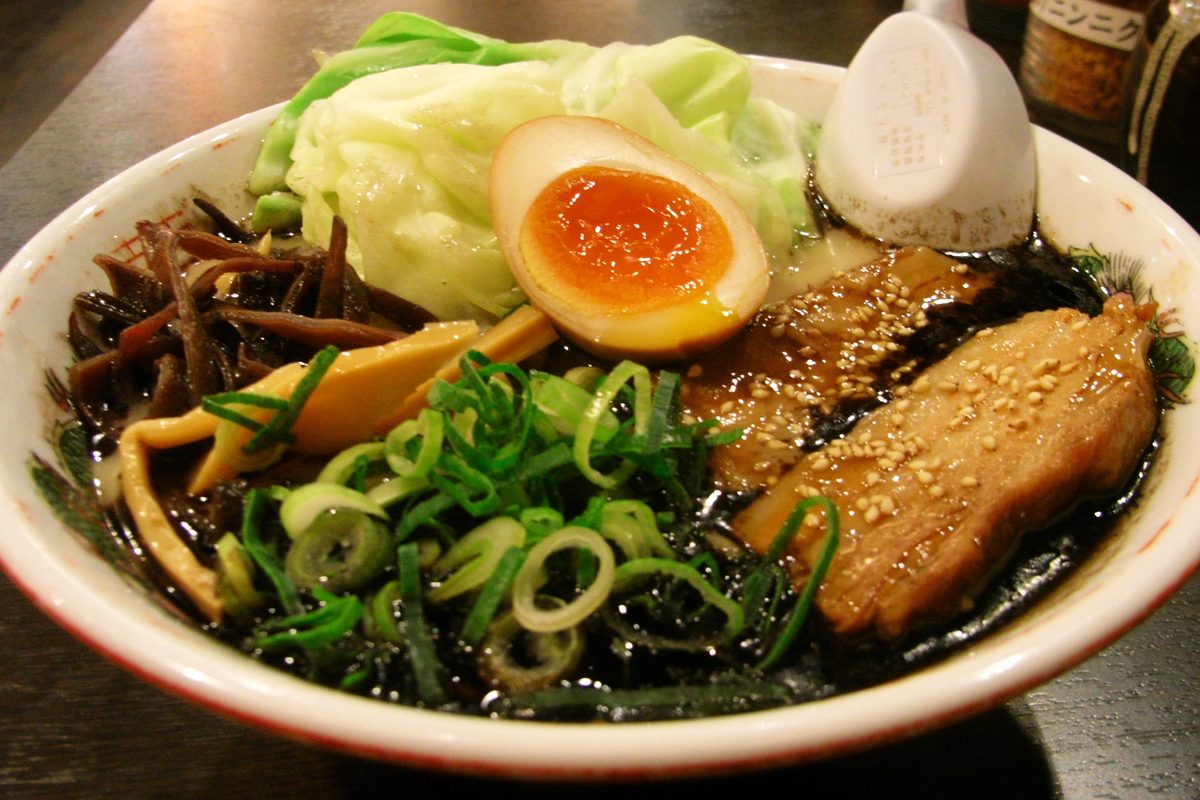
Photo: woinary from Kumamoto ramen shop Ganso Kumamoto-ken Kuro Ram / CC BY-SA 2.0 (Wikimedia Commons) Kumamoto Ramen
熊本ラーメン
Pork-bone broth noodles—often rounded out with chicken stock—flavored with fried garlic chips or dark roasted garlic oil (mayu) over medium-thick straight noodles. Ramen cooks brought tonkotsu soup from Tamana to Kumamoto City in the mid-1950s and added roasted garlic and local groundwater to create a milder regional style.
Eaten as a single bowl at ramen shops from midday into late night, topped with wood ear mushrooms and chashu.
Where to eat it
- Kumamoto Ramen Komurasaki, Kamitori ↓
- Keika Ramen HontenWebsiteMap
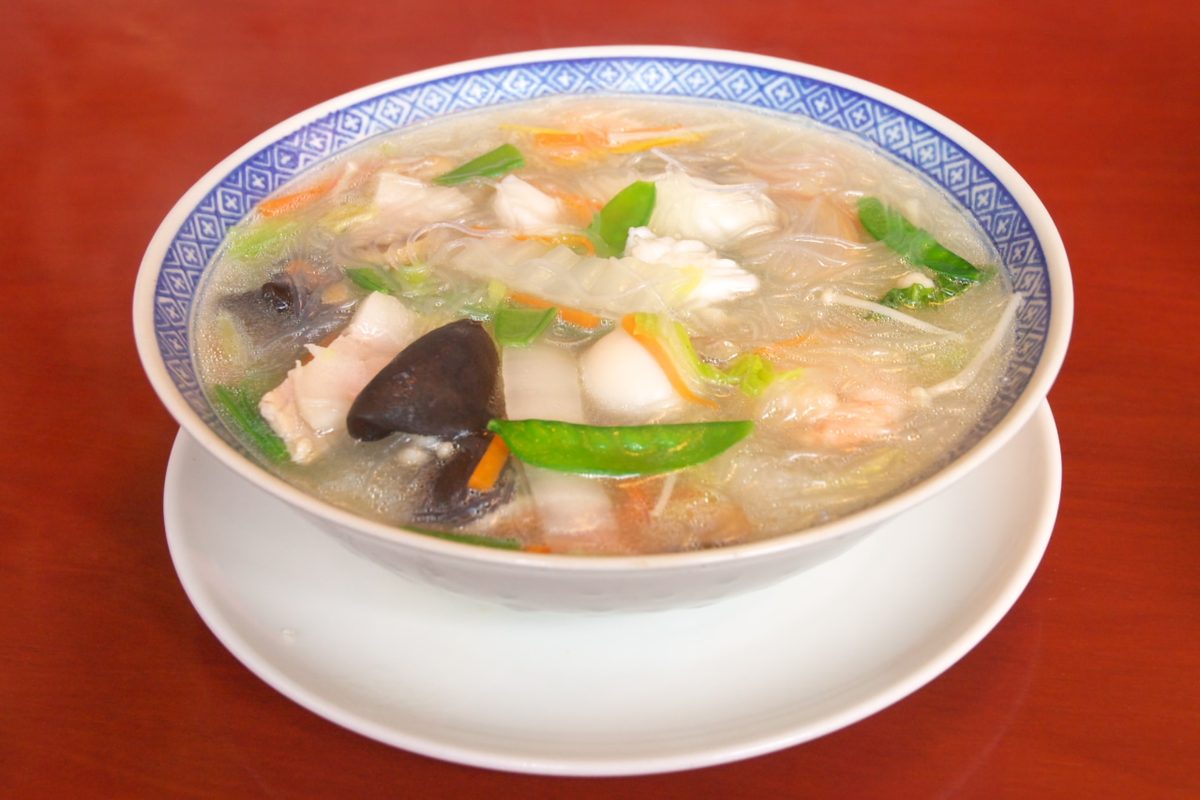
Photo: woinary from Chinese restaurant Unnan in Kumamoto, Kumamoto / CC BY-SA 2.0 (Wikimedia Commons) Taipiien (vermicelli soup)
太平燕
A hot soup of mung-bean glass noodles in chicken-and-pork broth loaded with stir-fried cabbage, pork, seafood, and a deep-fried boiled egg. Originating from a Fuzhou celebratory soup brought by Fujian immigrants, it was adapted into an everyday individual dish in early 1930s Kumamoto Chinese restaurants.
Ordered as a single light meal at local Chinese restaurants for lunch, dinner, or after drinks.
Where to eat it
- Kourantei, Shimotori ↓
- KairakuenWebsiteMap
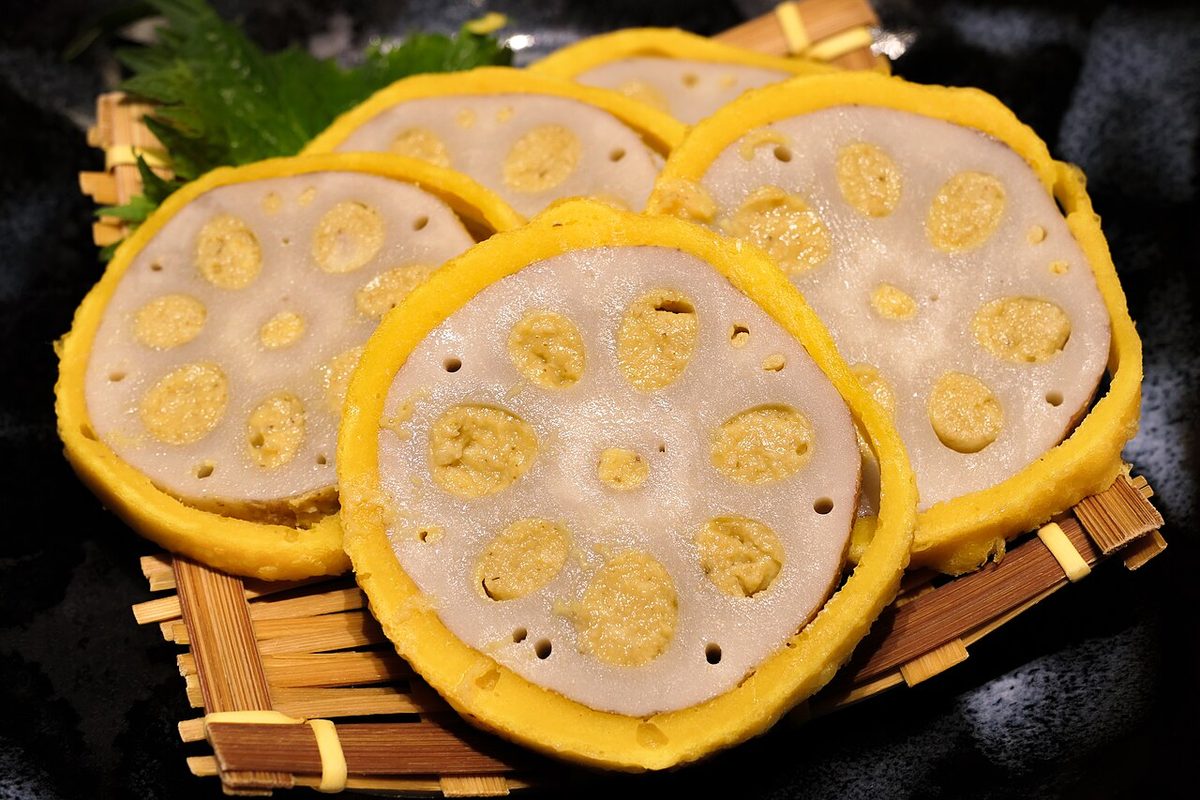
Photo: MaedaAkihiko / CC0 (Wikimedia Commons) Karashi Renkon (mustard-stuffed lotus root)
からし蓮根
Lotus root stuffed with a paste of barley miso and sharp Japanese mustard, coated in a yellow turmeric batter and deep-fried. Created in 1632 as a tonic for the frail lord Hosokawa Tadatoshi using local marshland lotus root, it remained a domain secret because its sliced pattern resembled the Hosokawa crest.
Sliced into 5–10 mm rounds and eaten as a snack or with drinks, plain or with a touch of soy sauce or mayonnaise.
Where to eat it
The LATITUDE editors’ 14 picks in Kumamoto
Our editors verified that these places were open (checked 2026-11-16). Check the official site for hours and closing days before visiting. Sponsored listings are marked.
Save places to your trip list and revisit them in this browser. No account needed.
Editors’ picks on the map — or build your own route
Tap a mark to see the place; squares are museums and sights (landmarks). Use “Build your own route” to make a walk of your own.
Loading the map
Map data © OpenStreetMap contributors
Browse by category
1 / 16
Kamitori / Namikizaka
Kumamoto Ramen Komurasaki, Kamitori
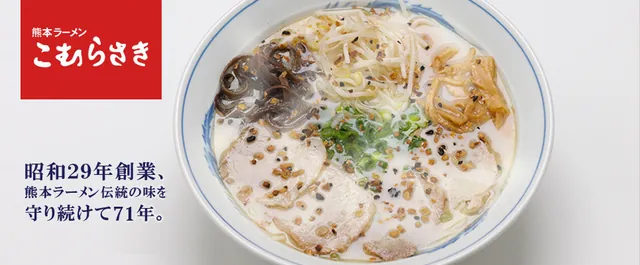
Photo: the shop’s official page 熊本ラーメン こむらさき 上通中央店
A Kumamoto ramen house founded in 1954, with only this Kamitori shop and Shin-Yokohama. Its signature Osama Ramen pairs a clear pork-and-chicken bone broth with roasted garlic chips. Open 11 am to 4 pm and 6 pm to 10 pm; closed only over New Year.
Why the editors chose itA 1954 Kumamoto ramen pioneer serving its garlic-chip Osama Ramen at only two direct branches.
Shimotori / Shinshigai
Kourantei, Shimotori
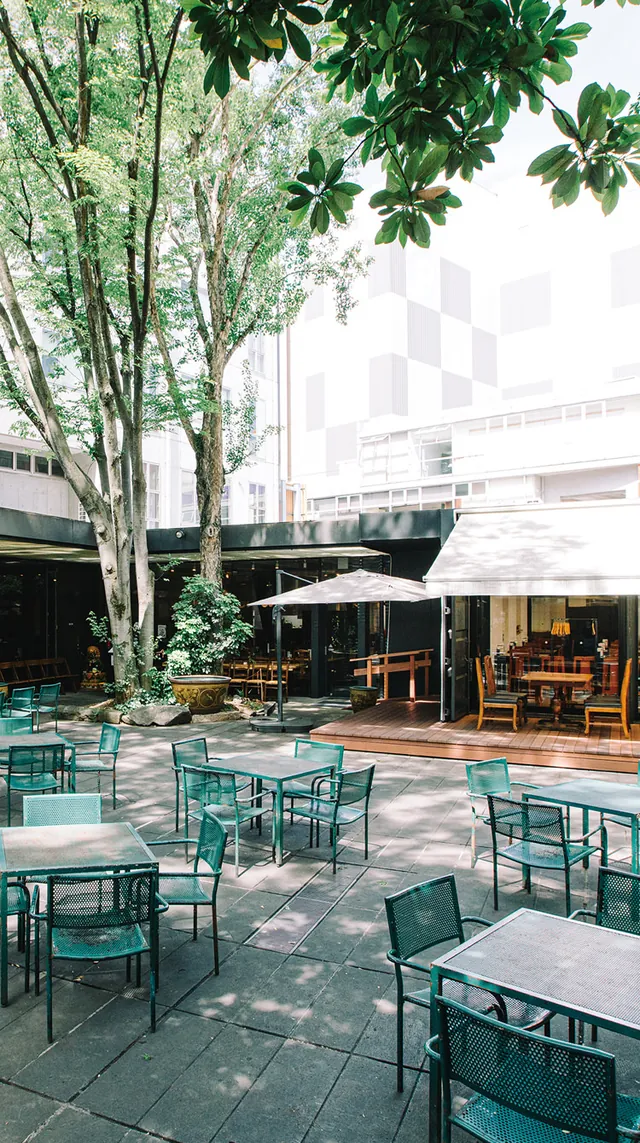
Photo: the shop’s official page 中国名菜 紅蘭亭 下通本店
A Chinese restaurant founded in 1934 (its Kamitori branch is closed), known for Kumamoto taipiien: 100% mung-bean glass noodles in chicken-and-pork broth with stir-fried vegetables, seafood and meat. Open 11 am to 9 pm (last order 8 pm).
11:00–21:00 (L.O. 20:00)
Why the editors chose itCome to this 1934 restaurant for Kumamoto’s signature taipiien made with 100% mung-bean glass noodles.
Shimotori / Shinshigai
Umasakura, Ginza-dori
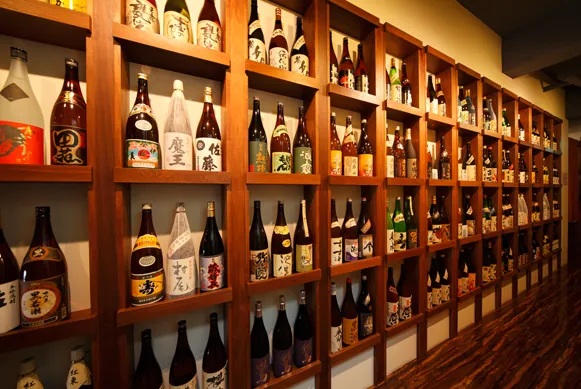
Photo: the shop’s official page 熊本馬肉ダイニング 馬桜 銀座通り店
A horse-meat restaurant on the third floor off Ginza-dori serving basashi, steamed horse meat and local dishes such as karashi renkon and hitomoji guruguru. Open daily, with lunch on weekends and holidays (10% evening surcharge Dec 31–Jan 3).
Sun–Thu & Holidays 17:00–22:00 (L.O. 21:30), Fri–Sat & Pre-holidays 17:00–23:00 (L.O. 22:00); Sat/Sun/Holidays Lunch 12:00–14:30 (L.O. 14:00) · Closed: Open daily (no regular holidays)
Why the editors chose itChoose this horse-meat specialist when you want basashi alongside local dishes like karashi renkon.
Kamitori / Namikizaka
Horinoen Chaikou, Kamitori
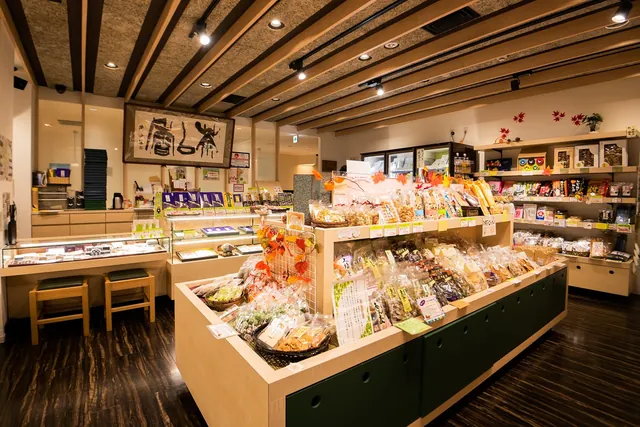
Photo: the shop’s official page お茶の堀野園 茶以香 上通店
The Kamitori tea room and leaf shop of Kumamoto tea grower Horinoen, selling local tea leaves and serving matcha and hojicha zenzai, anmitsu, and a matcha sweet-potato and Kumamoto-chestnut Mont Blanc. Open 11 am to 7 pm (last order 6:30 pm); closed Tuesdays.
11:00–19:00 (Cafe L.O. 18:30)
Why the editors chose itA tea grower's Kamitori tearoom selling Kumamoto leaves and serving matcha sweet-potato-and-chestnut Mont Blanc.
Kamitori / Namikizaka
Gluck Coffee Spot
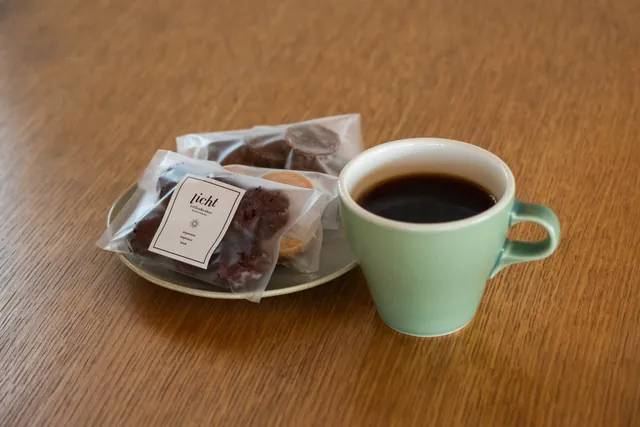
Photo: the shop’s official page A specialty coffee roaster in a renovated old townhouse off Namikizaka, with a counter downstairs and tables upstairs, serving single-origin coffee and baked sweets. Opens at 7 am.
Daily 07:00–19:00
Why the editors chose itOpening at 7 am in a renovated townhouse for single-origin coffee and sweets before heading out.
Suizenji
Suizenji Gallery Saryo Shohaku
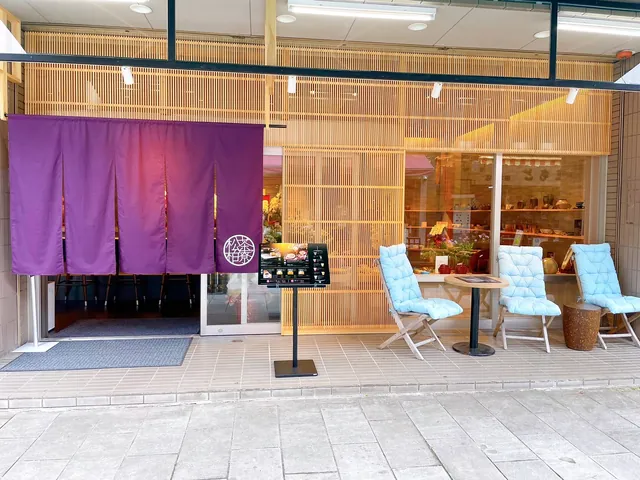
Photo: the shop’s official page 水前寺ギャラリー 茶寮松柏
A machiya-style gallery café on the approach to Suizenji Jojuen Garden with a long camphor-wood counter, displaying Kumamoto ceramics such as Shodai-yaki alongside light meals and sweets. Open 10 am to 5 pm (food from 11 am); closed Mondays.
Why the editors chose itOn the garden approach, a place to view Kumamoto pottery like Shodai-yaki over light meals.
Kamitori / Namikizaka
Kaho Maruiwa
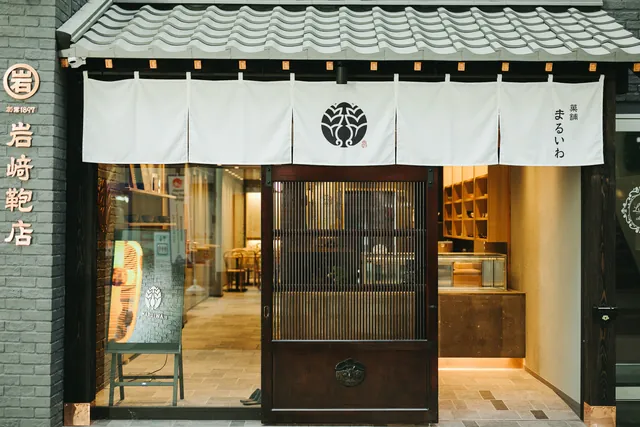
Photo: the shop’s official page 菓舗 まるいわ
A wagashi shop and café inside Kamitori Arcade making additive-free an-sundora dorayaki: batter with Uki lotus-root flour and Zuiyo amazake around house-cooked red bean paste and lightly salted Amakusa buttercream. Closed Wednesdays.
Why the editors chose itAdditive-free an-sundora dorayaki made with lotus-root flour, amazake, house red bean, and Amakusa salted buttercream.
Suizenji
FLAVÉDO Kumamoto
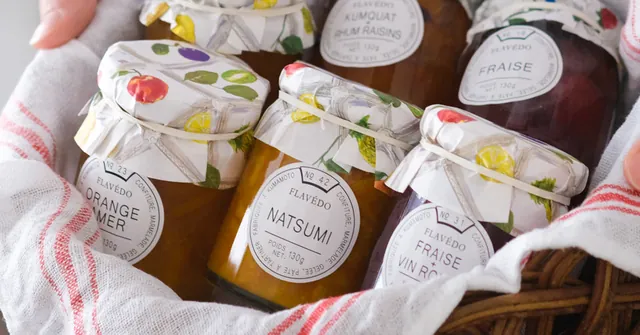
Photo: the shop’s official page FLAVÉDO熊本
FLAVÉDO’s confiture workshop and shop in Izumi (with one sister shop in Osaka), selling handmade seasonal fruit jams, takeaway scones and drinks, and reservation-only parfaits on select dates.
Why the editors chose itOne of only two shops, offering workshop-made seasonal fruit jams and reservation-only parfaits.
Suizenji
Ikinari Dango Wakaya
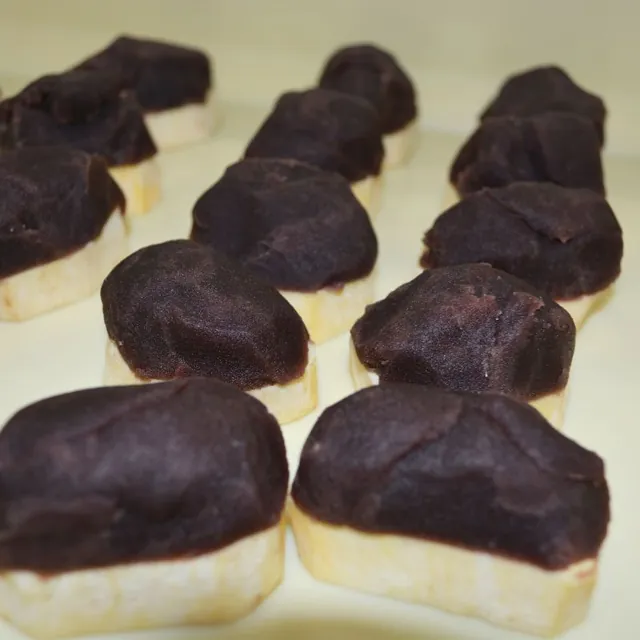
Photo: the shop’s official page いきなり団子専門店 わか屋
A single-shop ikinari dango maker in Kamisuizenji wrapping sweet potatoes from contracted Mashiki and Nishihara farms in Kumamoto-wheat dough, in four varieties with Beni-Haruka or Kurikaguya. Open 8 am to 5 pm on irregular days until sold out.
Why the editors chose itOpen from 8 am for four handmade ikinari dango made with local sweet potatoes and wheat.
Made in Kumamoto
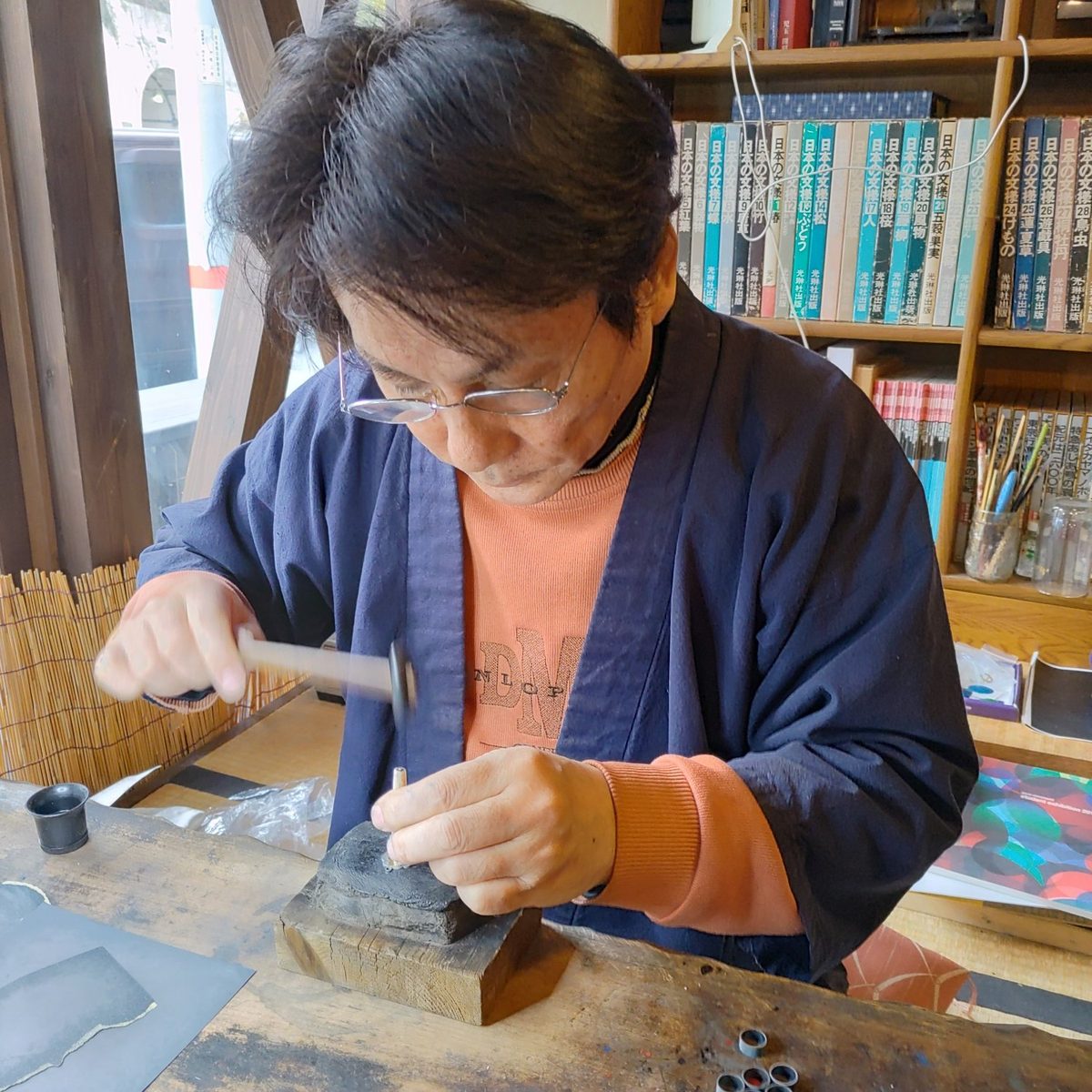
Higo Zogan began in the early Edo period when metalworkers serving the Hosokawa lords inlaid gold and silver onto gun barrels and sword fittings, and is a nationally designated traditional craft. Fine grooves are chiseled into iron and pure gold or silver is hammered in without adhesive before the iron is darkened with rust. Workshops in central Kumamoto now apply the craft to pendants, brooches and small everyday pieces.
An artisan hammers a metallic inlay onto an iron piece at a workbench.·Photo: Higo Zogan Mitsusuke (official site)
Shinmachi / Furumachi
Higo Zogan Mitsusuke
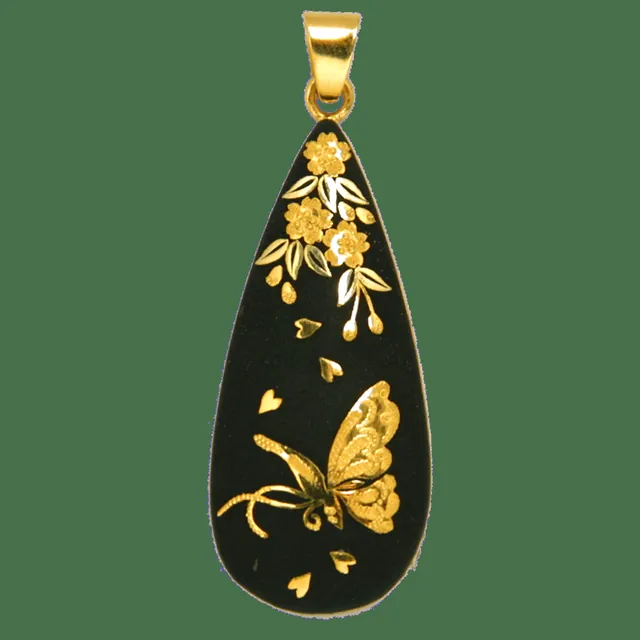
Photo: the shop’s official page 肥後象嵌 光助
A Higo Zogan inlay workshop founded in 1874, making and selling pure gold and silver inlay pendants, brooches and bookmarks, and offering hands-on sessions. Open weekdays 9 am to 5 pm, weekends and holidays 10 am to 4 pm; closed over New Year.
Mon–Fri 09:00–17:00, Sat–Sun & Holidays 10:00–16:00 · Closed: Year-end and New Year holidays
Why the editors chose itA Higo Zogan inlay workshop founded in 1874 offering hands-on sessions with pure gold and silver.
Made in Kumamoto
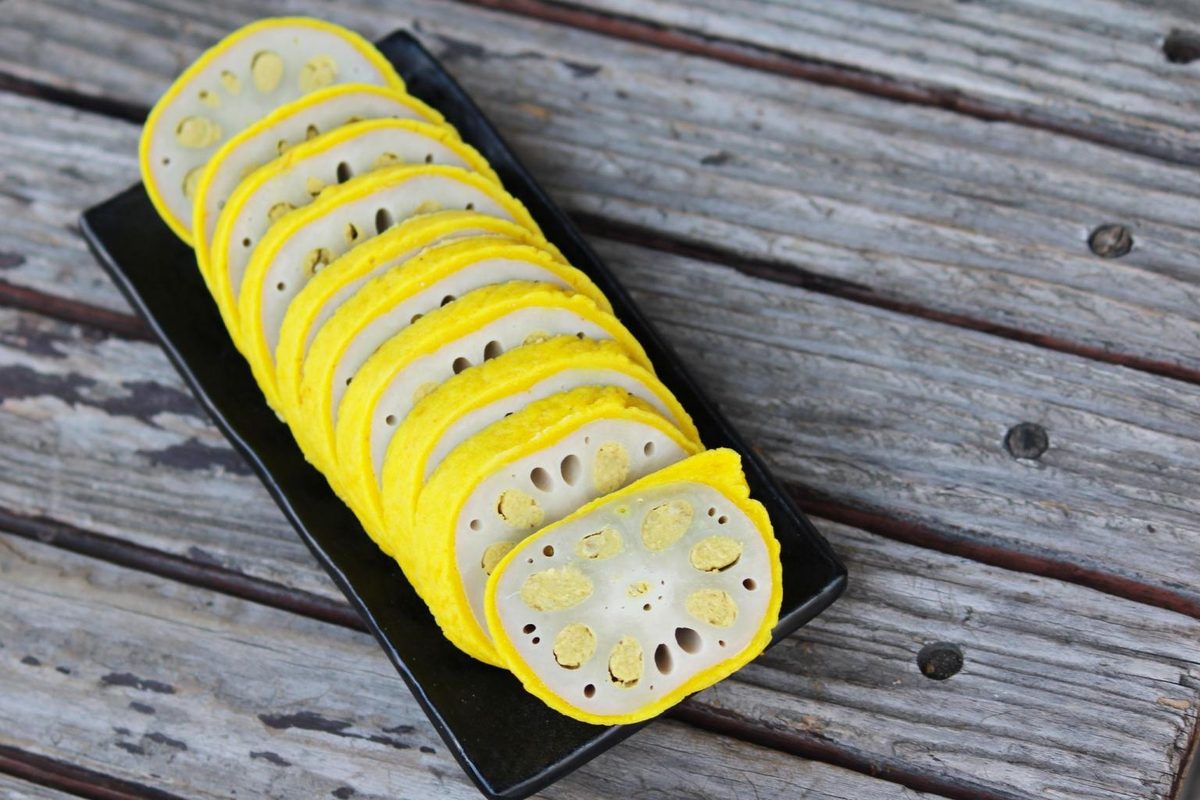
Karashi renkon began in 1632 as a nourishing dish prepared for the first Hosokawa lord of Kumamoto. Boiled lotus root is stuffed with spicy mustard miso, dipped in turmeric-yellow batter and fried; its sliced cross-section resembles the Hosokawa clan crest. Shops in the old castle-town quarter of Shinmachi still prepare it by hand.
Thick slices of yellow-battered lotus root with mustard filling sit on a dark ceramic tray.·Photo: Official Kumamoto Prefecture Tourism Site (Kumamoto Guide) (official site)
Shinmachi / Furumachi
Ganso Mori Karashi Renkon
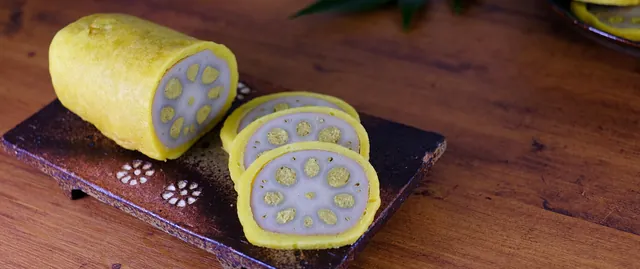
Photo: the shop’s official page 元祖 森からし蓮根 本店
The Shinmachi main shop of the family credited with creating karashi renkon in 1632, selling handmade spicy mustard-miso lotus root and chips. Open 8 am to 5 pm on irregular days (the Josaien branch closes at 6 pm from December to February).
Daily 08:00–17:00 · Closed: Irregular holidays
Why the editors chose itThe original karashi renkon house dating to 1632, selling handmade spicy mustard-miso lotus root.
Shinmachi / Furumachi
KANATA
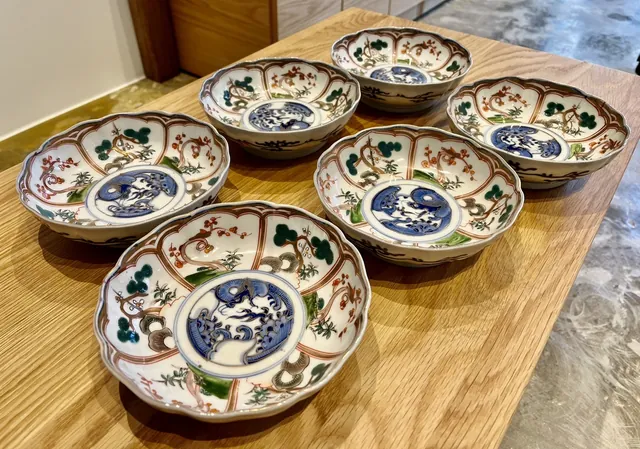
Photo: the shop’s official page 彼方 - KANATA
An antiques and art shop in Gofukumachi focused on everyday pieces: old Imari and Yatsushiro ware, lacquerware and prints. Open 11 am to 5 pm on irregular days; opening dates are posted on Instagram.
11:00–18:00 · Closed: Irregular holidays
Why the editors chose itAn antiques shop in Gofukumachi focusing on everyday old Imari and Yatsushiro ware, lacquer, and prints.
Kamitori / Namikizaka
Kurashi no Utsuwa Tsukimachi
くらしのうつわ 月まち
A gallery for everyday vessels and household objects on Kamitori, showing pottery and woodwork by local and outside makers alongside seasonal exhibitions. Closed Wednesdays and Thursdays; its New Year tableware show starts late November 2026, with renovations planned for December.
Why the editors chose itA Kamitori gallery showing everyday pottery and woodwork by local and visiting makers alongside exhibitions.
Suizenji
Orian
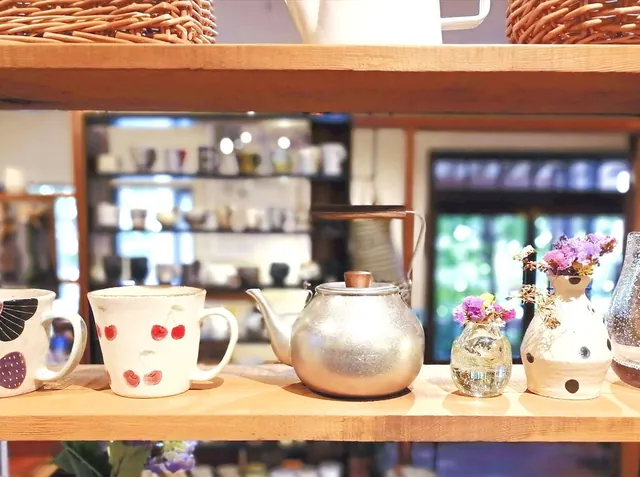
Photo: the shop’s official page うつわと雑貨 織庵
A pottery and household goods shop in a residential street of Izumi south of Suizenji Garden, stocking everyday ceramics and studio tableware. Open 11 am to 6 pm; closed Wednesdays.
11:00–18:00 · Closed: Wednesdays
Why the editors chose itVisit this residential street south of Suizenji Garden to browse studio ceramics for everyday use.
Sights in Kumamoto
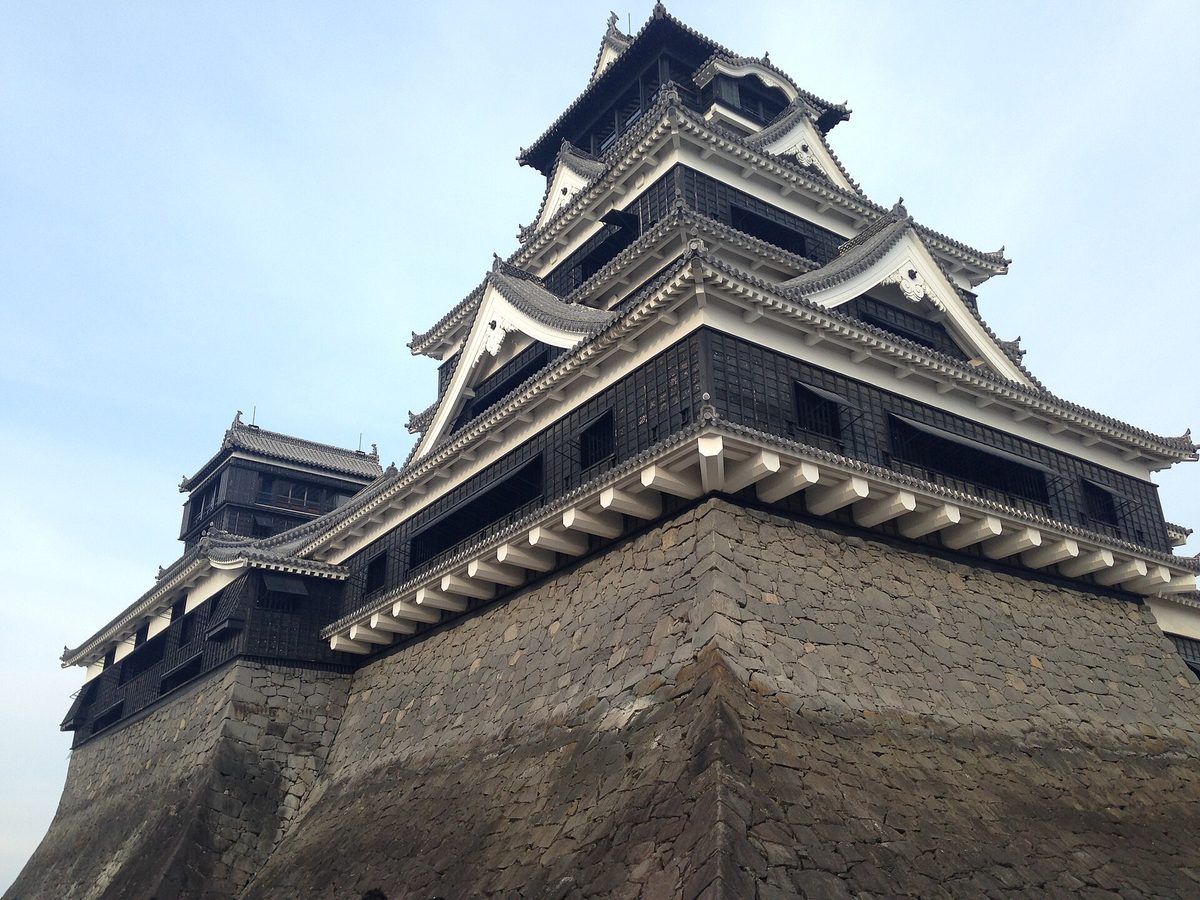
Photo: そらみみ / CC BY-SA 3.0 (Wikimedia Commons) Built by Kato Kiyomasa in 1607 on Chausuyama.
September to June open 9 am to 5 pm (last entry 4 pm, keep 4:30 pm). Weekdays south gate only; weekends and holidays both north and south gates; closed December 29.
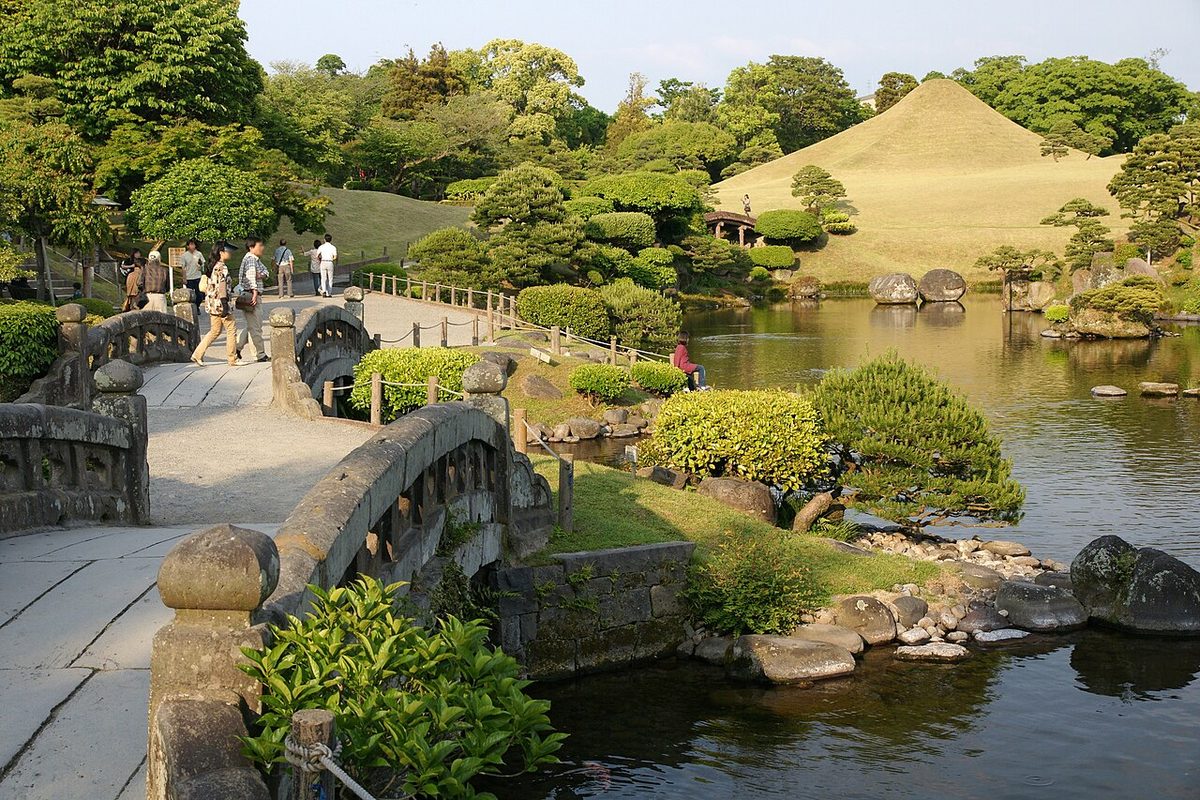
Photo: 663highland / CC BY 2.5 (Wikimedia Commons) A spring-fed strolling garden begun in 1632 as a tea retreat for Hosokawa Tadatoshi, first Hosokawa lord of Higo, with miniature hills modelled on the Fifty-three Stations of the Tokaido and Izumi Shrine inside.
Open daily 8:30 am to 5 pm (last entry 4:30 pm). Use the main or north gate as the east, south and Soseki gates are usually closed (evening light-up Nov 6 to Dec 6, 2026).
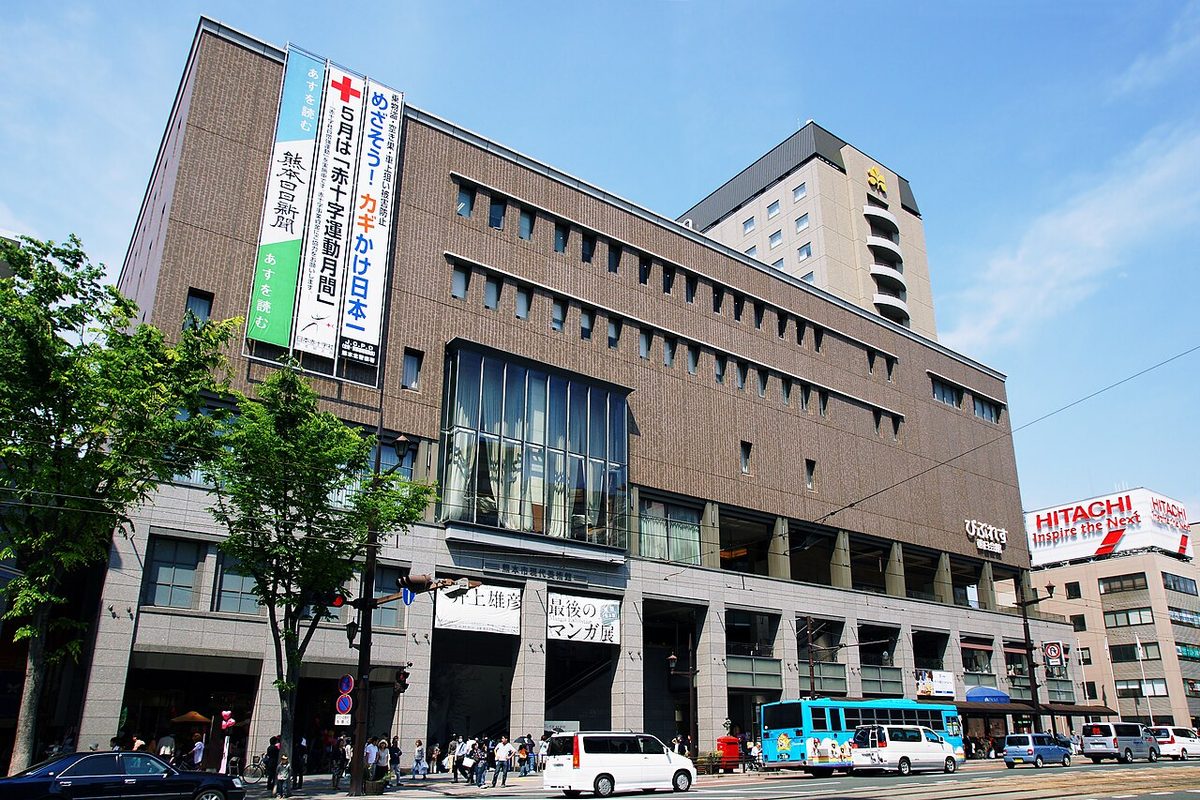
Photo: 663highland / CC BY 2.5 (Wikimedia Commons) Contemporary Art Museum Kumamoto
A contemporary art museum on Kamitori opened in 2002.
Open 10 am to 8 pm (exhibition entry until 7:30 pm); closed Tuesdays (next weekday if a holiday) and over New Year. Home Gallery access is restricted on November 15, 21 and 28, 2026 for events.
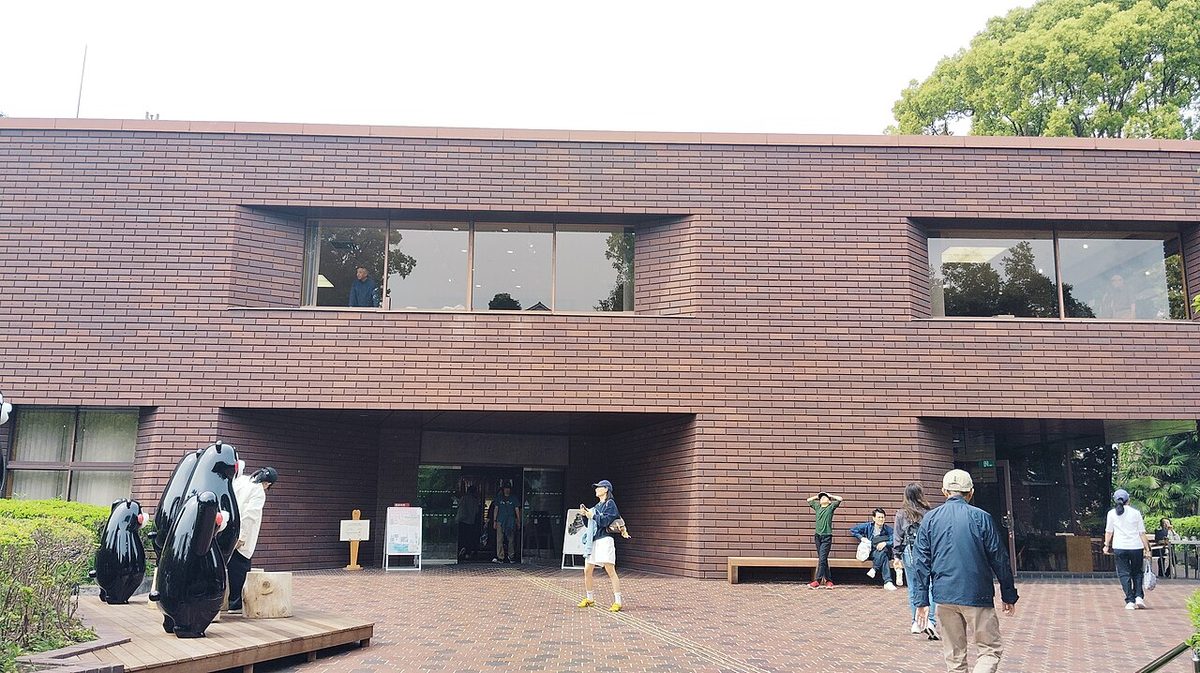
Photo: 水だらけのプール / CC0 (Wikimedia Commons) Kumamoto Prefectural Traditional Crafts Center
A prefectural crafts hall opened in 1982 displaying Kumamoto traditional handicrafts, with the renovated ground-floor museum shop Takumi (reopened March 2026) selling local crafts.
Open 9 am to 5 pm; closed Mondays (following day if a holiday). Special exhibition on Yoshio Akioka runs October 20 to December 27, 2026.
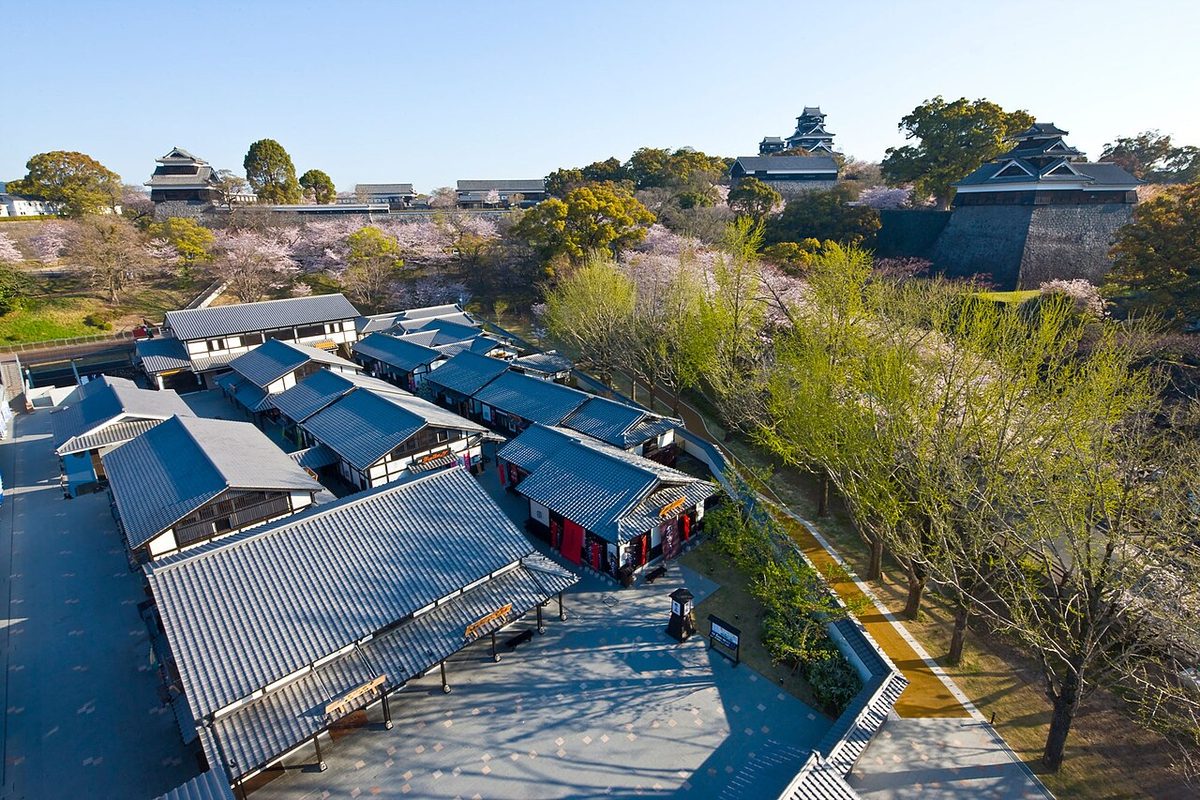
Photo: Jdjuice / CC BY-SA 4.0 (Wikimedia Commons) A castle-foot complex in Ninomaru below Kumamoto Castle, pairing the Sakura-no-Koji lane of local food and souvenir shops with a tourist information center.
Sakura-no-Koji shops are open normally 9 am to 6 pm (dining from 11 am). The Kumamoto Castle Museum Wakuwakuza inside the complex is temporarily closed due to the 2026 earthquake (reopening planned for December 2026).
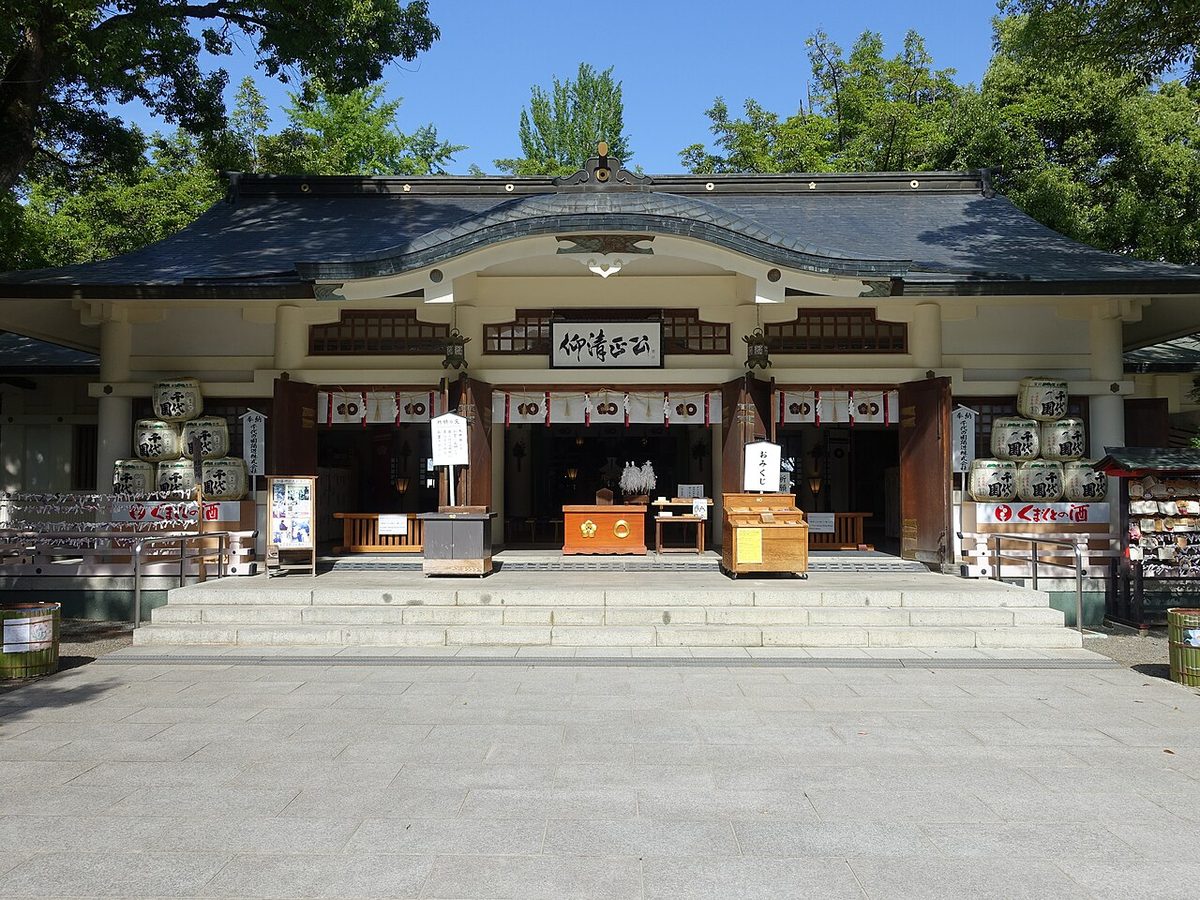
Photo: MilanoCollection / CC BY-SA 4.0 (Wikimedia Commons) A shrine inside Kumamoto Castle’s Honmaru dedicated to castle builder Kato Kiyomasa, founded in 1871 as Nishikiyama Shrine and moved to its present castle site in 1962, with views of the main keep and Uto Turret.
Sanctuary gates open 6 am to 6 pm (varies by season); shrine office 8 am to 5 pm.
These are local landmarks. Each was checked to be open on its official site (checked 2026-11-17). Please confirm hours before you go.
Beyond Kumamoto
1 / 4
 Uto · 16 km
Nagabeta Seabed Road →
A concrete fisheries road stretching into the Ariake Sea that emerges at low tide and leaves a line of utility poles standing straight out of the water at high tide.
 Yamaga · 24 km
Yachiyoza Theater →
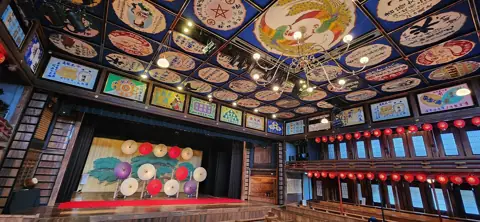
A 1910 wooden kabuki playhouse designated an Important Cultural Property, preserving a hand-turned revolving stage, under-stage cellar, and painted ceiling advertisements.
 Aso · 33 km
Kusasenrigahama →
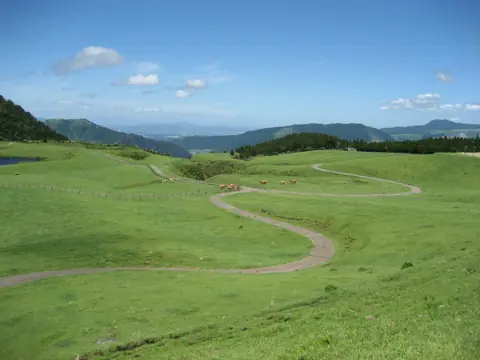
A popular tourist spot in the middle of Mt. Aso, characterized by a large pond and green grasslands.
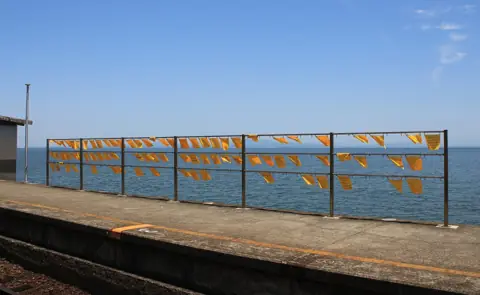 Shimabara · 34 km
Omisaki Station →
An unstaffed Shimabara Railway station whose platform sits directly on the Ariake Sea seawall, lined with yellow wish handkerchiefs fluttering in the sea breeze.


Distances are straight-line from the town centre. Each page has how to get there and a suggested day.
Questions people ask
- Where can I eat Kumamoto's local dishes?
Basashi (horse meat sashimi): Umasakura, Ginza-dori (Shimotori / Shinshigai)
Kumamoto Ramen: Kumamoto Ramen Komurasaki, Kamitori (Kamitori / Namikizaka)
Taipiien (vermicelli soup): Kourantei, Shimotori (Shimotori / Shinshigai)
Karashi Renkon (mustard-stuffed lotus root): Ganso Mori Karashi Renkon (Shinmachi / Furumachi), Umasakura, Ginza-dori (Shimotori / Shinshigai)
- Where can I see or buy Higo Zogan Inlay, Craft in Kumamoto?
Higo Zogan Inlay: Higo Zogan Mitsusuke (Shinmachi / Furumachi)
Craft: KANATA (Shinmachi / Furumachi), Kurashi no Utsuwa Tsukimachi (Kamitori / Namikizaka), Orian (Suizenji)
- What can I visit on foot around Kamitori / Namikizaka?
Craft: Kurashi no Utsuwa Tsukimachi
Cafés: Horinoen Chaikou, Kamitori, Gluck Coffee Spot
Food: Kumamoto Ramen Komurasaki, Kamitori
Sweets: Kaho Maruiwa
Every place was checked to be open in November 2026. Hours can change, so please check the official site before you go.
If you like Kumamoto
- Kagoshima
Kagoshima, Japan
For example, Kurashi no Utsuwa Tsukimachi here, and Kiraku in Kagoshima.
- Karatsu
Saga, Japan
For example, KANATA here, and Gallery Ichibankan in Karatsu.
- Tanabe
Wakayama, Japan
For example, KANATA here, and Tanaume Honten in Tanabe.
Chosen by how close the towns and their places are in what they make and serve.