36.2° N
Yamanaka Onsen
Ishikawa, Japan
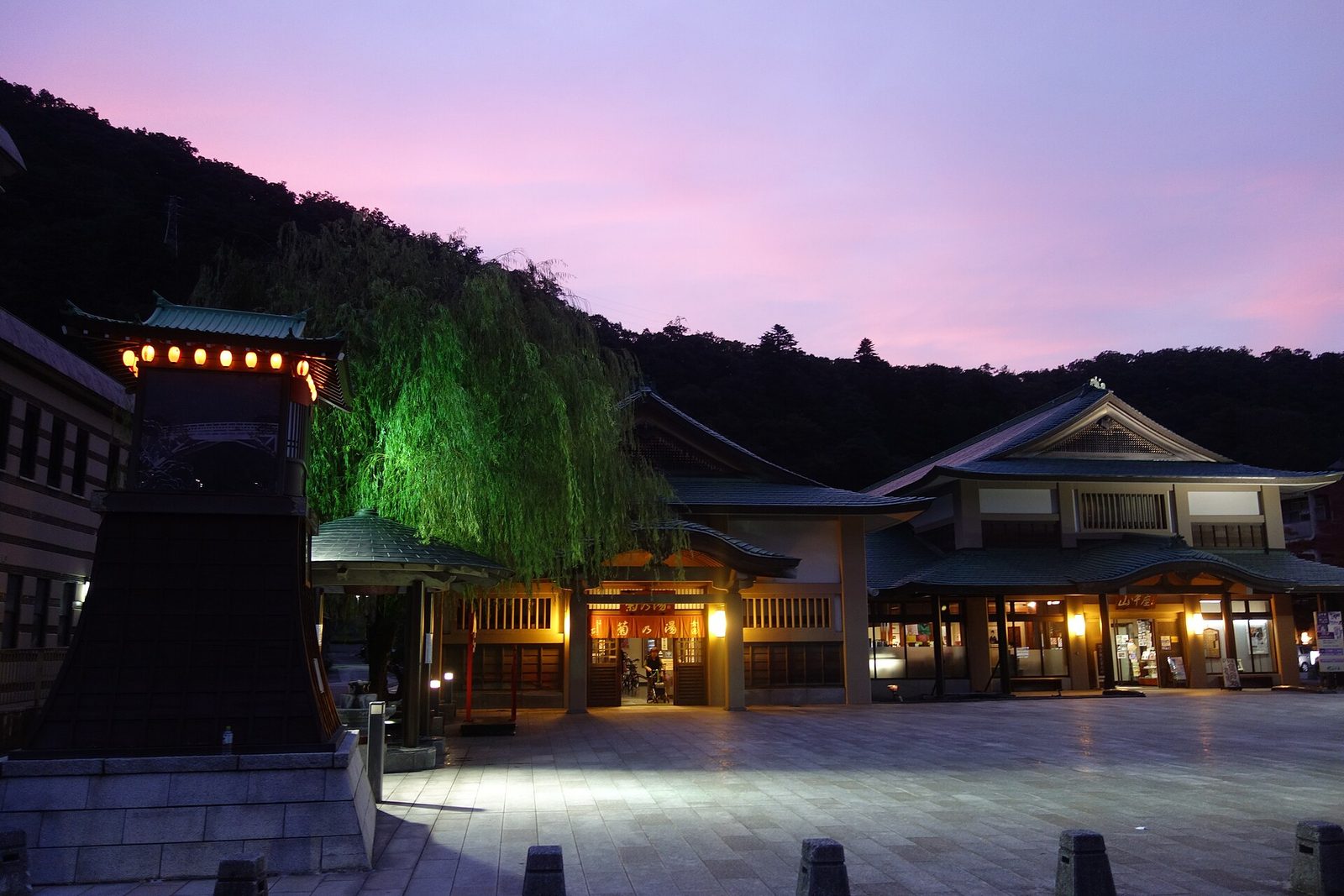
A hot-spring town in the gorge of the Daishoji River in southern Ishikawa. Yamanaka lacquerware wood-turners and Kutani kilns, alongside wagashi shops, coffee and diners along Yuge Kaido and Kakusenkei Gorge, as the editors’ picks.
Yamanaka Onsen, on film
5 sights and 16 places, each checked open in 2026, in 49 seconds.
Found somewhere you like? The map and the list below have the address, hours and official site.
Tap for sound
What to eat in Yamanaka Onsen
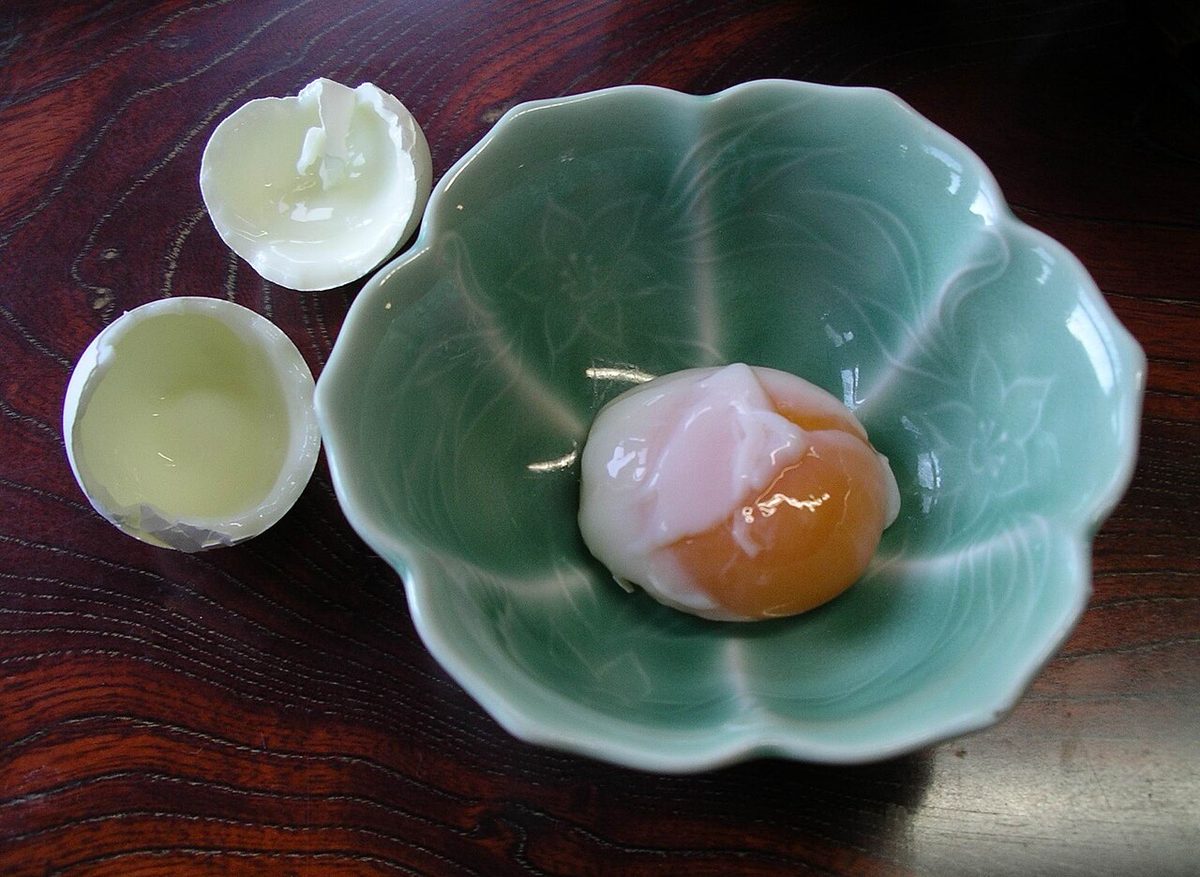
Photo: Blue Lotus from Jigokudani Onsen, Nagano / CC BY 2.0 (Wikimedia Commons) Yusen Tamago (Yamanaka hot-spring eggs)
温泉たまご
Slow-cooked eggs prepared in Yamanaka's thermal spring water so that both the white and the yolk turn creamy and custard-like. Locals call them yusen tamago, using the town's traditional dialect word for hot spring.
Buy raw eggs at Kikunoyu's bathhouse counter to boil for 40 to 90 minutes in the outdoor spring trough, or buy ready-made eggs with dashi at Koidesen.
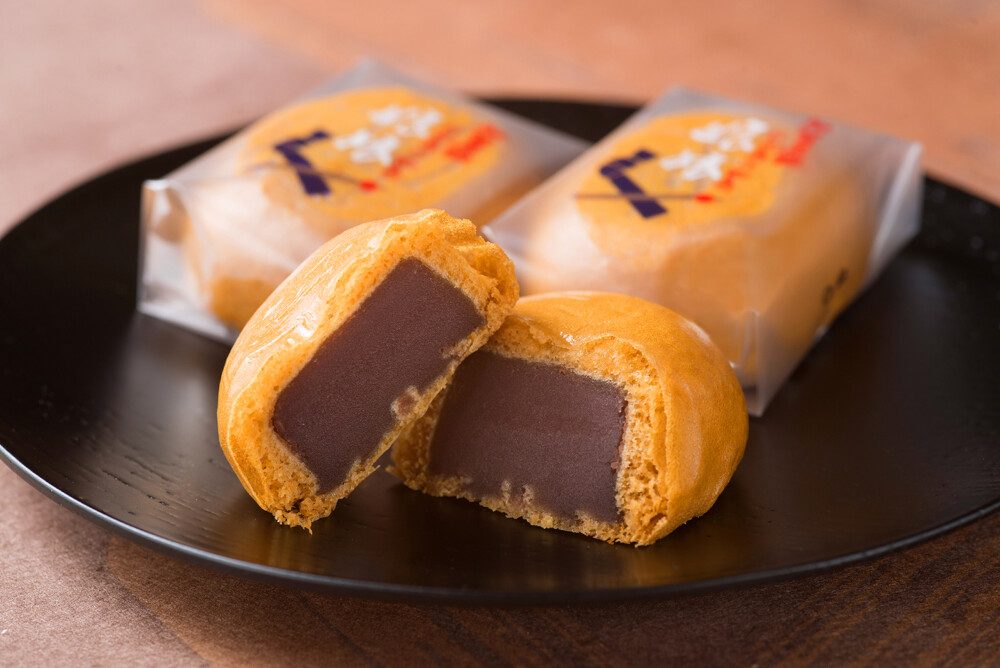
Photo: Yamanaka Ishikawaya (山中石川屋 本店) (official site) Nyaa-Nyaa Manju (brown-sugar and miso bun)
娘娘万頭
Bite-sized oval steamed buns with a thin brown-sugar and local-miso skin wrapped around smooth Hokkaido azuki bean paste. Yamanaka Ishikawaya created the sweet in the early Showa era after a local innkeeper suggested naming a town confection after nyaa-nyaa, the Kaga dialect word for a young woman.
Eaten year-round as a single-bite sweet with tea or packed in small gift boxes along Yuge Kaido.
Where to eat it
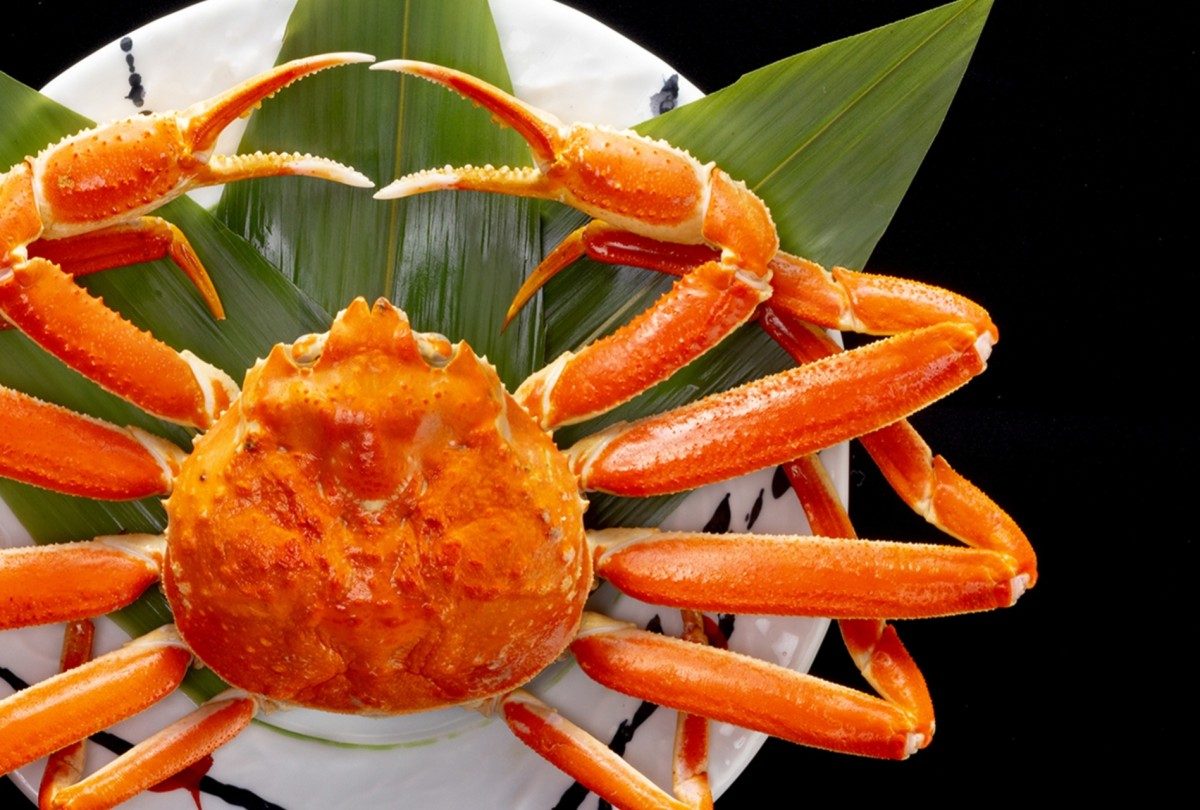
Photo: Kissho Yamanaka (吉祥やまなか) (official site) Kano-gani & Kobako-gani (Kaga snow crab)
加能ガニ・香箱ガニ
Ishikawa's blue-tagged male snow crab (Kano-gani) and smaller roe-bearing female snow crab (Kobako-gani), landed at nearby Hashidate Fishing Port on the Sea of Japan. From November, Yamanaka Onsen inns serve them in winter kaiseki courses while town eateries steam crab kamameshi with hot-spring water.
Eaten boiled, charcoal-grilled, as sashimi and shabu-shabu, or steamed over rice from November to March (Kobako-gani runs only through late December).(Nov–Mar)
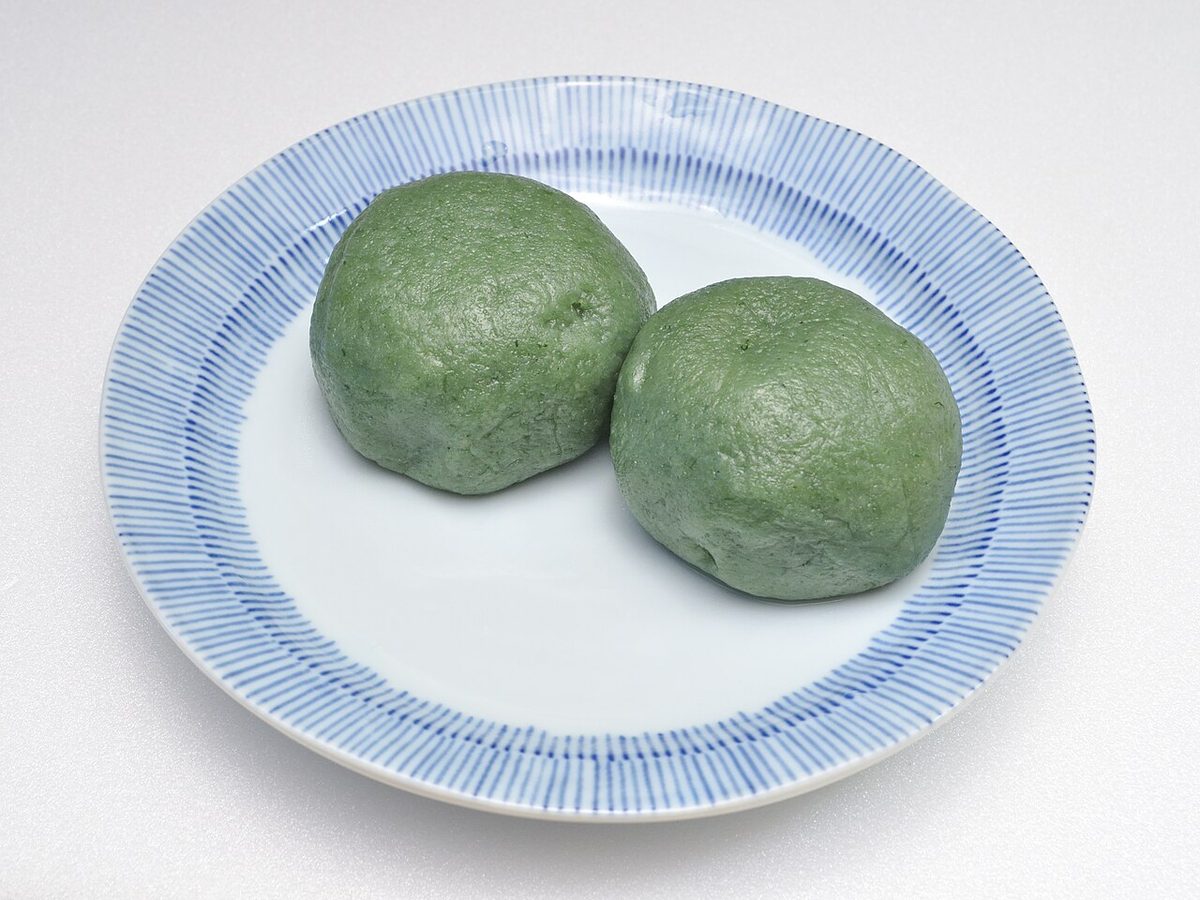
Photo: Ocdp / CC0 (Wikimedia Commons) Kusa Dango (mugwort rice dumplings)
草だんご
Preservative-free rice dumplings kneaded with hand-picked mountain mugwort (yomogi) and dusted with roasted soybean flour (kinako). In Yamanaka's Kayano district, families traditionally made them for spring festivals to pray for health, and local mothers revived the custom in 1990 across from the 2,300-year-old Kayano Great Cedar.
Eaten the same day while soft and fragrant with mugwort, sold in packs of five from mid-April through December 10.(Apr–Dec)
The LATITUDE editors’ 16 picks in Yamanaka Onsen
Our editors verified that these places were open (checked 2026-11-12). Check the official site for hours and closing days before visiting. Sponsored listings are marked.
Save places to your trip list and revisit them in this browser. No account needed.
Editors’ picks on the map — or build your own route
Tap a mark to see the place; squares are museums and sights (landmarks). Use “Build your own route” to make a walk of your own.
Loading the map
Map data © OpenStreetMap contributors
Browse by category
1 / 18
Yunomoto-machi
Enuma Station
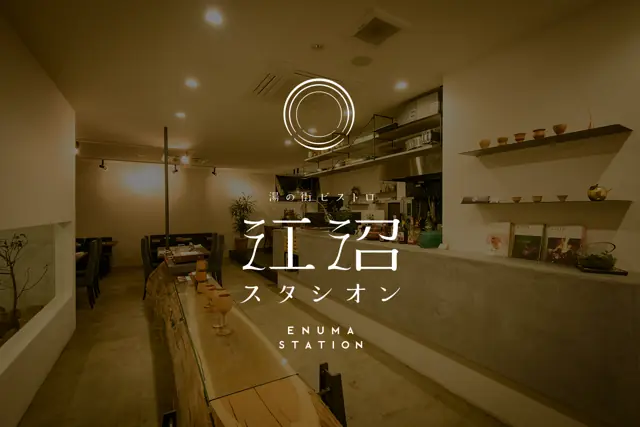
Photo: the shop’s official page 湯の街ビストロ 江沼スタシオン
A French bistro on Yunomoto-machi serving seasonal courses of local Kaga seafood and mountain vegetables with wine. Marks its tenth year in 2026.
Mon–Sat 11:30–14:00 (LO 13:00), 18:00–21:00 (LO 20:00) · Closed: Sundays (temporary closures may occur)
Why the editors chose itSavour local Kaga seafood and mountain vegetables from neighbourhood shops in seasonal wine-paired courses.
Yuge Kaido & Honmachi
Yamada Shokudo
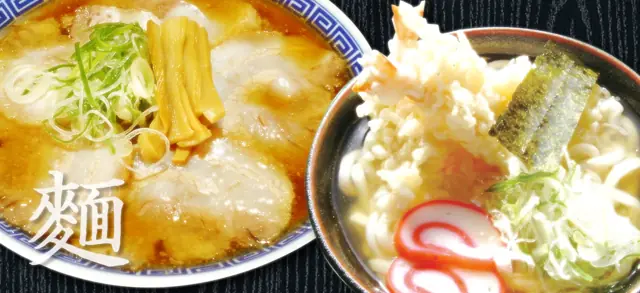
Photo: the shop’s official page 山田食堂
A neighbourhood diner in Honmachi serving house-made udon and soba, rice bowls and set meals. Open 11 am to 2:45 pm and 5:30 to 8:45 pm; closed Thursdays and the first Wednesday.
11:00–14:45, 17:30–20:45 (last order) · Closed: Thursdays and 1st Wednesday of each month
Why the editors chose itA Honmachi diner serving house-made udon and soba alongside rice bowls and set meals.
Sugatani & Aratani
Warakuan
手打ちそば 和楽庵
A hand-cut soba house in the mountain hamlet of Aratani-machi. Open from spring to early winter, serving pale Gozen soba milled from the heart of the buckwheat and tenzaru.
Why the editors chose itOpen spring to early winter in a mountain hamlet for pale Gozen soba milled from buckwheat hearts.
Uwahara & Haseda
LUCCI CAFE
A lunch café in Kamiyadai serving spice curries made with fermented ingredients such as koji and Noto miso, in plates of one to three curries. Open 11 am to 6 pm; closed Mondays and Tuesdays.
Why the editors chose itChoose one to three spice curries made with fermented koji and Noto miso for lunch.
Yuge Kaido & Honmachi
Basho Coffee
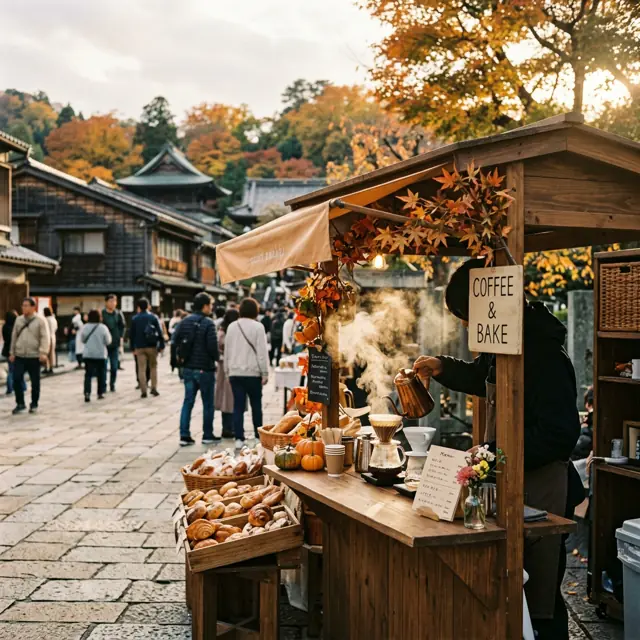
Photo: the shop’s official page 芭蕉珈琲
Irregular closing days
A retro coffee shop founded in 1966, a three-minute walk from Kikunoyu. House-roasted beans are brewed in glass siphons in a room with a banana-tree stained-glass window. Open 9 am to 7 pm, irregular holidays.
9:00–19:00 · Closed: Irregularchecked Nov 2026
Why the editors chose itA 1966 coffee house brewing house-roasted beans in siphons beneath a stained-glass window.
Kakusenkei Gorge & Korogi Bridge
Higashiyama Bonheur
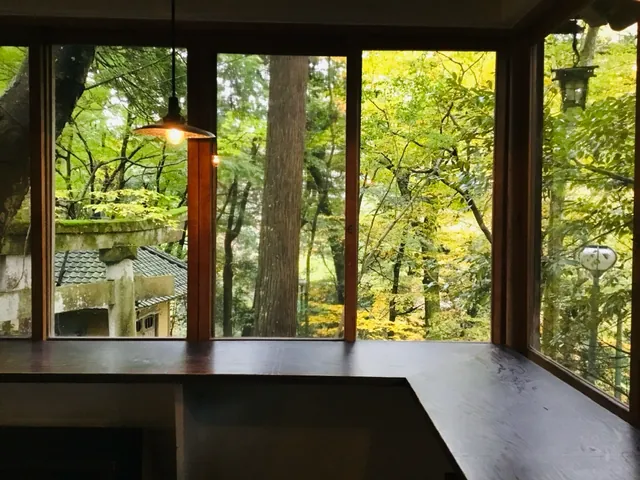
Photo: the shop’s official page 東山ボヌール
A café in a converted former inn by Kurotani Bridge at the entrance to Kakusenkei Gorge. Serves hand-drip coffee, Mori no Cake and beef stew rice. Café hours 10 am to 4 pm.
Fri–Wed 10:00–16:00 (cafe LO 15:00; lunch 11:00–15:00, LO 14:00) · Closed: Thursdays
Why the editors chose itA converted former inn by Kurotani Bridge serving hand-drip coffee, Mori no Cake and beef stew rice.
Yunomoto-machi
Yamanaka PORTAL
山中PORTAL
A café in a renovated townhouse off Yunomoto-machi. Serves specialty coffee and house-made drinks with slightly bitter pudding, fruit sandwiches and muffins.
Why the editors chose itA renovated Yunomoto-machi townhouse serving specialty coffee, house drinks, pudding and fruit sandwiches.
Yunomoto-machi
Sankaido
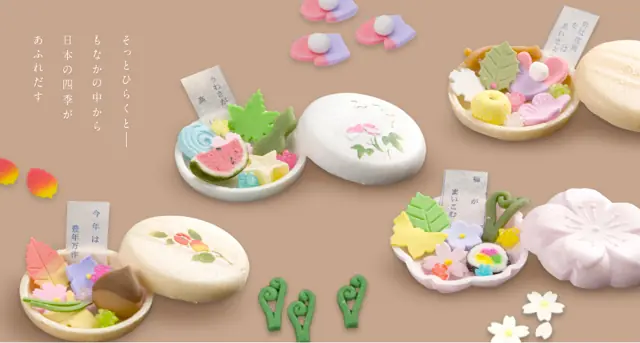
Photo: the shop’s official page 御菓子調進所 山海堂
A wagashi confectioner on Yunomoto-machi, founded in 1905. Makes seasonal dry-sugar sweets Sotto Hirakuto and fresh wagashi. Closed Tuesdays.
Mon, Wed, Fri–Sat 09:00–16:00, Sun & Thu 09:00–13:00 · Closed: Tuesdays
Why the editors chose itA 1905 wagashi shop making seasonal dry-sugar sweets Sotto Hirakuto and fresh confections.
Yuge Kaido & Honmachi
Yamanaka Ishikawaya
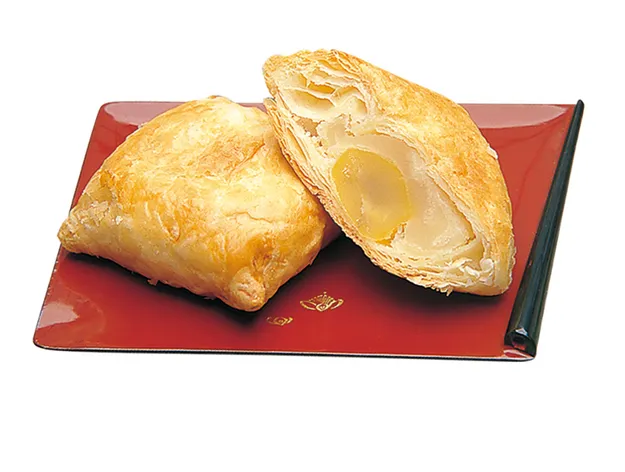
Photo: the shop’s official page 山中石川屋 本店
A wagashi shop on Yuge Kaido, founded in 1905. Known for Nyaa-Nyaa Manju, brown-sugar and local-miso buns filled with smooth azuki paste, and Nyaa-Nyaa Soft.
8:00–17:00 · Closed: Wednesdays, Jan 1–2
Why the editors chose itOn Yuge Kaido since 1905, known for brown-sugar and miso Nyaa-Nyaa Manju and soft-serve.
Made in Yamanaka Onsen
Yamanaka lacquerware is known for wood-turning on a lathe, cutting the timber vertically along the grain (tategi-dori). With a history of more than 400 years, its workshops turn paper-thin bowls and tea canisters in the damp climate of the gorge.
Yamanaka Lacquerware·Photo: MUSUBI KILN / CC BY-SA 2.0 (Wikimedia Commons)
Kakusenkei Gorge & Korogi Bridge
GATO MIKIO/1

Photo: the shop’s official page The flagship shop of wood-turning house Gato Mikio Shoten, founded in 1908, near Korogi Bridge. Carries KARMI tea canisters, thin-turned TOHKA sake vessels and other Yamanaka lacquerware. Closed Thursdays.
9:00–17:00 · Closed: Thursdayschecked Nov 2026
Why the editors chose itThe flagship of a 1908 wood-turning house, carrying KARMI tea canisters and thin-turned TOHKA sake vessels.
Sugatani & Aratani
Urushi no Utsuwa Asada
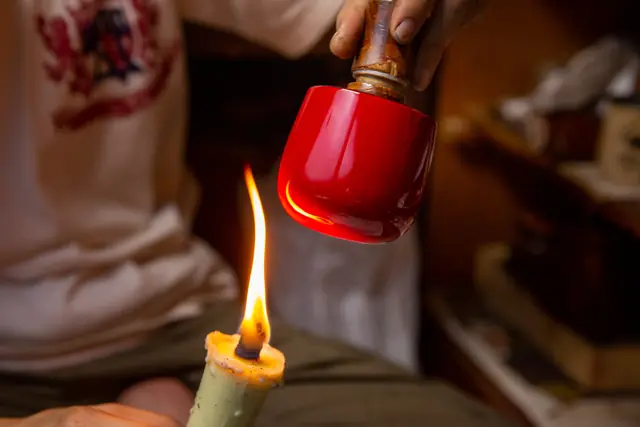
Photo: the shop’s official page うるしの器 あさだ
The workshop shop of Asada Shikki Kogei in Sugatani, where wood-turning and urushi lacquering are done under one roof. Carries keyaki and cherry vessels, and smoky Murakumo-nuri.
Weekdays 9:00–17:00 · Closed: New Year
Why the editors chose itA workshop shop doing turning and lacquering under one roof, including candle-soot Murakumo-nuri vessels.
Uwahara & Haseda
Kobo Jokan
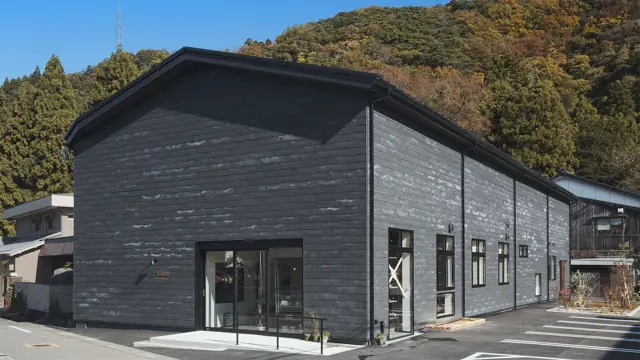
Photo: the shop’s official page 工房 静寛
A tableware and plant shop run by Morita Shikki, founded in 1909. Visitors can watch wood-turners and lacquerers through glass, alongside Nurimono Jokan vessels, thin-turned lamps and houseplants.
10:00–17:00 · Closed: Wednesdayschecked Nov 2026
Why the editors chose itWatch wood-turners and lacquerers through glass while browsing thin-turned lamps, vessels and houseplants.
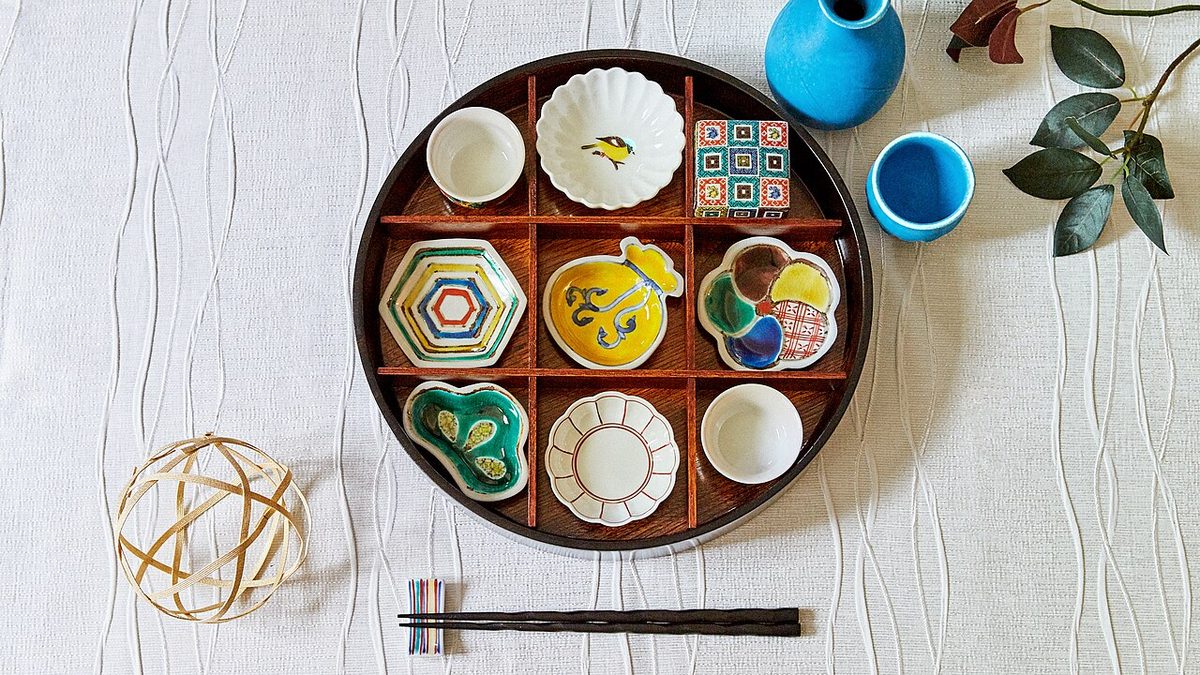
Made in Yamanaka Onsen
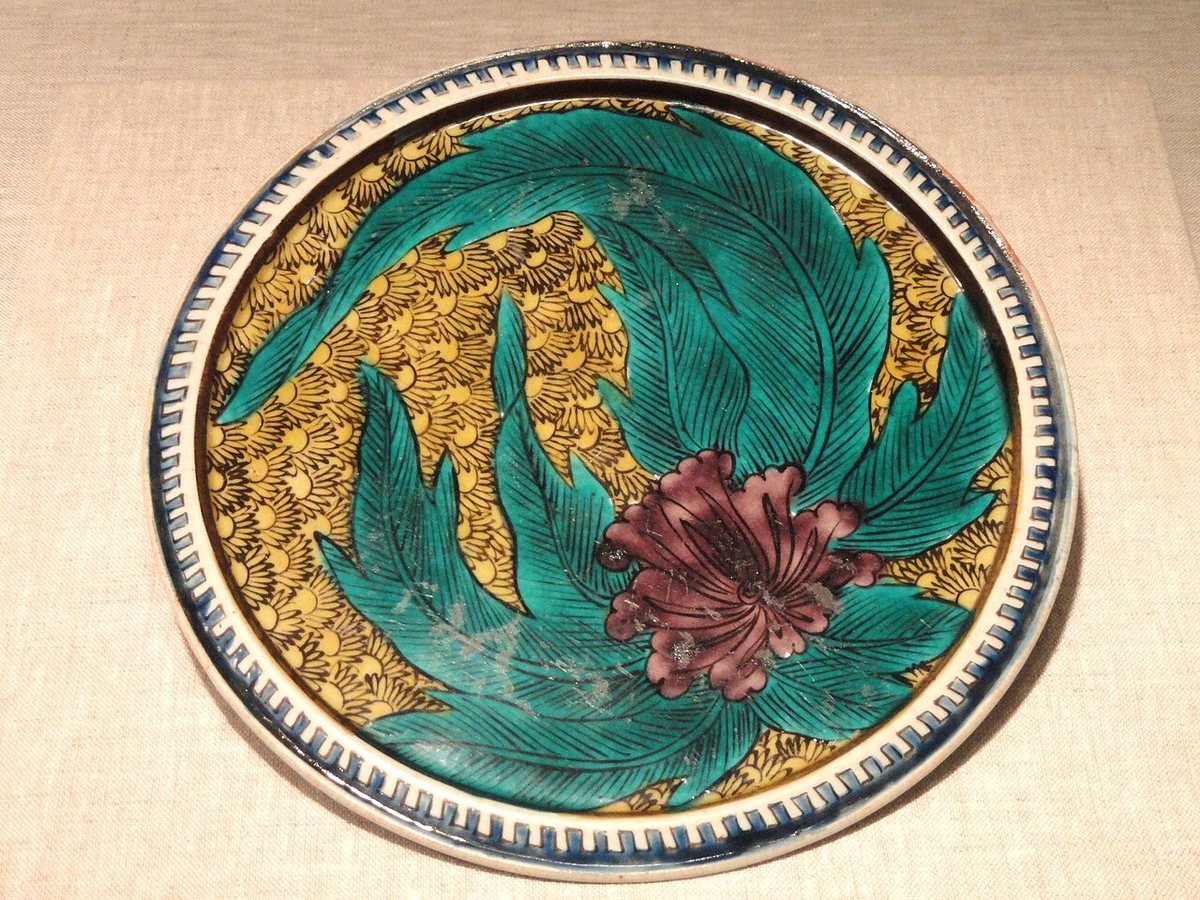
Kutani ware began in the mid-17th century when a kiln was built in Kutani village, upstream from Yamanaka Onsen. It is known for overglaze enamels in five colours—green, yellow, purple, navy blue and red.
An antique Kutani ware porcelain plate with five-color enamel·Photo: Daderot / CC0 (Wikimedia Commons)
Kakusenkei Gorge & Korogi Bridge
Kutani Kiln Kinuya

Photo: the shop’s official page 九谷焼窯元 きぬや
A Kutani ware kiln shop in a red-ochre lattice townhouse near the Kakusenkei Gorge entrance. The ground floor sells Kutani vessels and small pieces; upstairs is a wheel-throwing and overglaze studio.
9:00–17:00 (closed 12:00–13:00) · Closed: Thursdayschecked Nov 2026
Why the editors chose itBrowse Kutani ware in a lattice townhouse, with wheel-throwing and overglaze painting upstairs.
Yuge Kaido & Honmachi
Hata Shikki Company Store
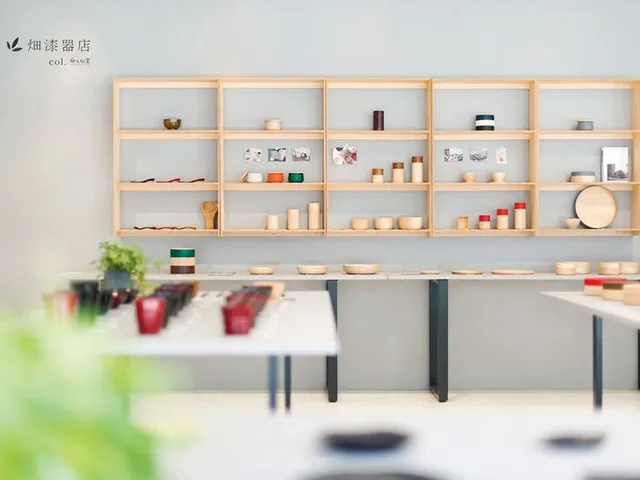
Photo: the shop’s official page 畑漆器店 直営店
Irregular closing days
The street-level shop on Yuge Kaido of Hata Shikki, founded in 1930. Stocks contemporary turned-wood lines such as col., SOJI and ouyouki. Open 10 am to 5 pm; closed Wednesdays.
10:00–17:00 · Closed: Wednesdays (irregular holidays)checked Nov 2026
Why the editors chose itChoose contemporary turned-wood Yamanaka lacquerware at the direct shop of a 1930 maker.
Yuge Kaido & Honmachi
Amu Shop & Cafe
A shop and café in Minami-machi on Yuge Kaido selling contemporary crafts, accessories and foods from Ishikawa. Open 9:30 am to 6:30 pm; closed Wednesdays and the second and fourth Thursdays.
Why the editors chose itA Yuge Kaido shop and café bringing together Ishikawa craft goods and local foods.
Kakusenkei Gorge & Korogi Bridge
CRAFTOUR

Photo: the shop’s official page A shop near the entrance to Kakusenkei Gorge selling Yamanaka lacquerware and running private reservation-only tours to local artisans' workshops.
Why the editors chose itBook a private tour from here to visit local Yamanaka lacquerware artisans' workshops.
Sights in Yamanaka Onsen
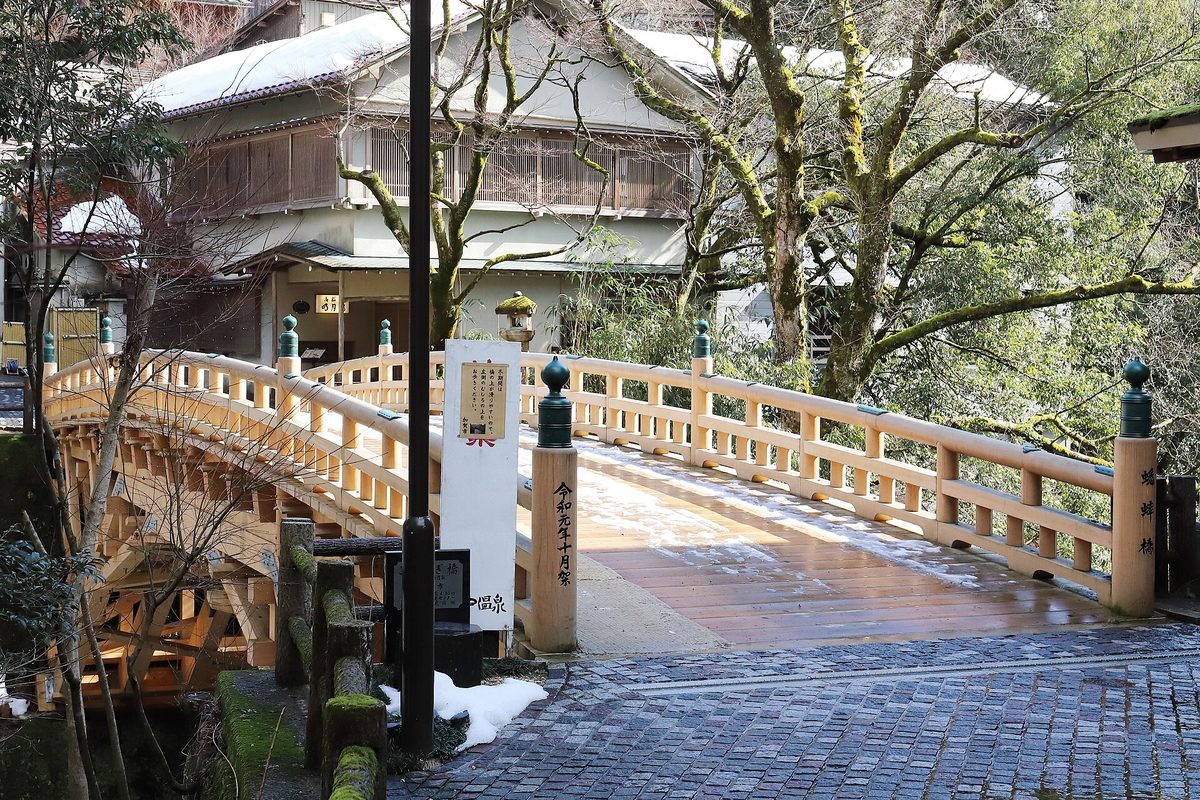
Photo: 藤谷良秀(Fujitani Yoshihide) / CC BY-SA 4.0 (Wikimedia Commons) An all-cypress bridge over Kakusenkei Gorge.
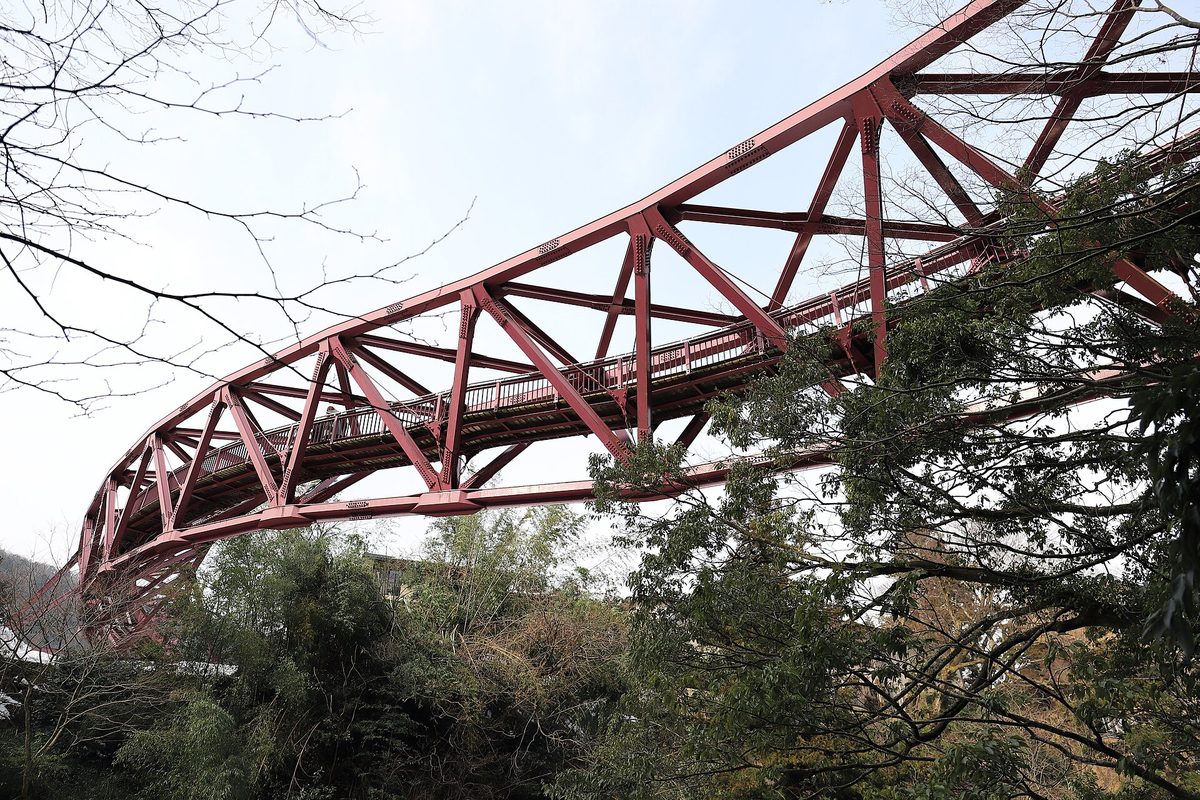
Photo: 藤谷良秀(Yoshihide Fujitani) / CC BY-SA 4.0 (Wikimedia Commons) A 94.7-metre pedestrian bridge midway between Korogi Bridge and Kurotani Bridge, designed in an S-curve of crimson-purple steel by Sogetsu headmaster Hiroshi Teshigahara.
Yamanaka Onsen's public bathhouse, with separate buildings for men and women.
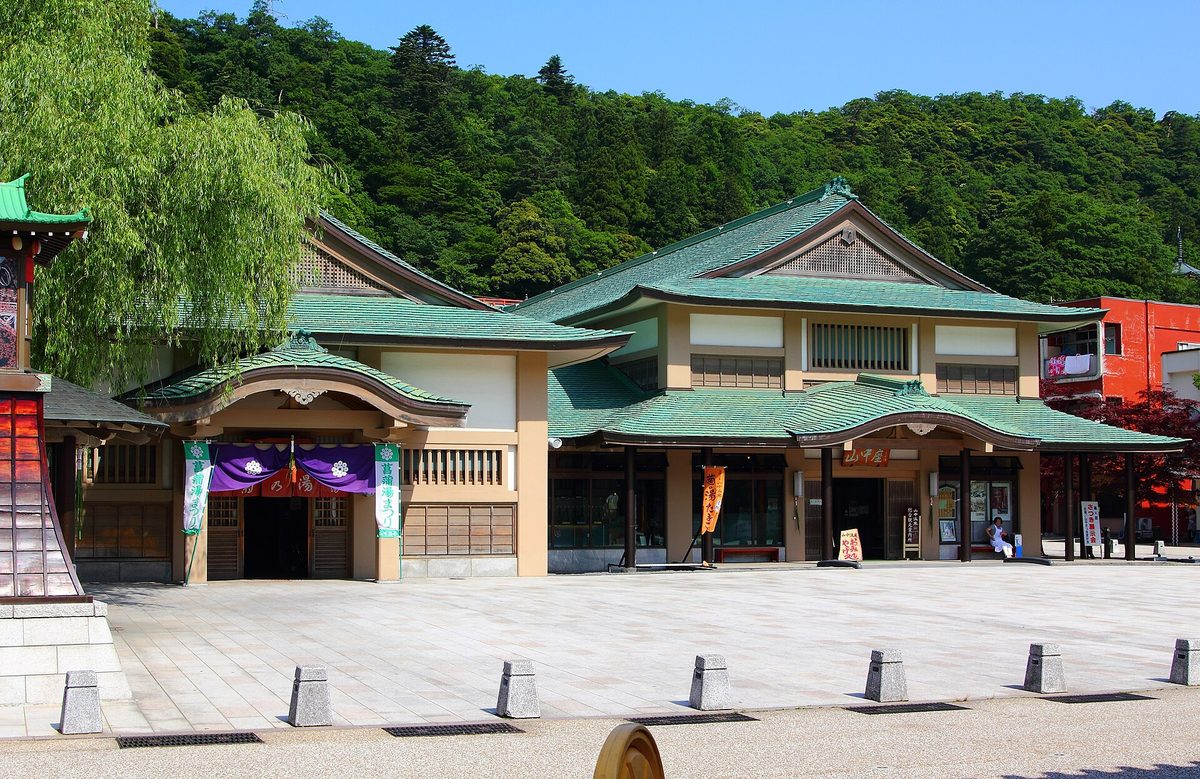
Photo: Kakidai / CC BY-SA 4.0 (Wikimedia Commons) A hall for Yamanaka-bushi folk song and tourist information next to the women's bath of Kikunoyu, with lacquered pillars and maki-e coffered ceilings.
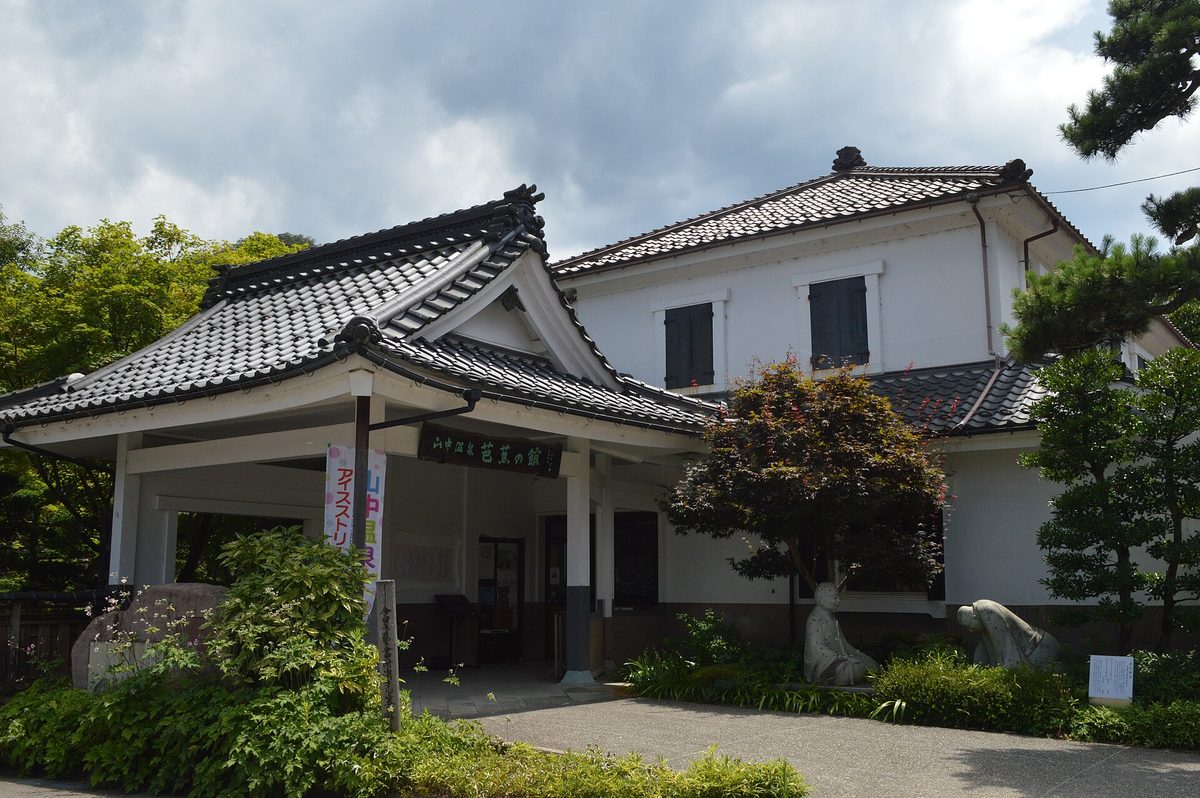
Photo: Asturio Cantabrio / CC BY-SA 4.0 (Wikimedia Commons) An exhibition house in a 1905 ryokan villa with a garden, displaying items linked to Matsuo Basho and Yamanaka lacquerware.
These are local landmarks. Each was checked to be open on its official site (checked 2026-11-12). Please confirm hours before you go.
Beyond Yamanaka Onsen
1 / 7
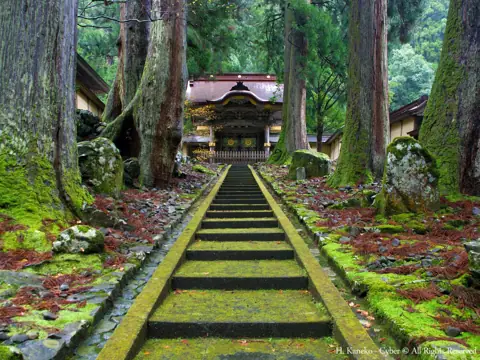 永平寺町 · 21 km
Eiheiji Temple →
The head temple of the Soto sect of Zen Buddhism, it is still a training monastery where many monks practice strictly.
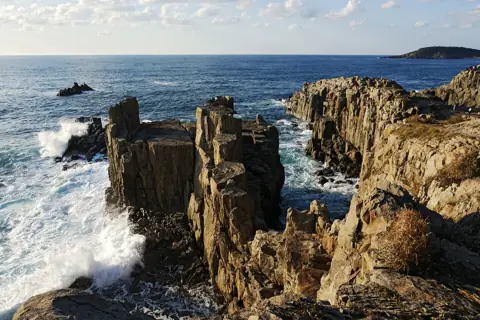 坂井市 · 21 km
Tojinbo Cliffs →
A scenic place with steep cliffs and globally rare columnar jointing of pyroxene andesite.
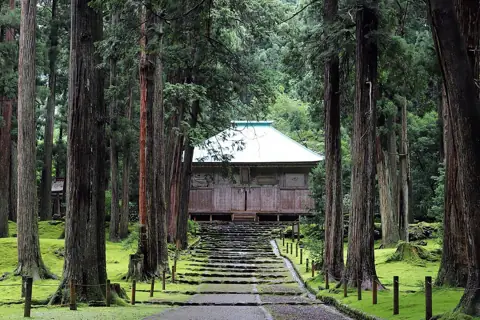 Katsuyama · 27 km
Heisenji Hakusan Shrine →
A historic Hakusan shrine founded in 717 whose vast cedar-shaded grounds are carpeted end-to-end in lush green moss.
 Ono · 31 km
Echizen Ono Castle →
A hilltop castle in Ono that appears to float above a sea of morning clouds from autumn to spring.
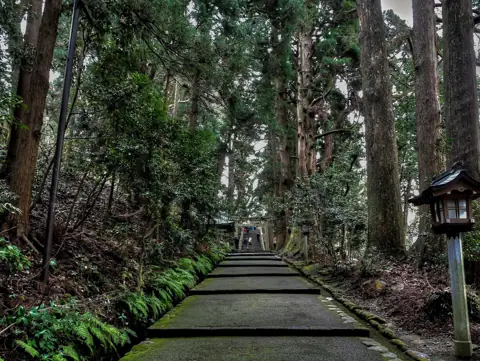 Kanazawa · 31 km
Shirayama Hime Shrine →
The head shrine of over 3,000 Hakusan shrines across Japan, approached along a mossy stone path through ancient cedars.
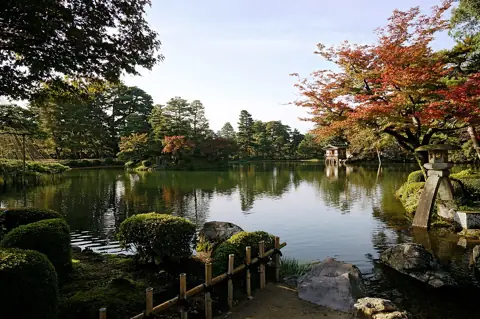 Kanazawa · 44 km
Kenrokuen Garden →
A Japanese garden built by the lords of the Kaga Domain, ranked as one of the Three Great Gardens of Japan, and offering beautiful seasonal scenery.
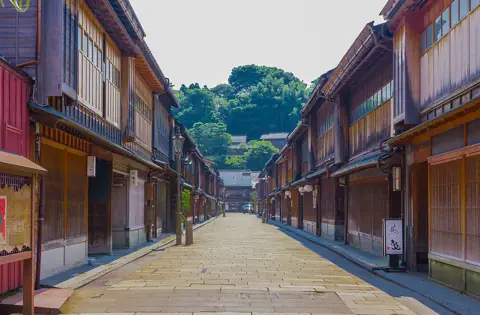 Kanazawa · 45 km
Higashi Chaya District →
A historic district with preserved tea house architecture from the Edo period, offering a glimpse into traditional culture.


Distances are straight-line from the town centre. Each page has how to get there and a suggested day.
Questions people ask
- Where can I see or buy Yamanaka Lacquerware, Kutani Ware, Craft in Yamanaka Onsen?
Yamanaka Lacquerware: GATO MIKIO/1 (Kakusenkei Gorge & Korogi Bridge), Urushi no Utsuwa Asada (Sugatani & Aratani), Kobo Jokan (Uwahara & Haseda)
Kutani Ware: Kutani Kiln Kinuya (Kakusenkei Gorge & Korogi Bridge)
Craft: Hata Shikki Company Store (Yuge Kaido & Honmachi), Amu Shop & Cafe (Yuge Kaido & Honmachi), CRAFTOUR (Kakusenkei Gorge & Korogi Bridge)
- Which places in Yamanaka Onsen open by 9 in the morning?
Yamanaka Ishikawaya (Yuge Kaido & Honmachi, 8:00–17:00)
Sankaido (Yunomoto-machi, Mon, Wed, Fri–Sat 09:00–16:00, Sun & Thu 09:00–13:00)
Basho Coffee (Yuge Kaido & Honmachi, 9:00–19:00)
- What can I visit on foot around Yuge Kaido & Honmachi?
Sweets: Yamanaka Ishikawaya
Cafés: Basho Coffee
Food: Yamada Shokudo
Craft: Hata Shikki Company Store, Amu Shop & Cafe
Every place was checked to be open in November 2026. Hours can change, so please check the official site before you go.
If you like Yamanaka Onsen
- Takamatsu
Kagawa, Japan
For example, Amu Shop & Cafe here, and kitahama blue stories in Takamatsu.
- Kanazawa
Ishikawa, Japan
For example, CRAFTOUR here, and on la CRU. in Kanazawa.
- Odawara
Kanagawa, Japan
For example, Urushi no Utsuwa Asada here, and Okawa Woodwork in Odawara.
Chosen by how close the towns and their places are in what they make and serve.