35.4° N
Kurayoshi
Tottori, Japan
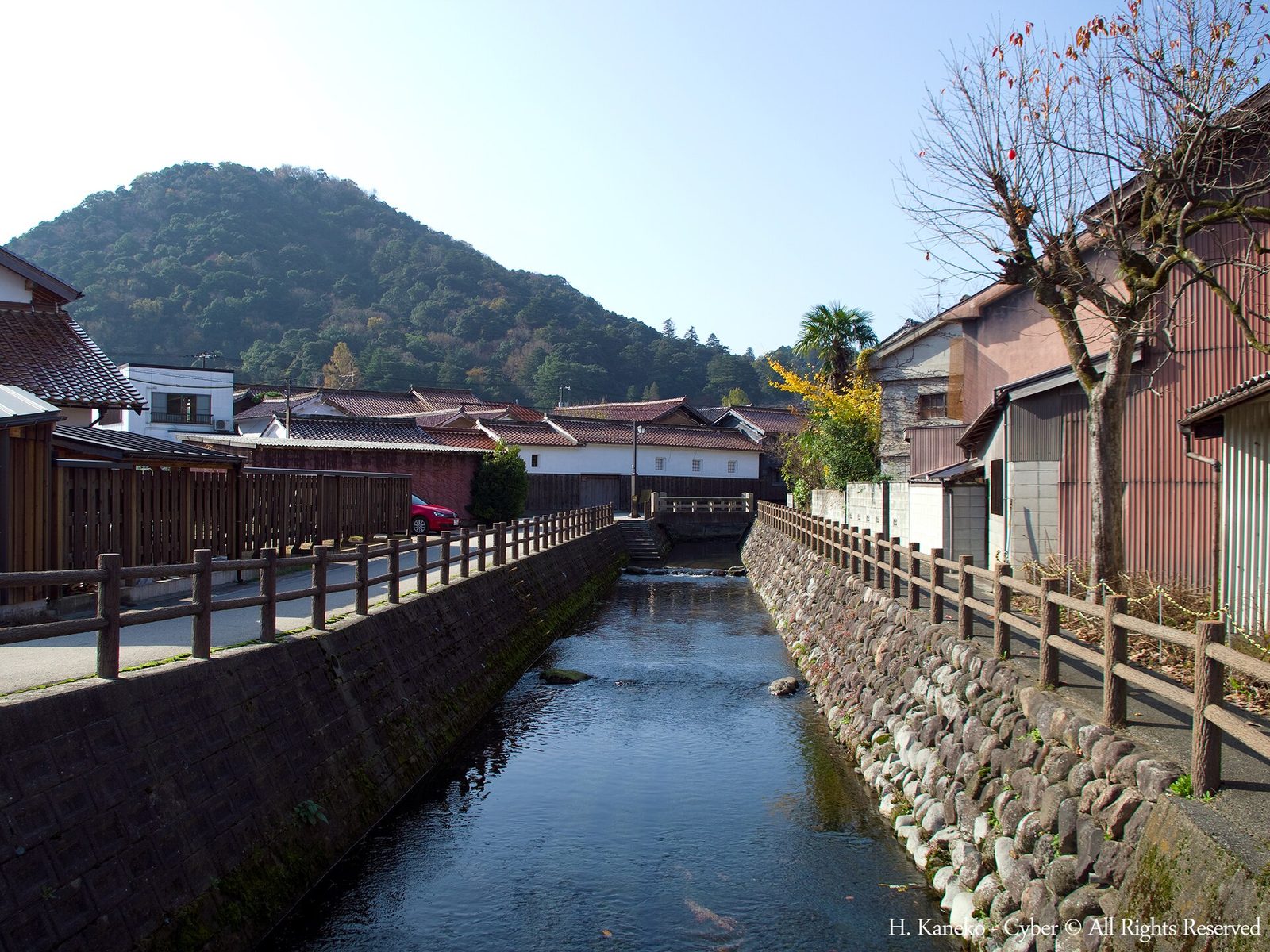
A former castle town in central Tottori, at the foot of Mount Utsubuki and along the Tamagawa and Tenjin rivers. Kurayoshi Kasuri weaving, sake breweries and bamboo craft in the red-tiled Shirakabe Dozogun quarter, alongside sweets and morning diners, as the editors’ picks.
Kurayoshi, on film
4 sights and 10 places, each checked open in 2026, in 38 seconds.
Found somewhere you like? The map and the list below have the address, hours and official site.
Tap for sound
What to eat in Kurayoshi
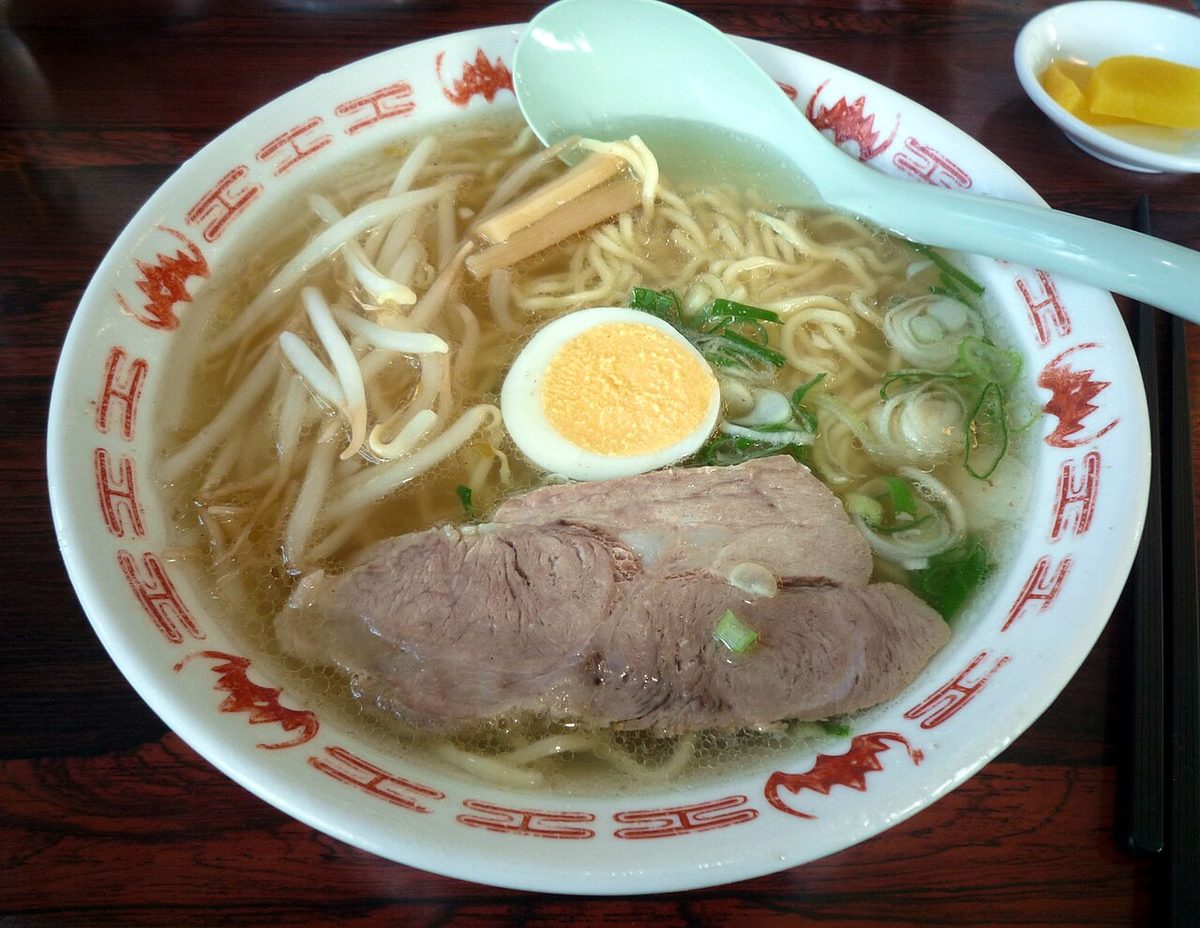
Photo: Flow in edgewise / CC BY 3.0 (Wikimedia Commons) Gyukotsu Ramen (beef-bone ramen)
牛骨ラーメン
A regional ramen whose broth is simmered from beef bones rather than pork or chicken, giving it a light yet savory finish with sweet beef-fat aroma and medium-thick curly noodles. It took root in central and western Tottori after World War II, when repatriates recreated bone-broth noodles using beef bones readily available in a prefecture long known for cattle breeding.
Eaten year-round at local diners and ramen shops, often in soy-sauce or salt broth and sometimes even at breakfast.
Where to eat it
- Ichiba Shokudo ↓
- Gyukotsu Gottsuo Ramen Kurayoshi HontenWebsiteMap
- Ramen EnishiWebsiteMap
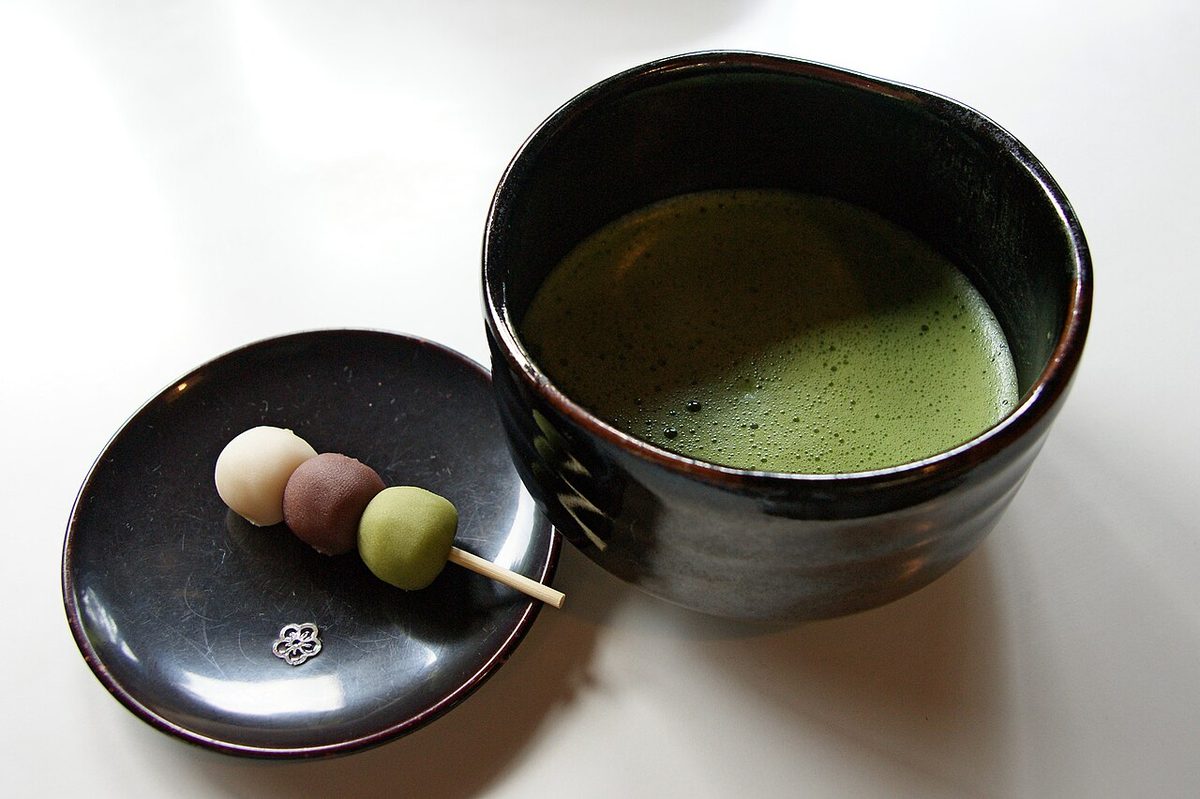
Photo: 663highland / CC BY 2.5 (Wikimedia Commons) Utsubuki Koen Dango (three-color skewered rice dumplings)
打吹公園だんご
Bite-sized skewered rice dumplings made from local glutinous rice flour and malt syrup, each coated in white kidney bean, azuki red bean, or matcha green tea paste without additives. Created in 1880 by Ishitani Seikado in Kurayoshi, the confection takes its name from Utsubuki Park near the shop.
Eaten as a snack with tea at the shop's tearoom, where ordering a drink comes with one complimentary skewer, or bought boxed as a souvenir.
Where to eat it
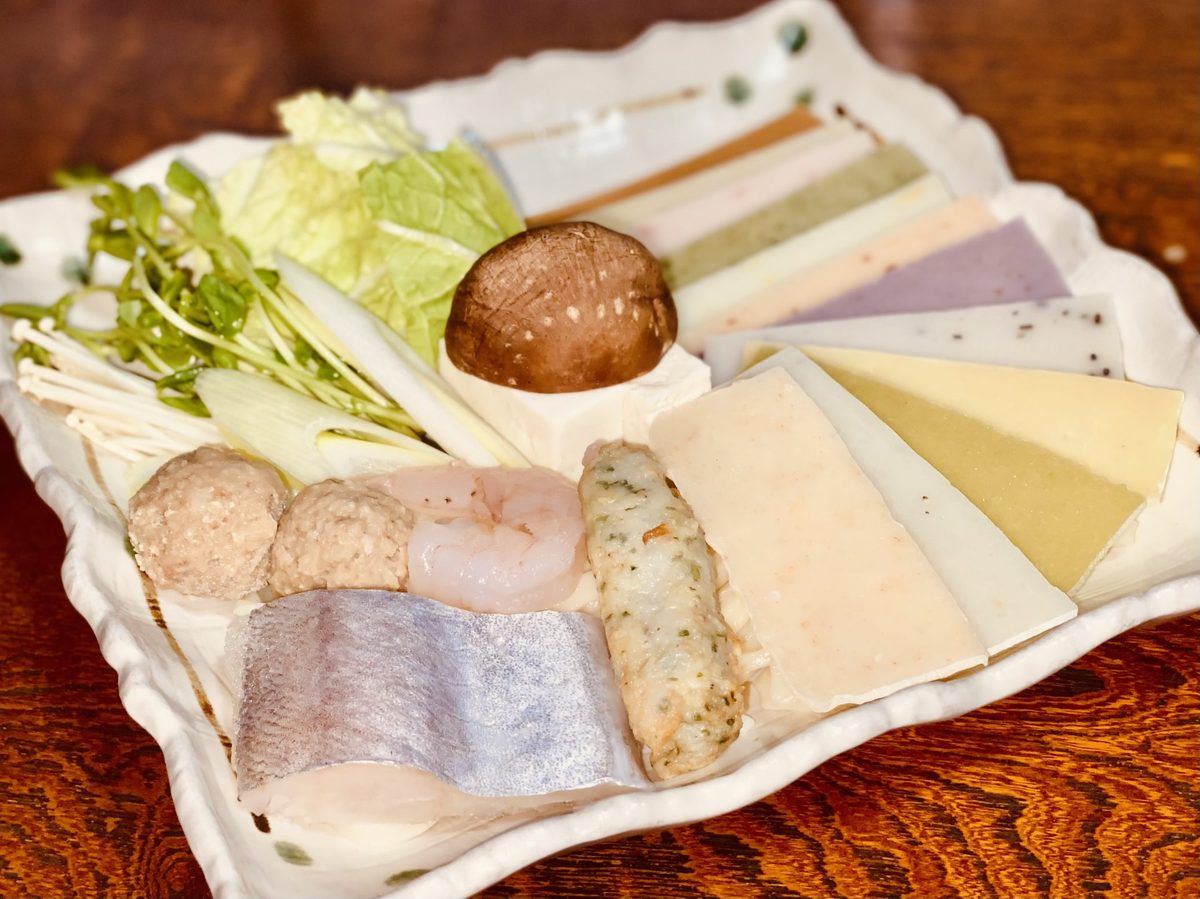
Photo: 町屋 清水庵 (official site) Mochi Shabu (thinly sliced mochi hot pot)
餅しゃぶ
A hot pot dish in which paper-thin slices of mochi flavored with 12 ingredients such as mugwort, yuzu, sesame, and matcha are swished briefly in simmering bonito dashi until soft. Developed in Kurayoshi by the century-old mochi maker Machiya Seisuian in Shirakabe Dozogun, its colorful slices are inspired by the twelve-layered robes of the local Utsubuki heavenly maiden legend.
Swish each mochi slice in the hot dashi for five to ten seconds so the outside turns soft while the center stays chewy, often paired with vegetables and local pork or beef.
No photo yet
Nijisseiki Pear (20th Century pear)
二十世紀梨
A crisp, juicy green Asian pear balancing bright acidity with gentle sweetness. Introduced to Tottori in 1904 and cultivated around Kurayoshi for over a century, it made the prefecture Japan's top producer and inspired Kurayoshi's pear museum and local pear confections.
Fresh pears peak from late August to early September, while year-round visitors can compare three chilled pear varieties or eat pear soft-serve and pear dorayaki.(Aug–Sep)
Where to eat it
- Kurayoshiya ↓
- Tottori Nijisseiki Pear Museum (acepack Nashikkokan)WebsiteMap
The LATITUDE editors’ 10 picks in Kurayoshi
Our editors verified that these places were open (checked 2026-11-12). Check the official site for hours and closing days before visiting. Sponsored listings are marked.
Save places to your trip list and revisit them in this browser. No account needed.
Editors’ picks on the map — or build your own route
Tap a mark to see the place; squares are museums and sights (landmarks). Use “Build your own route” to make a walk of your own.
Loading the map
Map data © OpenStreetMap contributors
Browse by category
1 / 12
Shirakabe Dozogun
Shirakabe Club
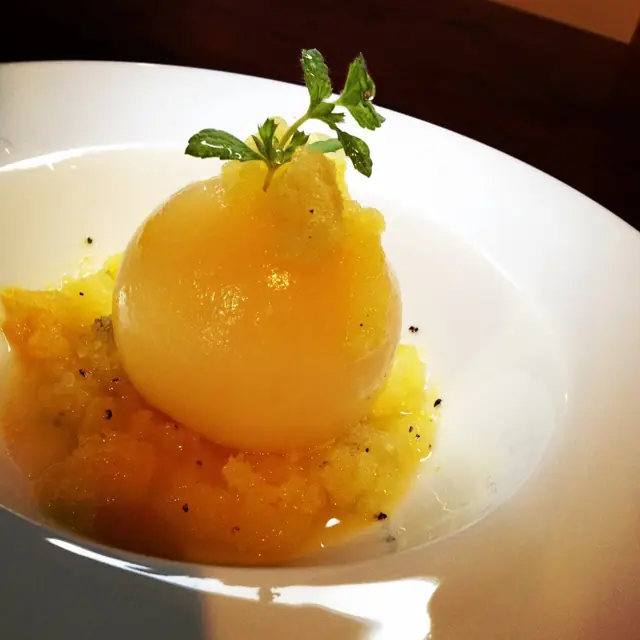
Photo: the shop’s official page 白壁倶楽部
A restaurant and café in the 1908 former Dai-San National Bank Kurayoshi branch. Under plasterwork ceilings, it serves house-made tofu dishes, lunches and café fare.
10:30–21:00 · Closed: Wednesdays and 3rd Tuesdays
Why the editors chose itDine on house-made tofu dishes beneath the original plasterwork ceilings of a 1908 former bank.
Agei
Ichiba Shokudo
市場食堂
A diner inside the Kurayoshi Wholesale Market. Open from 7 a.m., with cafeteria-style side dishes to choose from and katsu curry as a staple.
Why the editors chose itInside the wholesale market from 7 am, pick your own side dishes cafeteria-style or order katsu curry.
Agei
Washoku Kingyo
和食きんぎょ
A washoku spot in Wada, just west of the Tenjin River, serving the kaiseki-style Kingyo Lunch with small dishes built around vegetables from its own farm.
Why the editors chose itCome for the kaiseki-style lunch of small dishes built around vegetables from the restaurant’s own farm.
Uwanada
Tea Lounge Diana
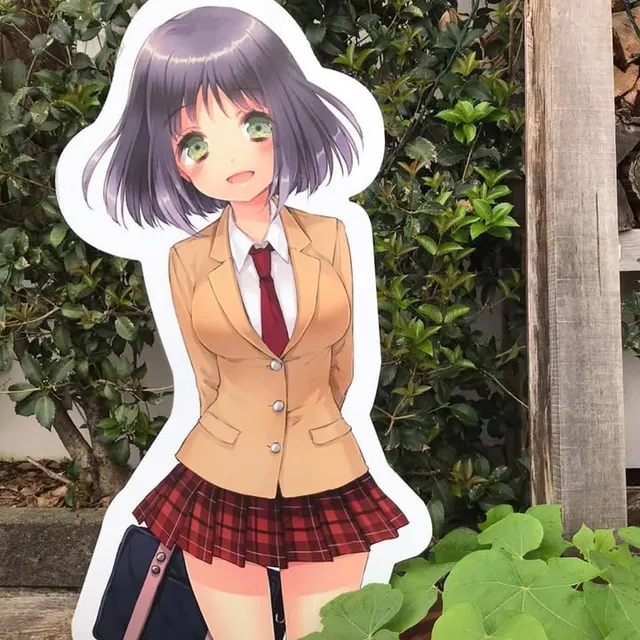
Photo: the shop’s official page ティーラウンジ ダイアナ
A long-running kissaten in Yonedacho, open from 8:30 a.m. for morning sets, lunch, and its chikuwa parfait topped with tofu chikuwa. Closed Sundays; cash only.
Why the editors chose itAn old kissaten open from 8:30 am for morning sets and a parfait topped with tofu chikuwa.
Shirakabe Dozogun
Ishitani Seikado Honten
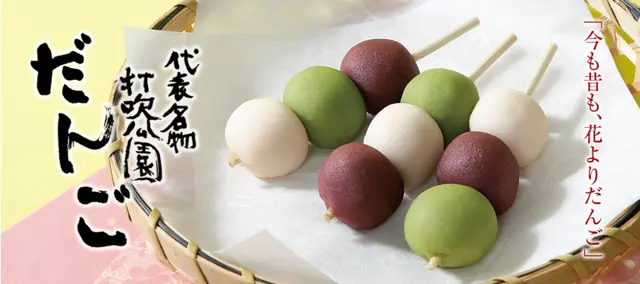
Photo: the shop’s official page 石谷精華堂 本店
A confectioner of more than 120 years, known for Utsubuki Koen Dango. The Saiwaicho flagship has a tearoom, Hana, and opens at 8 a.m. every day except New Year’s Day.
Shop 8:00–17:30, tearoom 8:00–17:00 · Closed: Open every day (except New Year's Day)
Why the editors chose itOpen from 8 am daily except New Year’s Day, a 120-year-old confectioner with an in-house tearoom.
Uwanada
Kurayoshiya
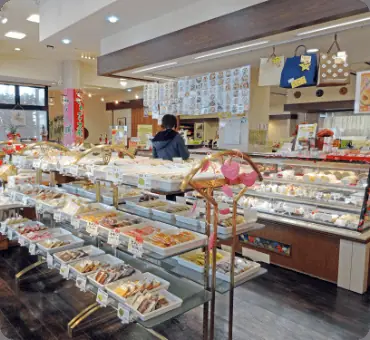
Photo: the shop’s official page 菓子蔵楽部 倉吉舎
A confectioner in Kurayoshi for over thirty years. With minimal additives, it makes Nashi Fuwadora pear dorayaki, Hakota manju, fresh sweets and baked pastries.
Mon–Sat 9:30–18:30, Sun & public holidays 9:30–18:00
Why the editors chose itChoose this 30-year-old confectioner for minimal-additive sweets like pear dorayaki and Hakota manju.
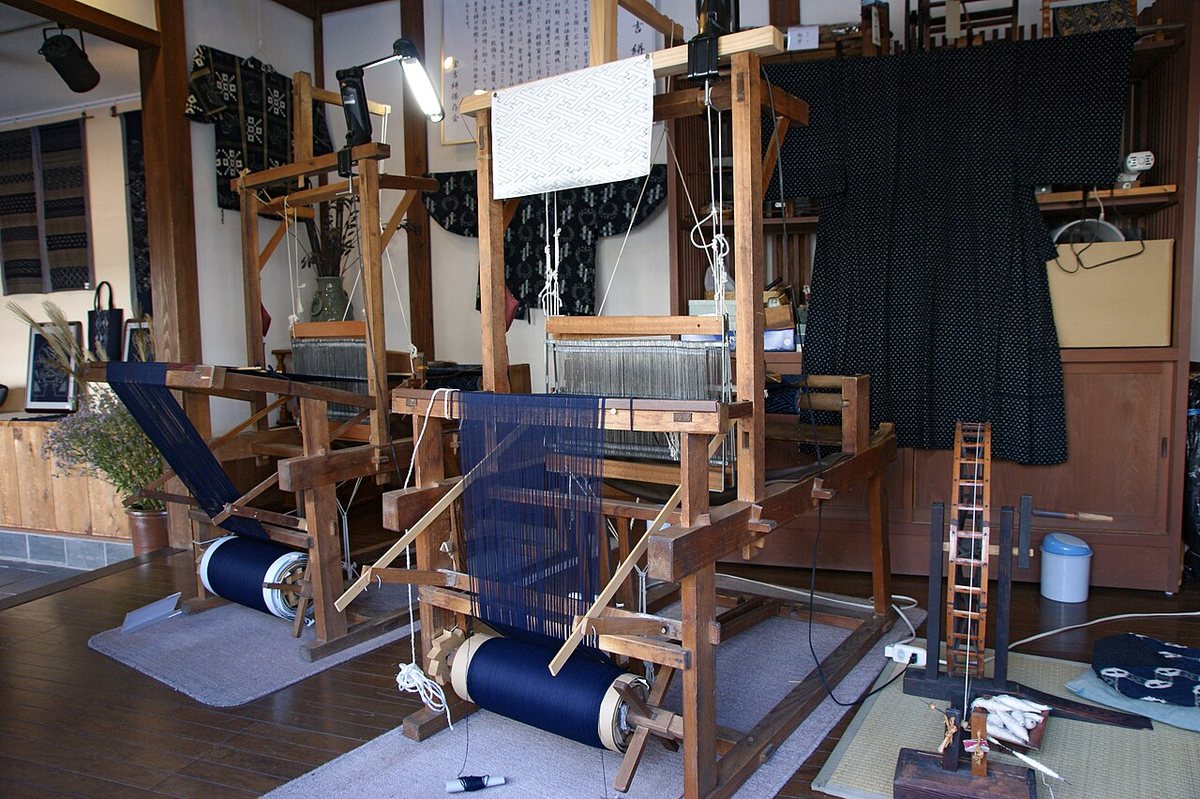
Made in Kurayoshi
Kurayoshi Kasuri is a hand-tied indigo cotton ikat developed in late-Edo Kurayoshi. Pictorial motifs of flowers, birds, mountains and water are dyed onto the threads and woven on wooden handlooms.
Wooden handlooms with indigo-dyed kasuri warp threads in Kurayoshi·Photo: 663highland / CC BY 2.5 (Wikimedia Commons)
Shirakabe Dozogun
Kurayoshi Furusato Kogeikan
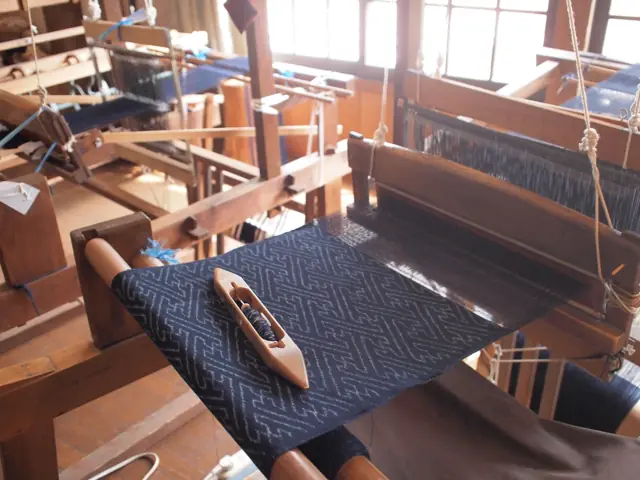
Photo: the shop’s official page 倉吉ふるさと工芸館
A craft hall in Shirakabe Dozogun for Kurayoshi Kasuri, indigo cotton ikat with pictorial motifs. Textiles are displayed and sold, with loom demonstrations and booked coaster-weaving sessions. Closed Wednesdays.
10:00–16:00 · Closed: Wednesdays and Year-end/New Year holidayschecked Nov 2026
Why the editors chose itGo beyond browsing Kurayoshi Kasuri textiles with loom demonstrations and booked coaster weaving.
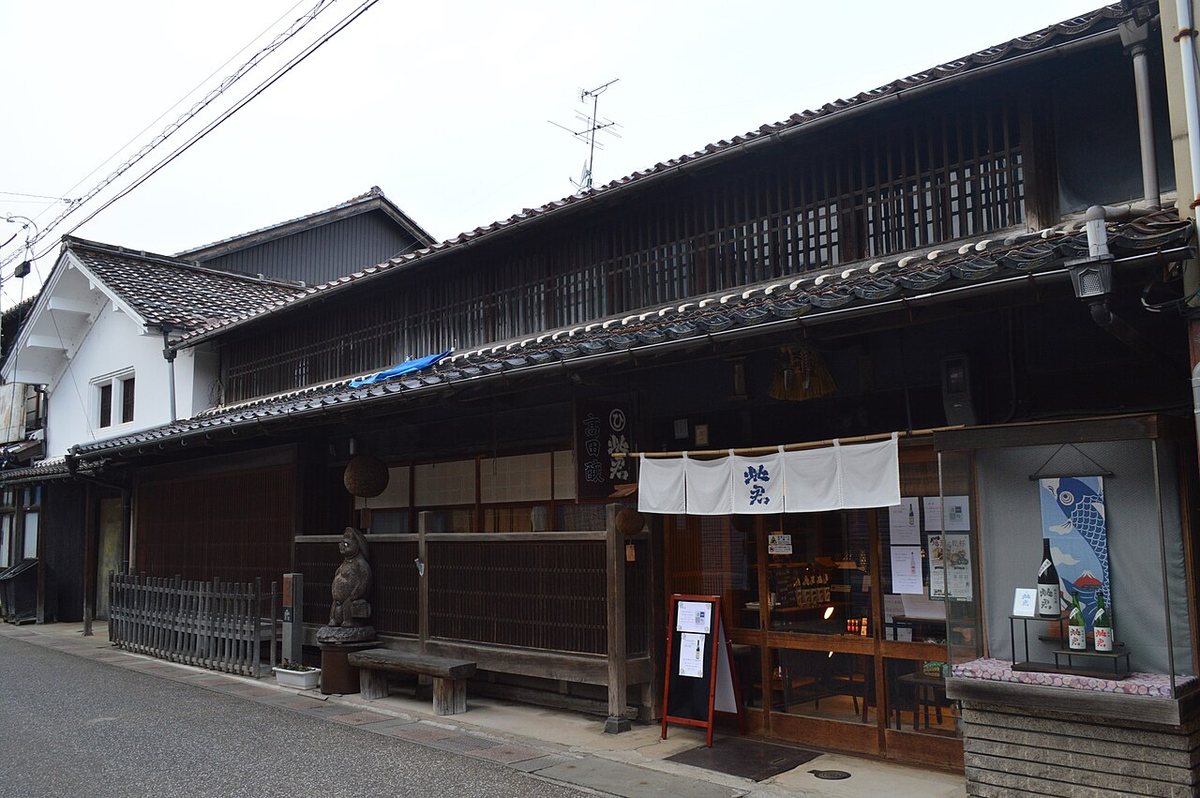
Made in Kurayoshi
Kurayoshi’s sake brewing grew in the merchant townhouses along the Tamagawa river, where Edo- and Meiji-era storehouses and stone bridges still line the water.
Historic wooden facade of Takada Sake Brewery in Kurayoshi·Photo: Asturio Cantabrio / CC BY-SA 4.0 (Wikimedia Commons)
Shirakabe Dozogun
Takata Sake Brewery
高田酒造
A brewery built in 1843 along the Tamagawa river in Nishinakamachi. Its flagship sake is Shikun.
Why the editors chose itVisit this 1843 riverside brewery on the Tamagawa, home to flagship sake Shikun.
Shirakabe Dozogun
COCOROSTORE
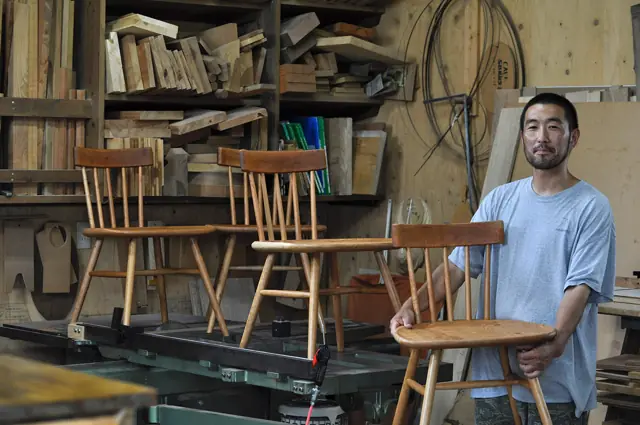
Photo: the shop’s official page A shop in Uomachi carrying Tottori craft for everyday use—ceramics, textiles, forged metalwork, wood and bamboo, and washi. Repairs are also taken on.
Why the editors chose itFind Tottori craft for daily use—from ceramics to forged metalwork—with repair services available.
Shirakabe Dozogun
Nakano Chikugei
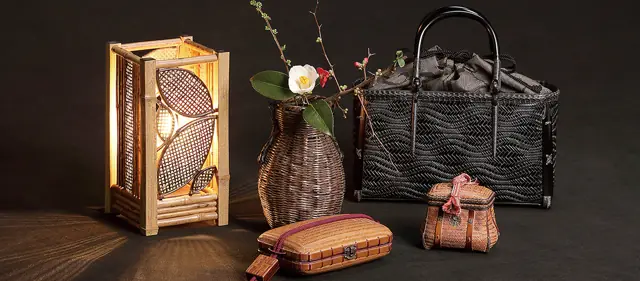
Photo: the shop’s official page 創作工房 中野竹藝
A bamboo workshop founded in 1912. It dyes hobichiku bamboo with plant dyes and bends whole culms without splitting them into flower vessels, bags and serving trays.
10:00–17:00 · Closed: New Year's Day onlychecked Nov 2026
Why the editors chose itA bamboo workshop founded in 1912 bending whole dyed culms without splitting into baskets and trays.
Sights in Kurayoshi
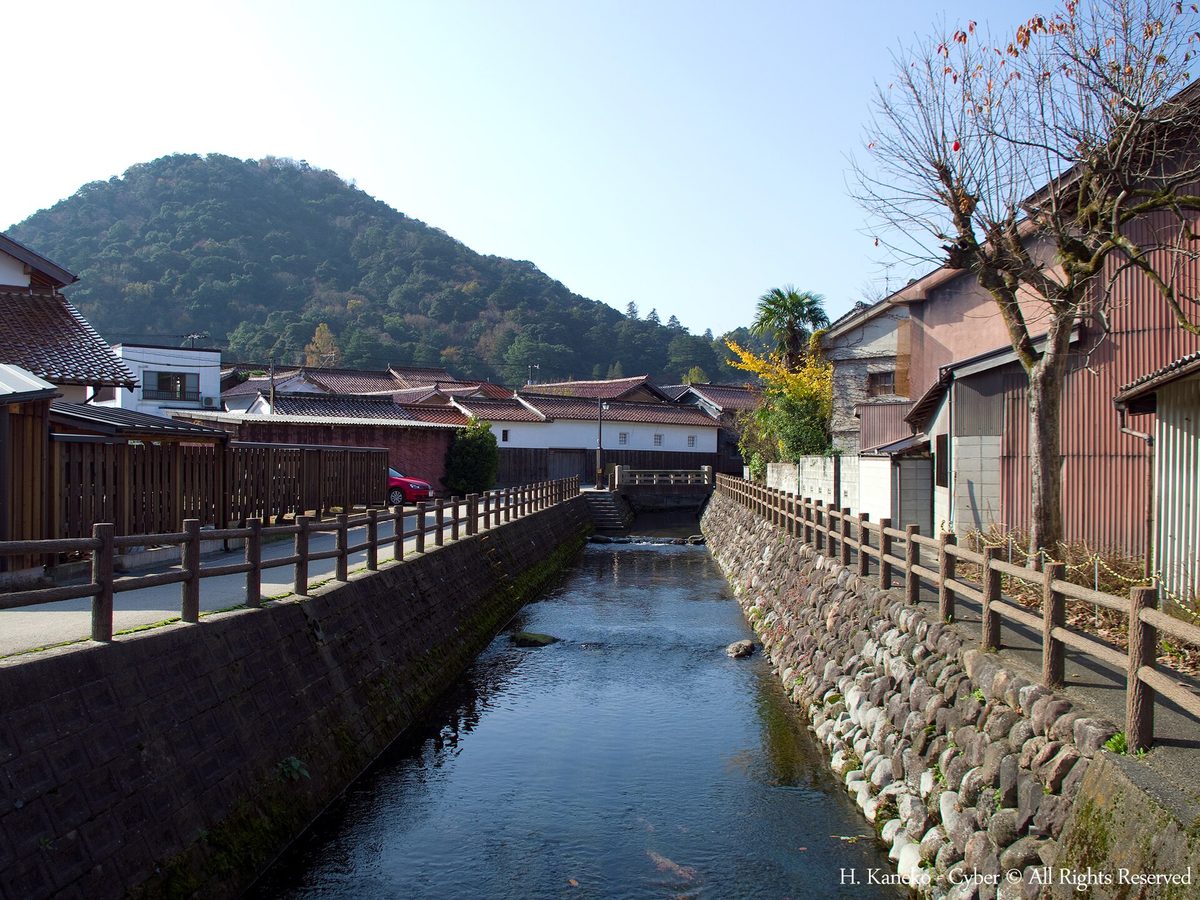
Photo: Hiroaki Kaneko / CC BY-SA 3.0 (Wikimedia Commons) A national preservation district along the Tamagawa river at the foot of Mount Utsubuki, lined with Edo- to Showa-era storehouses and townhouses of white plaster, charred cedar and red Sekishu tiles.
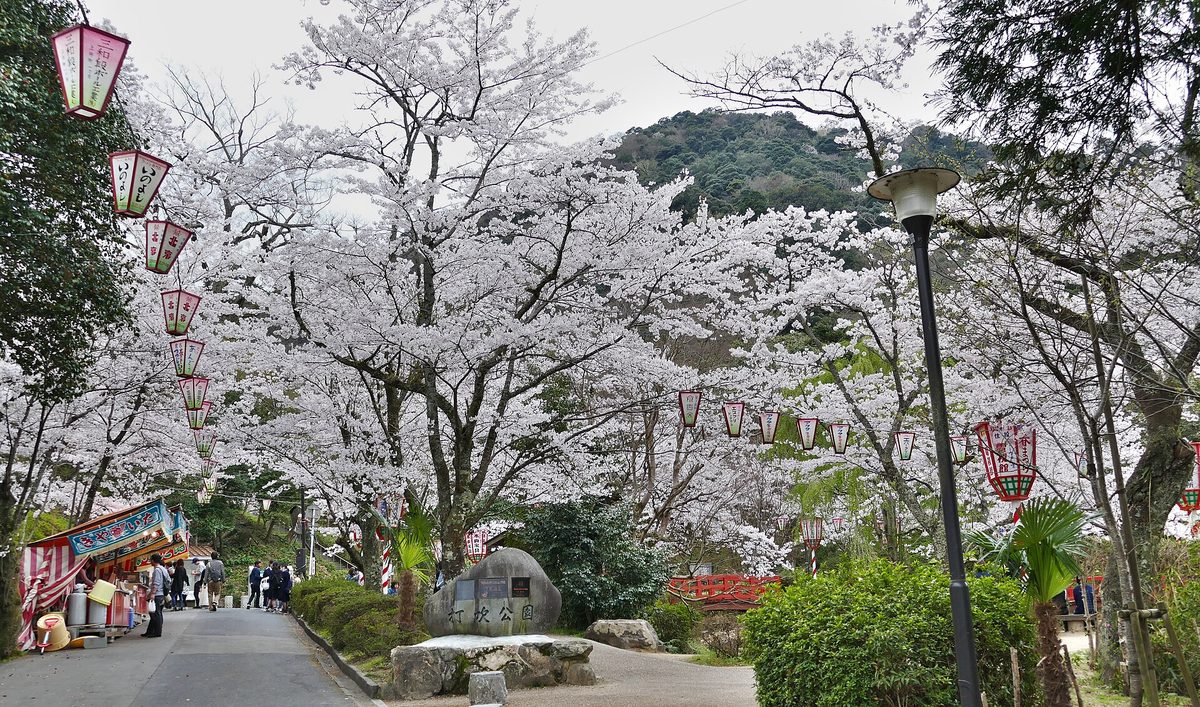
Photo: アラツク / CC BY-SA 4.0 (Wikimedia Commons) A park at the foot of Mount Utsubuki just south of Shirakabe Dozogun, with the Kurayoshi Museum inside its grounds and a stop on the Utsubuki loop route.
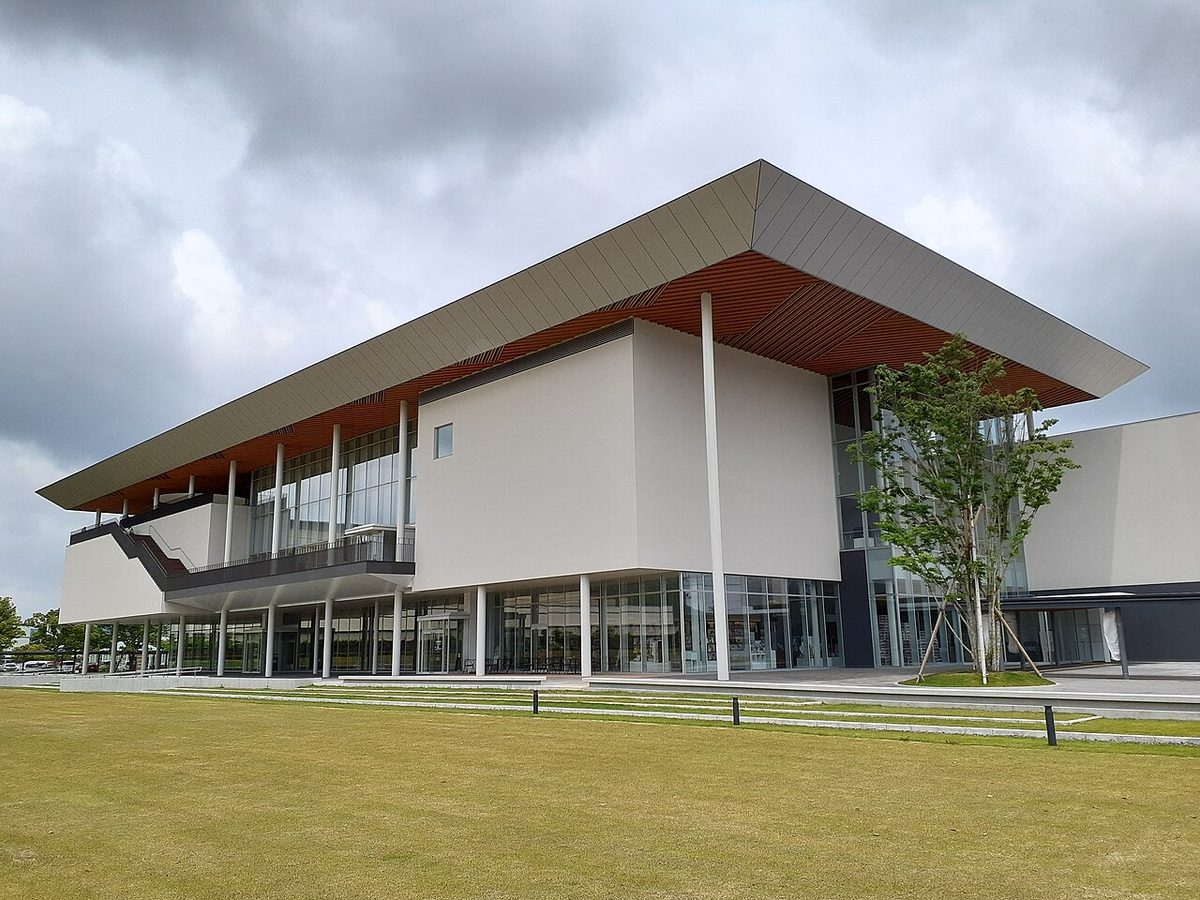
Photo: Vetalapancavimsatika / CC BY-SA 4.0 (Wikimedia Commons) Tottori Prefectural Museum of Art
Tottori’s prefectural art museum in Dakejicho, holding special and collection exhibitions, with a café and shop inside.
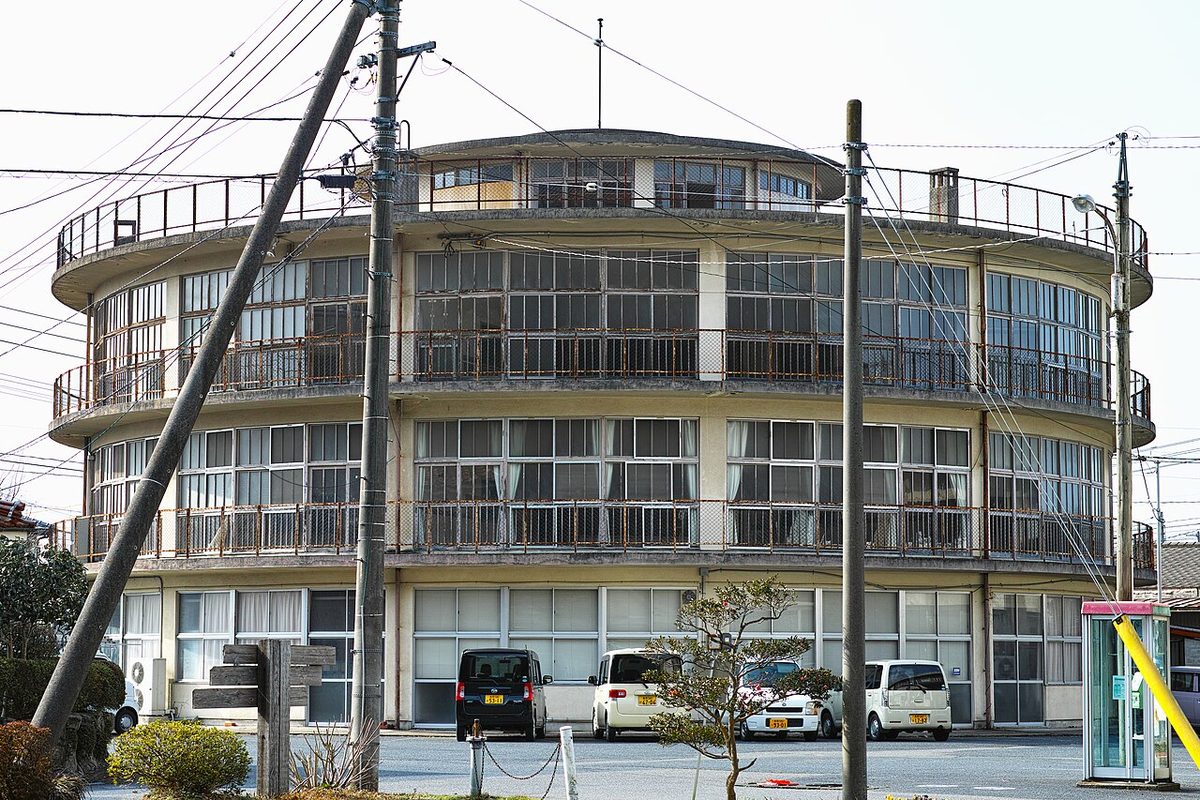
Photo: mstk east / CC BY 2.0 (Wikimedia Commons) Kurayoshi Figure Museum (Enkei Gekijo)
A figure museum housed in Japan’s oldest surviving round schoolhouse, displaying around 2,000 figures and local exhibits across its spiral staircase and fan-shaped classrooms.
These are local landmarks. Each was checked to be open on its official site (checked 2026-11-12). Please confirm hours before you go.
Beyond Kurayoshi
1 / 4
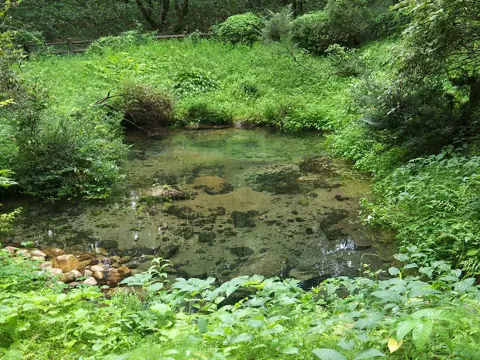 Maniwa · 20 km
Shiogama Cold Spring →
A gourd-shaped natural spring pond at the base of Mt. Nakahiruzen gushing 300 liters per second of 11°C crystal-clear water.
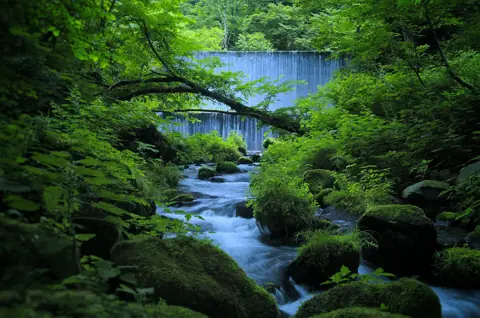 Kofu · 25 km
Kitanizawa Gorge →
A mossy beech-forest mountain stream at the foot of Oku-Daisen in Kofu Town, famed in Japan as a mineral-water TV commercial filming location.
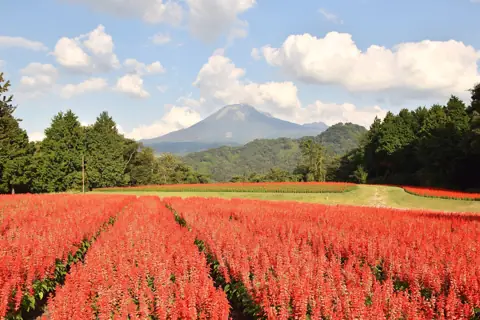 Yonago · 38 km
Tottori Hanakairo Flower Park →
One of Japan's largest flower parks, encircled by a 1-kilometer covered circular walkway framing Mt. Daisen in the distance.
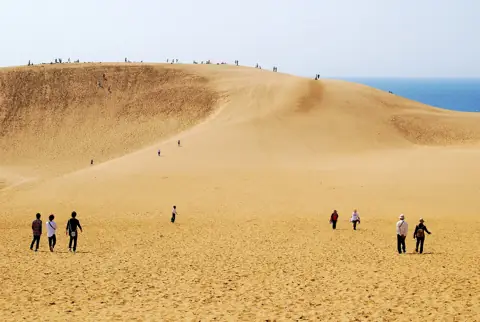 Tottori · 39 km
Tottori Sand Dunes →
One of Japan's largest coastal sand dunes, known for its beautiful wind ripples and spectacular views.


Distances are straight-line from the town centre. Each page has how to get there and a suggested day.
Questions people ask
- Where can I eat Kurayoshi's local dishes?
Gyukotsu Ramen (beef-bone ramen): Ichiba Shokudo (Agei)
Utsubuki Koen Dango (three-color skewered rice dumplings): Ishitani Seikado Honten (Shirakabe Dozogun)
Nijisseiki Pear (20th Century pear): Kurayoshiya (Uwanada)
- Where can I see or buy Kurayoshi Kasuri Weaving, Kurayoshi Sake Brewing, Craft in Kurayoshi?
Kurayoshi Kasuri Weaving: Kurayoshi Furusato Kogeikan (Shirakabe Dozogun)
Kurayoshi Sake Brewing: Takata Sake Brewery (Shirakabe Dozogun)
Craft: COCOROSTORE (Shirakabe Dozogun), Nakano Chikugei (Shirakabe Dozogun)
- What can I visit on foot around Shirakabe Dozogun?
Craft: COCOROSTORE, Nakano Chikugei
Kurayoshi Kasuri Weaving: Kurayoshi Furusato Kogeikan
Kurayoshi Sake Brewing: Takata Sake Brewery
Sweets: Ishitani Seikado Honten
Food: Shirakabe Club
Every place was checked to be open in November 2026. Hours can change, so please check the official site before you go.
If you like Kurayoshi
- Yame
Fukuoka, Japan
For example, Kurayoshi Furusato Kogeikan here, and Shimogawa Orimono in Yame.
- Kurashiki
Okayama, Japan
For example, Kurayoshi Furusato Kogeikan here, and T.S.L Kurashiki in Kurashiki.
- Naha
Okinawa, Japan
For example, Kurayoshi Furusato Kogeikan here, and Shuri Textile Center suikara in Naha.
Chosen by how close the towns and their places are in what they make and serve.