34.6° N
Kurashiki
Okayama, Japan
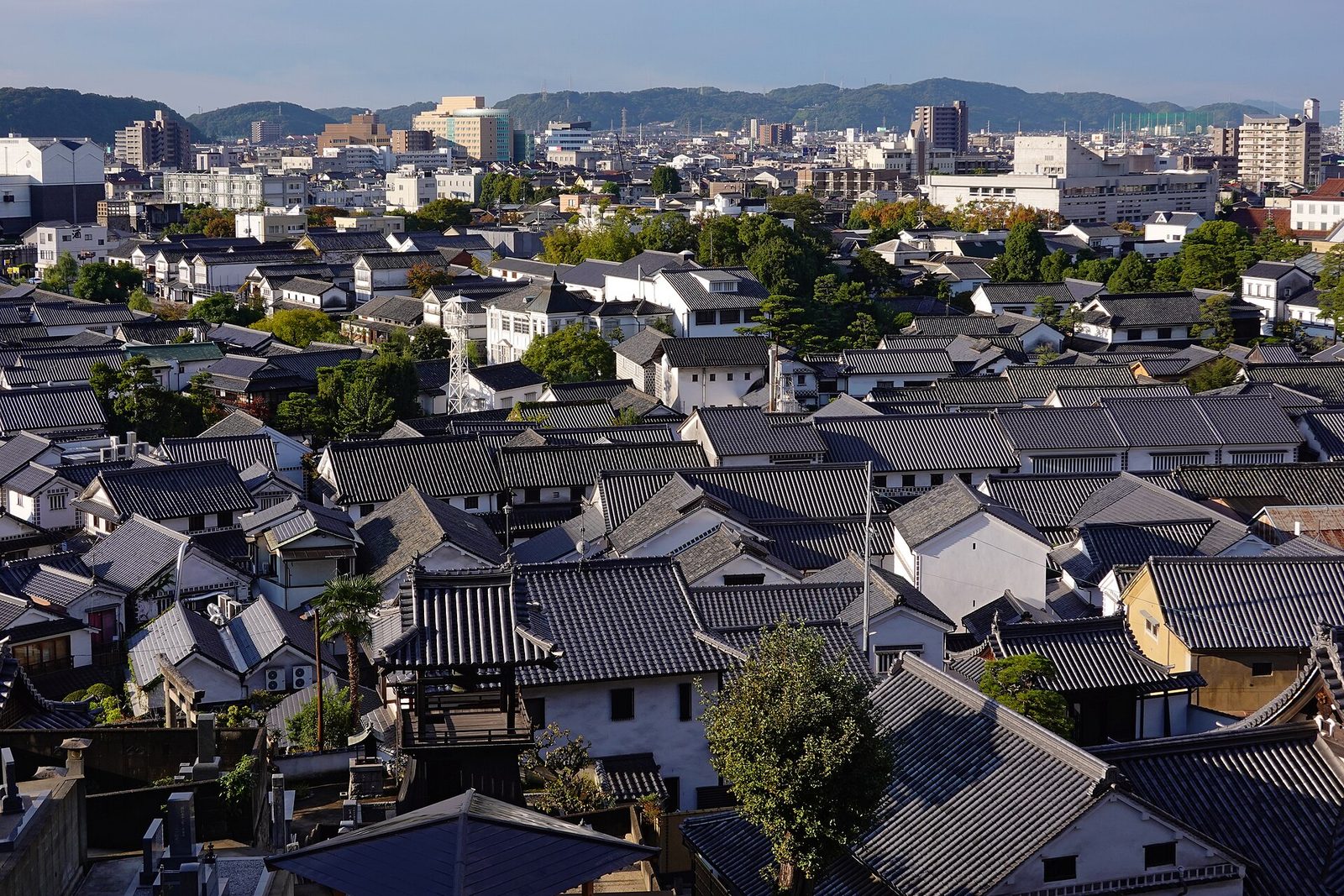
A town of white-walled storehouses along the Kurashiki River. Canvas and woven tatami edging, folk-craft tableware and coffee: the editors’ picks. In autumn, the art and folk-craft museums have exhibitions to see along the way.
What to eat in Kurashiki
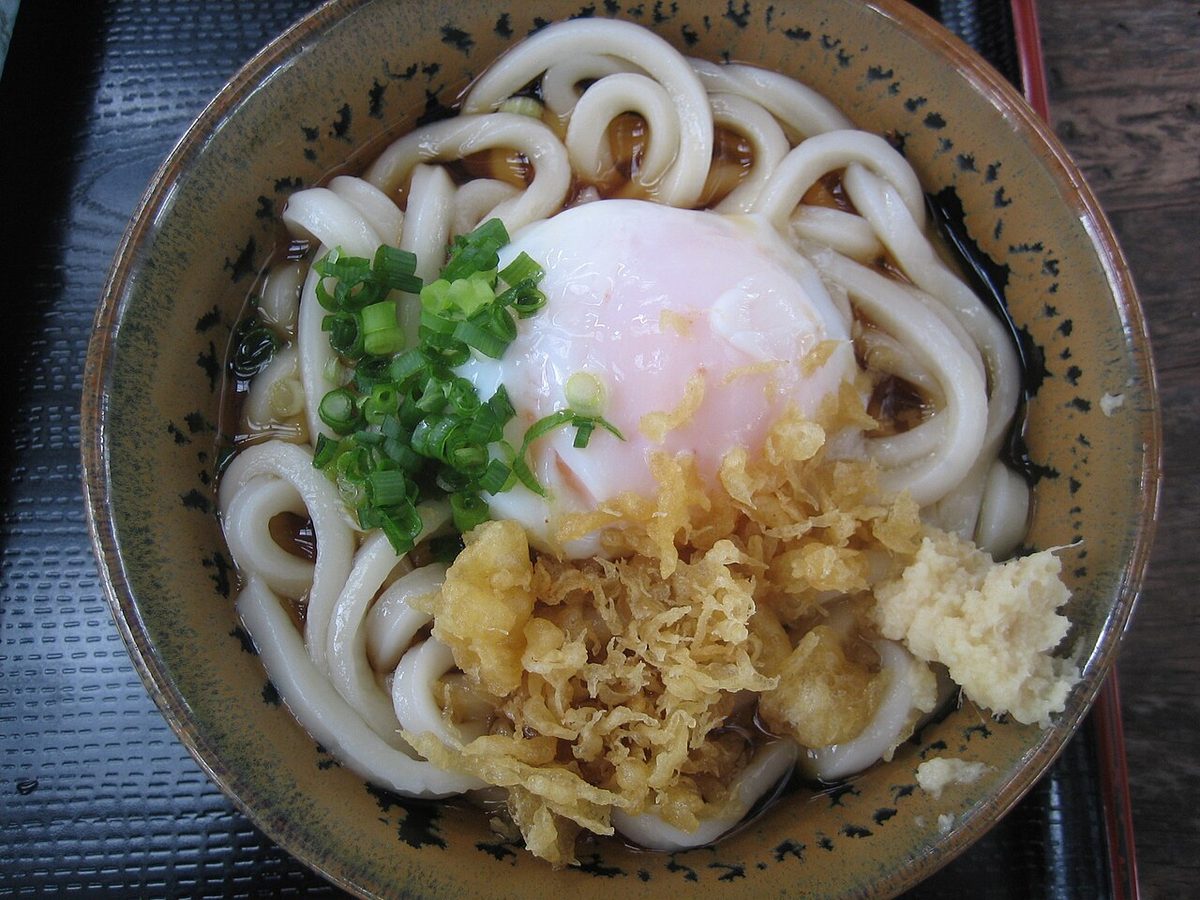
Photo: Ozchin / CC BY-SA 2.0 (Wikimedia Commons) Bukkake udon (thick udon noodles with dark dashi sauce)
ぶっかけうどん
Thick, chewy wheat noodles served in a bowl with a dark, sweet-savory dashi-soy sauce poured directly over the noodles and toppings. The style originated in Kurashiki in the 1960s at Furuichi, where zaru udon, dipping sauce, and toppings were combined in one bowl so founder Hiroshi Furuichi could eat while playing mahjong.
Ordered hot or cold and mixed well with toppings such as scallions, tempura bits, and grated ginger or wasabi.
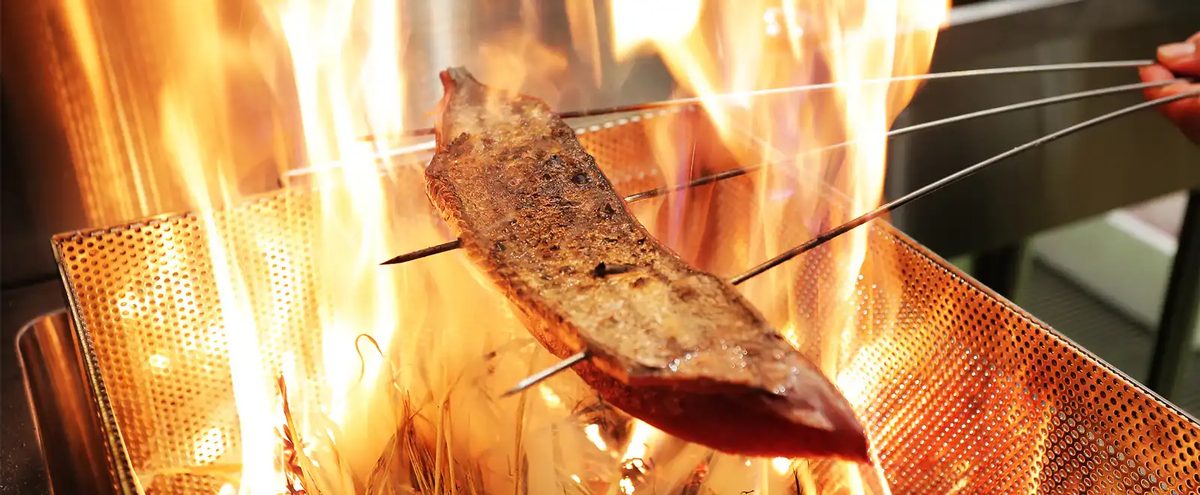
Photo: ゆうなぎ 倉敷本店 (official site) Mamakari (vinegared Japanese sardinella)
ままかり
A small herring-family fish (sappa, Sardinella zunasi) caught in the Seto Inland Sea and cured in sweet vinegar to soften its fine bones, or served as nigiri sushi. Its local name comes from the saying that it makes rice go down so fast you end up borrowing rice (mama) from the house next door.
Eaten whole as pickled fish with rice or drinks, or served as nigiri sushi in local set meals.(Apr–Nov)
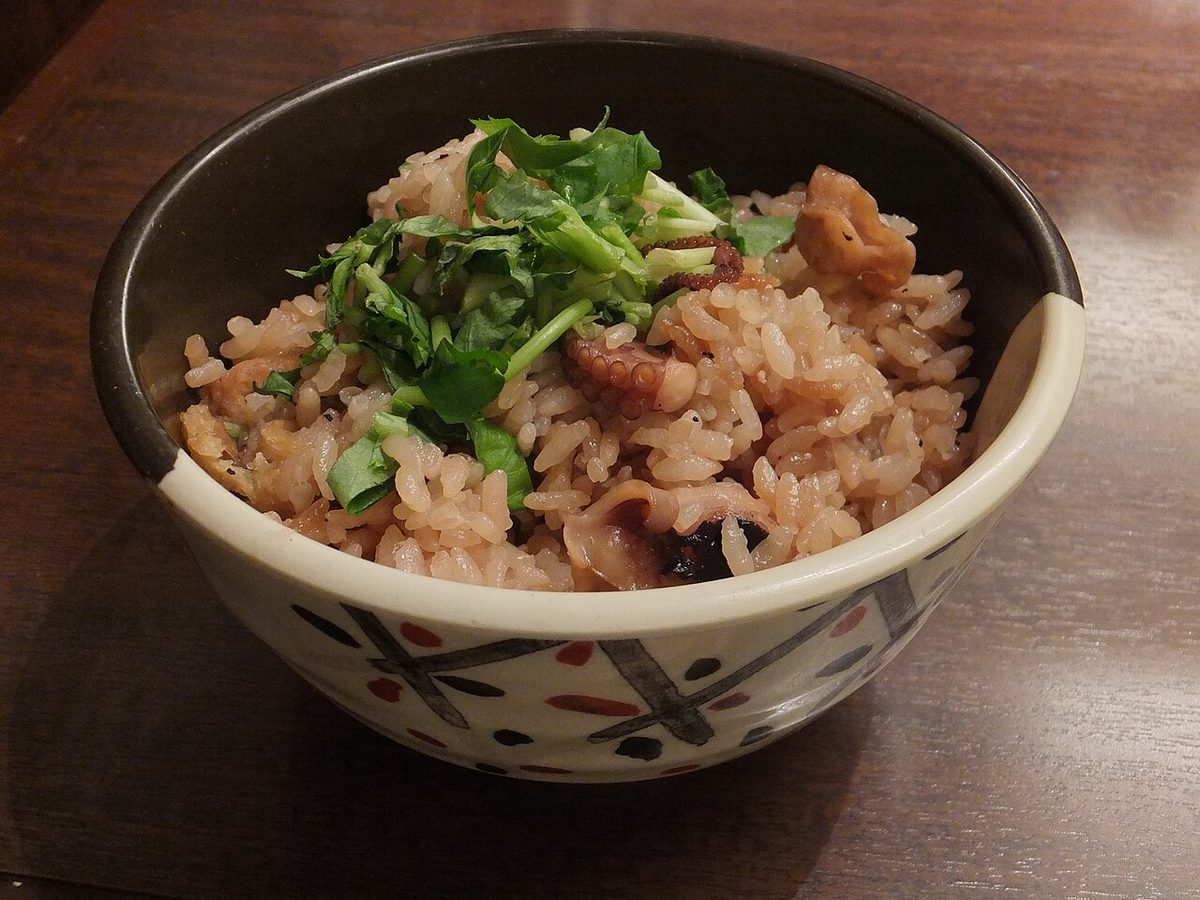
Photo: Lombroso / CC BY-SA 4.0 (Wikimedia Commons) Takomeshi (octopus rice)
たこめし
Rice steamed with bite-sized pieces of boiled octopus, soy sauce, sake, and dashi broth. It comes from the fishing port of Shimotsui in southern Kurashiki, where fast Seto Inland Sea currents produce firm, short-limbed octopus.
Served hot in a bowl as a set meal with miso soup and pickled vegetables, or alongside local seafood dishes.
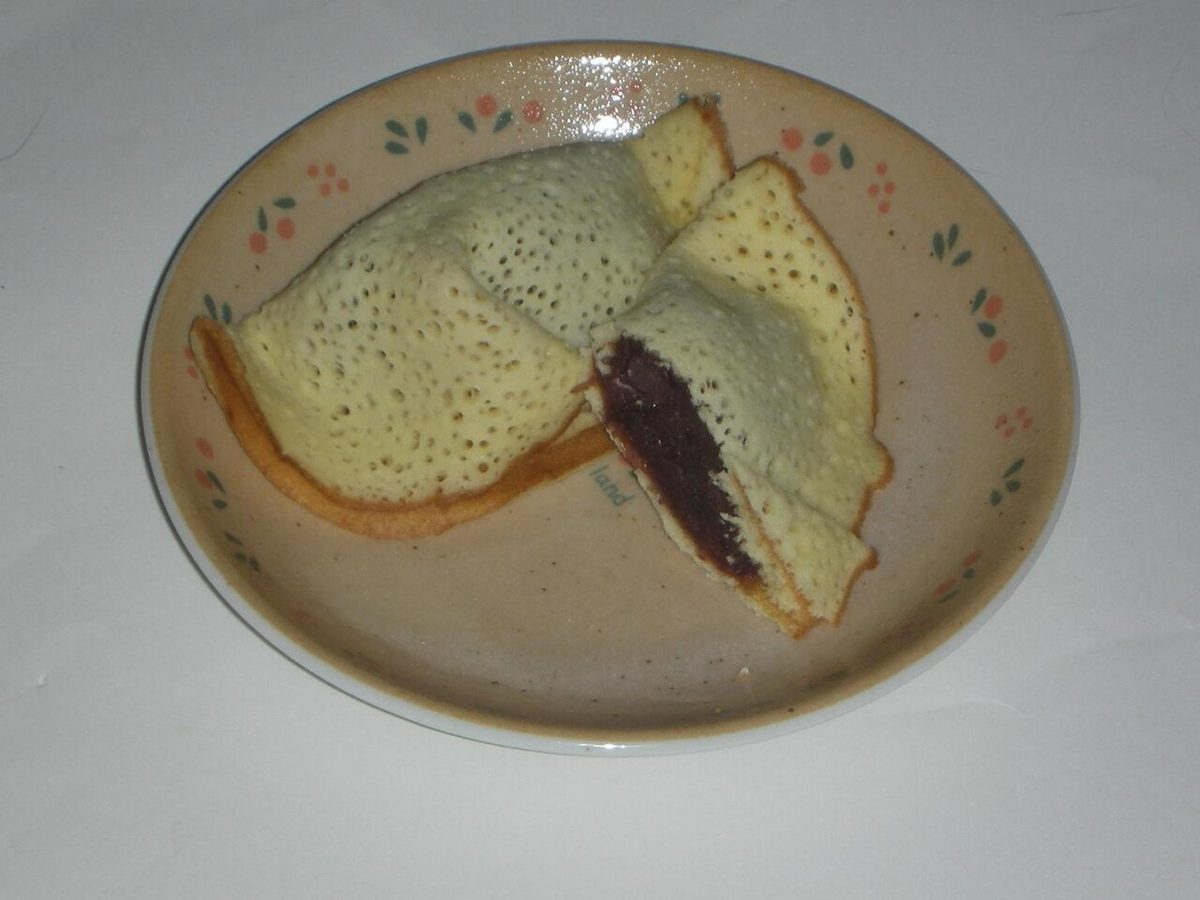
Photo: おんさき / CC BY 3.0 (Wikimedia Commons) Murasuzume (sweet red-bean crepe)
むらすゞめ
A thin, round crepe-like batter made with fresh eggs and wheat flour folded in a half-moon around chunky sweet adzuki bean paste. Created in 1877 by Kurashiki confectioner Kikkodo, its golden colour and rush-hat shape recall sparrows flocking over rice ears during local harvest dances.
Eaten by hand as a snack with green tea or matcha, or baked fresh to eat warm at Kikkodo's Bikan Quarter shop.
The LATITUDE editors’ 13 picks in Kurashiki
Our editors verified that these places were open (checked 2026-11-11). Check the official site for hours and closing days before visiting. Sponsored listings are marked.
Save places to your trip list and revisit them in this browser. No account needed.
Editors’ picks on the map — or build your own route
Tap a mark to see the place; squares are museums and sights (landmarks). Use “Build your own route” to make a walk of your own.
Loading the map
Map data © OpenStreetMap contributors
Browse by category
1 / 15
Higashimachi
atelier & salon Hashimaya
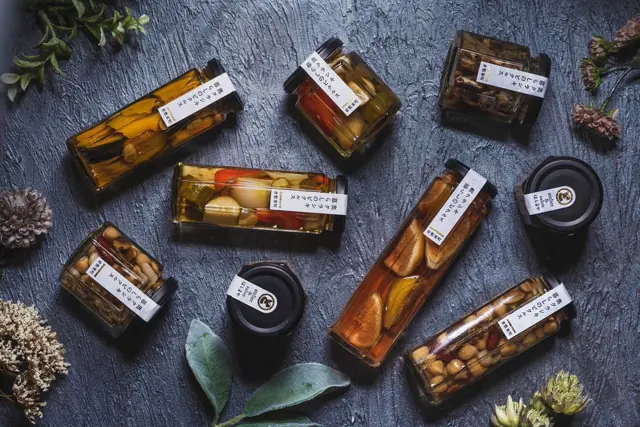
Photo: the shop’s official page atelier & salon はしまや
A salon for fermented food in a restored rice storehouse, about 150 years old, in Higashimachi. Lunches with fermented seasonings, amazake and pickles made in the adjoining atelier.
11:30–15:00 (last order 14:30) · Closed: Tuesdayschecked Nov 2026
Why the editors chose itSet in a roughly 150-year-old rice storehouse, serving fermented lunches, amazake, and house-made pickles.
Honmachi
kobacoffee Kurashikigawa
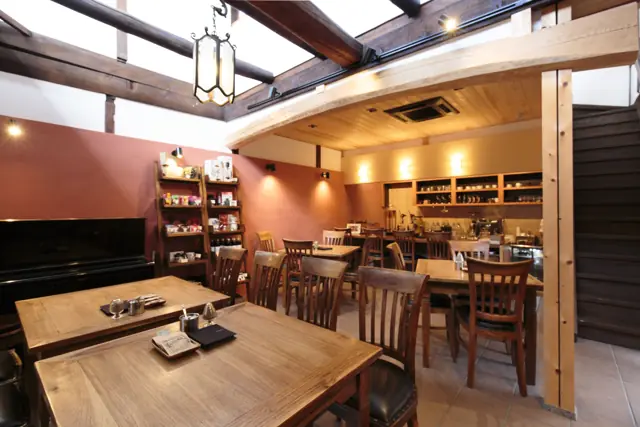
Photo: the shop’s official page kobacoffee 倉敷川店
A coffee shop and roaster in Honmachi. Coffee brewed by paper drip, siphon or coffee press.
11:00–17:00 · Closed: Tuesdays (open on public holidays)checked Nov 2026
Why the editors chose itA local roaster letting you choose paper drip, siphon, or coffee press for your brew.
Achi
Coffee+Bar FIDELITY

Photo: the shop’s official page A coffee roaster by Kurashiki Station. Direct-flame roasted beans, ground to order for hand-drip coffee and espresso.
Tue–Sat 14:00–22:00 (L.O. 21:30) · Closed: Sundays & Mondays
Why the editors chose itRight by Kurashiki Station, serving direct-flame roasted beans ground to order for drip or espresso.
Achi
Tenryo Kurashiki Coffee
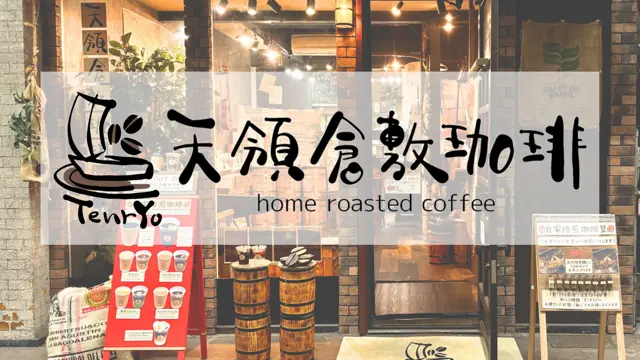
Photo: the shop’s official page 天領倉敷珈琲
A roast-to-order coffee bean shop in the station-front shopping arcade. Beans roasted to your preferred level in about ten minutes.
Tue–Wed, Fri–Sun 11:30–17:30 · Closed: Mondays & Thursdays
Why the editors chose itAt this station-arcade bean shop, coffee is roasted to your preferred level in about ten minutes.
Made in Kurashiki
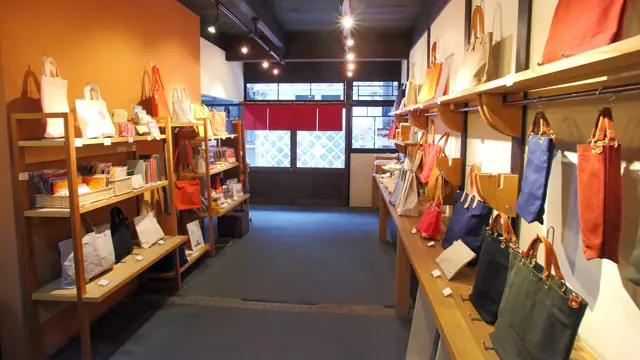
Cotton growing on reclaimed land led to weaving in the Kojima district. Thick cotton canvas and narrow woven tatami edging are still made here, and their makers sell bags and sewing materials in the old town.
Canvas bags displayed on shelves at Kurashiki Hanpu·Photo: Kurashiki Hampu, Bikan Shop (official site)
Honmachi
Kurashiki Hampu, Bikan Shop
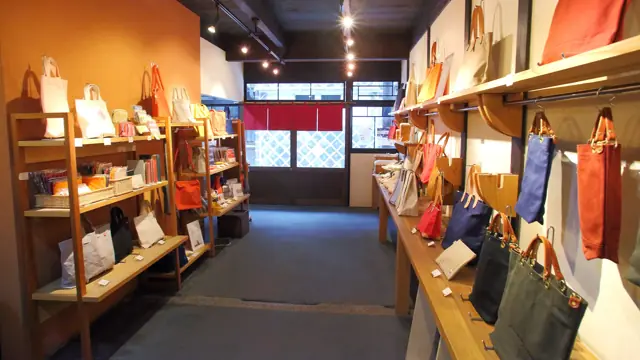
Photo: the shop’s official page 倉敷帆布 美観地区店
The Kurashiki Hampu shop in a restored old house in Honmachi. Canvas bags and small goods; fabric is not sold here.
10:00–17:30 · Closed: Year-end and New Year holidayschecked Nov 2026
Why the editors chose itA direct shop in a restored Honmachi old house dedicated to Kurashiki Hampu bags and goods.
Chuo
FLAT Kurashiki Bikan Shop
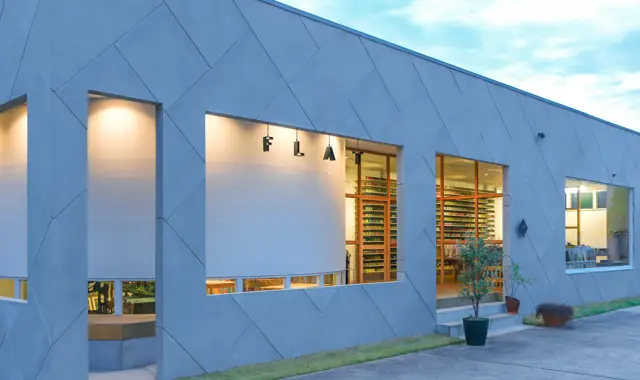
Photo: the shop’s official page FLAT 倉敷美観地区店
A shop run by tatami-edging weaver Takata Orimono. Woven edging for sewing, small goods made from it, and craft patterns.
10:00–17:00 · Closed: Year-end/New Year, irregular holidays (Wednesdays in Jan, Feb, Jun)
Why the editors chose itRun by tatami-edging weaver Takata Orimono, a place to pick up woven edging and craft patterns.
Achi
T.S.L Kurashiki
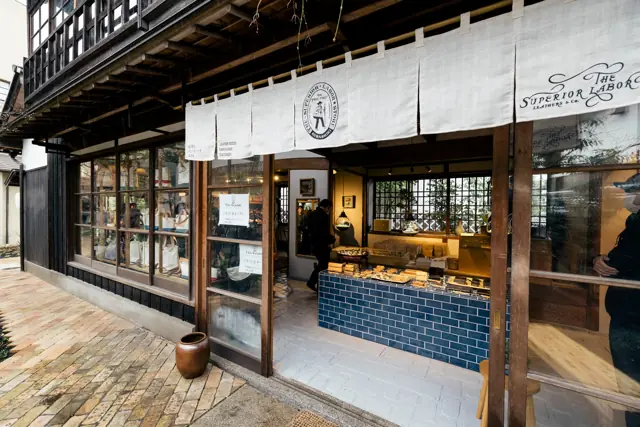
Photo: the shop’s official page The shop of THE SUPERIOR LABOR at Hayashi Genjuro Shoten. Bags and leather goods downstairs; TRAVELER’S notebooks and used records upstairs.
10:00–18:00 (may close at 17:00) · Closed: Mondays and Tuesdays (subject to change on holidays)
Why the editors chose itCome for bags and leather goods downstairs, then TRAVELER’S notebooks and used records upstairs.
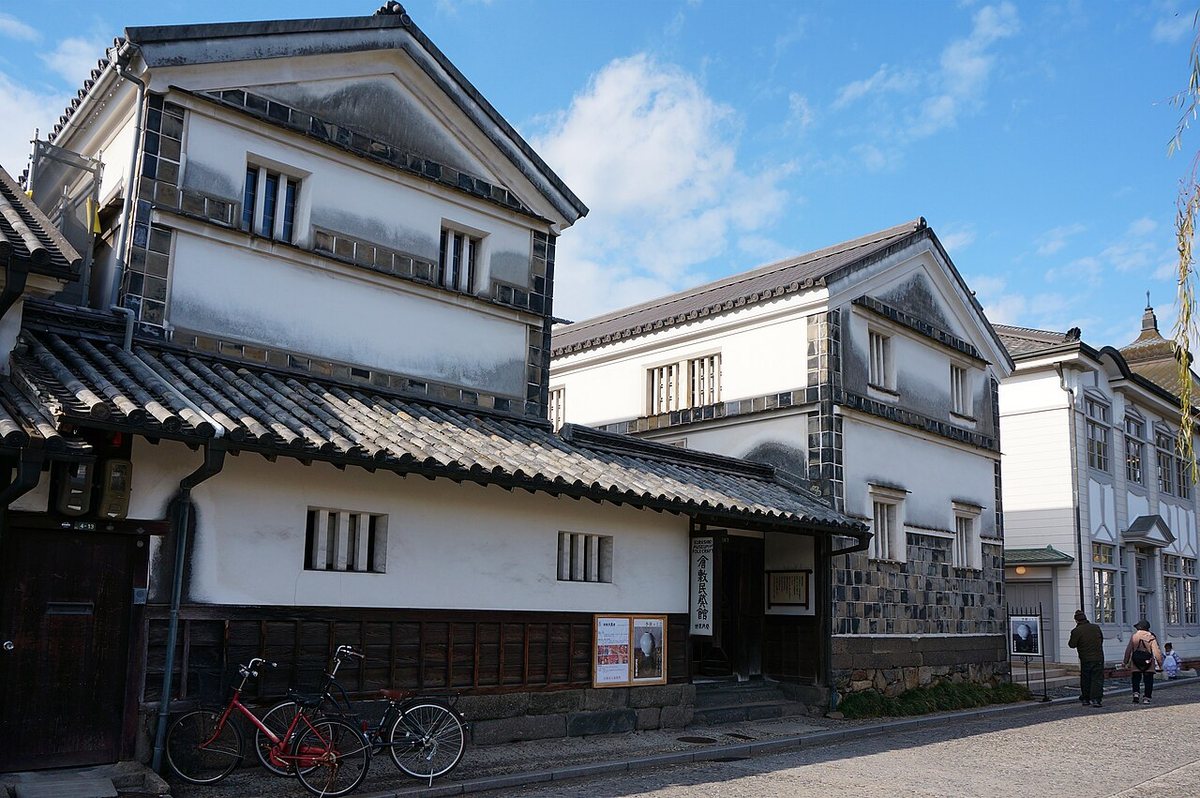
Made in Kurashiki
The Kurashiki Museum of Folk Crafts opened in 1948 in former rice storehouses, with textile researcher Kichinosuke Tonomura as its first director. Shops in the town carry everyday pottery and the blown Kurashiki glass of Shinzo and Eiji Kotani.
Historic white-walled granary buildings of the Kurashiki Museum of Folkcraft·Photo: 663highland / CC BY-SA 4.0 (Wikimedia Commons)
Achi
Toworu Mingei
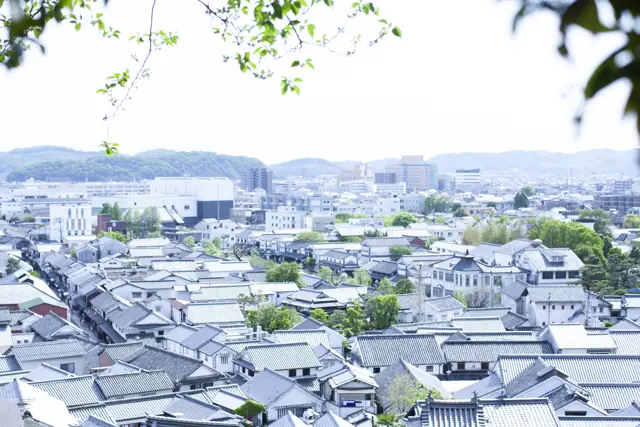
Photo: the shop’s official page 融民藝店
A folk-craft shop in the Bikan quarter, here since 1971.
Why the editors chose itA long-standing choice for folk craft in the Bikan quarter, operating here since 1971.
Chuo
Japan Rural Toy Museum
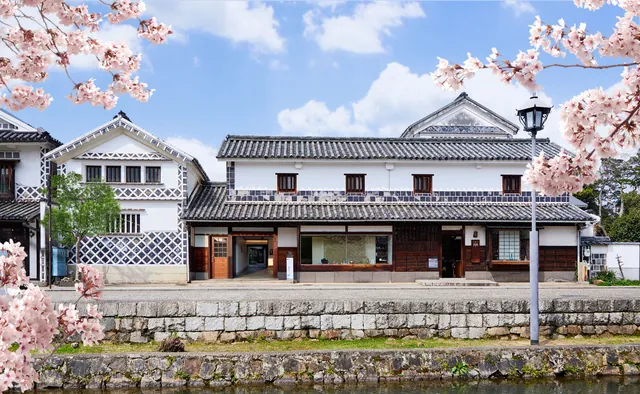
Photo: the shop’s official page 日本郷土玩具館
A folk-toy museum in former rice storehouses along the Kurashiki River. Toy shops, a gallery and the Side Terrace shop for Kurashiki glass and everyday tableware share the grounds.
10:00–17:00 (museum last entry 16:40) · Closed: Dec 30–Jan 1, Wednesdays in off-season (Jan, Feb, Jun), and irregular holidays
Why the editors chose itVisit former rice storehouses along the Kurashiki River for folk toys, Kurashiki glass, and tableware.
Chuo
toutou
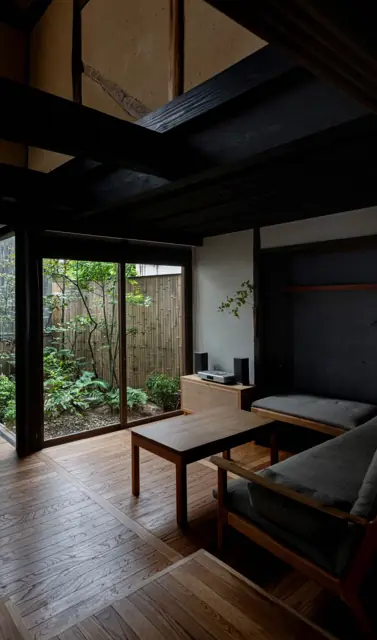
Photo: the shop’s official page 滔々 toutou
A gallery for crafts by contemporary makers. Its separate shop south of the folk-craft museum sells everyday vessels, Kurashiki temari balls and baskets.
Daily 12:00–17:00 · Closed: None (open daily)
Why the editors chose itPair contemporary craft at the gallery with everyday vessels, Kurashiki temari, and baskets at its sister shop.
Chuo
Koubou Ikuko
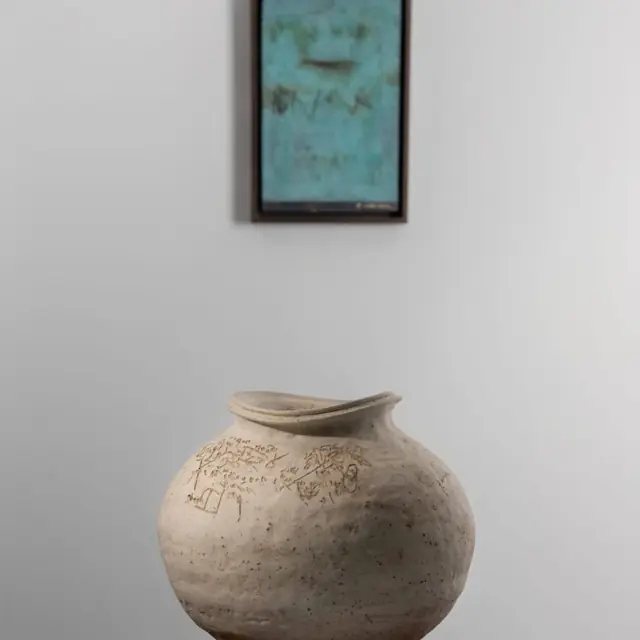
Photo: the shop’s official page 工房イクコ
A gallery for studio ceramics, glass and wooden vessels, with solo shows and a regular display. Closed Mondays and also Tuesdays in weeks without an exhibition.
10:00–18:00 · Closed: Mondays (open on public holidays)checked Nov 2026
Why the editors chose itA gallery to browse studio ceramics, glass, and wooden vessels across both solo shows and regular displays.
Achi
atiburanti
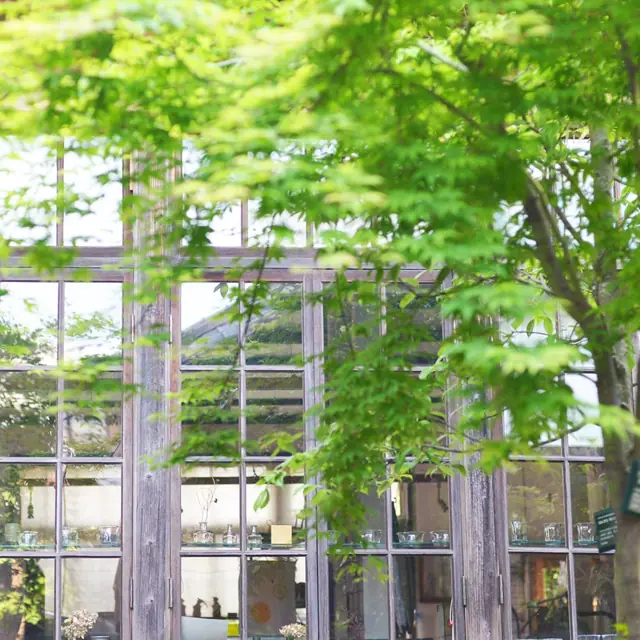
Photo: the shop’s official page アチブランチ
A shop for everyday goods on the ground floor of the 1934 Hayashi Genjuro Shoten building. A partner shop of Kurashiki Isho Keikakushitsu, with exhibitions of makers’ work.
10:00–18:00 (Dec–Feb weekdays 10:00–17:00) · Closed: Mondays (next Tuesday if a public holiday)
Why the editors chose itInside the 1934 Hayashi Genjuro Shoten building, browse Kurashiki Isho everyday goods and maker exhibitions.
Achi
Café & Ceramics Utsuwa Shiki
Café&Ceramics うつわ四季
A ceramics shop with a café in Achi. Open from 8 a.m. Saturday to Wednesday, and 10:30 a.m. on Thursdays and Fridays; some Thursdays closed.
Why the editors chose itOpen from 8 am Saturday to Wednesday, a ceramics shop with a café for an early start.
Sights in Kurashiki
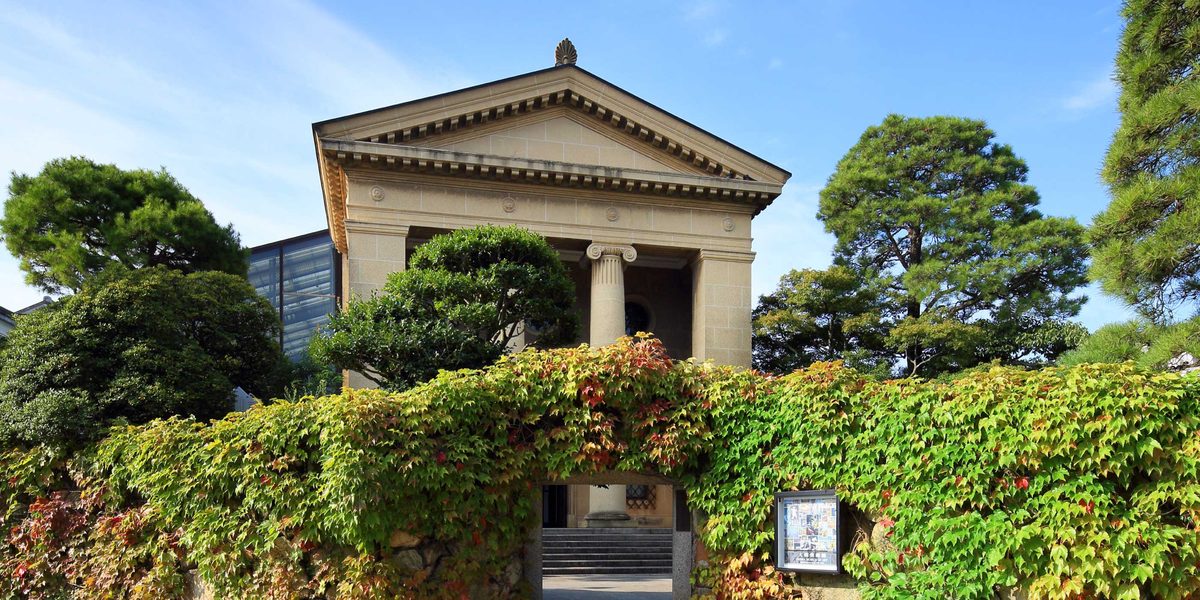
Photo: official site Founded in 1930 by Ohara Magosaburo in memory of the painter Kojima Torajiro.
The Annex is closed for an extended period.
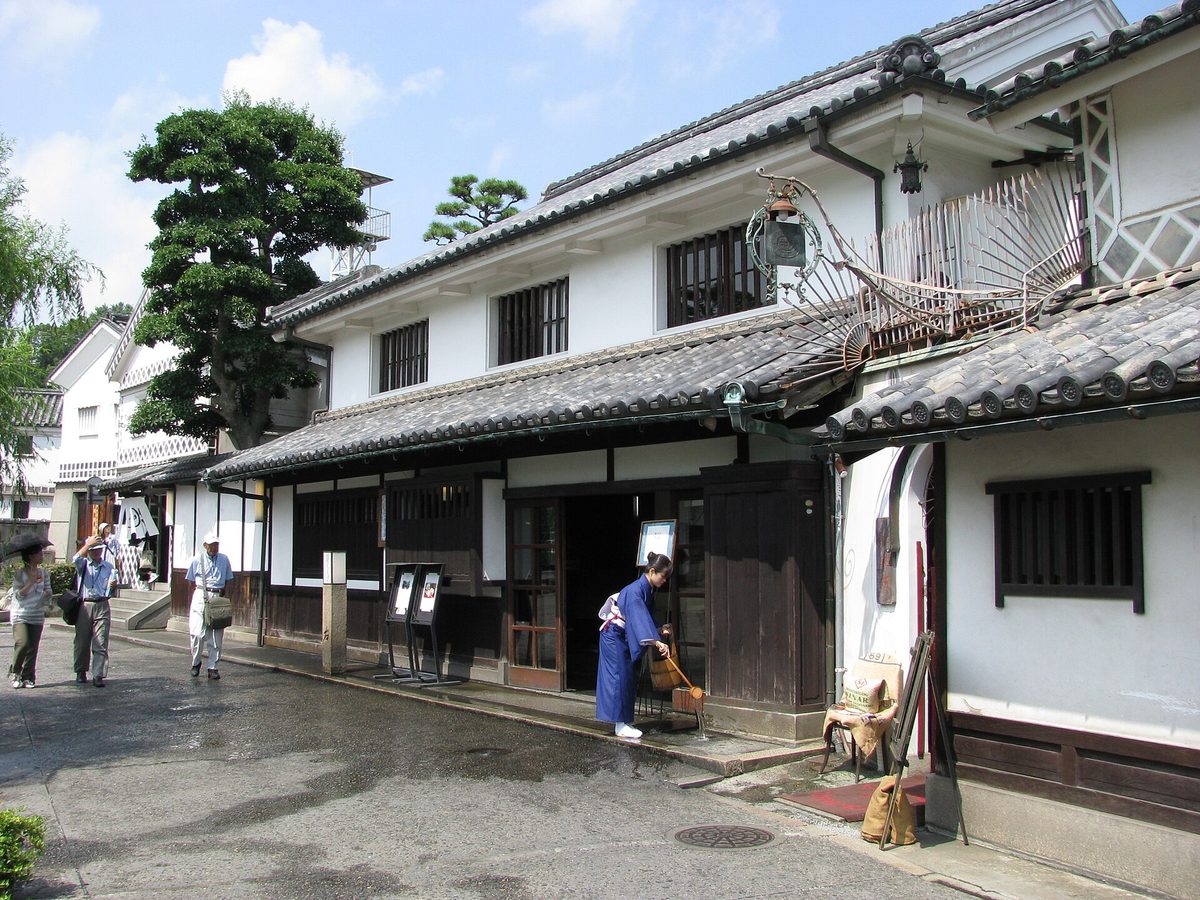
Photo: Aimaimyi / CC BY-SA 3.0 (Wikimedia Commons) Kurashiki Museum of Folk Crafts
A folk-craft museum opened in 1948 in late-Edo rice storehouses.
Closed for exhibition changes on 8–10 December 2026, and for the regular Monday closure on 7 December. Open 10:00–17:00, last admission 16:30.
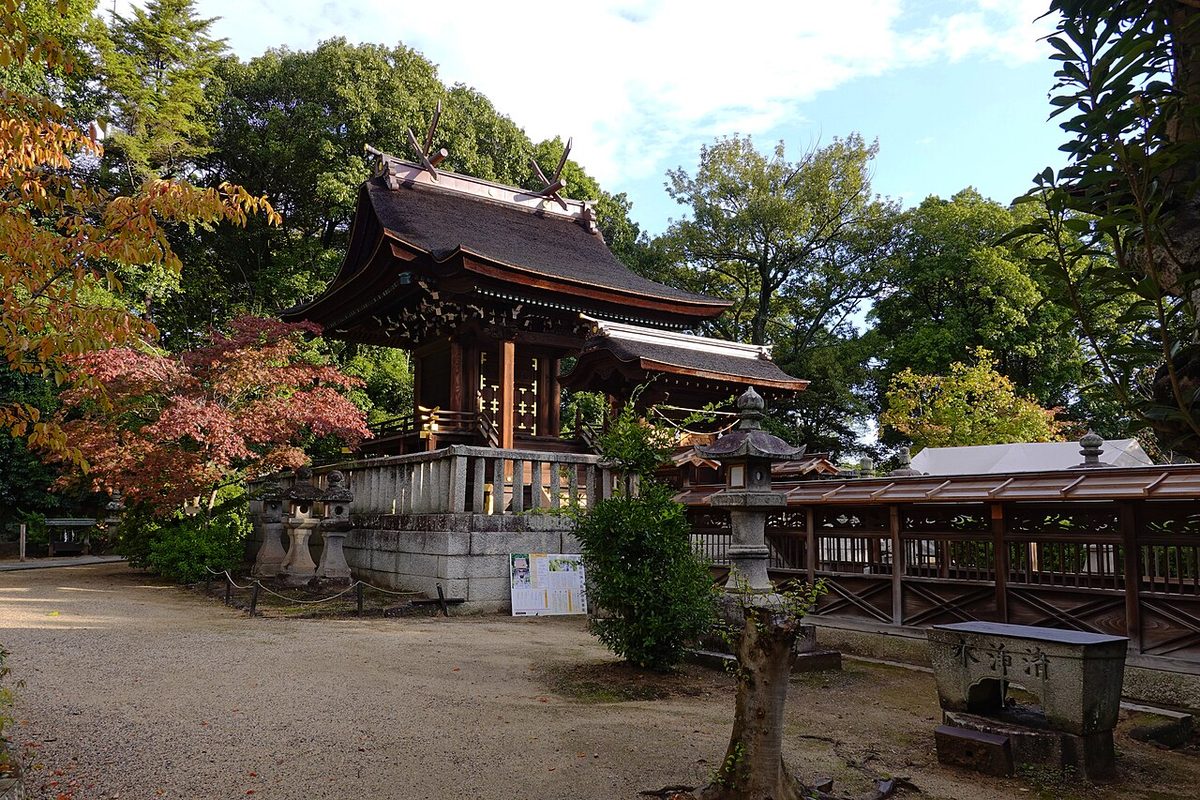
Photo: 663highland / CC BY-SA 4.0 (Wikimedia Commons) The guardian shrine of the Bikan quarter, dedicated to the three Munakata goddesses.
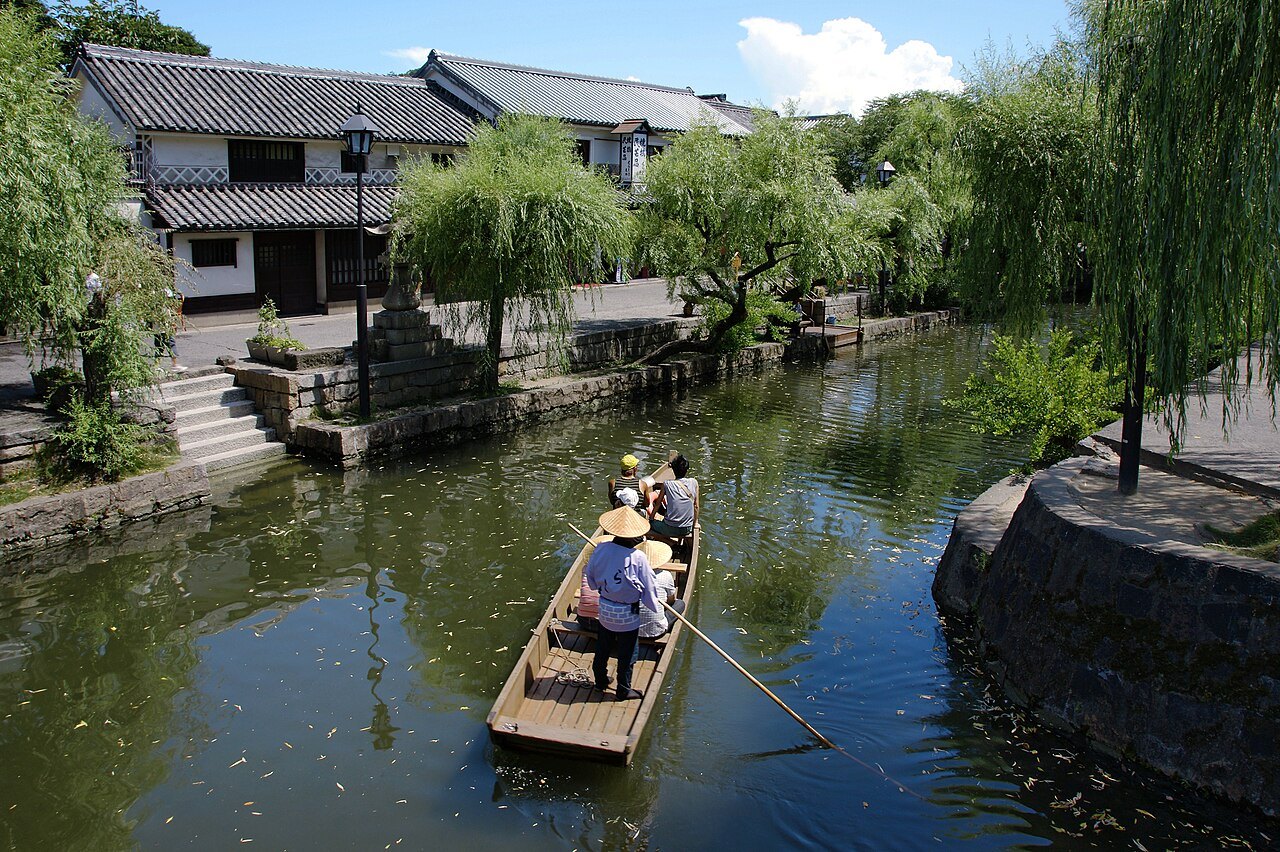
Photo: 663highland / CC BY-SA 4.0 (Wikimedia Commons) Kurashiki Bikan Historical Quarter
In this area of Okayama, traditional white-walled merchant houses and storehouses from the Edo period line the canal, perfect for strolling through history.
These are local landmarks. Each was checked to be open on its official site (checked 2026-11-17). Please confirm hours before you go.
Beyond Kurashiki
1 / 5
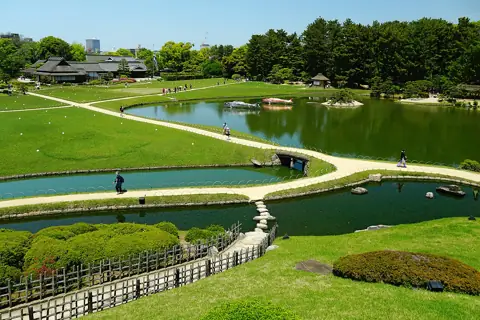 Okayama · 17 km
Okayama Korakuen Garden →
Okayama Korakuen Garden is one of the leading daimyo gardens representing the Edo period.
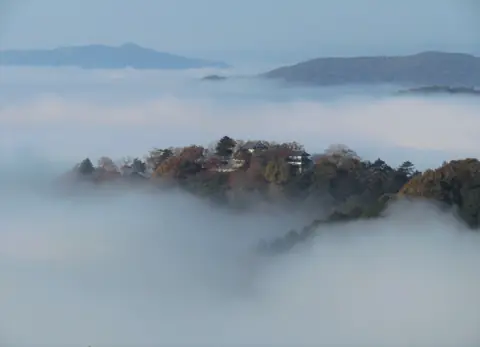 Takahashi · 25 km
Bitchu-Matsuyama Castle Unkai Observatory →
An opposite-ridge observatory facing Bitchu-Matsuyama Castle, where autumn and winter dawn mist turns the hilltop keep into a 'castle in the sky.'
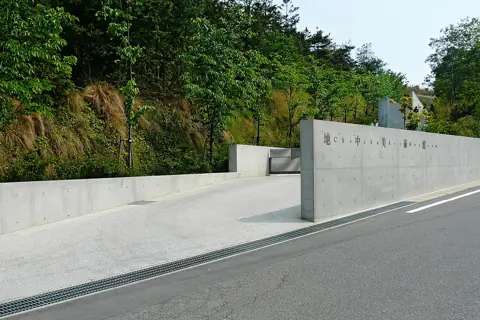 Naoshima · 26 km
Chichu Art Museum →
An art museum designed by Tadao Ando, with most of the structure built underground to harmonize with the nature of the Seto Inland Sea.
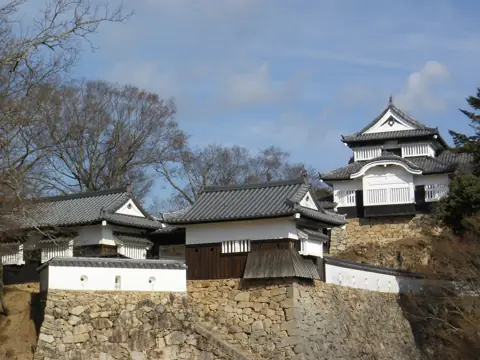 Takahashi · 27 km
Bitchu Matsuyama Castle →
The only remaining mountain castle in Japan.
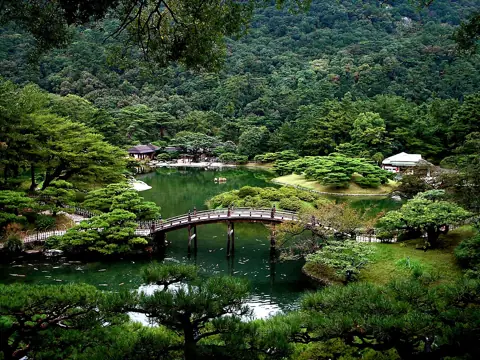 Takamatsu · 39 km
Ritsurin Garden →
A daimyo garden designated as a special place of scenic beauty, originally built as a villa for the Matsudaira lords of Takamatsu.


Distances are straight-line from the town centre. Each page has how to get there and a suggested day.
Questions people ask
- Where can I see or buy Kurashiki canvas and woven textiles, Kurashiki mingei and handblown glass, Craft in Kurashiki?
Kurashiki canvas and woven textiles: Kurashiki Hampu, Bikan Shop (Honmachi), FLAT Kurashiki Bikan Shop (Chuo), T.S.L Kurashiki (Achi)
Kurashiki mingei and handblown glass: Toworu Mingei (Achi), Japan Rural Toy Museum (Chuo)
Craft: toutou (Chuo), Koubou Ikuko (Chuo), atiburanti (Achi), Café & Ceramics Utsuwa Shiki (Achi)
- What can I visit on foot around Achi?
Kurashiki canvas and woven textiles: T.S.L Kurashiki
Kurashiki mingei and handblown glass: Toworu Mingei
Craft: atiburanti, Café & Ceramics Utsuwa Shiki
Cafés: Coffee+Bar FIDELITY, Tenryo Kurashiki Coffee
Every place was checked to be open in November 2026. Hours can change, so please check the official site before you go.
If you like Kurashiki
- Kamakura
Kanagawa, Japan
For example, Koubou Ikuko here, and Natsutsubaki in Kamakura.
- Kiryu
Gunma, Japan
For example, atiburanti here, and shop & gallery Katachi in Kiryu.
- Miyakojima
Okinawa, Japan
For example, Koubou Ikuko here, and Ryukyu Zakka Aosora in Miyakojima.
Chosen by how close the towns and their places are in what they make and serve.