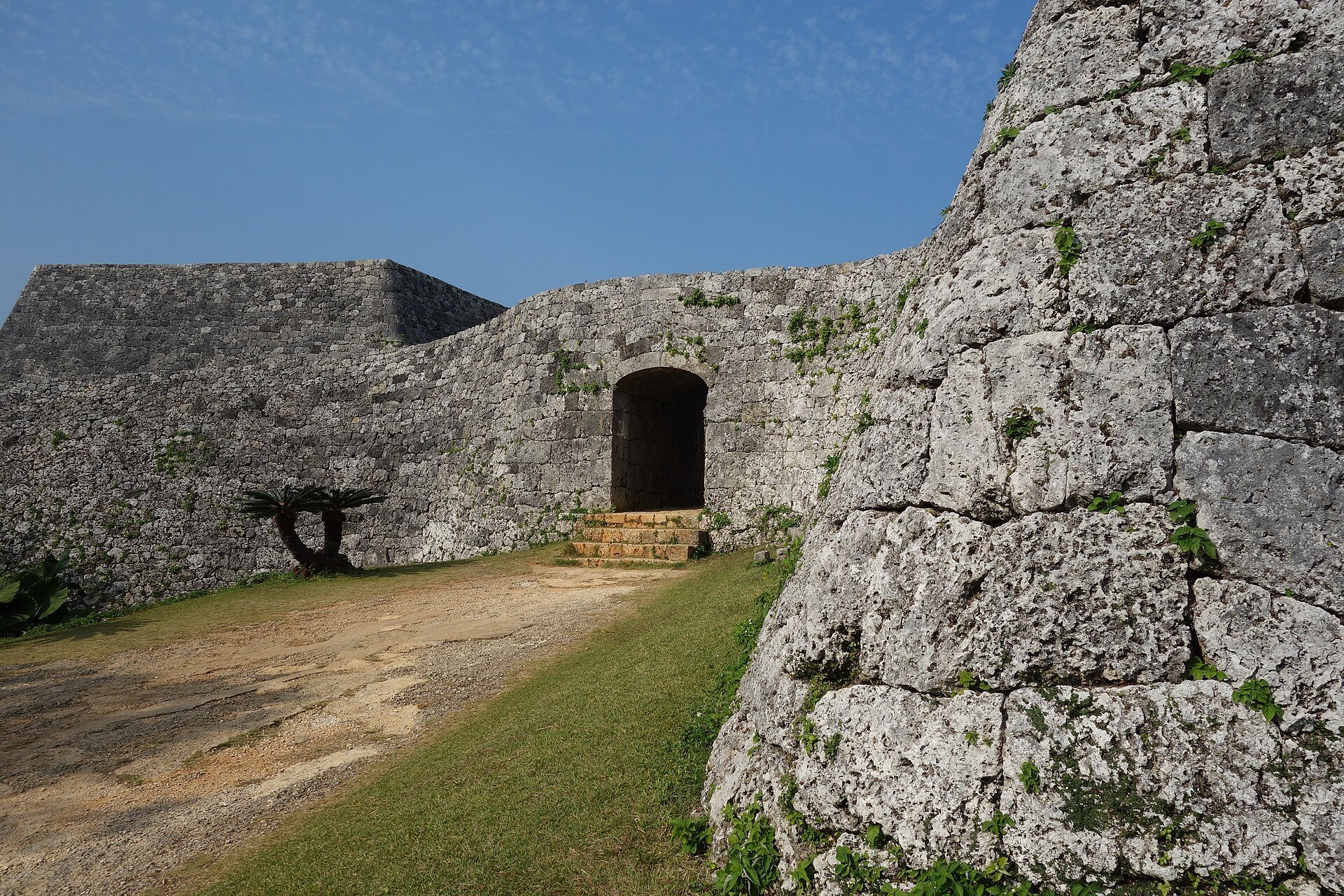
26.4° N
Yomitan
Okinawa, Japan
A village on a peninsula in central Okinawa, facing the East China Sea, where the heat eases in autumn. Potters' climbing kilns at Yachimun no Sato, Ryukyu glass and Hanaui weaving, alongside Okinawa soba, bread and coffee from Zakimi to Toya port, as the editors’ picks.
Yomitan, on film
5 sights and 16 places, each checked open in 2026, in 42 seconds.
Found somewhere you like? The map and the list below have the address, hours and official site.
Tap for sound
What to eat in Yomitan
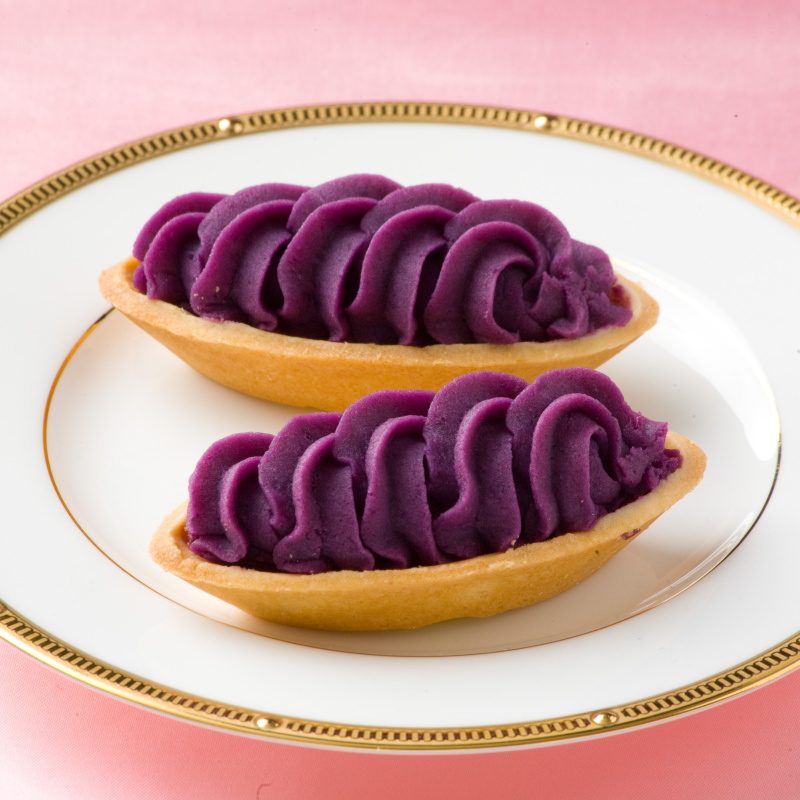
Photo: Okashigoten (御菓子御殿) (official site) Beni-imo tart (purple sweet potato tart)
紅いもタルト
A boat-shaped pastry tart piped with smooth paste made from purple beni-imo sweet potatoes grown in Okinawa. It was created in Yomitan in 1986 as part of a village revitalization effort using the town's signature crop and is baked on site at the originator's flagship.
Eaten freshly baked straight from the factory line at the shop's café corner or bought individually and in boxes.
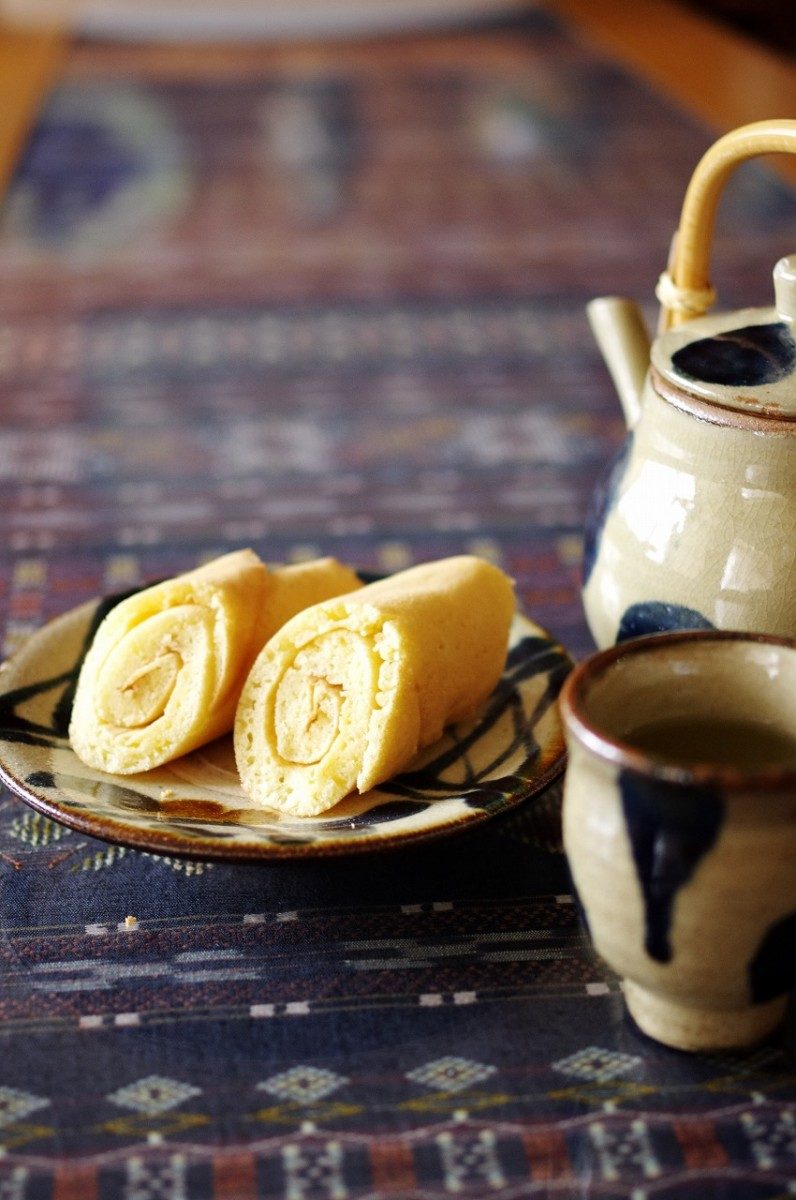
Photo: Yomitan Village Tourism Association (読谷村観光協会) (official site) Sobe popo (Okinawan brown-sugar rolled pancake)
楚辺ポーポー
A thick, spongy rolled pancake made from flour and Okinawan brown sugar, specific to Yomitan's Sobe district. Unlike standard Okinawan popo filled with sweet miso paste, Sobe popo omits the filling and was traditionally prepared at home for the lunar fourth-month Abushibare festival.
Sold rolled and wrapped at market stalls and specialty counters to eat at room temperature as a daytime snack.
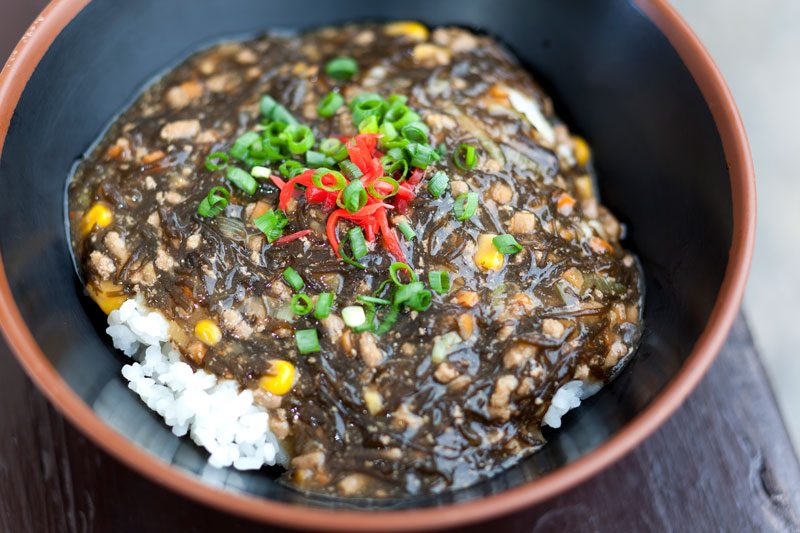
Photo: Yomitan Village Tourism Association (読谷村観光協会) (official site) Mozuku-don (simmered mozuku seaweed rice bowl)
もずく丼
A savory rice bowl topped with Okinawan mozuku seaweed cooked with minced pork and vegetables in a light thickened sauce. It was developed in Yomitan Village from a local school-lunch dish in collaboration with producer Okiham and is served at Toya Fishing Port.
Ordered at lunchtime at the fishing port canteen as a set with a small bowl of fish soup and vinegar-miso side dish.
Where to eat it
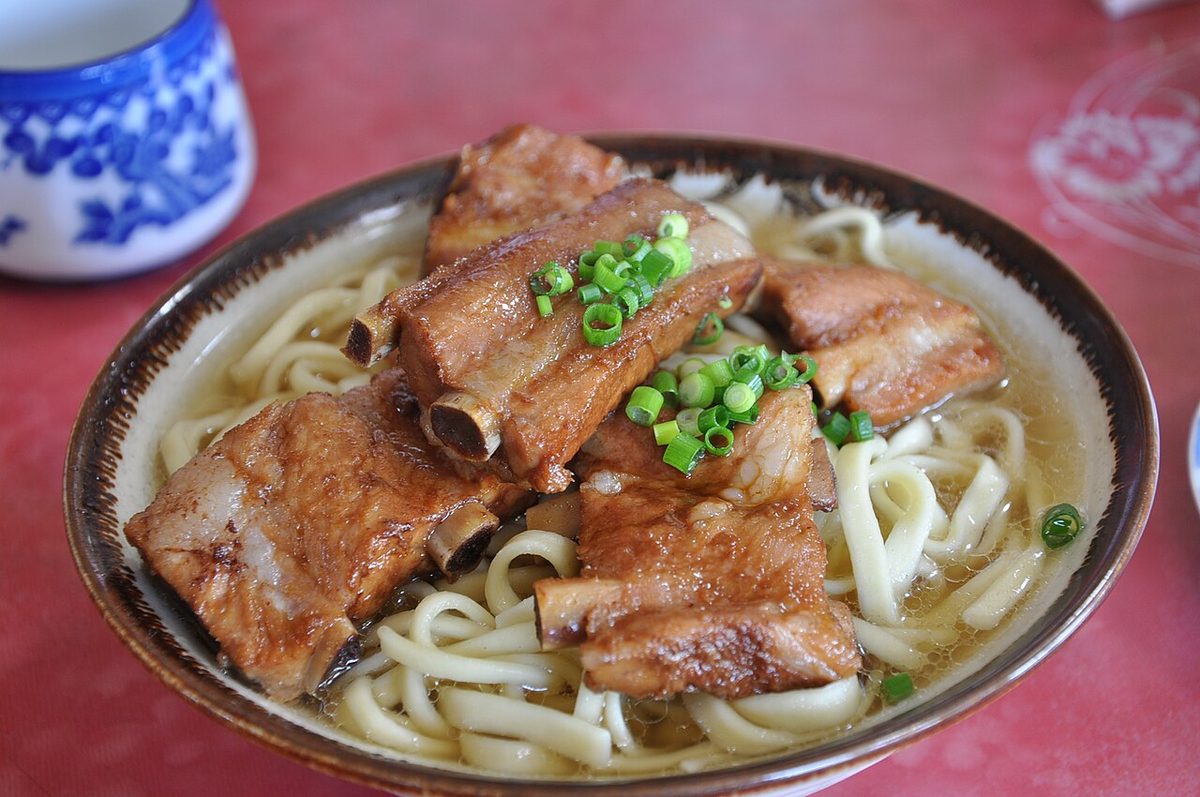
Photo: Banzai Hiroaki / CC BY 2.0 (Wikimedia Commons) Okinawa soba (wheat noodles in pork-bonito broth)
沖縄そば
Thick wheat noodles served in a clear pork-and-bonito broth topped with braised pork belly or spare ribs. Yomitan has many independent soba shops, from MSG-free bonito broths with raw aasa seaweed to homemade noodles kneaded with local beni-imo.
Ordered for lunch topped with pork belly or cartilage soki, often alongside jushi seasoned rice.
Where to eat it
The LATITUDE editors’ 16 picks in Yomitan
Our editors verified that these places were open (checked 2026-11-19). Check the official site for hours and closing days before visiting. Sponsored listings are marked.
Save places to your trip list and revisit them in this browser. No account needed.
Editors’ picks on the map — or build your own route
Tap a mark to see the place; squares are museums and sights (landmarks). Use “Build your own route” to make a walk of your own.
Loading the map
Map data © OpenStreetMap contributors
Browse by category
1 / 18
Zakimi
Zakimi Soba
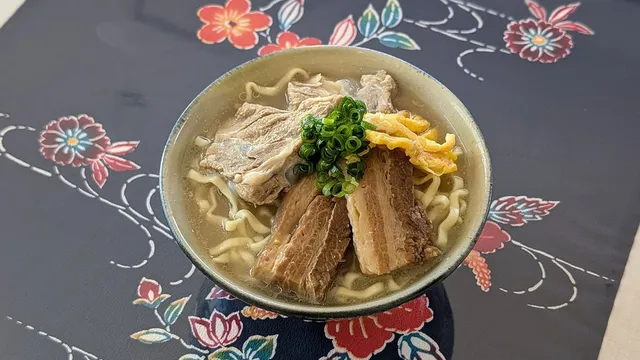
Photo: the shop’s official page 座喜味そば
An Okinawa soba shop in Zakimi serving Zakimi soba, sanmainiku and salt-simmered cartilage soba, along with jushi rice and zenzai. Open 11:00 to 16:00 until sold out; closed Thursdays and Fridays.
Sat–Wed 11:00–16:00 · Closed: Thursdays & Fridays
Why the editors chose itA Zakimi soba shop serving salt-simmered cartilage soba alongside jushi rice and zenzai.
Toya
Asian Shokudo Shirokuma
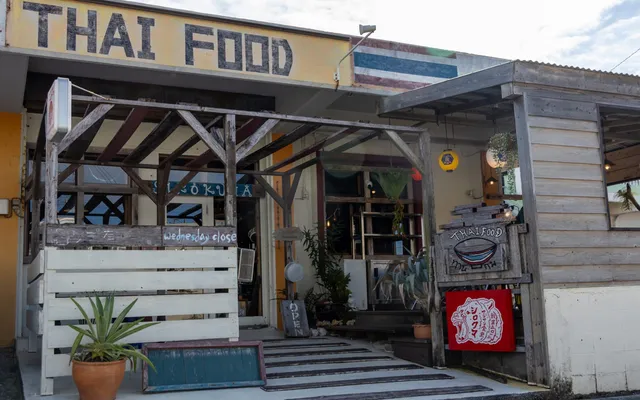
Photo: the shop’s official page アジアン食堂 シロクマ
A street-stall-style Thai diner in Toya serving dishes learned from a Thai chef with gentle heat, from tom yum kung and local coriander salad to pad thai. Closed Wednesdays.
Mon–Tue, Thu 11:00–15:00, 17:00–21:00; Fri–Sun 11:00–15:00, 17:00–22:00 · Closed: Wednesdays
Why the editors chose itServes Thai street-stall dishes learned from a Thai chef with gentle heat and local coriander.
Toya
Uminchu Shokudo
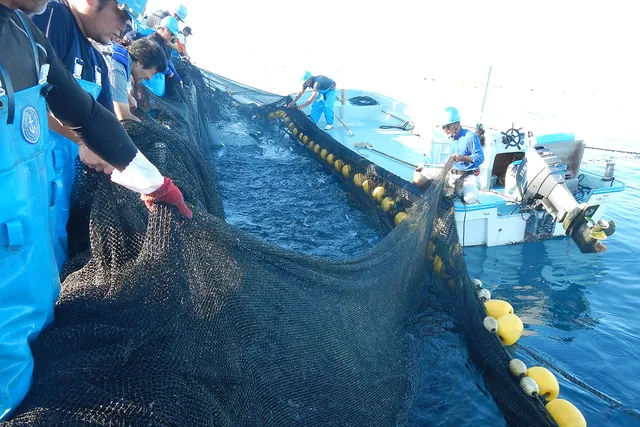
Photo: the shop’s official page 海人食堂(読谷村漁業協同組合)
The Yomitan Fishery Cooperative's canteen on the second floor of the seafood hall at Toya Fishing Port, serving uminchu seafood bowls, mozuku bowls, fish soup and fresh-fried tempura. Hours are posted on Instagram.
Why the editors chose itThe Toya Fishing Port co-op canteen serving uminchu bowls, mozuku bowls, and fresh-fried tempura.
Kina
Mainichi Shokudo
まいにち食堂
A small Okinawa soba shop in a quiet part of Kina, making MSG-free bonito-broth soba with raw aasa seaweed, cured pork and jushi rice. Open 11:30 to 15:00 until sold out; closed Sundays, Mondays and Thursdays.
Why the editors chose itMakes MSG-free bonito-broth soba topped with raw aasa seaweed and cured pork in quiet Kina.
Kina
Yubanta Coffee
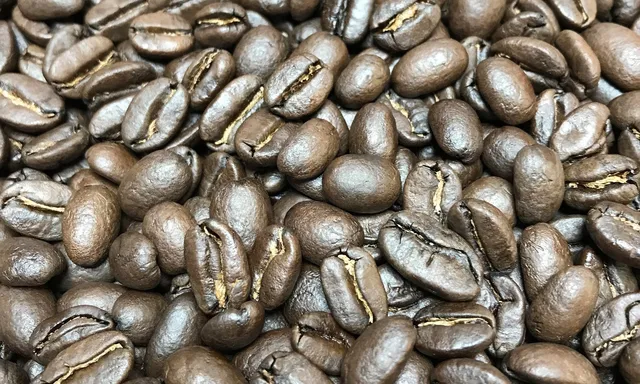
Photo: the shop’s official page 焙煎工房 ゆうばんた珈琲
A stand-style house-roasted coffee shop on the ground floor of the Yomitan Regional Promotion Center in Kina, brewing beans from its nearby Kina roastery and carrying Okinawa-grown coffee. Open 12:00 to 17:30; closed Tuesdays.
Wed–Mon 12:00–17:30 · Closed: Tuesdays
Why the editors chose itA stand-style coffee shop pouring nearby Kina-roasted beans alongside Okinawa-grown coffee.
Zakimi
CLAY Coffee & Gallery
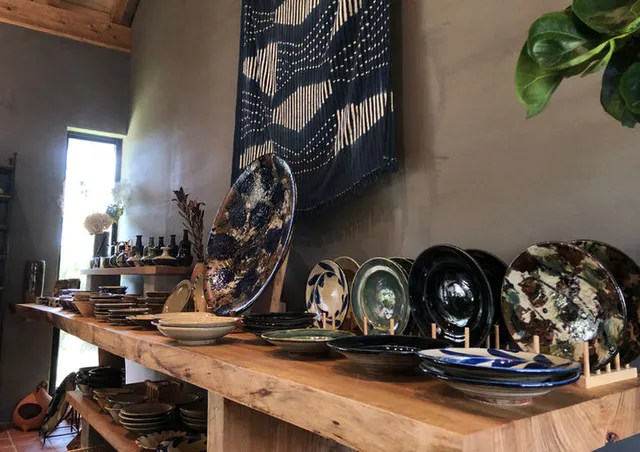
Photo: the shop’s official page A café and gallery at Kitagama in Yachimun no Sato, produced by potter Kyoji Matsuda. In a tiled-roof building, it serves house-roasted coffee and light meals on his vessels alongside pieces for sale. Closed Thursdays and Sundays.
Mon–Wed, Fri 11:00–17:00, Sat 9:00–16:00 · Closed: Thursdays & Sundays
Why the editors chose itServes coffee on potter Kyoji Matsuda's own vessels inside a tiled-roof Kitagama gallery.
Kina
Two Dots Cafe
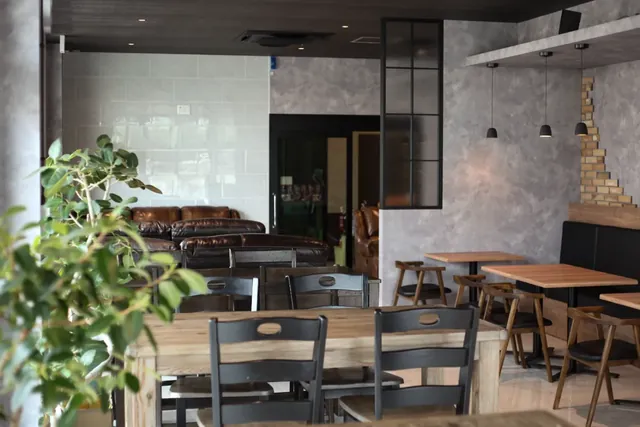
Photo: the shop’s official page A café on the ground floor of a hotel along Route 58 in Kina. Open from 7:30 to 18:00, serving brown-sugar lattes, French toast and taco rice.
Why the editors chose itOpen from 7:30 am along Route 58 for early-morning brown-sugar lattes and French toast.
Zakimi
Bakery Suien
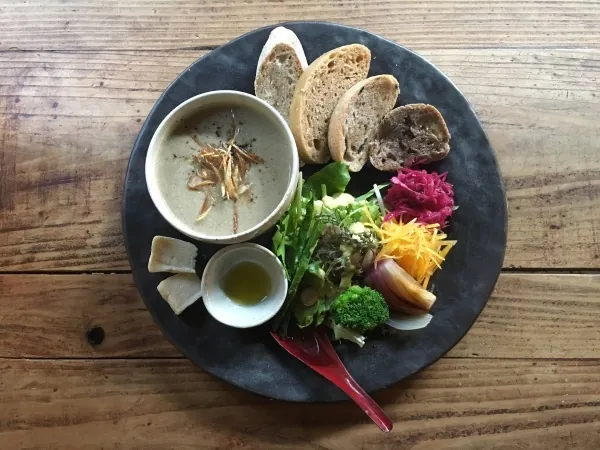
Photo: the shop’s official page パン屋 水円
A bakery in Zakimi making daily natural-yeast breads, baked sweets with seasonal fruit and drinks, as well as soup and sandwich lunches. Opening days are posted on Instagram.
Why the editors chose itBakes natural-yeast breads daily alongside seasonal fruit bakes and soup-and-sandwich lunches.
Zakimi
Tsurukamedo Zenzai
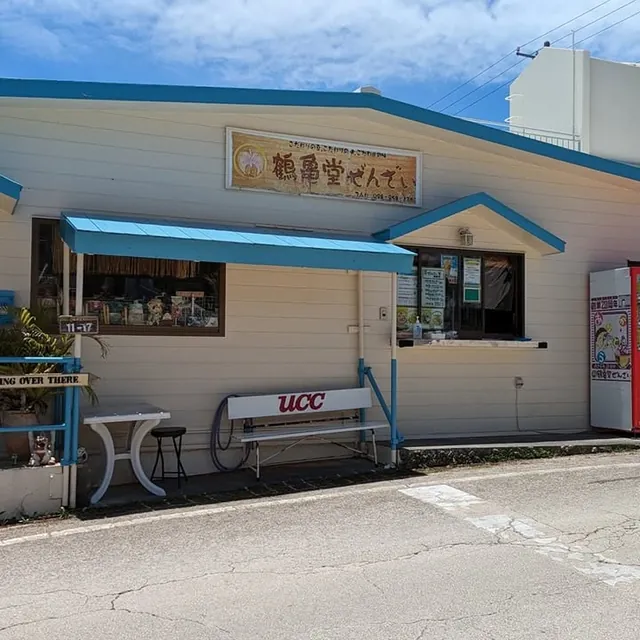
Photo: the shop’s official page 鶴亀堂ぜんざい
An Okinawan zenzai shop right outside the gate of Zakimi Castle Ruins, serving shaved ice over sweet cooked beans, including a beni-imo brown-sugar zenzai. Open 11:00 to 17:00 until sold out; closed Tuesdays and Wednesdays.
Why the editors chose itRight outside Zakimi Castle Ruins, serving shaved-ice zenzai made with local beni-imo and brown sugar.
Sobe
JoieJoie326
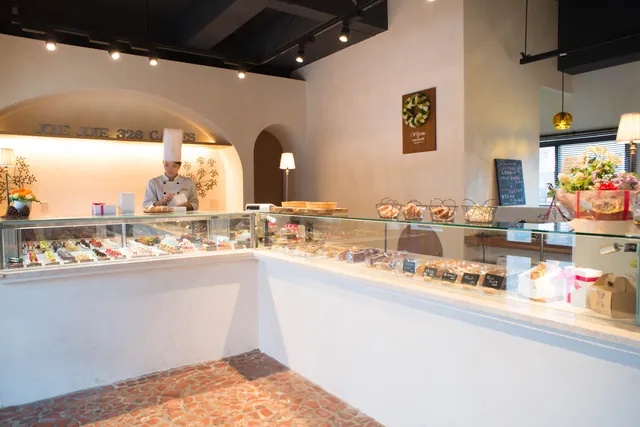
Photo: the shop’s official page A patisserie in Sobe making cakes, baked sweets and quiche with free-range Yomitan eggs, unrefined cane and Okinawan brown sugar, and organic local produce where possible. Open 11:00 to 19:00 (café until 18:00); closed Thursdays.
Fri–Wed 11:00–19:00 · Closed: Thursdays
Why the editors chose itMakes cakes, baked sweets, and quiche using free-range Yomitan eggs, local brown sugar, and organic produce.
Made in Yomitan
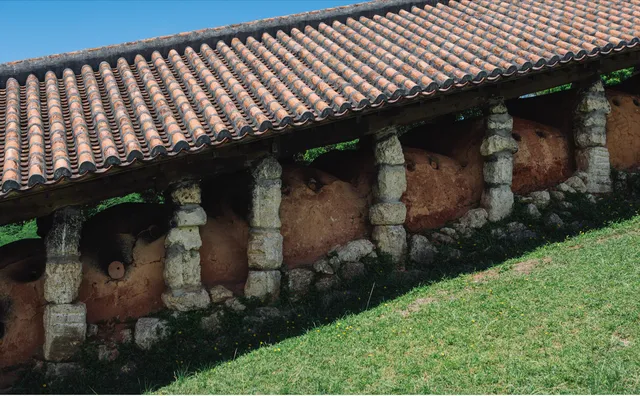
In the 1970s and 1980s, potters moved wood-fired climbing kilns from Naha's Tsuboya district to Yomitan, where residential growth had made firing hard in town. Around the shared climbing kiln built in 1980, Yachimun no Sato took shape, and today dozens of kilns work across the village.
Red-tiled wood-fired climbing kiln at Yamada Kobo in Yomitan·Photo: Yamada Kobo (official site)
Zakimi
Yomitanzan-yaki Kitagama Baiten
読谷山焼 北窯売店
The joint shop in Yachimun no Sato for the four Kitagama workshops—Masataka Miyagi, Masamori Yonahara, Yoneji Matsuda and Kyoji Matsuda—showing wood-fired vessels from the climbing kiln.
Why the editors chose itCompare wood-fired vessels from four distinct Kitagama climbing-kiln workshops in one joint shop.
Zakimi
Yamada Kobo
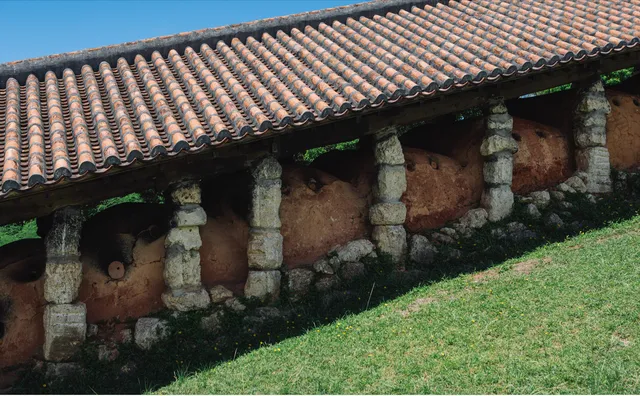
Photo: the shop’s official page 山田工房
The studio and gallery of potter Shinman Yamada in Yachimun no Sato, one of the founders of the Yomitanzan-gama climbing kiln in 1980. Open 10:00 to 17:00 (with a midday break); irregular holidays.
10:00–17:00 · Closed: Irregular holidays
Why the editors chose itBrowse vessels directly at the studio of Shinman Yamada, a 1980 Yomitanzan-gama founder.
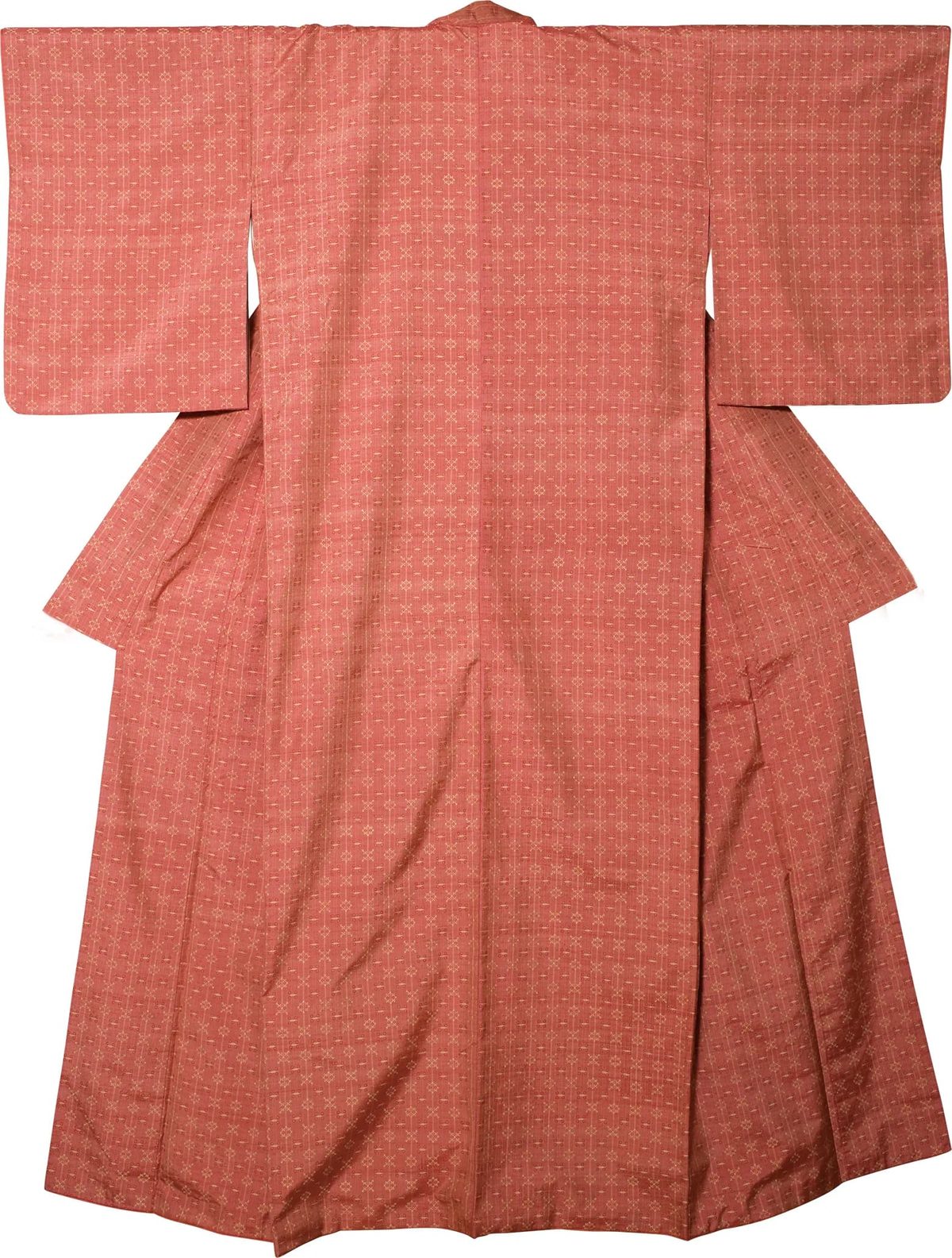
Made in Yomitan
Said to have come from the south in the 14th to 15th centuries, Yomitan Hanaui died out after the Meiji era and was revived in the 1960s through the efforts of local weavers. It is a nationally designated traditional craft woven only in Yomitan.
Hands weave a raised floral pattern into fabric on a wooden loom.·Photo: Okinawa Craft Industry Promotion Center (Okinawa Prefecture) (official site)
Zakimi
Yomitan Hanaui Cooperative
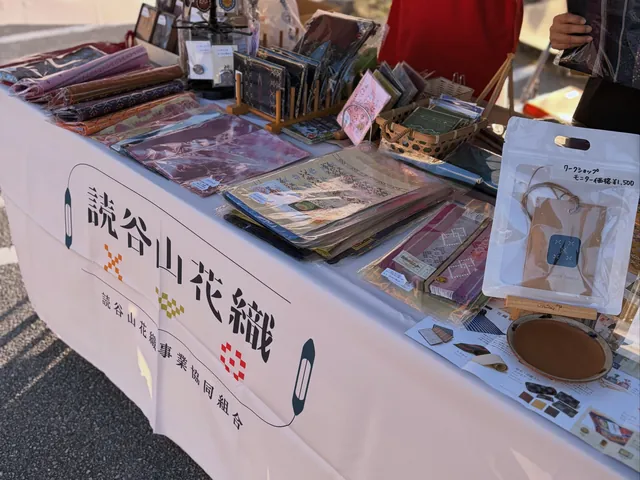
Photo: the shop’s official page 読谷山花織事業協同組合
The Yomitan Hanaui weavers' cooperative inside the Yomitan Traditional Crafts Center in Zakimi, exhibiting and selling hanaui and minsa textiles, small exclusive goods, and reservation-only coaster weaving. Open 8:30 to 17:00; closed Sundays.
Why the editors chose itPick up exclusive Yomitan hanaui and minsa textiles or reserve a coaster-weaving session.
Zakimi
Genka Genkichi Ryukyu Glass Studio
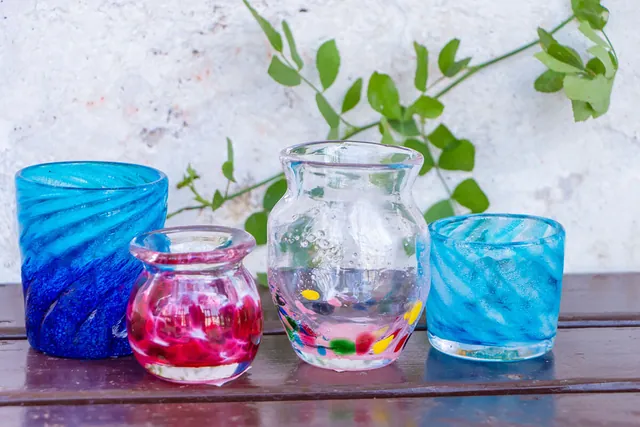
Photo: the shop’s official page 源河源吉琉球ガラス工房
A Ryukyu glass studio in Zakimi blowing ocean-themed glassware from a 1,400°C furnace for over fifty years, with a shop, an outlet corner and glassblowing sessions. Open 9:00 to 18:00; closed over New Year.
Daily 9:00–18:00 · Closed: Open daily (closed Year-End & New Year)
Why the editors chose itA 50-year Ryukyu glass studio offering direct sales, an outlet corner, and glassblowing sessions.
Takashiho
RYUKYU GLASS WORKS Umikaze
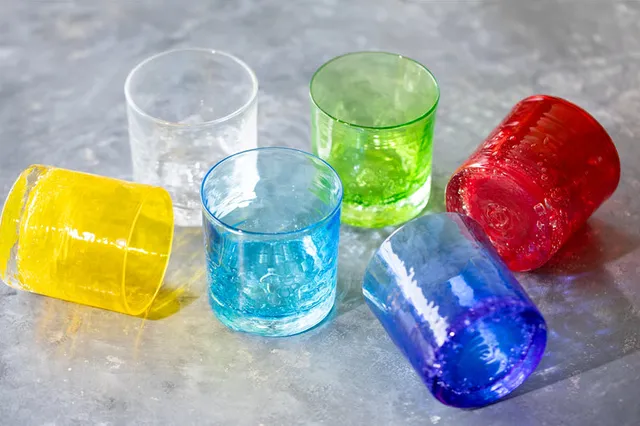
Photo: the shop’s official page RYUKYU GLASS WORKS 海風
A Ryukyu glass workshop and direct shop inside Gala Aoiumi in Takashiho, facing the East China Sea, making series such as Zanpa Sunset with extra rim-finishing work. Open 9:00 to 17:00 (irregular holidays); glassblowing sessions are closed Sundays.
9:00–17:00 · Closed: Irregular holidays
Why the editors chose itA seaside workshop finishing glass rims twice by hand and offering glassblowing sessions.
Yomitan
Nakama Tobo
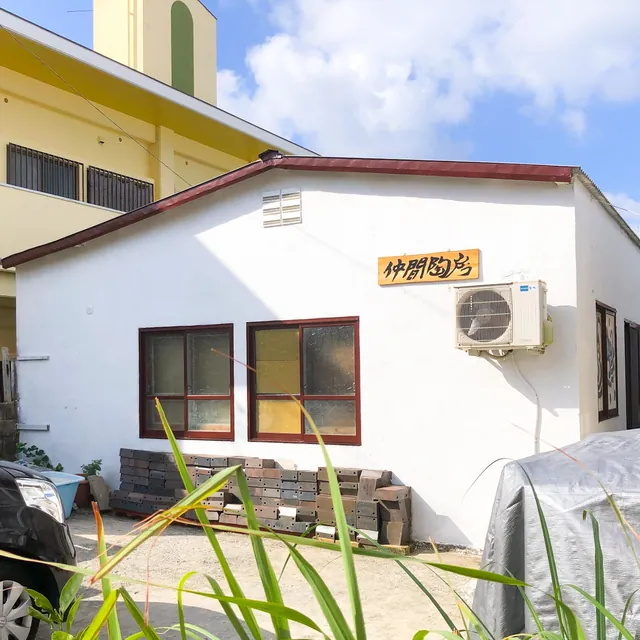
Photo: the shop’s official page 仲間陶房
A pottery studio in Nagahama, Yomitan, producing everyday vessels that blend traditional Yachimun techniques with a modern sensibility.
Why the editors chose itA Nagahama pottery studio blending traditional yachimun craft with modern everyday design.
Sights in Yomitan
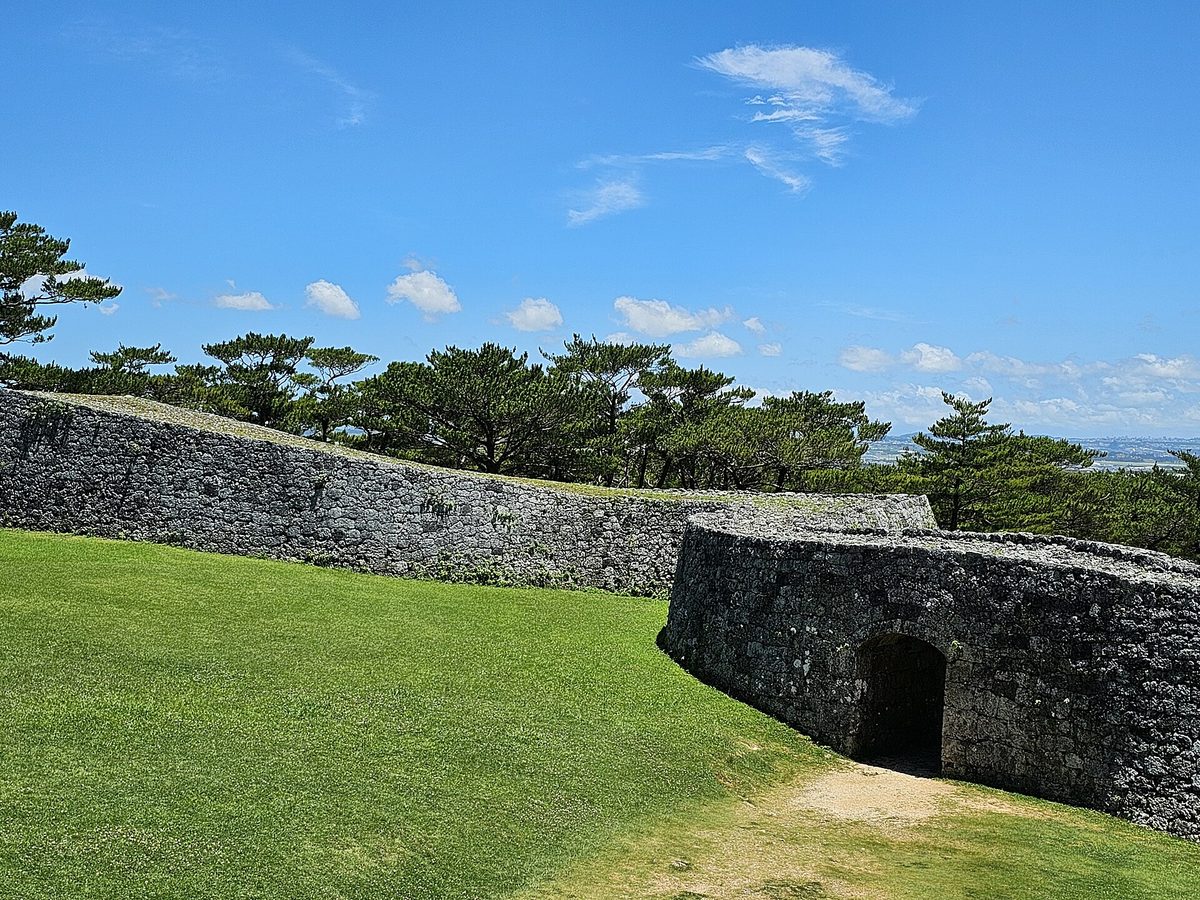
Photo: Renate Hano / CC BY-SA 4.0 (Wikimedia Commons) The ruins of a gusuku fortress built in the early fifteenth century by Gosamaru, known as a master castle builder.
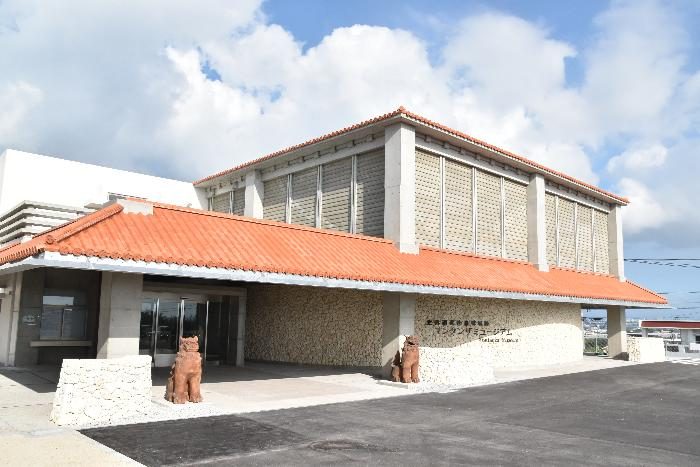
Photo: official site The village museum renewed in 2018 by uniting the former history and folk museum (opened 1975) and art museum.
Closed Wednesdays (or the next day if Wednesday is a holiday) and Dec 28–Jan 4. Open 9:00 to 18:00 (last entry 17:30).
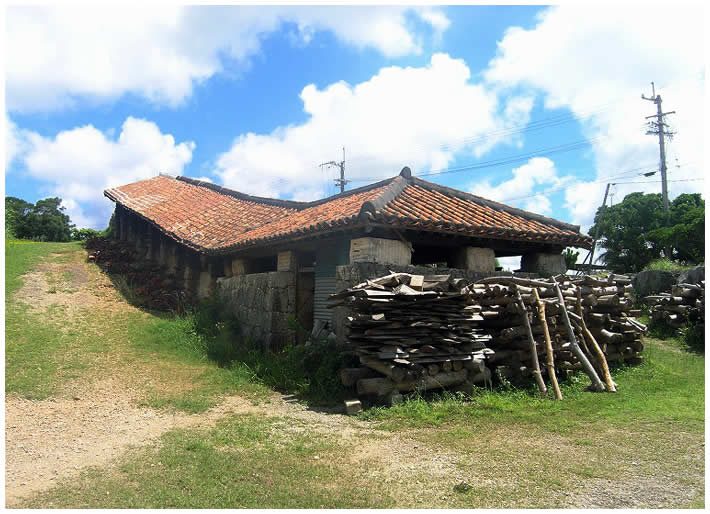
Photo: official site A pottery village that grew around the shared Yomitanzan-gama climbing kiln built by four potters in 1980.
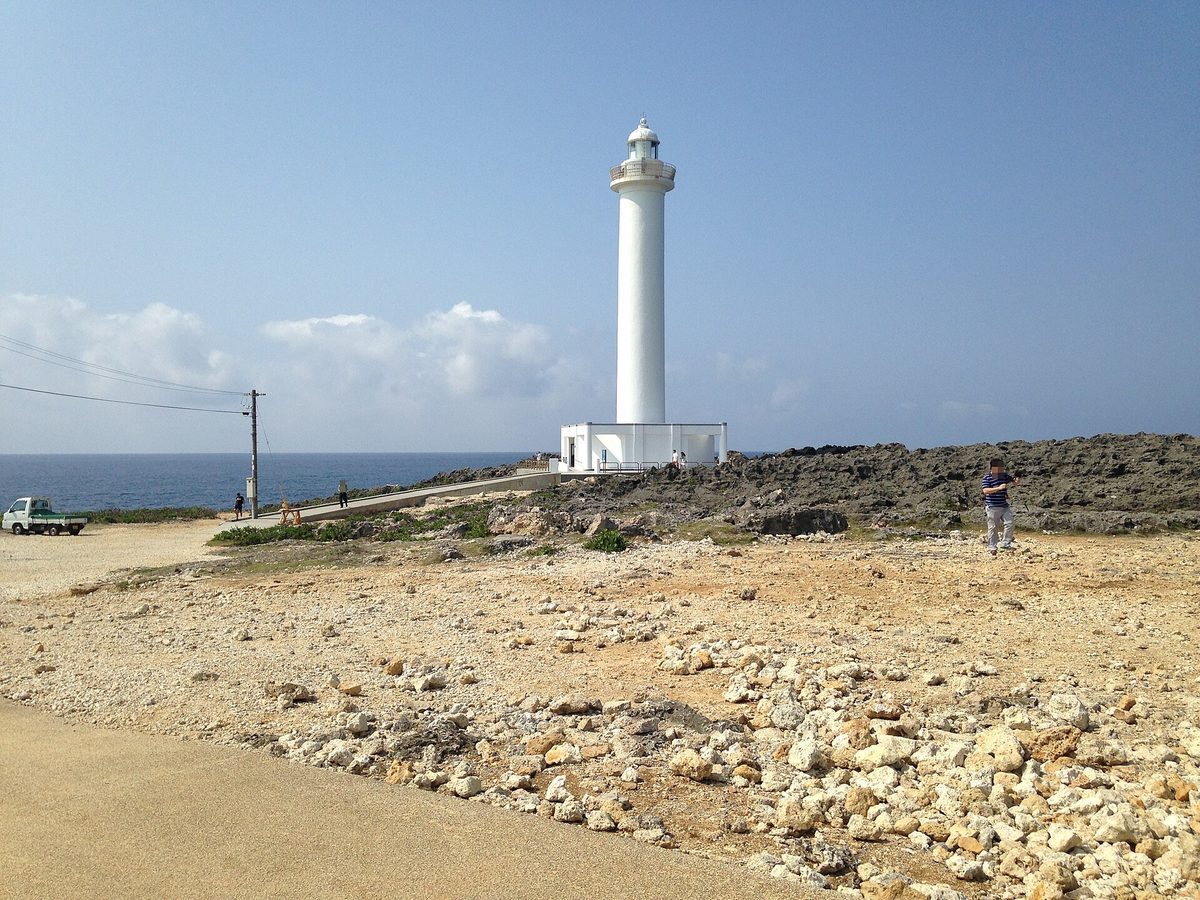
Photo: そらみみ (Soramimi) / CC BY-SA 4.0 (Wikimedia Commons) A white concrete lighthouse standing on Cape Zanpa, where 30–40 m raised coral cliffs stretch for about 2 km into the East China Sea.
Closed 12:00–13:00 for a midday break since March 1, 2026. Open 9:30–12:00, and 13:00–16:30 in the afternoon from October to February (last entry 20 minutes before closing).
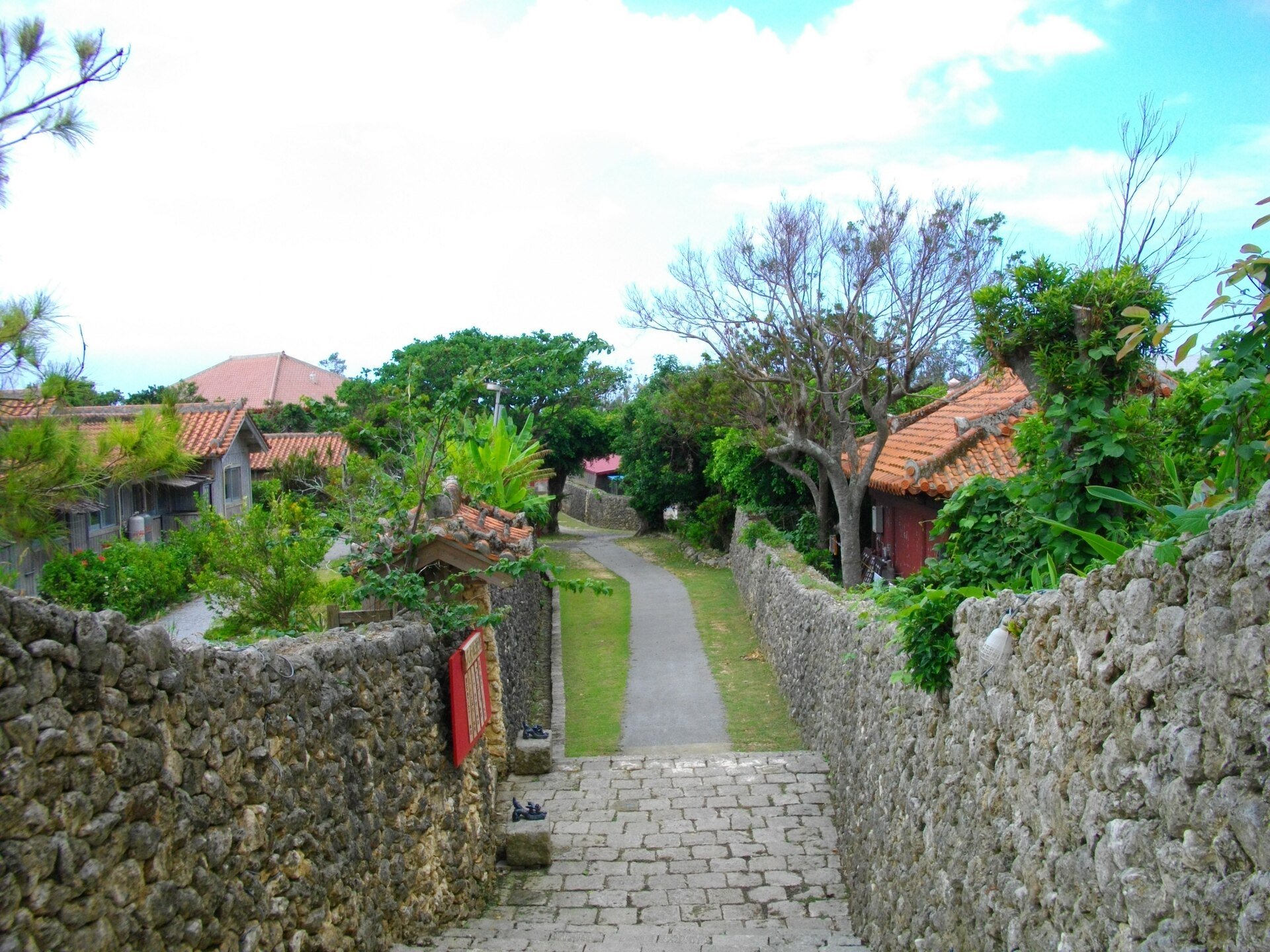
Photo: Abasaa / Public domain (Wikimedia Commons) A recreated 14th–15th century Ryukyu Kingdom village in Yomitan that hosts the Ryukyu Lantern Festival with over 3,000 glowing lanterns from December through March.
These are local landmarks. Each was checked to be open on its official site (checked 2026-11-14). Please confirm hours before you go.
Beyond Yomitan
1 / 13
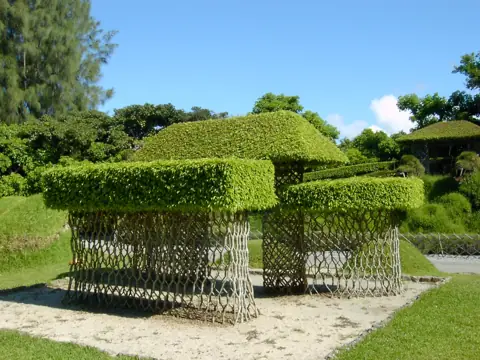 Uruma · 6 km
Bios Hill →
A subtropical forest and lake garden in Uruma featuring wild orchids, jungle-cruise lake boats, water buffalo carts, and giant wooden swings.
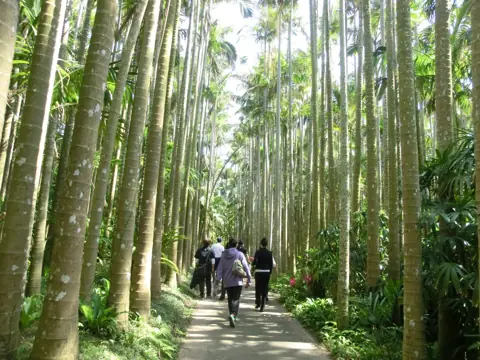 Okinawa City · 7 km
Southeast Botanical Gardens →
A 1,300-species subtropical botanical garden in Okinawa City that hosts an award-winning winter night illumination from late October through May.
- Okinawa City · 8 km
Okinawa Zento Eisa Festival →
Okinawa's largest traditional Eisa drum-dance festival held in Okinawa City on the first weekend after Obon, uniting youth troupes from across the island.
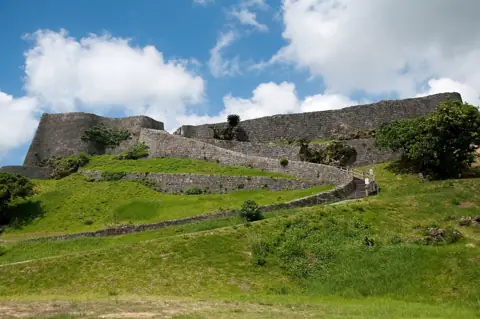 Uruma · 15 km
Katsuren Castle Ruins →
A 15th-century UNESCO World Heritage gusuku fortress in Uruma whose curving limestone walls command 360-degree views of the Pacific and Yokatsu Peninsula.
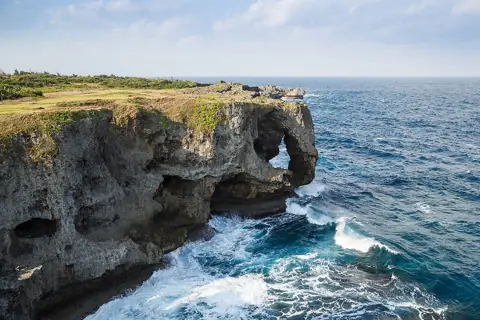 Onna · 16 km
Manzamo →
Famous for its stunning views from the cliff shaped like an elephant's trunk.
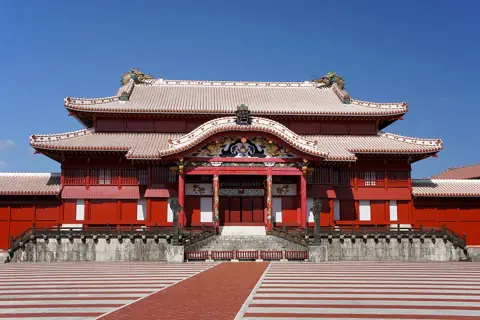 Naha · 20 km
Shurijo Castle →
A World Heritage site symbolising the history and culture of the Ryukyu Kingdom.
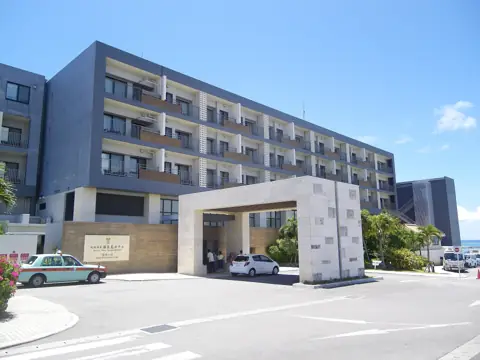 Tomigusuku · 26 km
Ryukyu Onsen Ryujin no Yu →
A natural hot spring facility on Senaga Island near Naha Airport with open-air ocean-view baths fed from 1,000 meters underground.
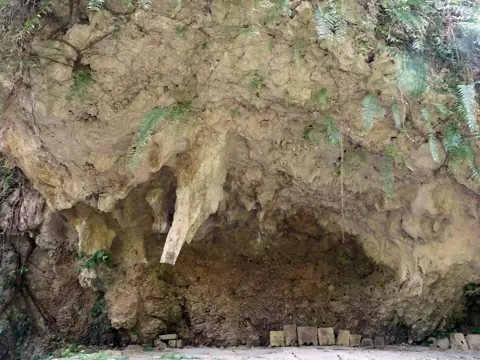 Nanjo City · 26 km
Sefa-utaki →
Located in Nanjo, Okinawa, this site is known as the most sacred place of prayer since the Ryukyu Kingdom, featuring majestic natural rock formations.
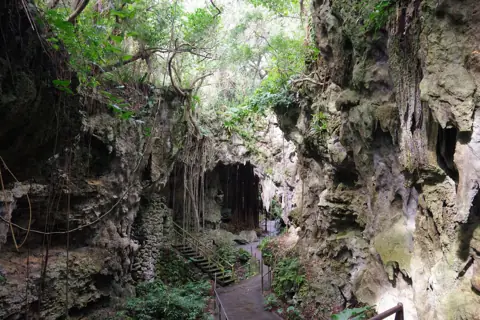 Naha · 28 km
Valley of Gangala →
A subtropical forest valley formed by a collapsed ancient limestone cave, home to a 150-year-old giant banyan tree and prehistoric human excavation sites.
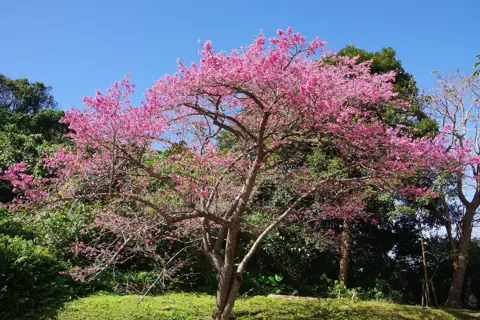 Motobu · 34 km
Yaedake Sakura no Mori Park →
A mountain park on 453-meter Mount Yaedake lined with roughly 7,000 early-blooming Kanhi-zakura cherry trees.
- Motobu · 34 km
Yohena Hydrangea Garden →
A seasonal private hillside garden in Izumi, Motobu, where roughly 10,000 hydrangea bushes (about 300,000 blossoms) bloom across subtropical slopes.
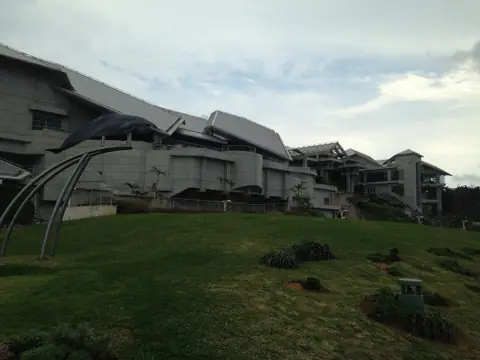 Motobu-cho · 36 km
Okinawa Churaumi Aquarium →
Whale sharks and manta rays are kept in the Kuroshio Sea tank, one of the largest in the world.
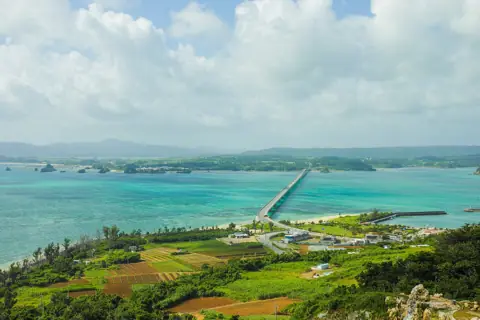 Nakijin · 44 km
Kouri Bridge and Kouri Island →
An island accessible by bridge from Okinawa main island, known for its stunning driving route.


Distances are straight-line from the town centre. Each page has how to get there and a suggested day.
Questions people ask
- Where can I eat Yomitan's local dishes?
Mozuku-don (simmered mozuku seaweed rice bowl): Uminchu Shokudo (Toya)
Okinawa soba (wheat noodles in pork-bonito broth): Zakimi Soba (Zakimi), Mainichi Shokudo (Kina)
- Where can I see or buy Yomitan Yachimun Pottery, Yomitan Hanaui Weaving, Craft in Yomitan?
Yomitan Yachimun Pottery: Yomitanzan-yaki Kitagama Baiten (Zakimi), Yamada Kobo (Zakimi)
Yomitan Hanaui Weaving: Yomitan Hanaui Cooperative (Zakimi)
Craft: Genka Genkichi Ryukyu Glass Studio (Zakimi), RYUKYU GLASS WORKS Umikaze (Takashiho), Nakama Tobo (Yomitan)
- What can I visit on foot around Zakimi?
Cafés: CLAY Coffee & Gallery
Sweets: Bakery Suien, Tsurukamedo Zenzai
Food: Zakimi Soba
Craft: Genka Genkichi Ryukyu Glass Studio
Yomitan Hanaui Weaving: Yomitan Hanaui Cooperative
Yomitan Yachimun Pottery: Yomitanzan-yaki Kitagama Baiten, Yamada Kobo
Every place was checked to be open in November 2026. Hours can change, so please check the official site before you go.
If you like Yomitan
- Miyakojima
Okinawa, Japan
For example, Genka Genkichi Ryukyu Glass Studio here, and glass studio luca in Miyakojima.
- Naha
Okinawa, Japan
For example, Yomitanzan-yaki Kitagama Baiten here, and miyagiya in Naha.
- Naruto
Tokushima, Japan
For example, Yomitanzan-yaki Kitagama Baiten here, and Umezatogama in Naruto.
Chosen by how close the towns and their places are in what they make and serve.