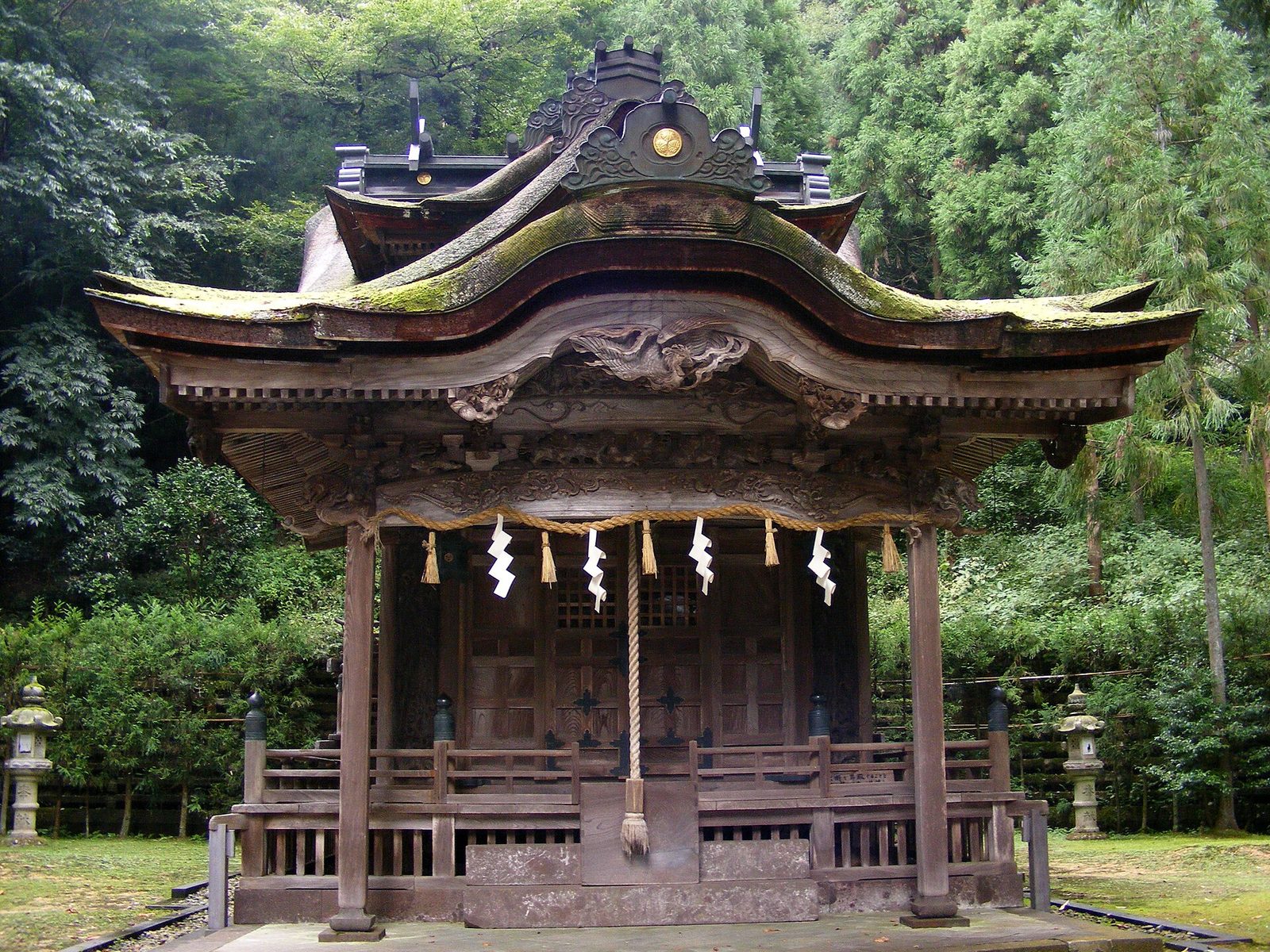
35.9° N
Echizen
Fukui, Japan
A craft town in the Takefu basin of Fukui, surrounded by mountains. Echizen washi papermaking in Gokaso, hand-forged cutlery and tansu cabinetry in Takefu, with soba, sweets and coffee in between, as the editors’ picks.
Echizen, on film
4 sights and 17 places, each checked open in 2026, in 50 seconds.
Found somewhere you like? The map and the list below have the address, hours and official site.
Tap for sound
What to eat in Echizen
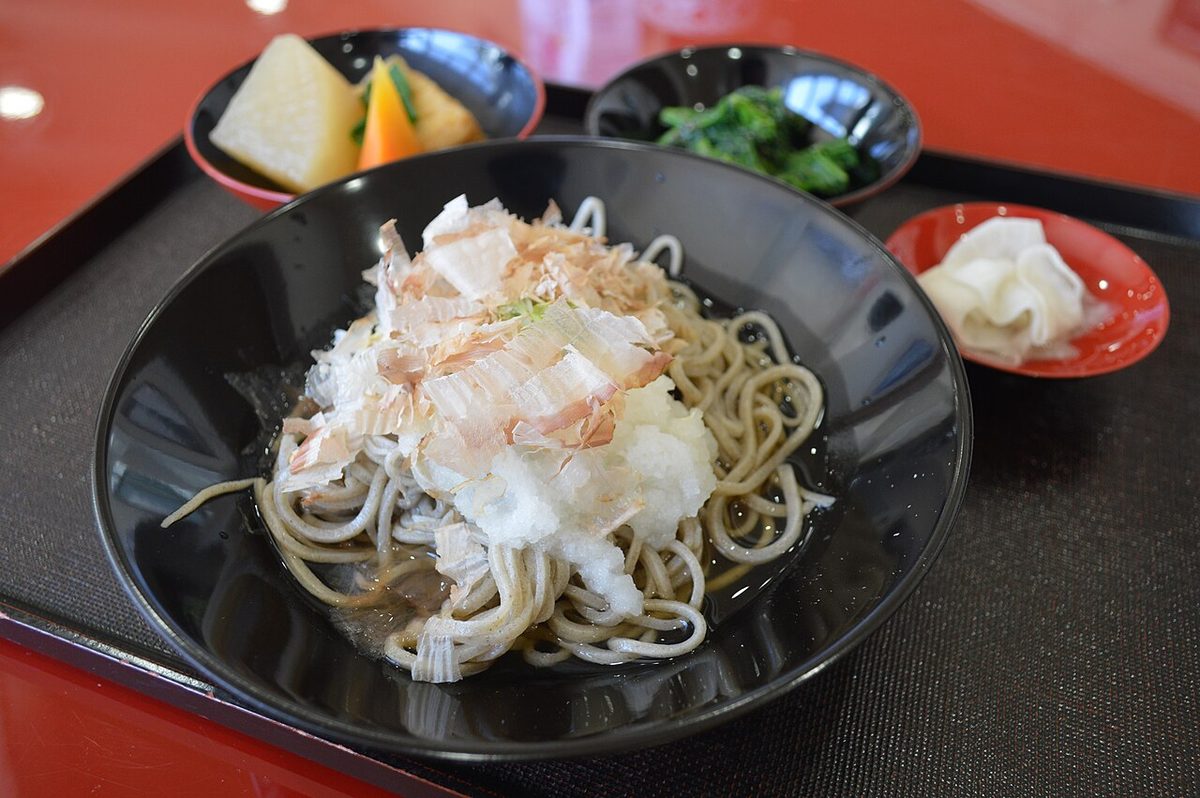
Photo: Asturio Cantabrio / CC BY-SA 4.0 (Wikimedia Commons) Echizen Oroshi Soba (cold buckwheat noodles with grated daikon)
越前おろしそば
Cold buckwheat noodles topped with grated spicy daikon radish, bonito flakes, and chopped green onions, served with dashi-soy broth. Buckwheat cultivation and grated-daikon soba took root in Takefu in 1601 under lord Honda Tomimasa, and Emperor Showa praised the local soba during a 1947 visit, spreading the name Echizen soba nationwide.
Eaten cold year-round at lunch, with dashi poured over grated daikon and often paired with a rice bowl or grilled mackerel sushi.
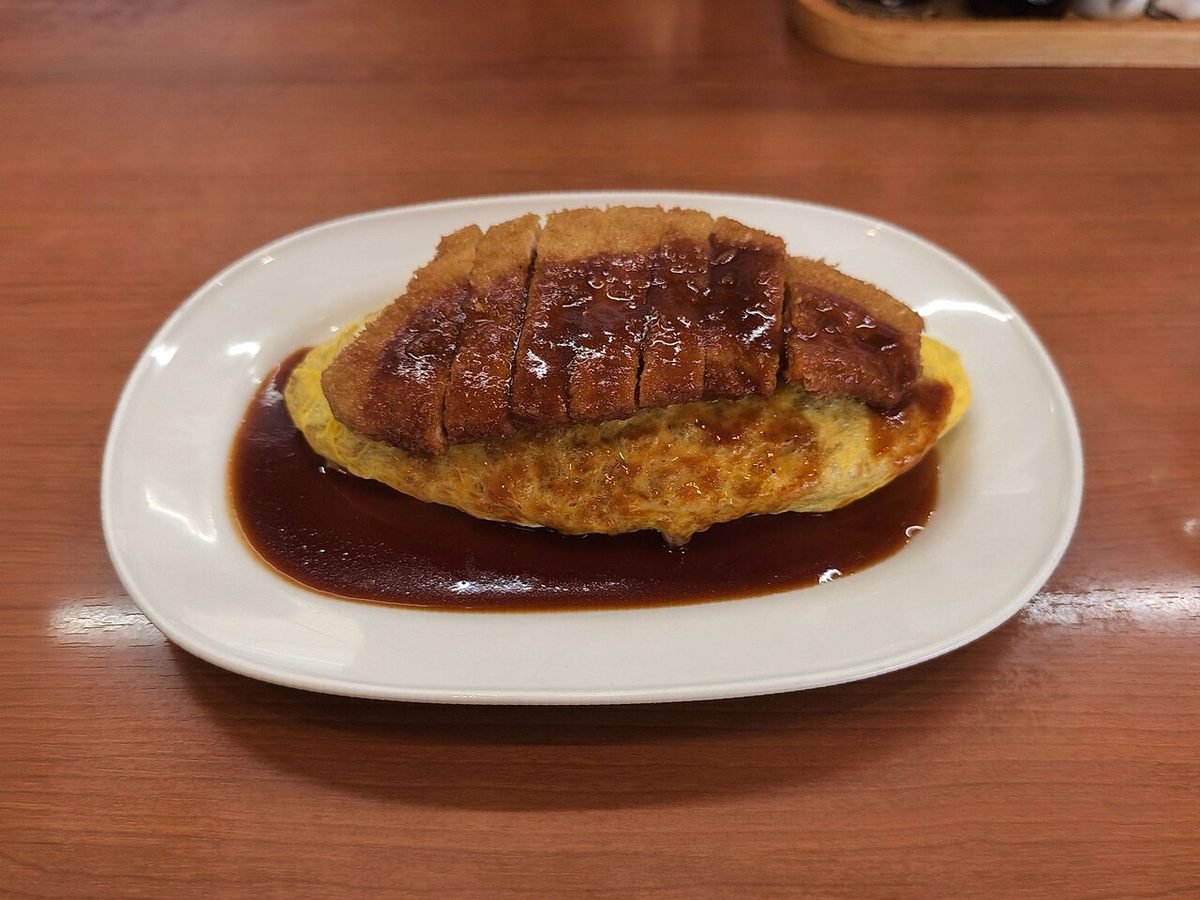
Photo: Kzaral / CC BY 2.0 (Wikimedia Commons) Volga Rice (omelet rice topped with pork cutlet)
ボルガライス
A Western-style rice dish made of an omelet over seasoned rice topped with a breaded pork cutlet and finished with demi-glace, tomato, or house sauce. It has been served at restaurants and diners in Takefu for more than thirty years, with each kitchen varying its rice, egg style, cutlet, and sauce.
Ordered at local yoshoku restaurants and diners for lunch or dinner, or as a set paired with Echizen oroshi soba.
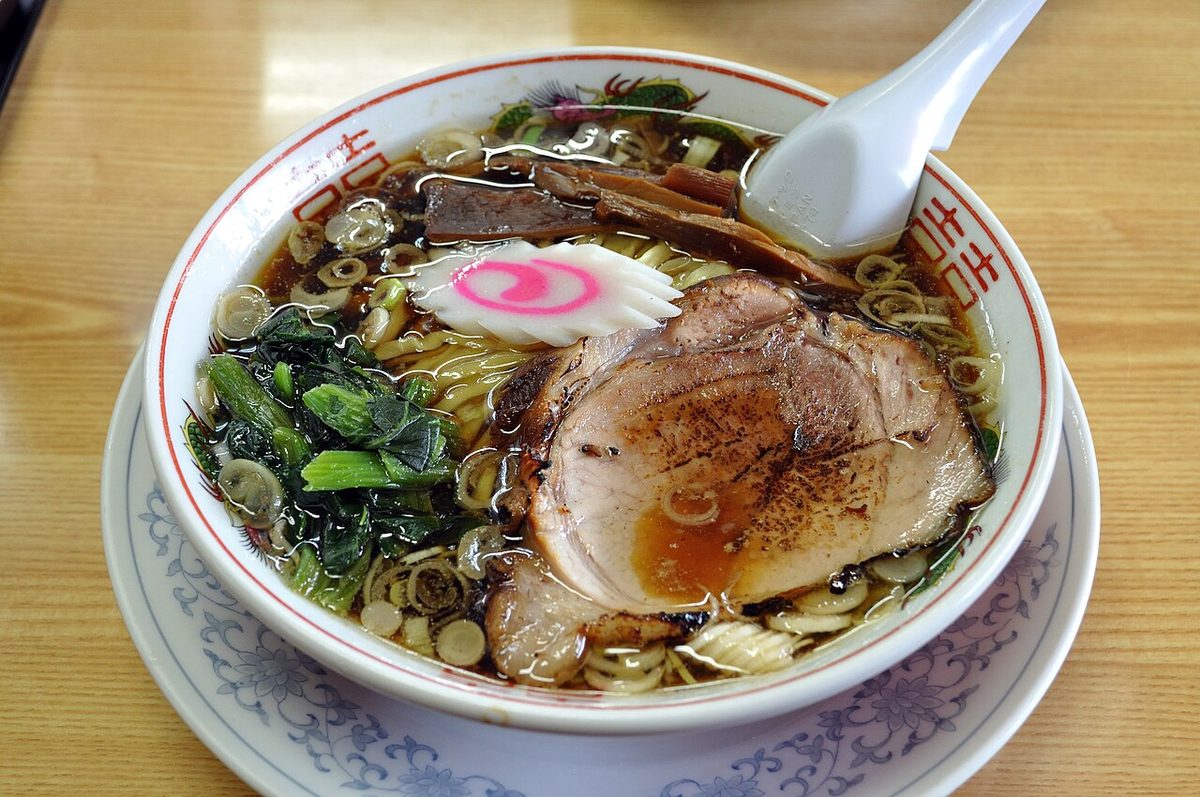
Photo: Ocdp / CC0 (Wikimedia Commons) Takefu Ekimae Chuka Soba (clear dashi-broth ramen)
たけふ駅前中華そば
A traditional soy-sauce noodle soup made with a clear golden broth of bonito, kelp, or chicken dashi and springy noodles, typically topped with green onion, kamaboko fish cake, and ham or pork. Served at long-standing diners and soba shops within an eleven-minute bicycle ride of JR Takefu Station, it grew out of the town's dashi culture and kept the pre-war name chuka soba on its menus.
Served hot at station-area diners and soba shops, often paired with a mini katsudon set at lunch or ordered after drinks.
The LATITUDE editors’ 17 picks in Echizen
Our editors verified that these places were open (checked 2026-11-19). Check the official site for hours and closing days before visiting. Sponsored listings are marked.
Save places to your trip list and revisit them in this browser. No account needed.
Editors’ picks on the map — or build your own route
Tap a mark to see the place; squares are museums and sights (landmarks). Use “Build your own route” to make a walk of your own.
Loading the map
Map data © OpenStreetMap contributors
Browse by category
1 / 20
Ajimano
O-edo+
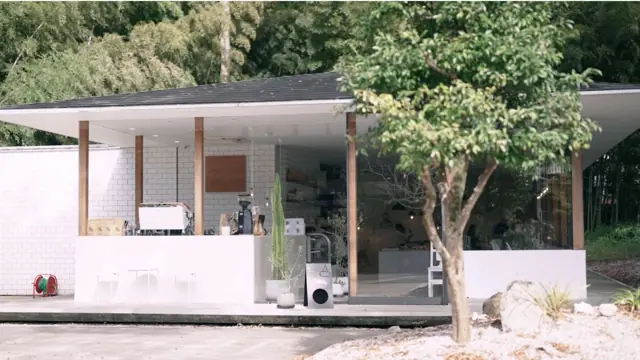
Photo: the shop’s official page Irregular closing days
A glass-walled sushi café in Ajimano run by a sushi house founded in 1953. Serves colourful WASARA sushi plates, muffins and coffee brewed with beans from % Arabica Kyoto. Closed Mondays.
Tue–Fri 11:00–17:00 (last order 16:00), weekends & holidays 11:00–18:00 (last order 17:00) · Closed: Mondays (and irregular holidays)checked Nov 2026
Why the editors chose itRun by a 1953 sushi house, this café pairs creative WASARA sushi with Kyoto coffee.
Kunitaka
HAMA-an
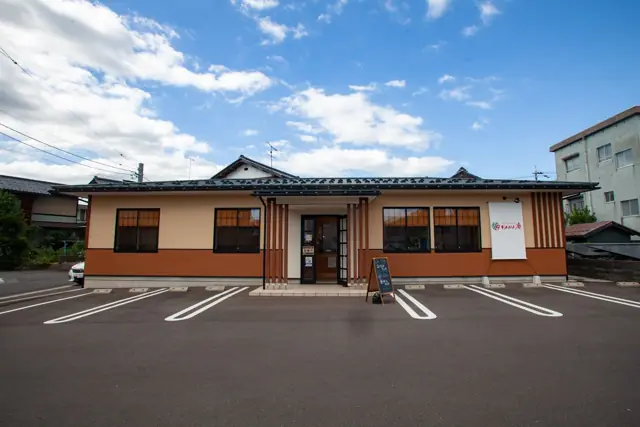
Photo: the shop’s official page 越前そばと珈琲 HAMA庵
A soba restaurant near Takefu High School in Kunitaka. Serves hand-cut 100% Fukui buckwheat soba made daily in-house, direct-fire kamameshi rice pots, and coffee and sweets afterward. Closed Tuesdays unless a holiday.
11:00–17:00 · Closed: Tuesdays (open on public holidays)checked Nov 2026
Why the editors chose itFrom daily hand-cut Fukui buckwheat soba to after-meal coffee and sweets, everything is under one roof.
Imadate
Kikyoan
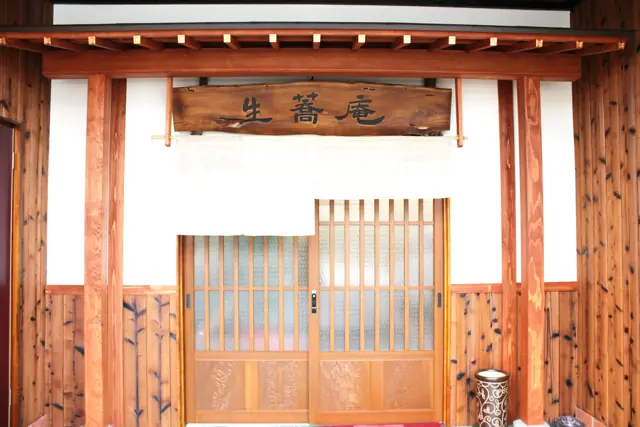
Photo: the shop’s official page 生蕎庵
A self-milled juwari soba shop in Chihara, Imadate. Buckwheat from Ono and elsewhere in Japan is stone-milled daily to match the day's temperature and grain, served with additive-free broth.
Weekdays 11:30–14:00 · Closed: Tuesdays, Wednesdays
Why the editors chose itGo for pure buckwheat soba stone-milled daily to the weather, paired with additive-free broth.
Awadabe-cho
Juwari Soba Terakoya
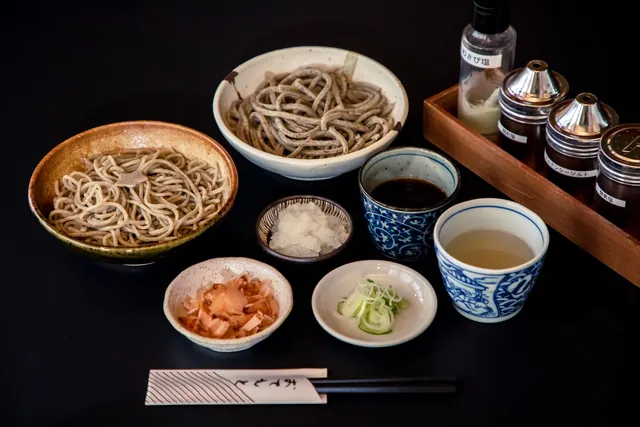
Photo: the shop’s official page 十割蕎麦 寺子屋
A juwari soba shop in Awadabe-cho run by an owner with 25 years of soba-making experience. Serves stone-milled 100% buckwheat soba made exclusively from Fukui-grown buckwheat flour, open 11:00 to 15:00 and closed Wednesdays, Thursdays and Fridays.
Why the editors chose itA veteran of 25 years serves stone-milled 100% Fukui buckwheat soba, open only at lunchtime.
Takefu
my name is...
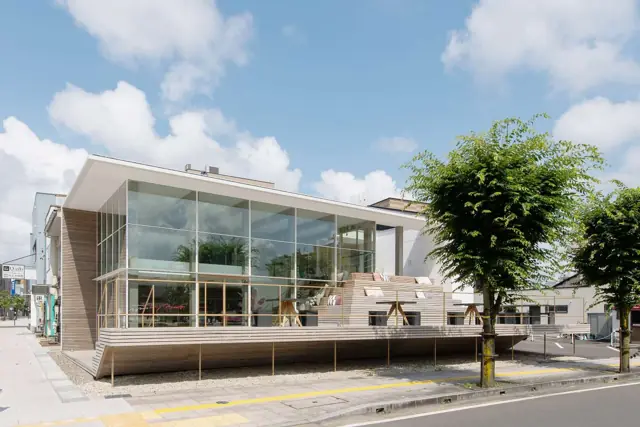
Photo: the shop’s official page Irregular closing days
A glass-fronted café and deli in front of JR Takefu Station. Serves an original coffee blend from Kyoto's 'here', house kombucha, and bento boxes made with local low-pesticide vegetables. Closed Mondays.
11:00–18:00 · Closed: Mondays (and irregular holidays)checked Nov 2026
Why the editors chose itRight outside Takefu Station for Kyoto 'here' coffee, house kombucha, or a local-vegetable bento.
Takefu
Coffee fam.
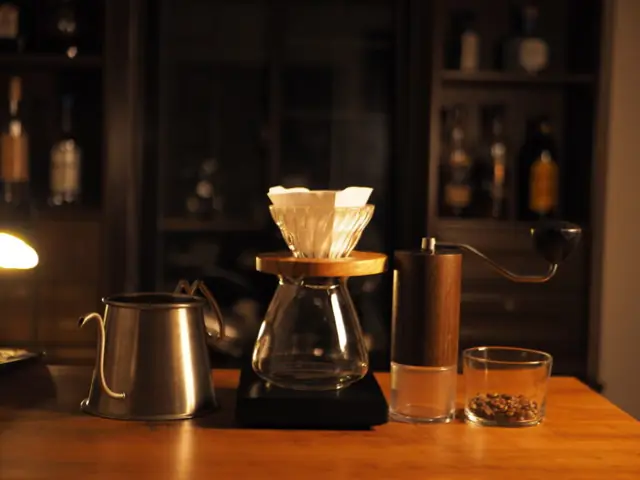
Photo: the shop’s official page A specialty coffee roaster in Hirose, Takefu. Runs as a coffee stand by day, and as a reservation-only outdoor bonfire café by night for guests 18 and over, up to two per group.
Wed–Sun 10:00–14:30 (stand), Wed–Mon 16:00–22:00 (night cafe, reservation only) · Closed: Tuesdays (daytime stand also closed Mondays)
Why the editors chose itA roaster stand by day that turns into a reservation-only bonfire café for pairs at night.
Takefu
MAMI CAFE Tachibanaya
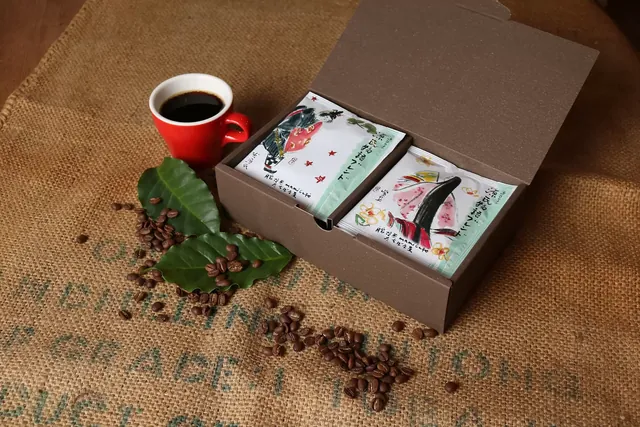
Photo: the shop’s official page 自家焙煎 MAMI CAFE たちばな屋
A coffee roastery founded in 1975. Roasts around twenty single-origin coffees and house blends over a direct flame, selling beans, brewing gear and takeaway cups.
Why the editors chose itRoasting around twenty direct-flame coffees since 1975 — ideal for choosing beans or a takeaway cup.
Takefu
Kissa Shiratori
喫茶白鳥
A kissaten along the approach to Soja Daijingu Shrine that has stood since 1956. Kept open around ten days a month by relatives, with its Showa-era interior and jazz records intact.
Why the editors chose itOpened in 1956 and now open roughly ten days a month, with Showa decor and jazz records intact.
Imadate
bloom
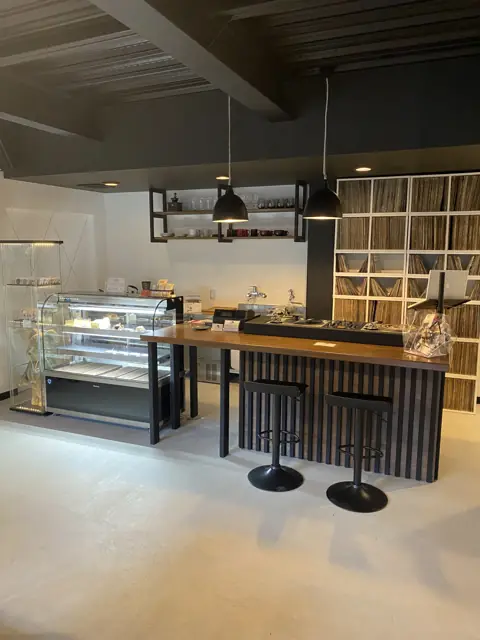
Photo: the shop’s official page 洋菓子店 bloom
A patisserie set among rice fields in Shindo, Imadate, serving seasonal fruit sweets while vinyl records play inside. Closed Sundays, Mondays and holidays; cash only.
11:00–17:00 · Closed: Sundays, Mondays, public holidayschecked Nov 2026
Why the editors chose itA patisserie set among Imadate's rice fields serving seasonal fruit sweets while vinyl records play inside.
Imadate
Kuninaka no Cake-yasan
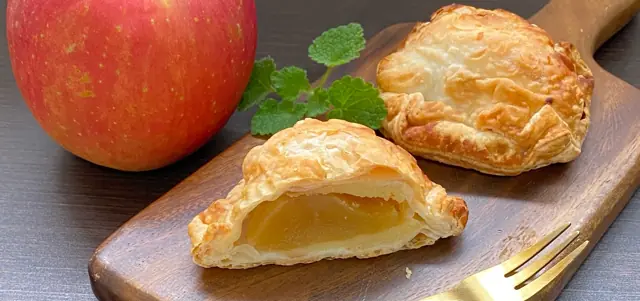
Photo: the shop’s official page くになかのケーキ屋さん
A handmade sweets shop in Kuninaka, Imadate, keeping ingredients simple with no extra additives: retro pudding, apple pie, cookies and ice-cream dacquoise sandwiches.
9:00–17:00 (Saturdays morning only) · Closed: Saturday afternoons, Sundays
Why the editors chose itA handmade sweets shop keeping ingredients additive-free for retro pudding, apple pie and ice-cream dacquoise.
Kunitaka
Komepan Kazemidori
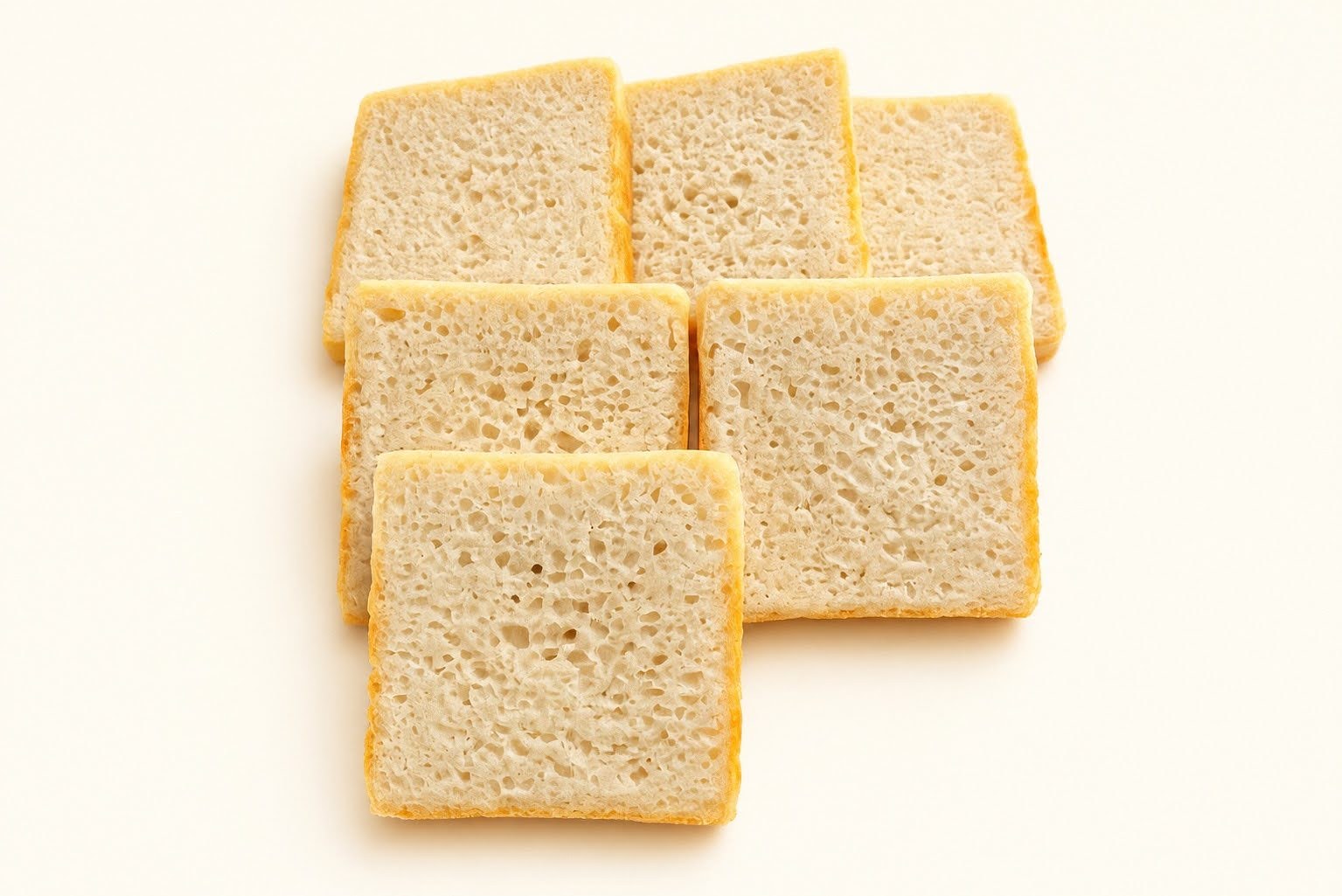
Photo: Komepan Kazemidori 米パン カゼミドリ
A gluten-free rice bread bakery in Kunitaka. Instead of rice flour, they use raw Fukui brown and white rice fermented with organic white-rice koji, with no animal products, and none of the 28 major allergens in the dough itself.
10:00–16:00 · Closed: Mondays, Wednesdays, Fridayschecked Nov 2026
Why the editors chose itBakes gluten-free bread from raw Fukui rice and koji yeast, without animal products or the 28 major allergens.
From the shop
We make bread that truly soothes you — bread you can eat with peace of mind.
Made in Echizen
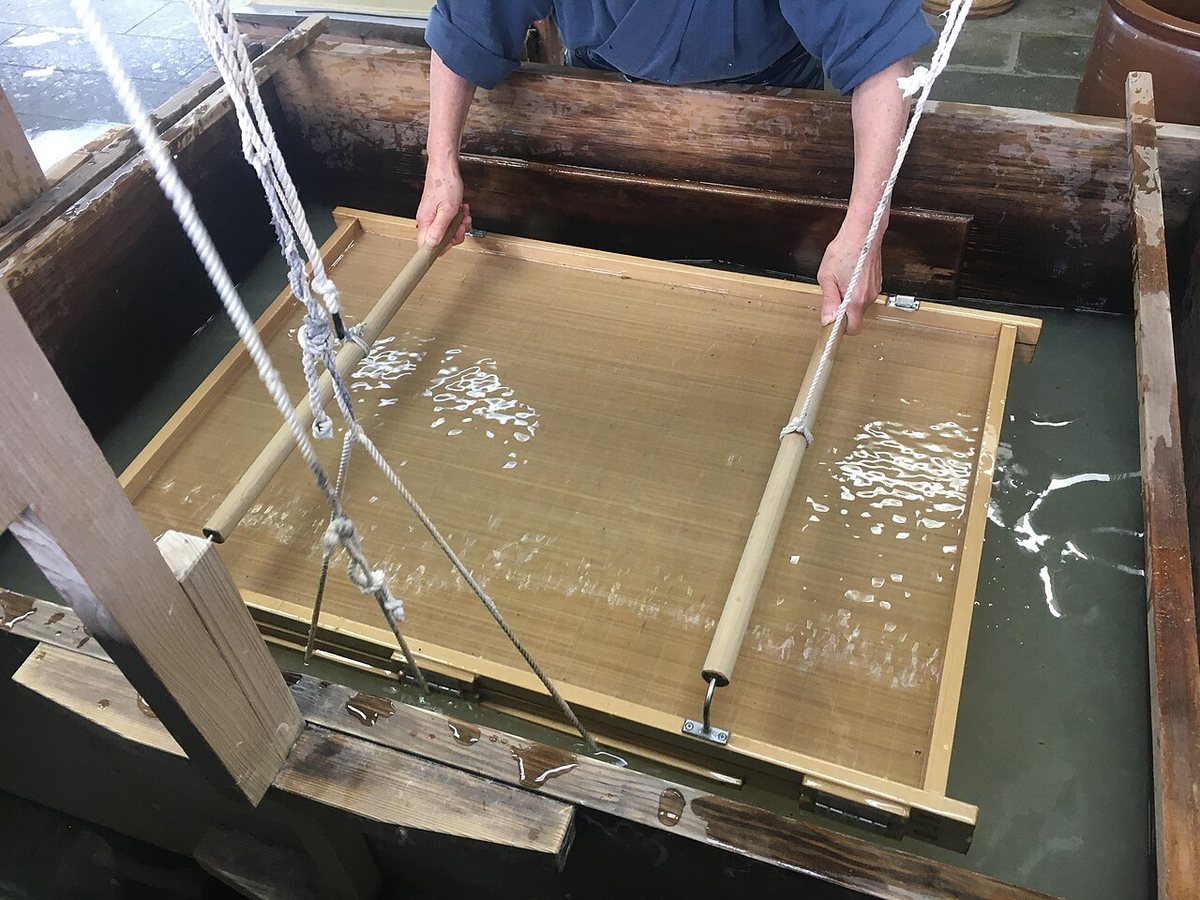
Hand-moulded from kozo, mitsumata and gampi fibers for over 1,500 years in the Gokaso valley along the Okamoto river, Echizen washi is a nationally designated traditional craft. Both thin kozo papers for sweets packaging and large art papers are still made by hand.
Hands papermaking Echizen washi with a bamboo screen in the vat·Photo: UFshio / CC BY-SA 4.0 (Wikimedia Commons)
Gokaso
Yanase Ryozo Seishisho

Photo: the shop’s official page 栁瀨良三製紙所
An Echizen washi workshop in Otaki, Gokaso, founded in 1946. They hand-mould thin kozo papers for wagashi wrapping and patterned rakusui paper, with an attached shop, RYOZO. Closed Sundays.
8:00–17:00 · Closed: Sundayschecked Nov 2026
Why the editors chose itA 1946 Echizen washi workshop hand-moulding thin kozo and patterned rakusui papers, sold directly at its attached shop.
Gokaso
Washiya Sugihara Shoten
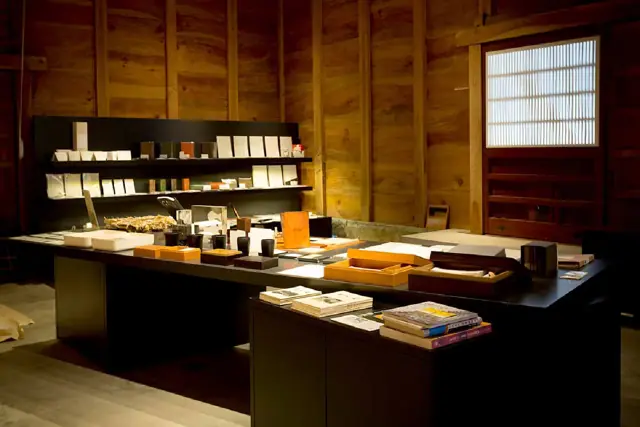
Photo: the shop’s official page 和紙屋の杉原商店
A gallery and shop in a century-old storehouse, run by an Echizen washi merchant founded in 1871. Stocks papers of varied textures, including lacquered uru-washi and embossed deko-washi. By appointment only.
Tue–Fri 9:00–13:00, 4th Sat 9:00–17:00 (by appointment only)
Why the editors chose itAn appointment-only gallery inside a century-old storehouse from an 1871 merchant, showing lacquered and embossed washi.
Made in Echizen
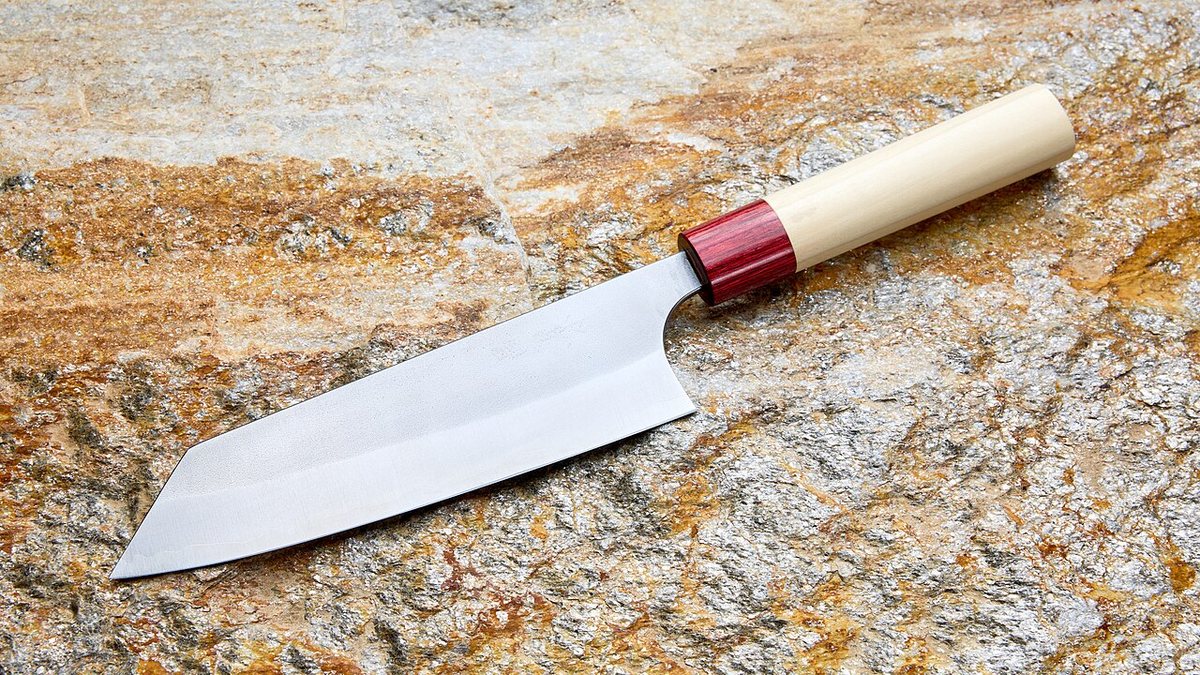
Said to have begun around 700 years ago when the Kyoto swordsmith Chiyozuru Kuniyasu came to Takefu, Echizen cutlery was the first blade craft in Japan designated a Traditional Craft. Makers still forge laminated steel by hand and sharpen kitchen knives.
Hand-forged Echizen bunka kitchen knife·Photo: Frank Schulenburg / CC BY-SA 4.0 (Wikimedia Commons)
Ajimano
Takefu Knife Village
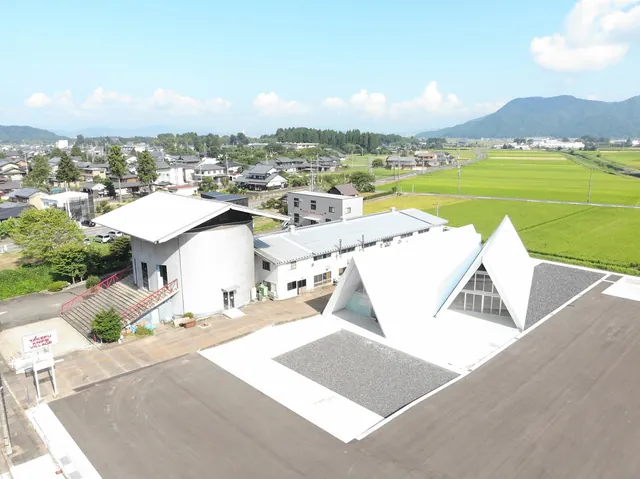
Photo: the shop’s official page タケフナイフビレッジ
A shared Echizen cutlery workshop in Ajimano. Visitors can watch forging and sharpening from the walkway, browse knives from member workshops in the shop, or bring blades for sharpening.
9:00–17:00
Why the editors chose itA shared cutlery workshop where you can watch forging and sharpening, join a class or browse member makers' knives.
Made in Echizen
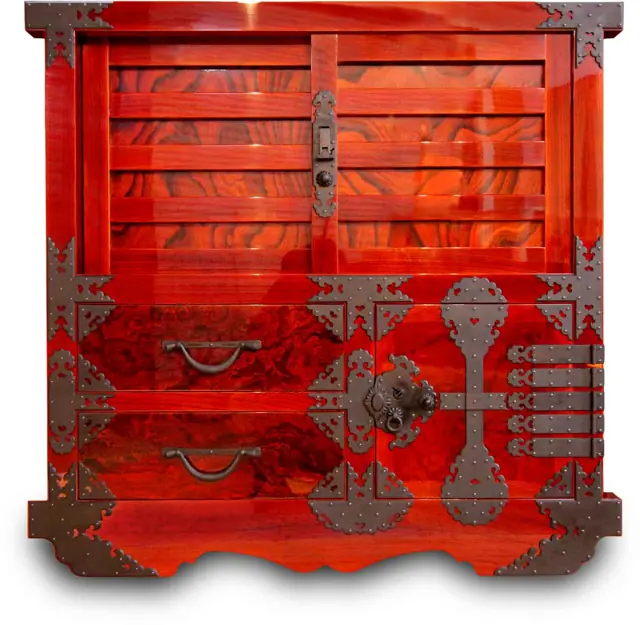
Made around Takefu since the late Edo period, Echizen tansu chests join zelkova and paulownia wood without nails, finished with urushi lacquer and hand-worked iron fittings. Workshops today also make smaller wooden pieces for everyday rooms.
Lacquered Echizen tansu chest with iron fittings·Photo: Oyanagi Tansu (official site)
Takefu
Oyanagi Tansu
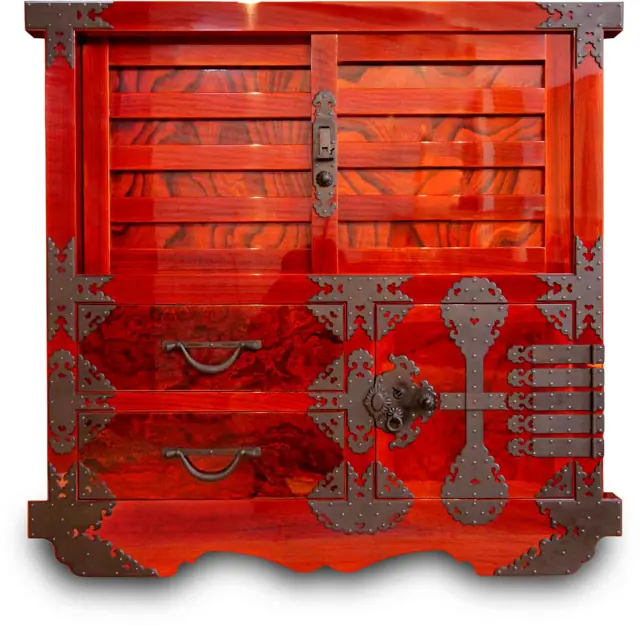
Photo: the shop’s official page 小柳タンス店
An Echizen tansu workshop founded in 1907. Uses nail-free joinery for traditional chests and custom furniture, and also makes smaller wooden gifts under its kicoru line.
Why the editors chose itAn Echizen tansu workshop since 1907 crafting nail-free paulownia chests, custom furniture and smaller wooden gifts.
Takefu
Etoe
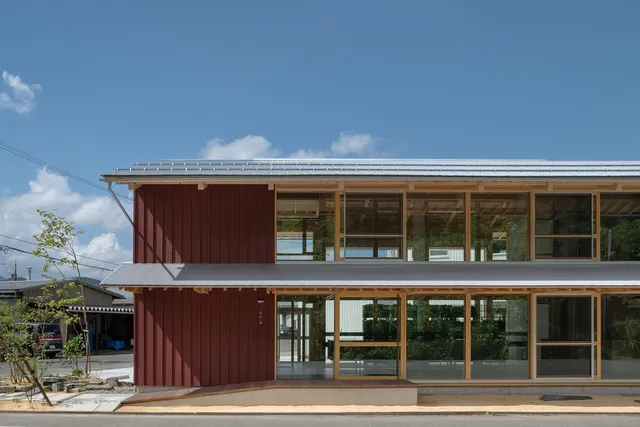
Photo: the shop’s official page 柄と繪
A gallery shop run by Yamaken Mokkosho, a knife-handle maker founded in 1912, bringing Echizen blades together with lacquer and maki-e handles. Opening days vary and are posted on Instagram.
Closed: Irregular
Why the editors chose itA gallery shop by a 1912 handle maker uniting Echizen forged blades with lacquer and maki-e handles.
Takefu
RYUSEN FACTORY&STORE
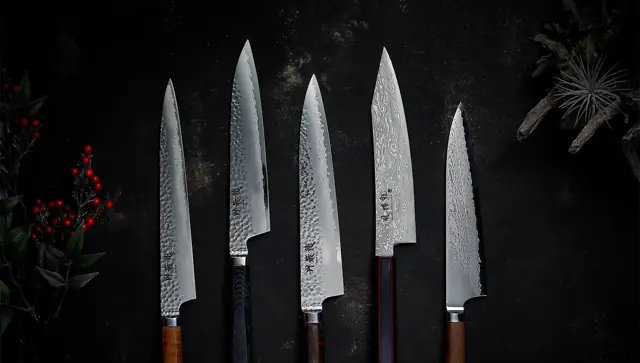
Photo: the shop’s official page The flagship store of Echizen cutlery maker Ryusen Hamono. Stocks rippled-blade kitchen knives, steak knives and cutlery with natural wood handles, and handles maintenance.
10:00–17:00
Why the editors chose itThe maker's flagship stocking rippled-blade kitchen and steak knives with natural wood handles, plus maintenance support.
Sights in Echizen
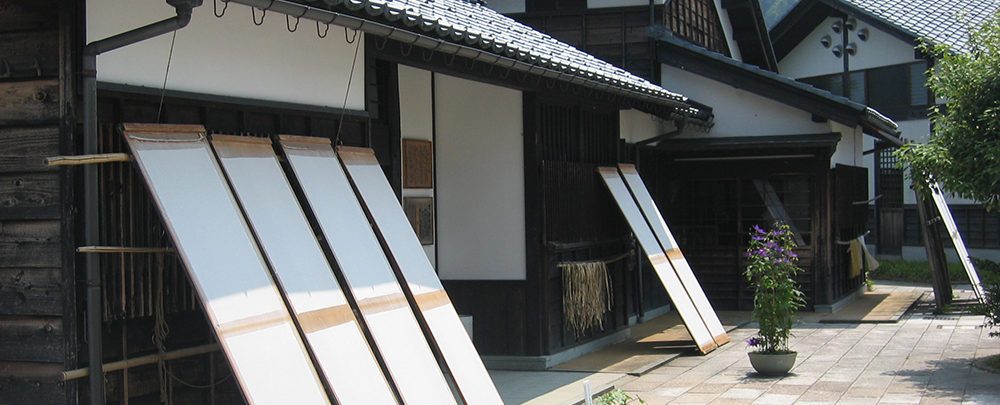
Photo: official site The main complex of the Echizen Washi Village in Gokaso, bringing together the Papyrus House for papermaking, the Udatsu Paper and Craft Museum in a relocated Edo-period workshop, and the Paper and Culture Museum.
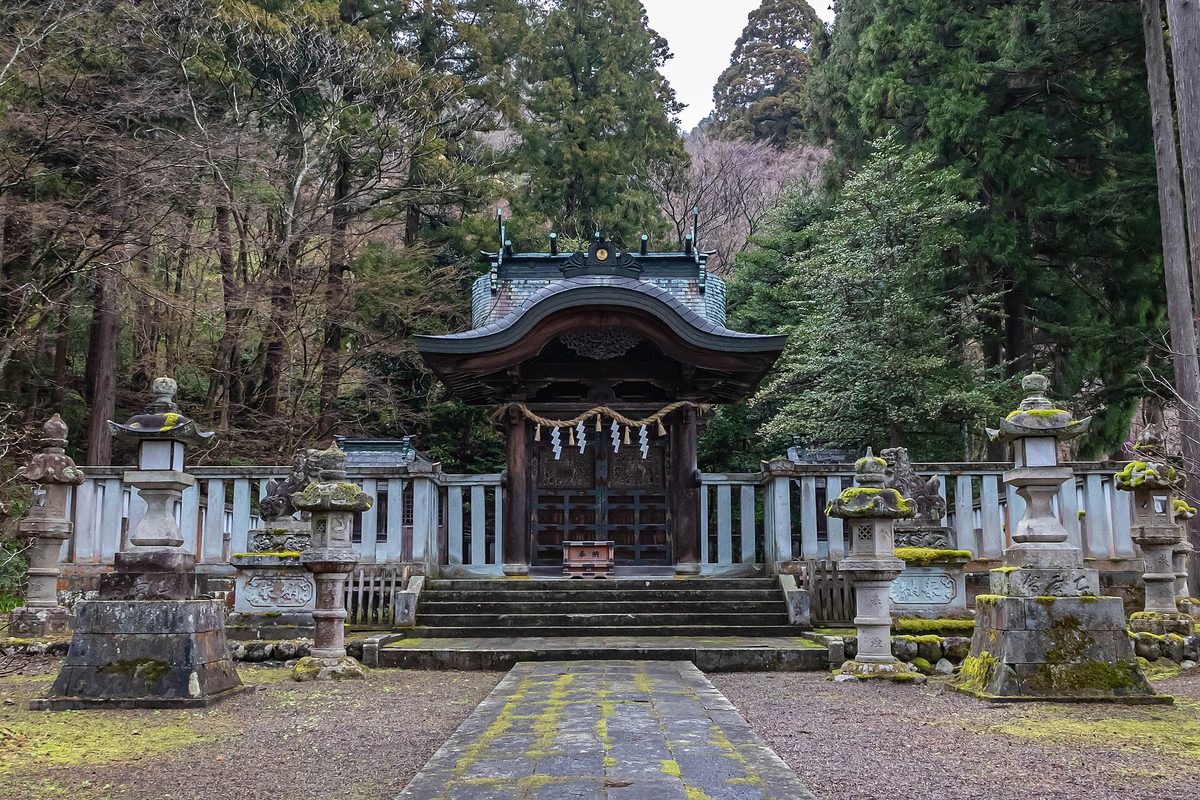
Photo: Naokijp / CC BY-SA 4.0 (Wikimedia Commons) The shrine dedicated to Kawakami Gozen, the goddess said to have brought papermaking to Echizen.
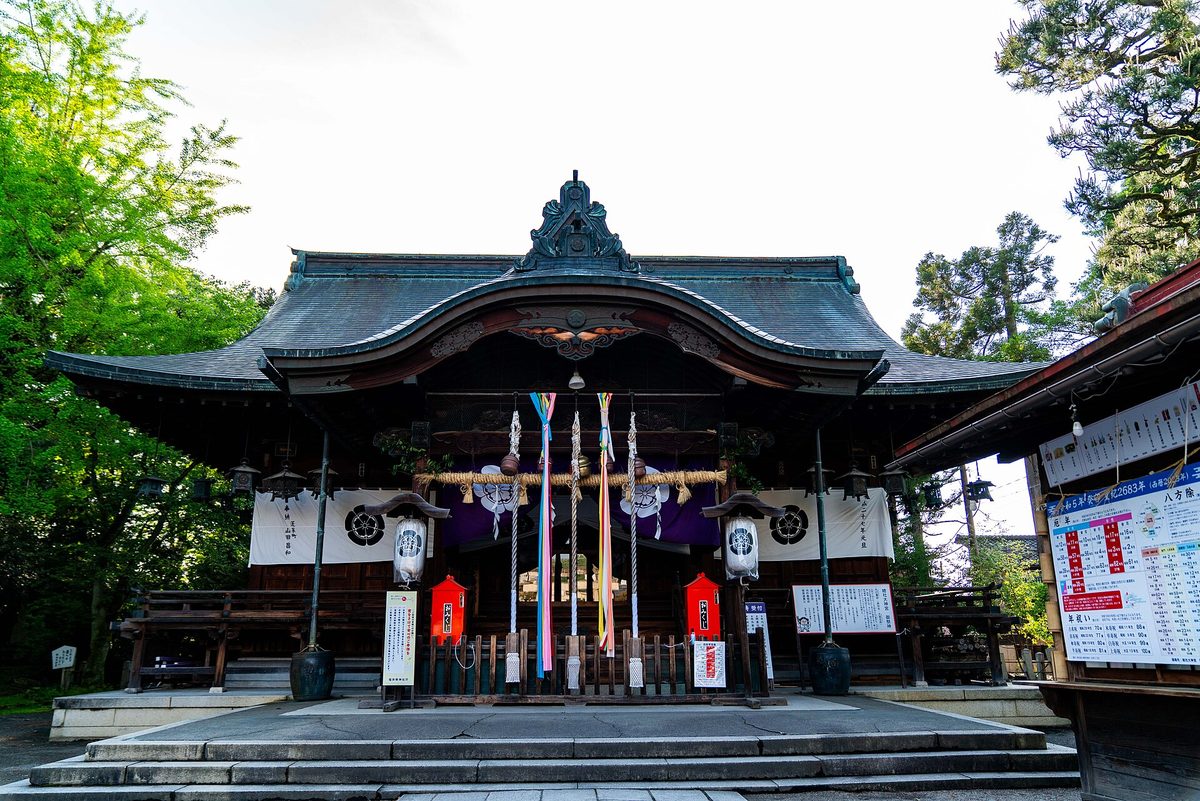
Photo: Kumatan69 / CC BY-SA 4.0 (Wikimedia Commons) A shrine in central Takefu founded to enshrine the deities of Echizen Province together, known locally as Osonja-san.
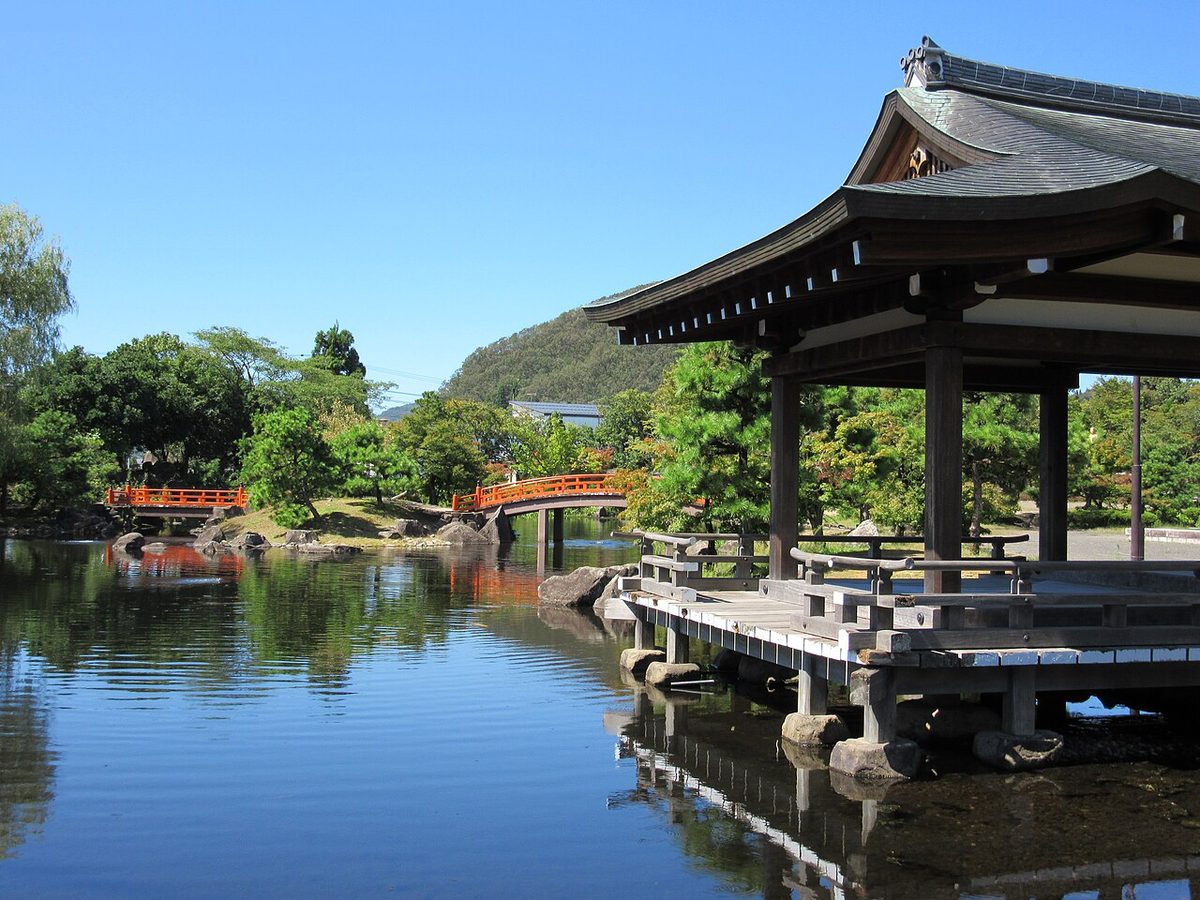
Photo: Opqr / CC BY-SA 4.0 (Wikimedia Commons) A park commemorating Murasaki Shikibu's year in Echizen with her father, Fujiwara no Tametoki.
These are local landmarks. Each was checked to be open on its official site (checked 2026-11-12). Please confirm hours before you go.
Beyond Echizen
1 / 4
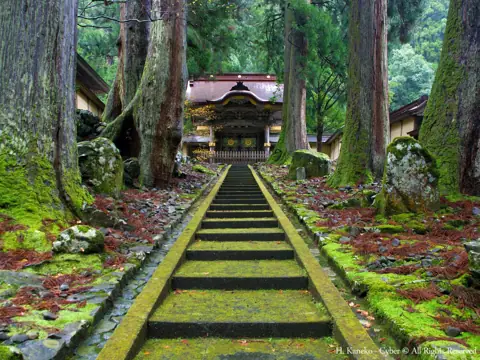 永平寺町 · 24 km
Eiheiji Temple →
The head temple of the Soto sect of Zen Buddhism, it is still a training monastery where many monks practice strictly.
 Ono · 30 km
Echizen Ono Castle →
A hilltop castle in Ono that appears to float above a sea of morning clouds from autumn to spring.
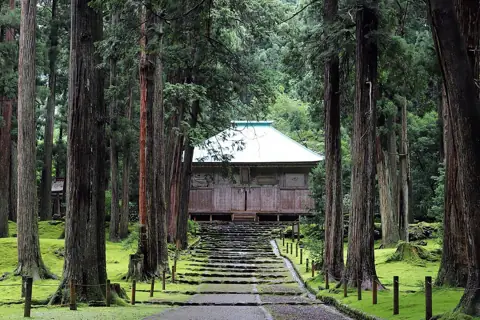 Katsuyama · 37 km
Heisenji Hakusan Shrine →
A historic Hakusan shrine founded in 717 whose vast cedar-shaded grounds are carpeted end-to-end in lush green moss.
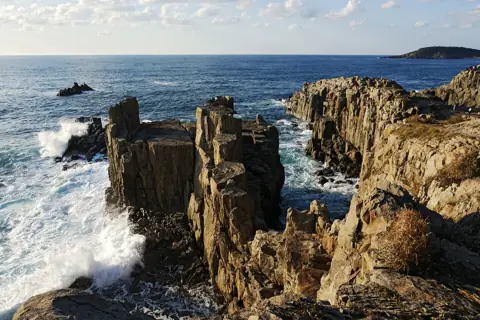 坂井市 · 38 km
Tojinbo Cliffs →
A scenic place with steep cliffs and globally rare columnar jointing of pyroxene andesite.


Distances are straight-line from the town centre. Each page has how to get there and a suggested day.
Questions people ask
- Where can I eat Echizen's local dishes?
Echizen Oroshi Soba (cold buckwheat noodles with grated daikon): HAMA-an (Kunitaka), Kikyoan (Imadate)
- Where can I see or buy Echizen Washi Papermaking, Echizen Forged Cutlery, Echizen Tansu Cabinetry in Echizen?
Echizen Washi Papermaking: Yanase Ryozo Seishisho (Gokaso), Washiya Sugihara Shoten (Gokaso)
Echizen Forged Cutlery: Takefu Knife Village (Ajimano)
Echizen Tansu Cabinetry: Oyanagi Tansu (Takefu)
Craft: Etoe (Takefu), RYUSEN FACTORY&STORE (Takefu)
- What can I visit on foot around Takefu?
Echizen Tansu Cabinetry: Oyanagi Tansu
Craft: Etoe, RYUSEN FACTORY&STORE
Cafés: my name is..., Coffee fam., MAMI CAFE Tachibanaya, Kissa Shiratori
Every place was checked to be open in November 2026. Hours can change, so please check the official site before you go.
If you like Echizen
- Sakai
Osaka, Japan
For example, Takefu Knife Village here, and Ashi Hamono in Sakai.
- Kochi
Kochi, Japan
For example, Takefu Knife Village here, and TAKETO in Kochi.
- Ise
Mie, Japan
For example, Yanase Ryozo Seishisho here, and Ise Washikan in Ise.
Chosen by how close the towns and their places are in what they make and serve.