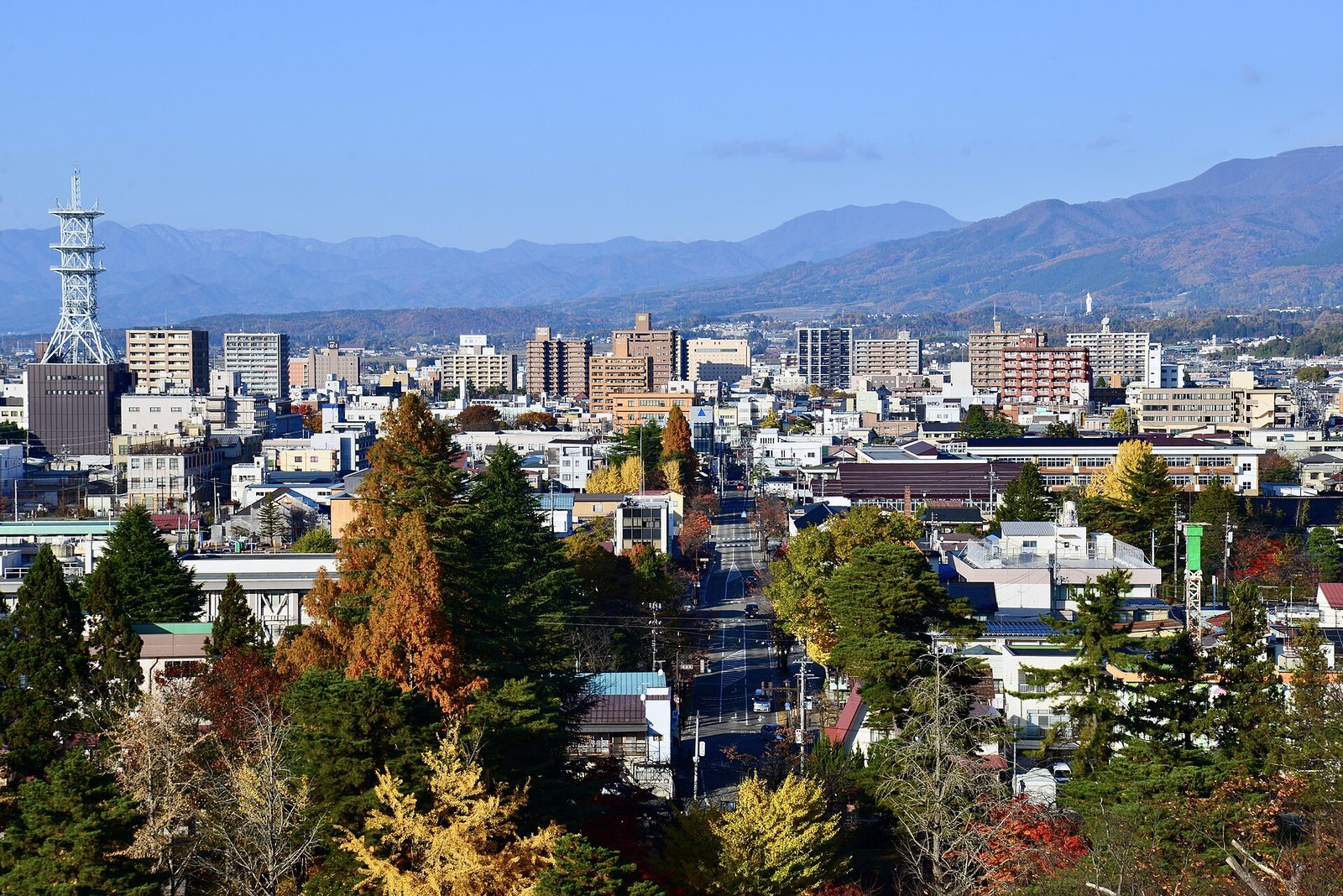
37.5° N
Aizuwakamatsu
Fukushima, Japan
A castle town in the Aizu basin of Fukushima, around the red-tiled Tsurugajo. Lacquerware, painted candles, striped cotton and sake from the old merchant streets, then miso dengaku, soba and coffee: the editors’ picks.
What to eat in Aizuwakamatsu
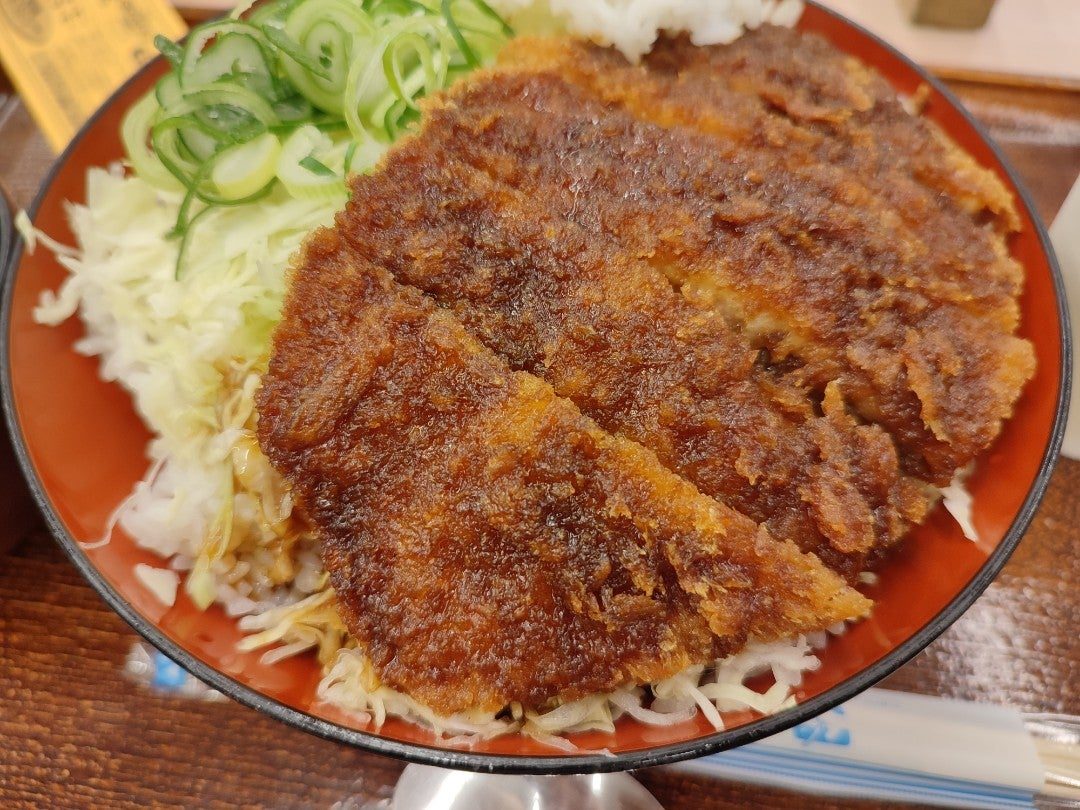
Photo: Masahiko OHKUBO / CC BY 2.0 (Wikimedia Commons) Aizu sauce katsudon (pork cutlet bowl)
会津ソースカツ丼
A thick breaded pork cutlet is dipped in a sweet-and-savory Worcestershire-based sauce and set over shredded cabbage on hot white rice, or simmered with egg in the sauce at some shops. It developed in Aizuwakamatsu's Western-style diners from the prewar and early postwar years and became the city's everyday comfort meal.
Eaten as a filling single-bowl meal, mainly at lunch, with portions often so large that the lid will not close.
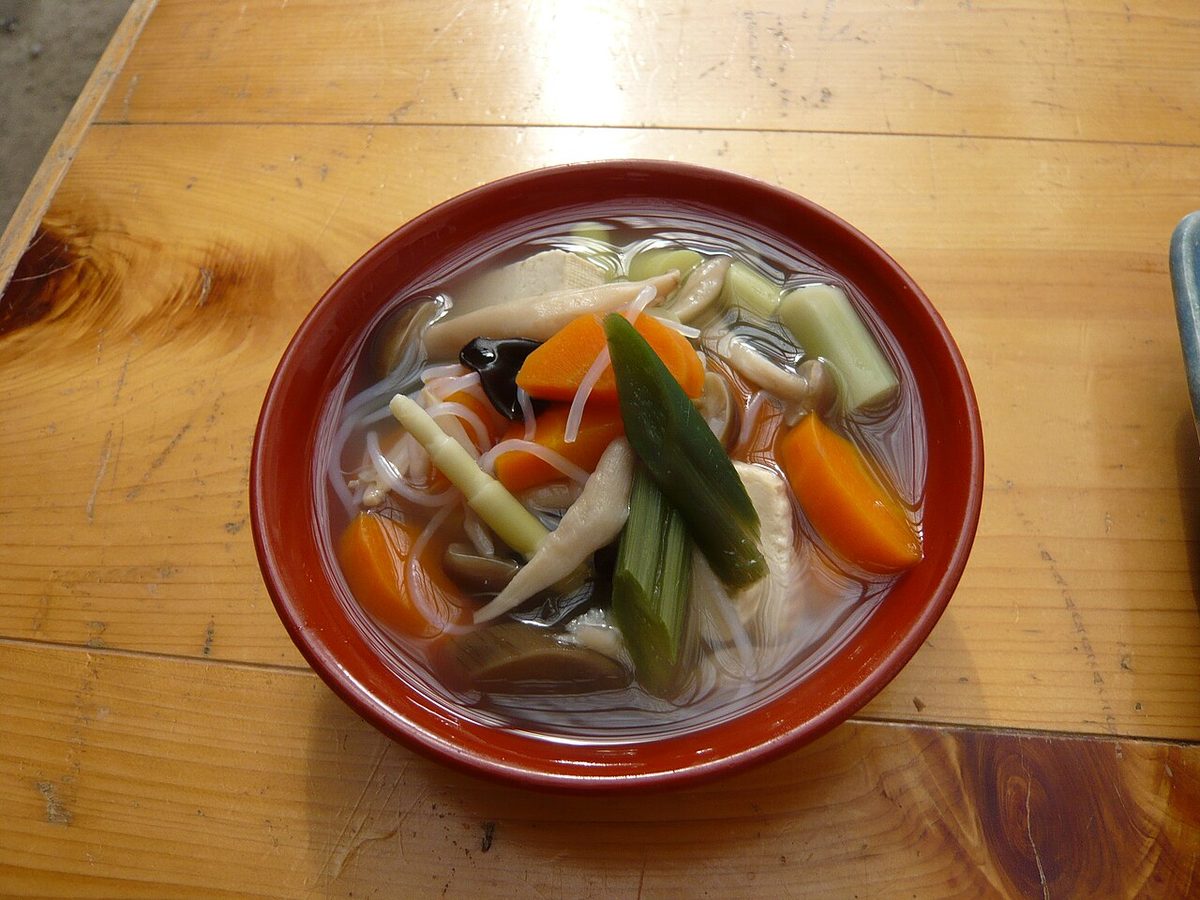
Photo: Opqr / CC BY-SA 3.0 (Wikimedia Commons) Kozuyu (dried scallop broth soup)
こづゆ
Kozuyu is a clear soup built on dried scallop adductor muscle dashi and filled with diced taro, carrots, wood ear mushrooms, shirataki noodles, and small round bean-flour wheat gluten (mame-fu). It originated as samurai-era ceremonial fare in the landlocked Aizu basin, where dried seafood brought along inland trade routes was prized for New Year and festive banquets.
Ladled into a shallow vermilion Aizu lacquerware bowl (teshio-zara) as part of a traditional set meal, with guests traditionally welcome to ask for seconds.
Where to eat it
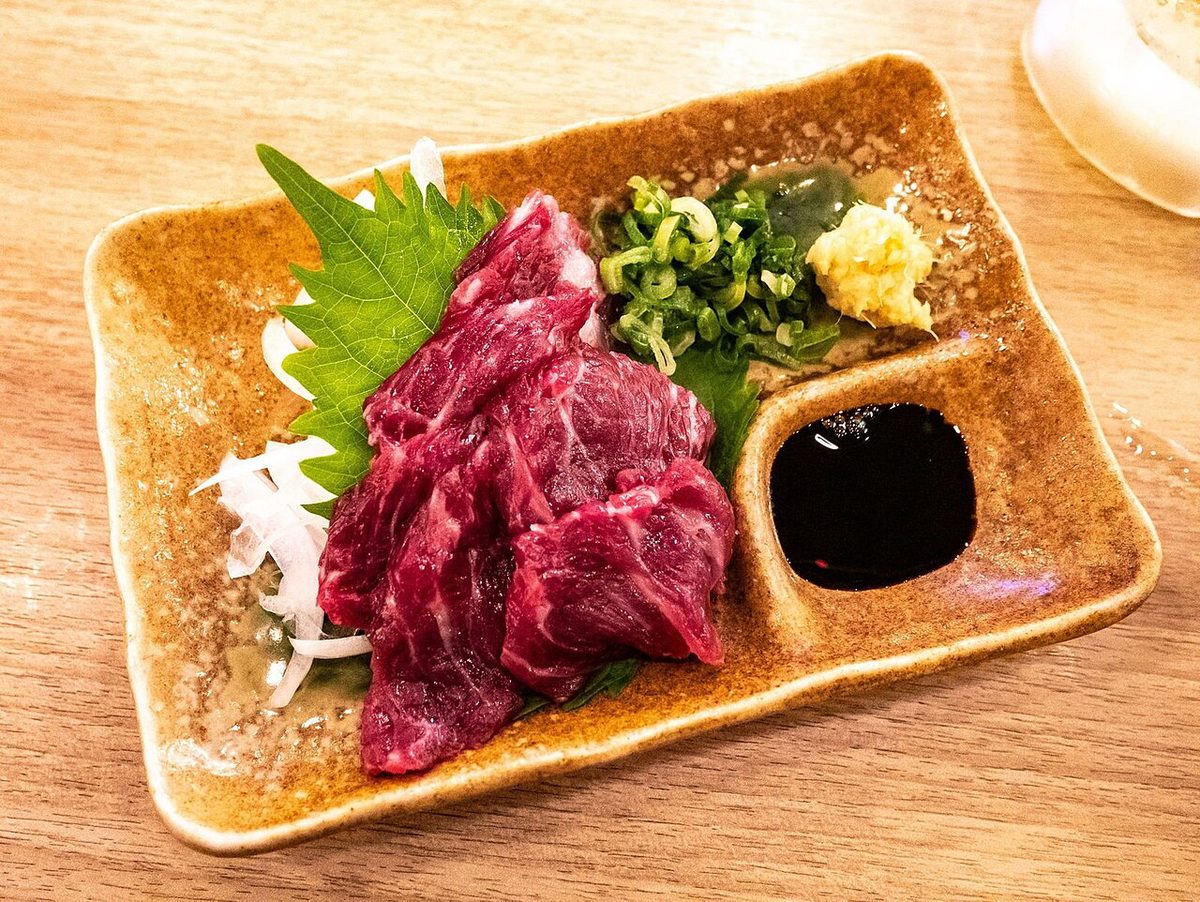
Photo: くろふね / CC BY 4.0 (Wikimedia Commons) Aizu basashi (horse meat sashimi)
馬刺し
Aizu basashi consists of thinly sliced raw lean red horse meat eaten with a spicy garlic-and-chili miso paste dissolved in soy sauce. Horse meat took root in the landlocked Aizu basin after the 1868 Boshin War as a protein source replacing scarce ocean fish, and the local karashi-miso style spread in the mid-20th century.
Ordered in the evening at local izakayas and specialty restaurants alongside Aizu sake.
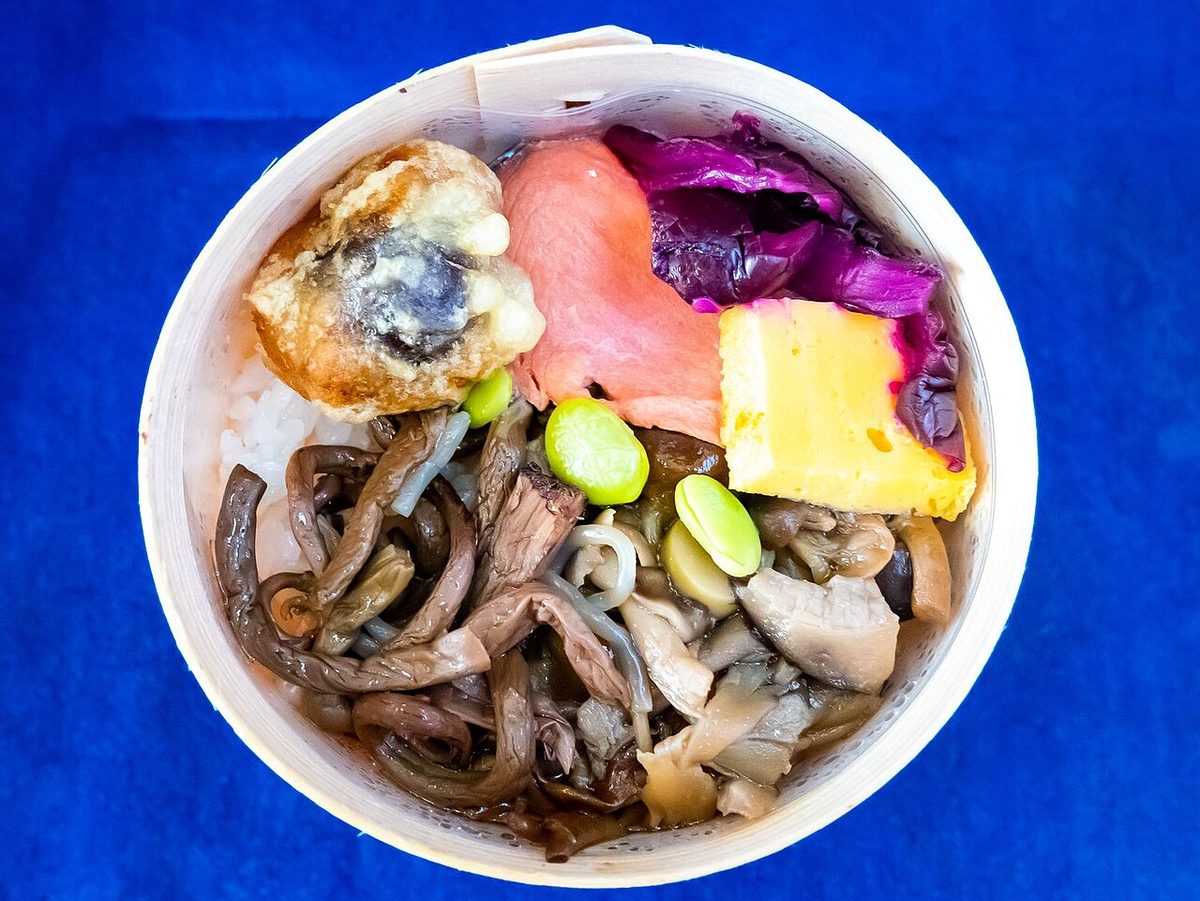
Photo: くろふね / CC BY 4.0 (Wikimedia Commons) Wappa-meshi (steamed rice in bentwood)
輪箱飯
Wappa-meshi (also called meppa-meshi locally) is seasoned Aizu rice topped with mountain vegetables, mushrooms, salmon, or whitebait and steamed inside a round bentwood box of hinoki cypress or cedar. Using traditional bentwood craft from the Aizu mountains, it brings together local rice and seasonal mountain and river ingredients.
Served hot in its wooden steaming box at lunch or dinner, often in a set with kozuyu soup and miso dengaku.
The LATITUDE editors’ 12 picks in Aizuwakamatsu
Our editors verified that these places were open (checked 2026-11-11). Check the official site for hours and closing days before visiting. Sponsored listings are marked.
Save places to your trip list and revisit them in this browser. No account needed.
Editors’ picks on the map — or build your own route
Tap a mark to see the place; squares are museums and sights (landmarks). Use “Build your own route” to make a walk of your own.
Loading the map
Map data © OpenStreetMap contributors
Browse by category
1 / 16
Omachi & Nakamachi
Mitsutaya
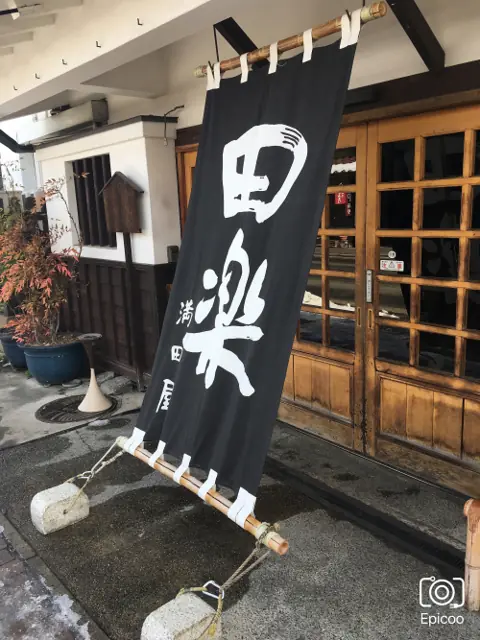
Photo: the shop’s official page 満田屋
A miso maker founded in 1834. In a converted miso storehouse it serves miso dengaku, an Aizu dish grilled skewer by skewer over charcoal at the hearth.
Shop 10:00–17:00, Miso Dengaku 10:30–16:30 (last order 16:20) · Closed: Wednesdays
Why the editors chose itInside a converted miso storehouse of an 1834 maker, serving miso dengaku grilled over hearth charcoal.
Omachi & Nakamachi
Kiriya Gongentei
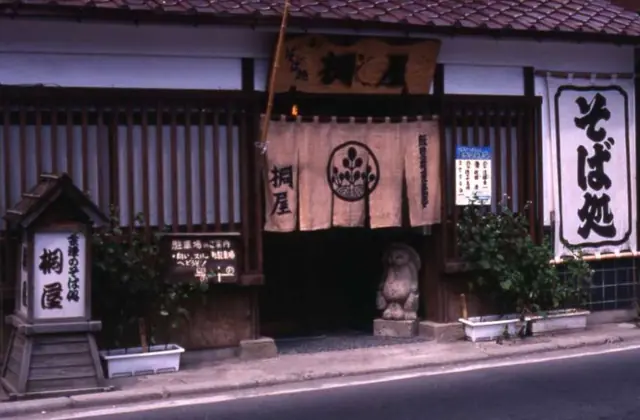
Photo: the shop’s official page 桐屋・権現亭
A hand-cut soba and Aizu cooking restaurant that began in 1971 as Kiriya Soba. Closed on Wednesdays.
Weekdays 11:00–15:00, weekends & holidays 11:00–16:00 (dinner by reservation) · Closed: Wednesdays
Why the editors chose itA restaurant dating back to 1971 for hand-cut soba alongside traditional Aizu dishes.
Tsurugajo
Tagoto
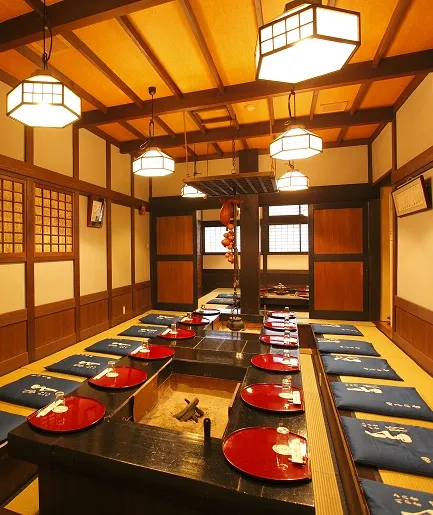
Photo: the shop’s official page 料理旅館 田事
Irregular closing days
A kappo inn in Johokumachi that began as a travellers’ inn on Nanukamachi; the resting stone where travellers sat still stands at the door. It serves Aizu dishes such as steamed meppa-meshi.
11:30–14:00 (last order 13:45), 17:30–21:00 (last order 20:30) · Closed: Irregularchecked Nov 2026
Why the editors chose itA former travellers' inn with its original resting stone at the door, serving steamed meppa-meshi and Aizu dishes.
Nanukamachi
Shibukawa Donya
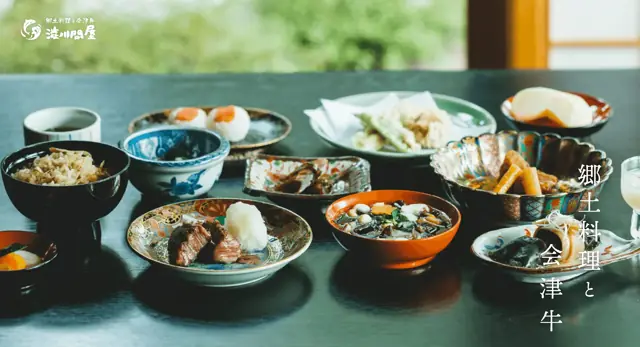
Photo: the shop’s official page 渋川問屋
The building of a seafood wholesaler founded in 1882, serving Aizu dishes made with dried herring, cod, kelp and scallops. It also has a café, Kaika.
11:00–15:00 (last entry 14:30), 17:00–21:00 (last entry 19:00) · Closed: Lunch open every day (dinner irregular)
Why the editors chose itInside an 1882 seafood wholesaler's building, serving Aizu dishes made with dried herring, cod and scallops.
Nanukamachi
Kura Kissa Kyo
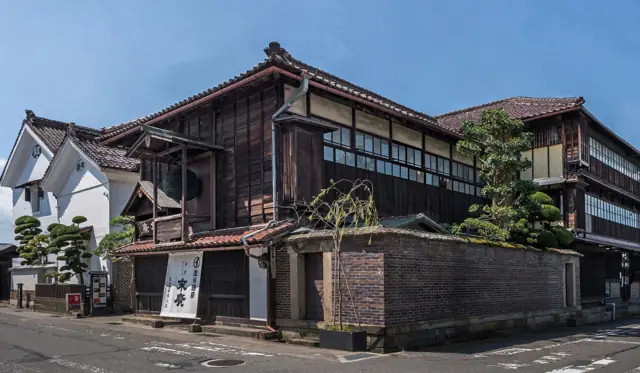
Photo: the shop’s official page 蔵喫茶 杏
A café in a storehouse hall built in 1892, inside the Kaeigura of Suehiro Sake Brewery. It serves coffee made with the brewing water, amazake from sake lees, and sweets made with sake.
10:00–16:30 · Closed: Wednesdays, Thursdayschecked Nov 2026
Why the editors chose itAn 1892 brewery storehouse café pouring coffee brewed with sake water, lees amazake and sake sweets.
Iimoriyama & Higashiyama
Ringdon Bakery
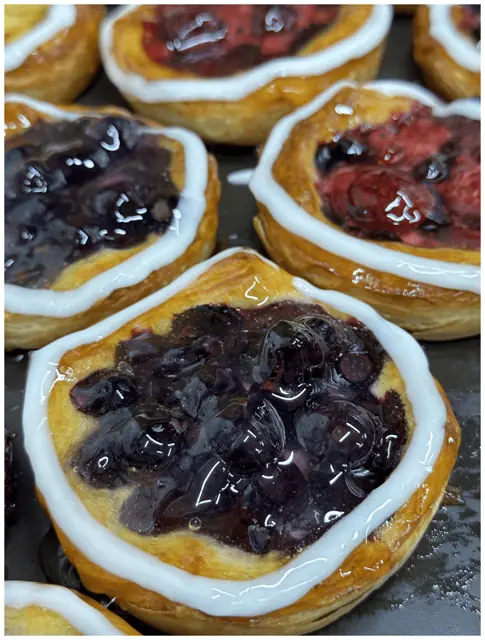
Photo: the shop’s official page りんどん
A bakery that uses its own wild yeast and a house blend of flour. The milk French bread is the signature. Closed Monday to Wednesday.
Thu–Sun 9:30–16:00 · Closed: Mondays, Tuesdays, Wednesdays
Why the editors chose itA bakery using house wild yeast and a custom flour blend, known for milk French bread.
Tsurugajo
Honke Nagatoya
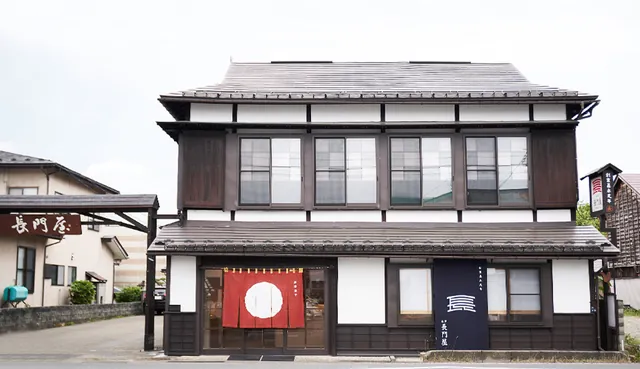
Photo: the shop’s official page 本家長門屋
A wagashi shop founded in 1848. Its Yokan Fantasia, made with champagne, oni-walnuts and raisins, won a Good Design Award in 2017. Closed on Sundays.
Why the editors chose itAn 1848 wagashi maker behind Yokan Fantasia, made with champagne, walnuts and raisins.
Made in Aizuwakamatsu
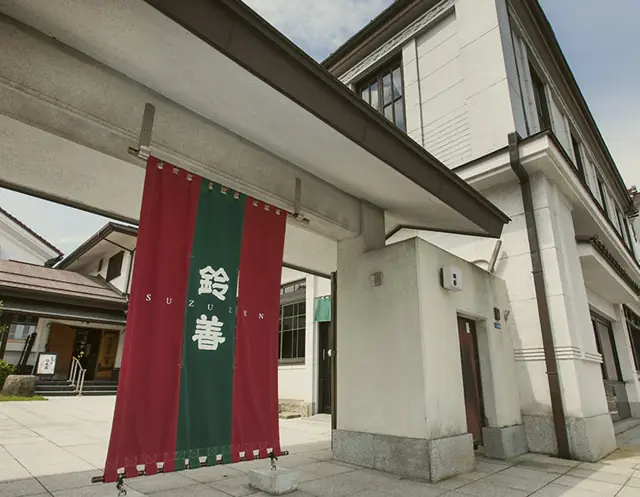
Aizu lacquerware is a craft of the castle town's merchant houses. Suzuzen, a lacquerware wholesaler founded in 1832, keeps its storehouses open to visitors, with exhibits, a shop and a workshop where you paint a maki-e design yourself.
Storehouse and banner of Suzuzen Lacquerware·Photo: Suzuzen Lacquerware (official site)
Omachi & Nakamachi
Suzuzen Lacquerware
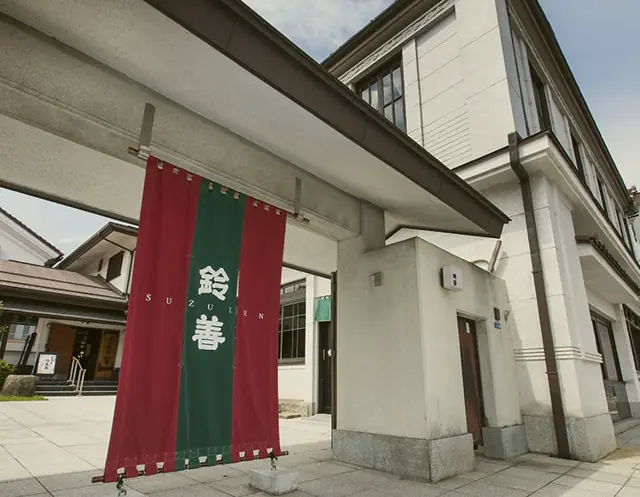
Photo: the shop’s official page 鈴善漆器店
Irregular closing days
A lacquerware wholesaler founded in 1832. Its storehouses are open as a hall of Aizu lacquer, with a shop and a maki-e workshop.
9:30–17:00 · Closed: Irregularchecked Nov 2026
Why the editors chose itAn 1832 wholesaler whose open storehouses display and sell Aizu lacquer alongside maki-e workshops.
Made in Aizuwakamatsu
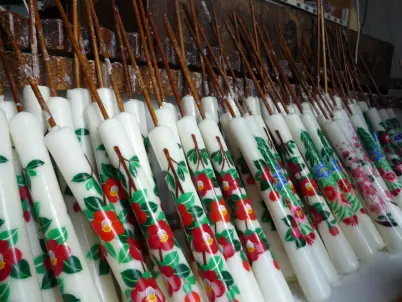
Aizu painted candles are Japanese candles whose shafts are painted by hand with chrysanthemums, peonies, plum blossoms and lucky patterns. They are named among the exhibits at the 1873 Vienna World Exposition. Ozawa, founded in 1785, still paints them and runs a painting workshop.
Hand-painted Aizu sumac-wax candles hanging in a row·Photo: Ozawa Candle Shop (official site)
Omachi & Nakamachi
Ozawa Candle Shop
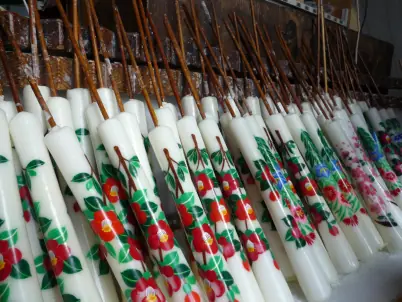
Photo: the shop’s official page 小澤蝋燭店
Irregular closing days
A Japanese candle shop founded in 1785, in a townhouse built in 1887. It makes Aizu painted candles by hand and runs a painting workshop.
Weekdays 10:00–17:30, weekends 10:00–19:30 · Closed: Irregularchecked Nov 2026
Why the editors chose itInside an 1887 townhouse, a 1785 candle maker crafting hand-painted floral candles and offering painting workshops.
Made in Aizuwakamatsu
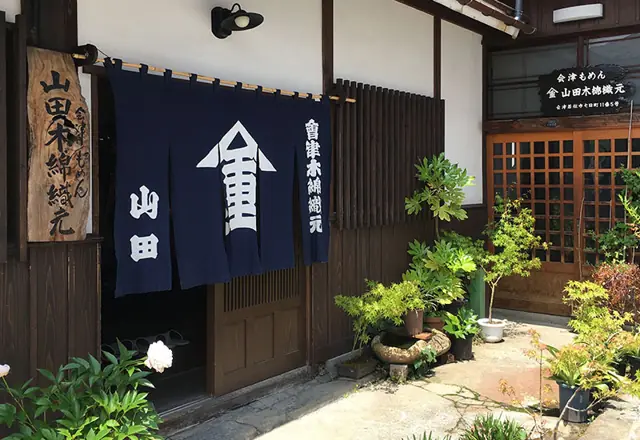
Aizu cotton is a striped plain weave made with warp threads of two or more colours. Aizu lies at the northern limit of cotton growing in Japan, so the cloth is thick and warm. Yamada Momen still runs a Toyoda power loom from the early Showa era.
Entrance and noren curtain of Yamada Momen weaving house·Photo: Yamada Momen (official site)
Nanukamachi
Yamada Momen
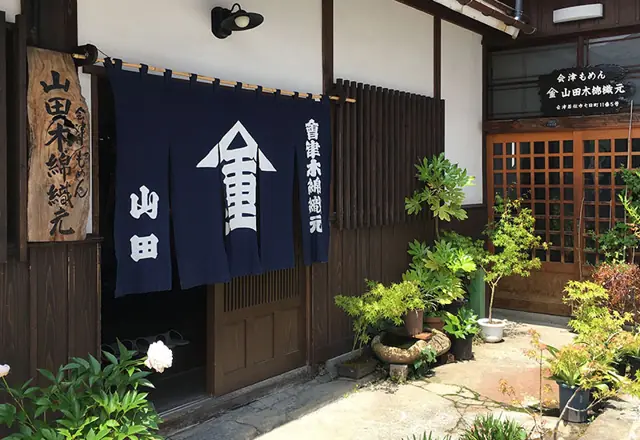
Photo: the shop’s official page 山田木綿織元
A weaver of Aizu cotton on Nanukamachi. Its factory still runs a Toyoda loom from the early Showa era, and it has its own cloth shop.
10:00–16:00 · Closed: Open every day (occasional closures in New Year and winter weekends/holidays)
Why the editors chose itBuy Aizu cotton cloth directly beside a working factory still running an early-Showa Toyoda loom.
Made in Aizuwakamatsu
Tsurunoe, founded in 1794 on Nanukamachi-dori, is a sake brewery in the castle town. It makes Aizu Chujo and Yuri, and the shop pours tastings and sells from nine in the morning to six.
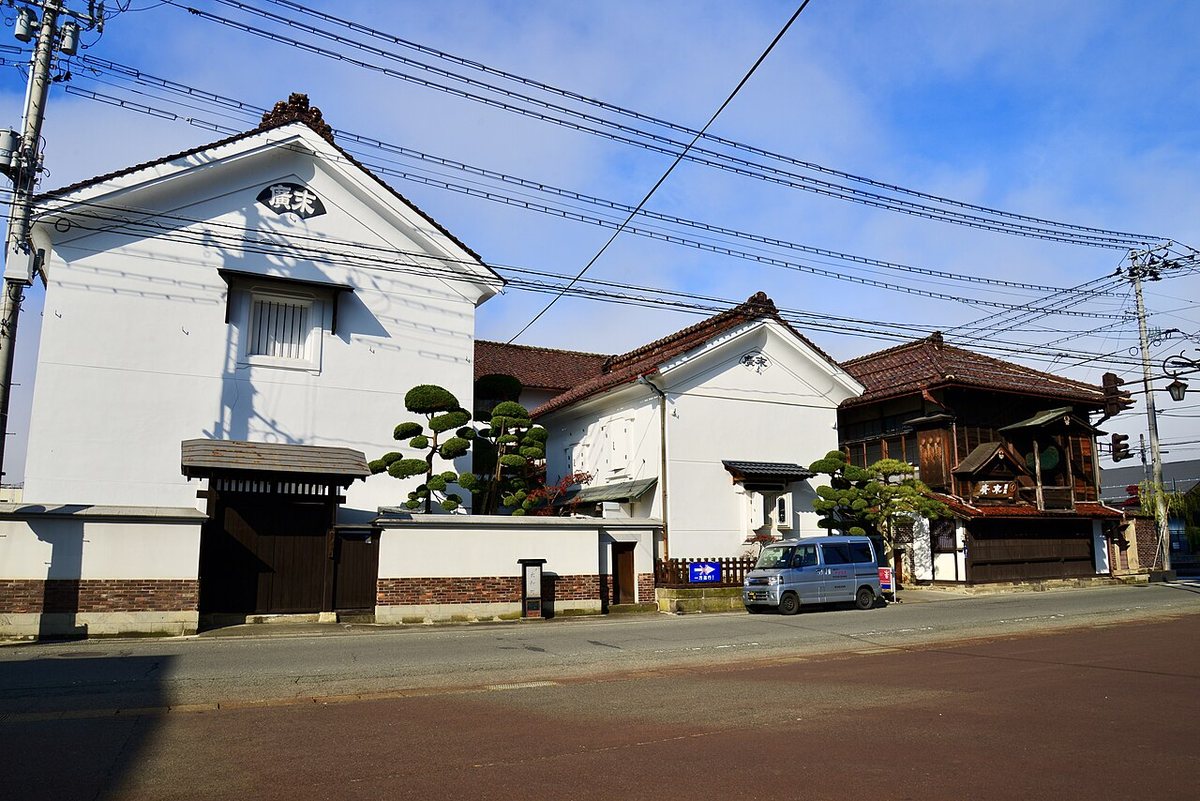
White-walled sake brewery buildings of Suehiro Shuzo in Aizuwakamatsu·Photo: 皓月旗 / CC BY-SA 4.0 (Wikimedia Commons)
Nanukamachi
Tsurunoe Sake Brewery
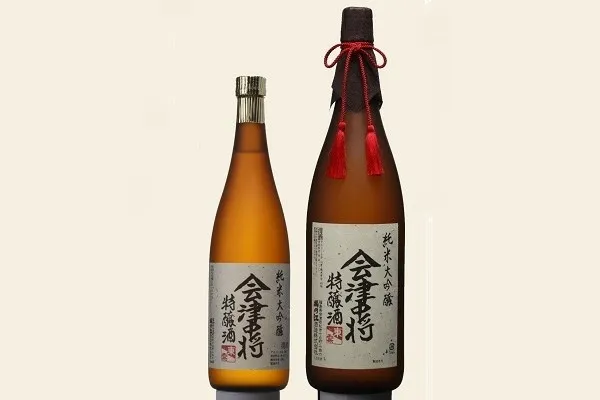
Photo: the shop’s official page 鶴乃江酒造
A sake brewery founded in 1794, on Nanukamachi-dori. The shop pours tastings and sells Aizu Chujo and Yuri, from nine to six, closed on New Year’s Day.
9:00–18:00 · Closed: New Year’s Day (Jan 1)checked Nov 2026
Why the editors chose itA 1794 brewery shop on Nanukamachi-dori pouring tastings and selling Aizu Chujo and Yuri.
Iimoriyama & Higashiyama
Aizu Keizanyaki Yamato
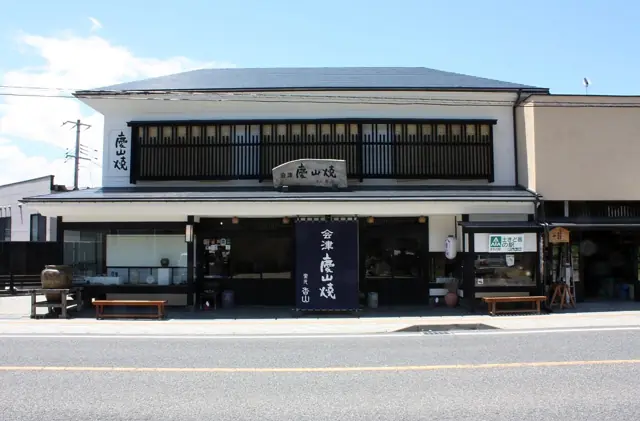
Photo: the shop’s official page 会津慶山焼 やま陶
A kiln for Aizu Keizanyaki, a traditional craft of Fukushima. It makes everyday tableware and runs pottery classes and painting sessions. Open nine to six, every day except New Year’s Day.
9:00–18:00 · Closed: Open every day (except Jan 1)checked Nov 2026
Why the editors chose itA kiln firing everyday Aizu Keizanyaki tableware that also runs pottery classes and painting sessions.
Sights in Aizuwakamatsu
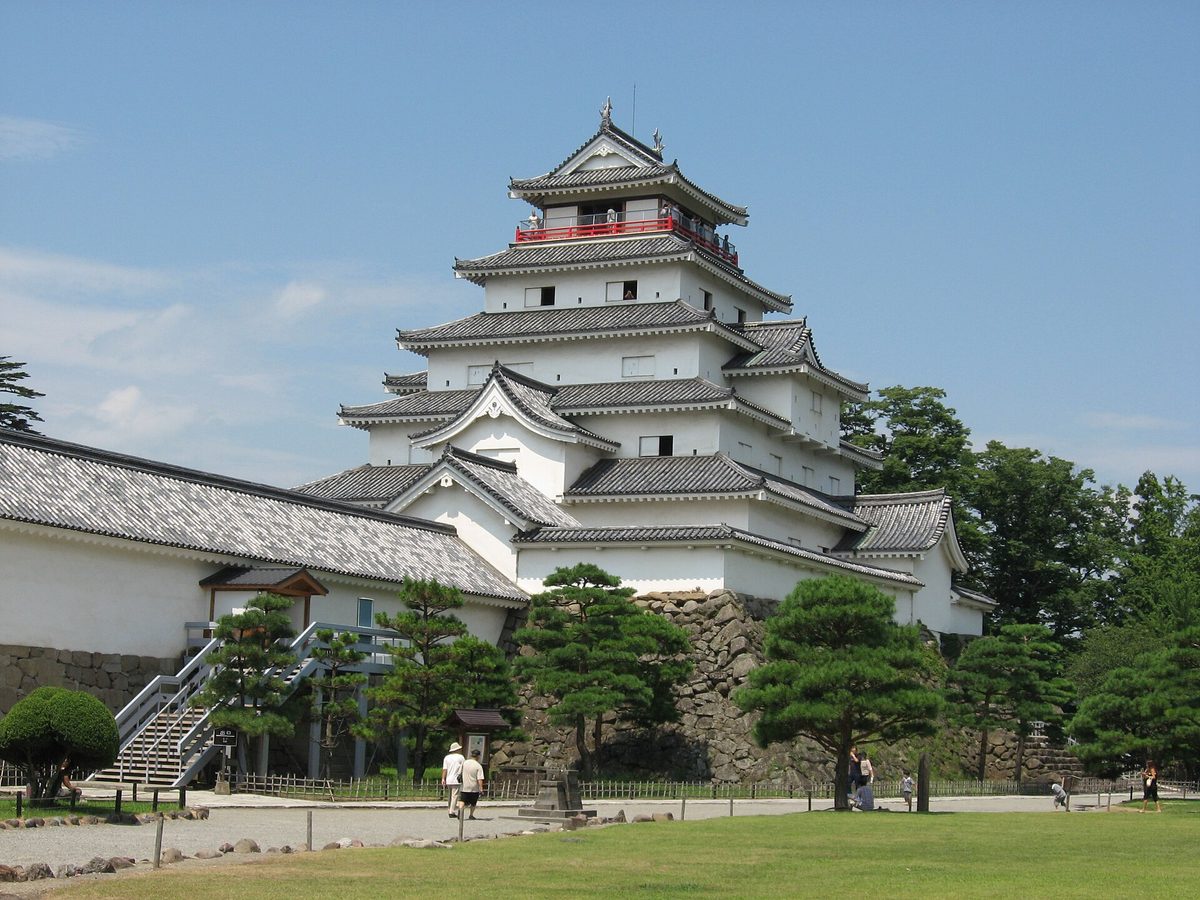
Photo: Σ64 / CC BY-SA 3.0 (Wikimedia Commons) The symbol of Aizuwakamatsu, officially Wakamatsu Castle, which withstood the Boshin War of 1868.
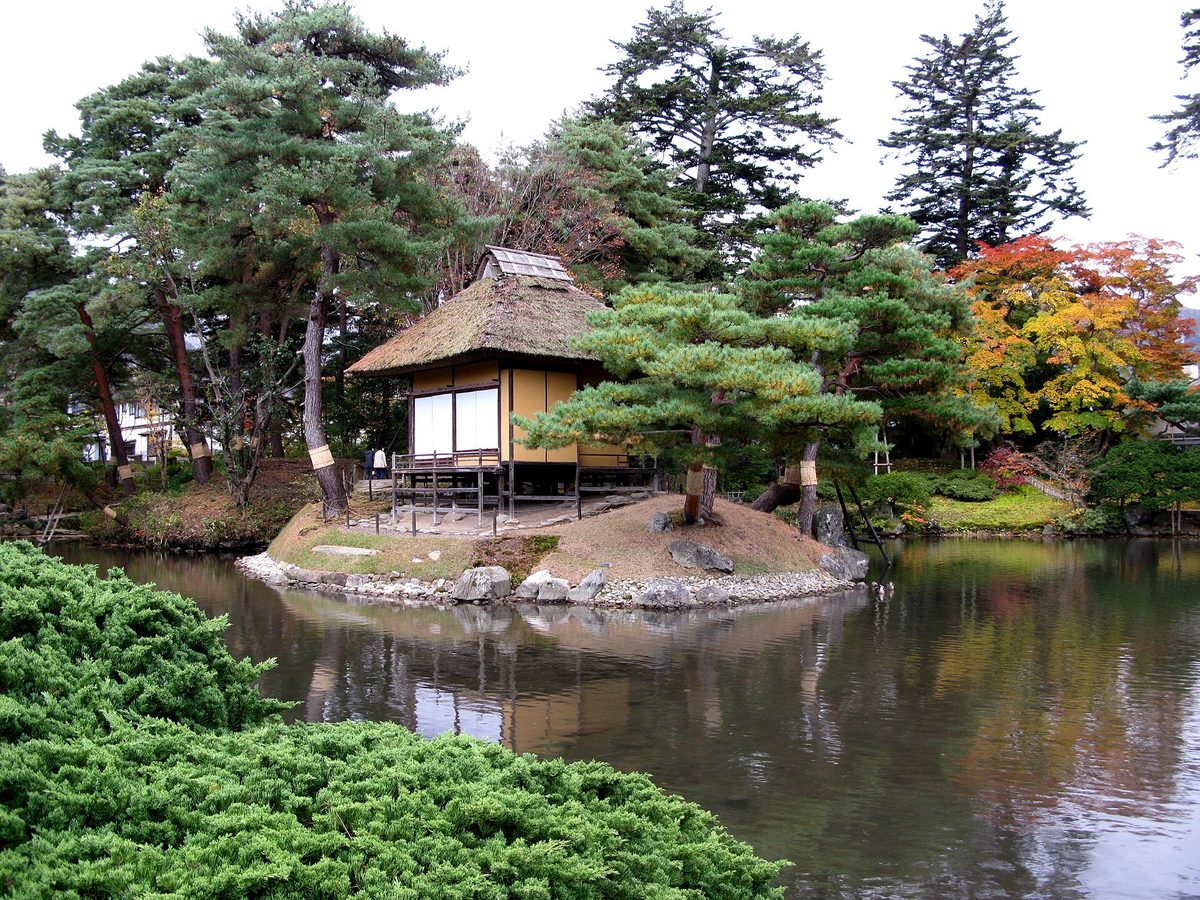
Photo: Qwert1234 / Public domain (Wikimedia Commons) The garden of the Aizu Matsudaira clan, a national place of scenic beauty.
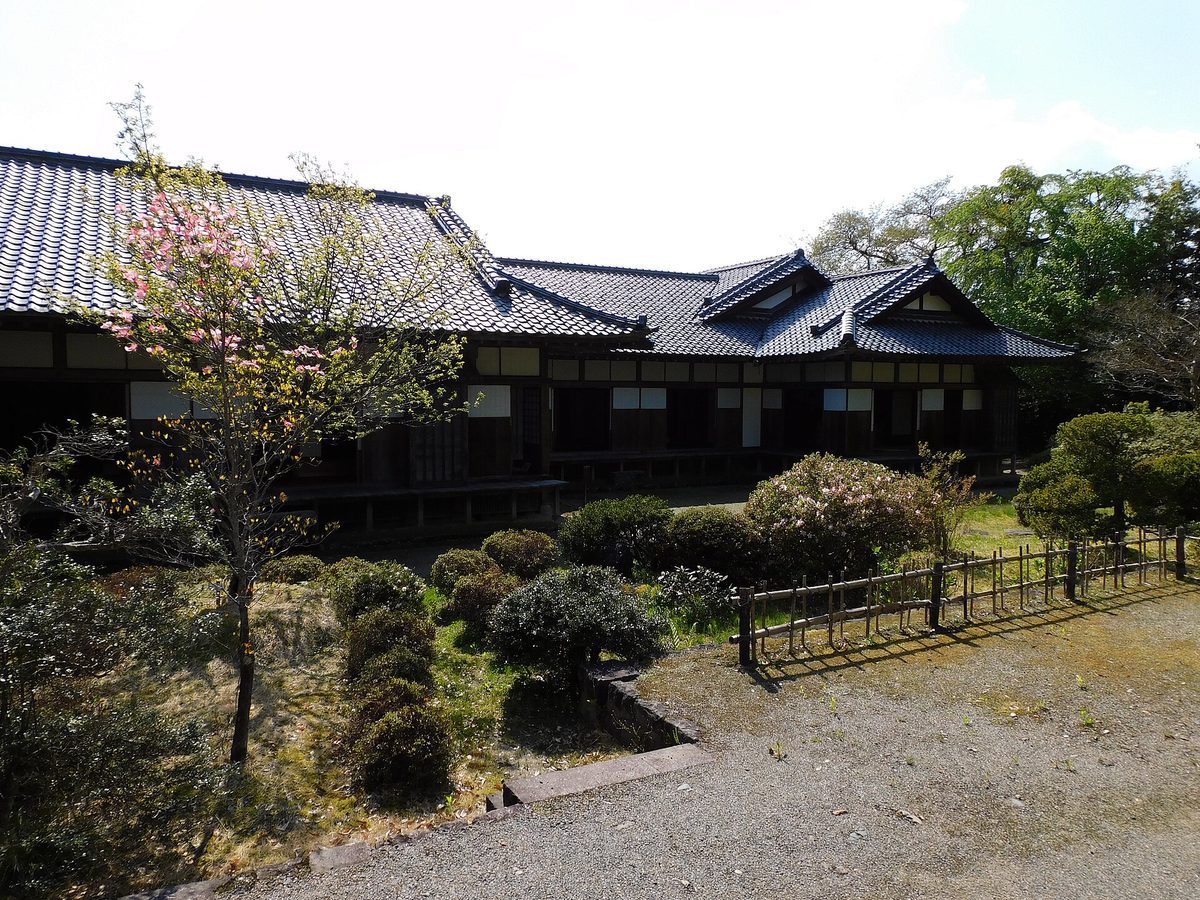
Photo: Miyuki Meinaka / CC BY-SA 4.0 (Wikimedia Commons) A museum of samurai life centred on the Saigo Tanomo residence, with listed buildings such as the chief retainer’s house and the Nakahata outpost.
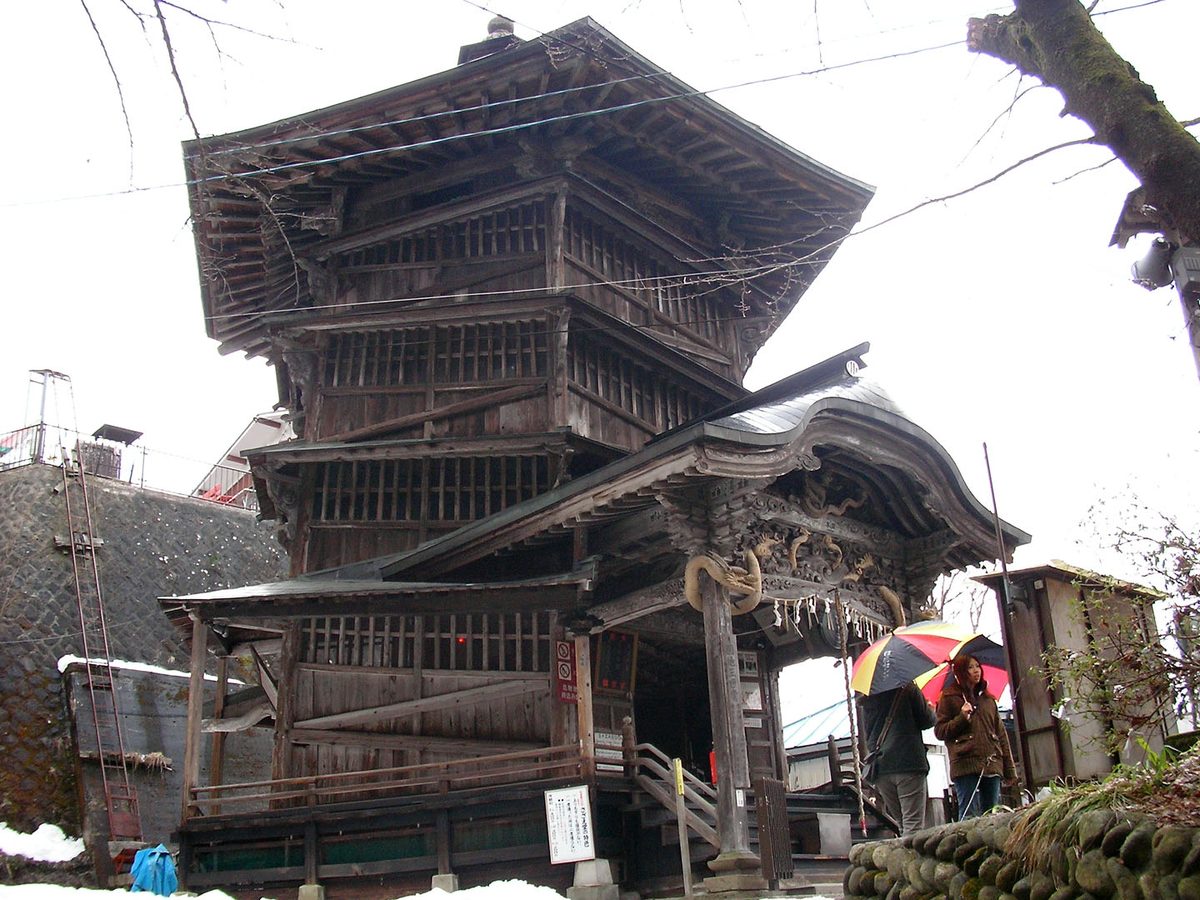
Photo: Kounosu / CC BY-SA 3.0 (Wikimedia Commons) A hexagonal three-storey hall, 16.5 metres high, built on Mount Iimori in 1796; its formal name is Entsu Sanso-do.
Repair work on the entrance roof after snow damage in March 2026 was completed on 10 April. Open 9:00 to 16:00 from December to March, and 8:15 to sunset from April to November.
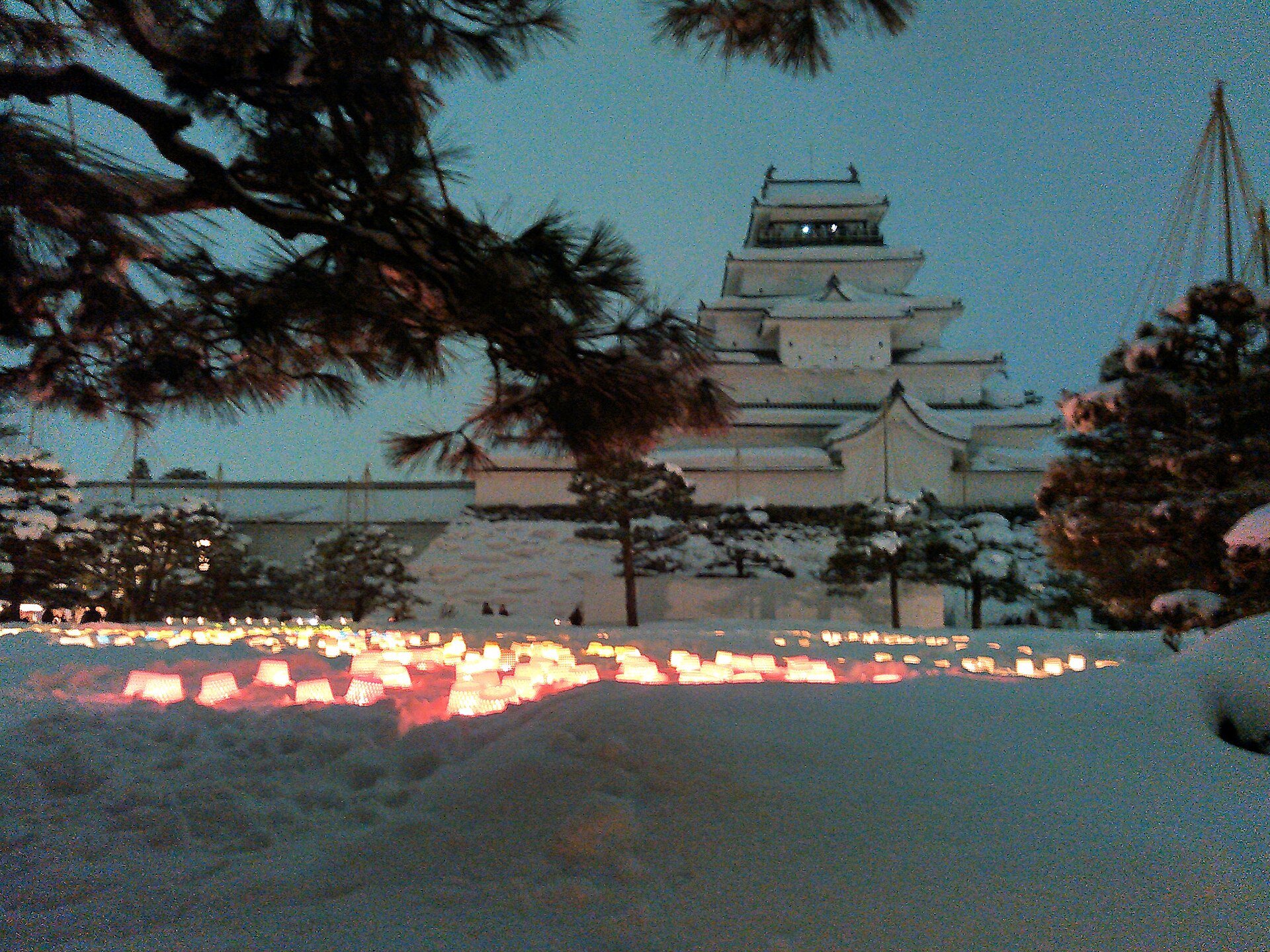
Photo: Sugikats / CC BY-SA 4.0 (Wikimedia Commons) An annual mid-February winter festival at Tsuruga Castle and Oyakuen Garden in Aizu-Wakamatsu where thousands of hand-painted traditional Aizu candles flicker in carved snow lanterns.
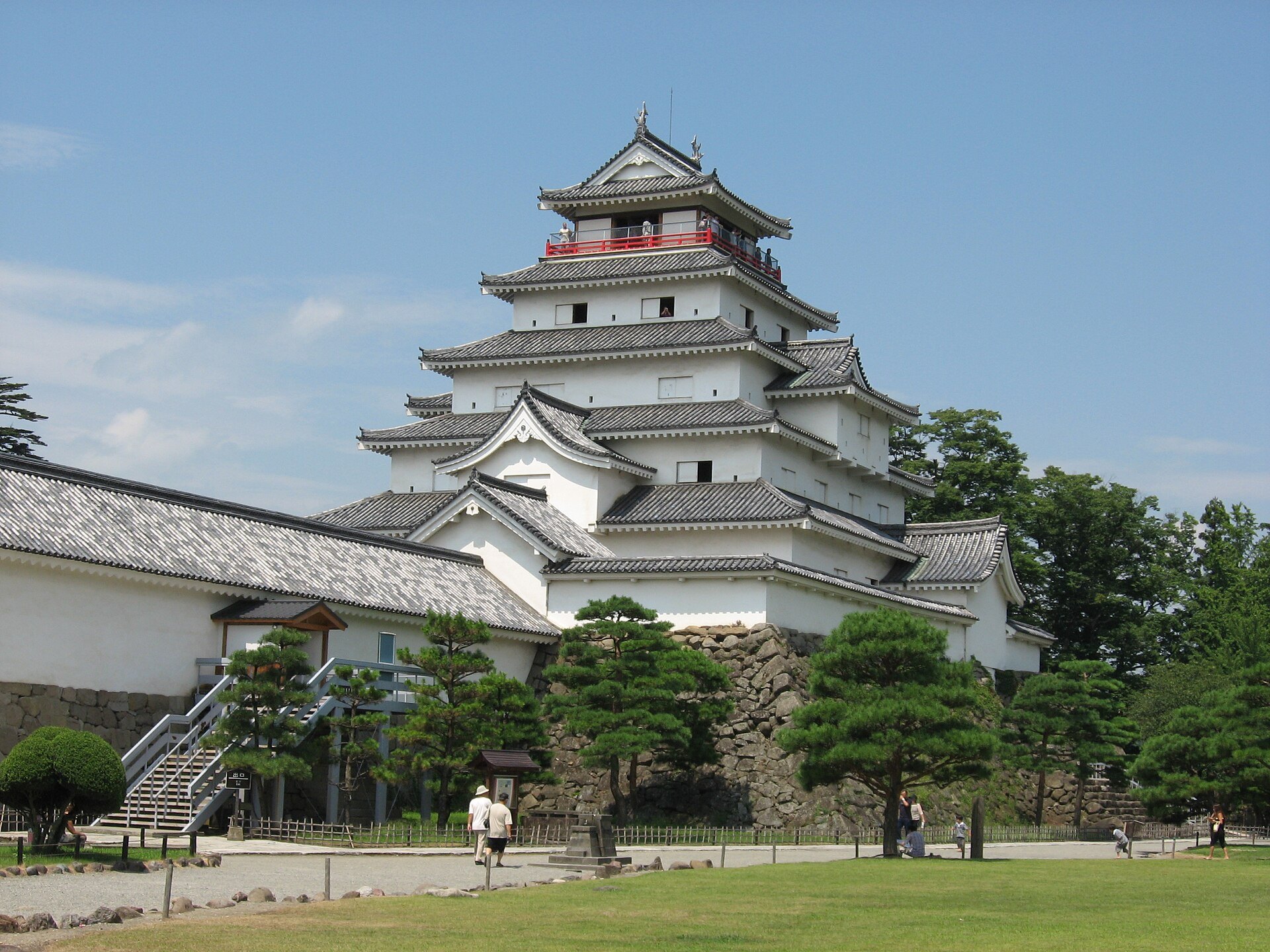
Photo: Σ64 / CC BY-SA 3.0 (Wikimedia Commons) Known as an impregnable castle, it is a historic site that served as the stage for the Boshin War at the end of the Edo period.
These are local landmarks. Each was checked to be open on its official site (checked 2026-11-17). Please confirm hours before you go.
Beyond Aizuwakamatsu
1 / 5
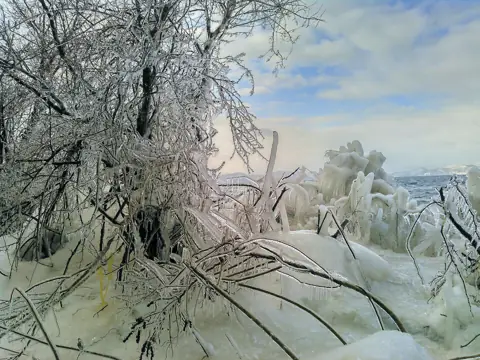 Inawashiro · 17 km
Lake Inawashiro Spray Ice & Swans →
Rare wind-whipped lake spray freezes onto shoreline trees at Tenjinhama on Lake Inawashiro to form natural ice sculptures, paired with thousands of wintering swans beneath snow-capped Mt. Bandai.
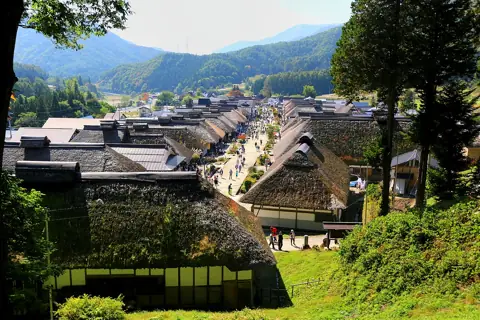 Shimogo · 19 km
Ouchi-juku →
A street lined with thatched-roof houses that retains the atmosphere of a post town from the Edo period.
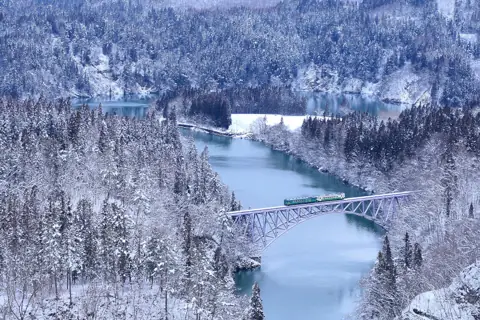 Mishima (Aizu) · 23 km
First Tadami River Bridge Viewpoint →
An elevated ridge viewpoint behind Michi-no-Eki Oze-Kaido Mishima-juku overlooking the iconic arched railway bridge as JR Tadami Line trains cross the snow-draped Tadami River gorge.
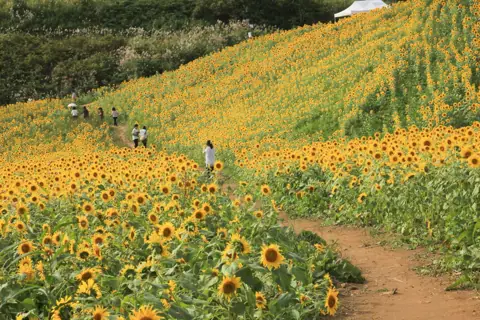 Kitakata · 28 km
Sannokura Highland Flower Field →
A ski-slope hillside above Kitakata carpeted with millions of yellow rapeseed blossoms in May and ~2.5 million sunflowers in August overlooking the Aizu Basin.
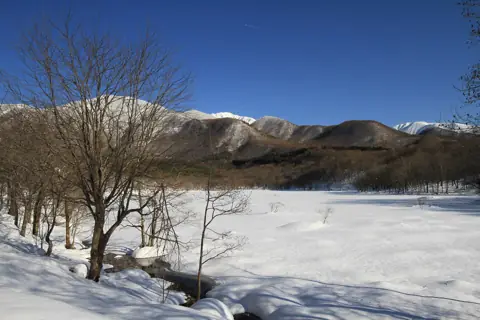 Aizuwakamatsu · 34 km
Kannon-numa Forest Park →
A quiet 900m-elevation marshland park in Shimogo dotted with floating moss islets and a 3.2km walking loop, famous for mirror-like autumn foliage reflections.


Distances are straight-line from the town centre. Each page has how to get there and a suggested day.
Questions people ask
- Where can I eat Aizuwakamatsu's local dishes?
Kozuyu (dried scallop broth soup): Tagoto (Tsurugajo), Shibukawa Donya (Nanukamachi), Kiriya Gongentei (Omachi & Nakamachi)
Wappa-meshi (steamed rice in bentwood): Tagoto (Tsurugajo)
- Where can I see or buy Aizu lacquerware, Aizu painted sumac-wax candles, Aizu cotton in Aizuwakamatsu?
Aizu lacquerware: Suzuzen Lacquerware (Omachi & Nakamachi)
Aizu painted sumac-wax candles: Ozawa Candle Shop (Omachi & Nakamachi)
Aizu cotton: Yamada Momen (Nanukamachi)
Aizu sake brewing: Tsurunoe Sake Brewery (Nanukamachi)
Craft: Aizu Keizanyaki Yamato (Iimoriyama & Higashiyama)
- What can I visit on foot around Omachi & Nakamachi?
Aizu lacquerware: Suzuzen Lacquerware
Aizu painted sumac-wax candles: Ozawa Candle Shop
Food: Mitsutaya, Kiriya Gongentei
Every place was checked to be open in November 2026. Hours can change, so please check the official site before you go.
If you like Aizuwakamatsu
- Fukuoka
Fukuoka, Japan
For example, Aizu Keizanyaki Yamato here, and Tokineri in Fukuoka.
- Asahikawa
Hokkaido, Japan
For example, Tsurunoe Sake Brewery here, and Takasago Shuzo in Asahikawa.
- Shiogama
Miyagi, Japan
For example, Tsurunoe Sake Brewery here, and Urakasumi Sake Gallery in Shiogama.
Chosen by how close the towns and their places are in what they make and serve.