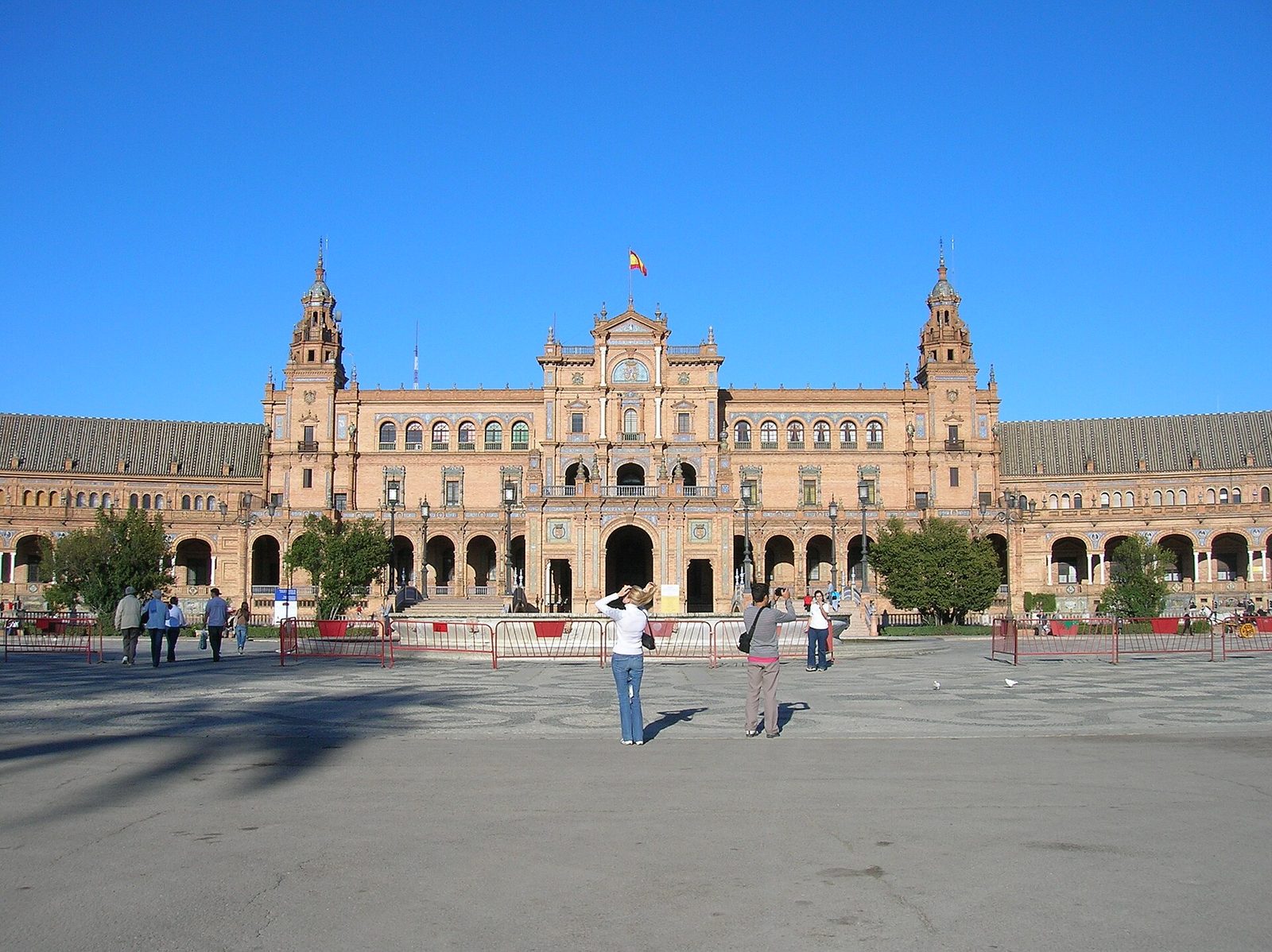
37.4° N
Seville
Andalusia, Spain
Andalusia’s capital on the Guadalquivir River, known for Mudéjar palaces, Triana pottery kilns and centuries-old taverns. Winter brings mild, sunny days, cooler evenings and bitter oranges ripening along the streets, with quieter monuments across Centro, Arenal, Santa Cruz, Alameda and Triana: the editors’ picks.
Seville, on film
6 sights and 17 places, each checked open in 2026, in 51 seconds.
Found somewhere you like? The map and the list below have the address, hours and official site.
Tap for sound
What to eat in Seville
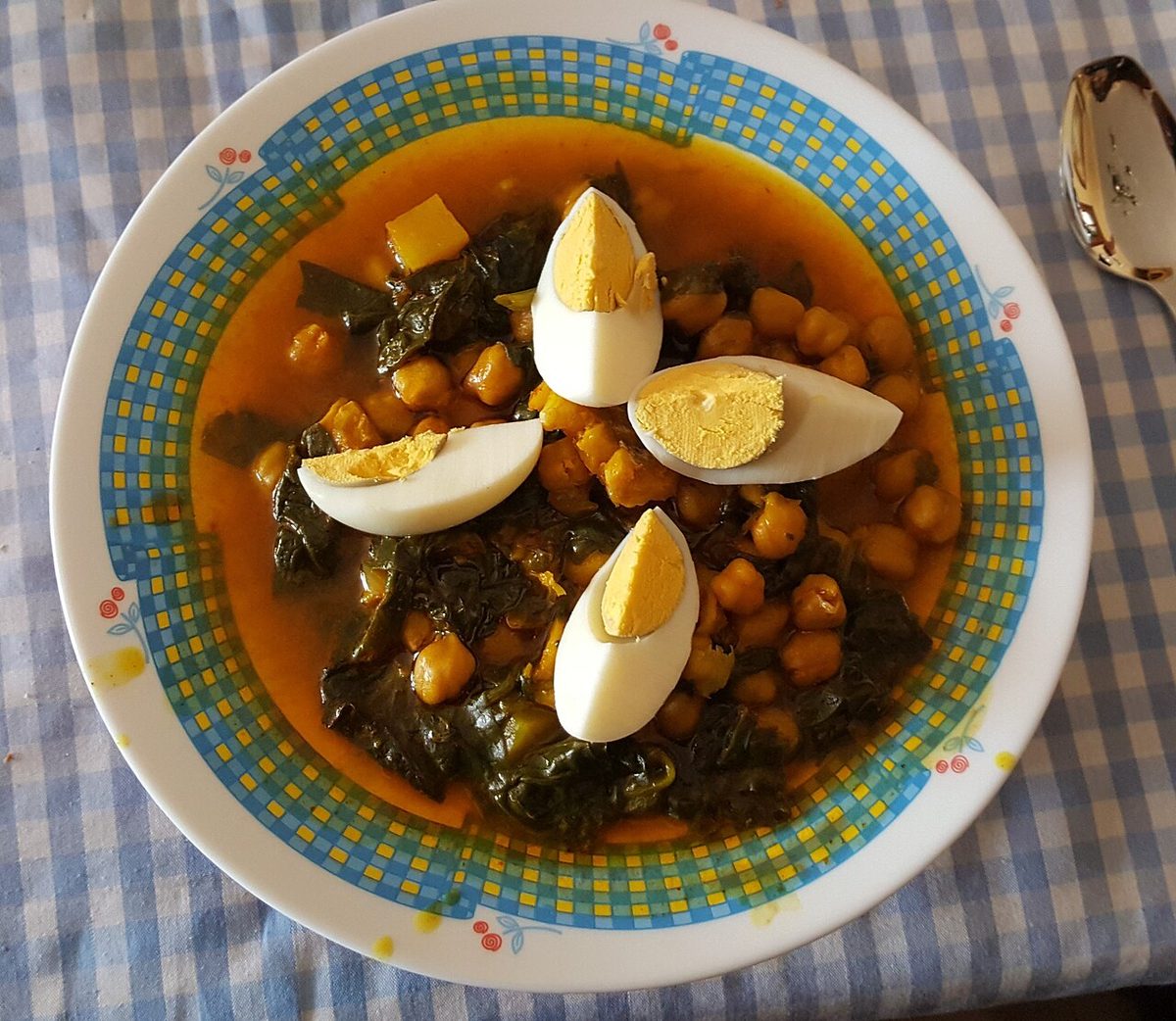
Photo: Toniher / CC BY-SA 4.0 (Wikimedia Commons) Espinacas con garbanzos (spinach with chickpeas)
Espinacas con garbanzos
A thick stew of chopped spinach and chickpeas bound with a pounded paste of fried bread, garlic, cumin, sweet paprika, and sherry vinegar. Rooted in Seville's Moorish and Sephardic culinary heritage, it became a meatless Lenten staple that local taverns now serve all year.
Ordered as a small tapa at the bar counter and eaten with slices of fried or toasted bread, though especially linked to Lent.
Where to eat it
- El RinconcilloMap
- Bar Las TeresasMap
- Casa Morales ↓
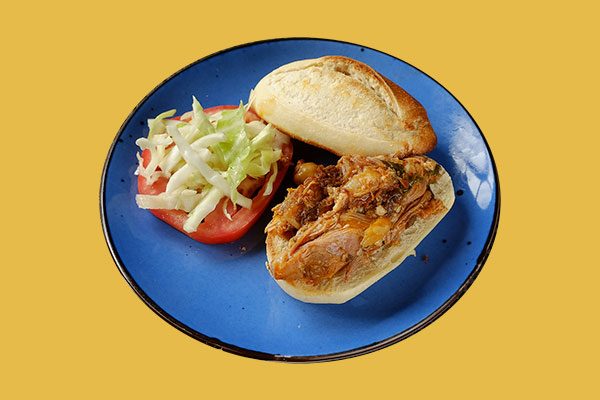
Photo: Bar Restaurante Los Cuevas (official site) Montadito de pringá (shredded stew-meat roll)
Montadito de pringá
A small warm bread roll stuffed with shredded beef, pork, bacon, chorizo, and blood sausage cooked down together. It comes from Seville's home-cooking tradition of eating the leftover meats from Andalusian puchero stew with bread so nothing goes to waste.
Eaten warm by hand at the bar counter as a quick tapa, usually paired with chilled dry sherry or cold draft beer.
Where to eat it
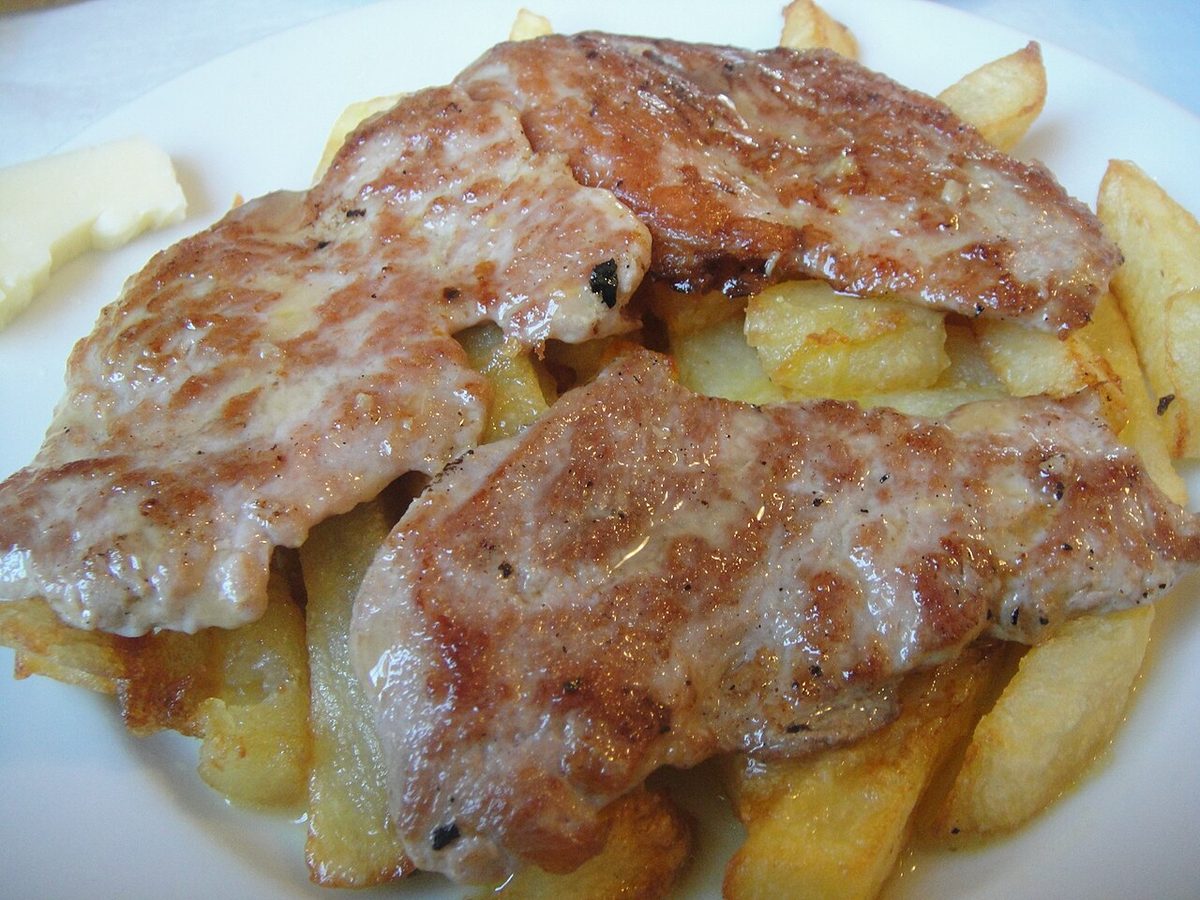
Photo: Miguelbremen / CC BY-SA 3.0 (Wikimedia Commons) Solomillo al whisky (pork tenderloin in whisky sauce)
Solomillo al whisky
Pan-seared medallions of pork tenderloin served in a glossy sauce of garlic, olive oil, lemon juice, stock, and whisky or brandy. The dish was invented in 1968 at Seville's Cafetería Rioja Pasaje and quickly became a staple across the city's tapas bars.
Ordered as a hot tapa or sharing plate at tapas bars, always accompanied by french fries and bread to mop up the sauce.
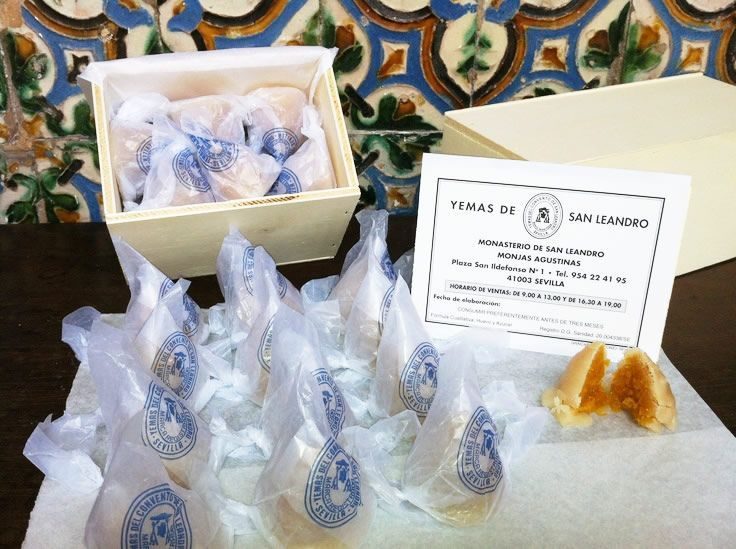
Photo: Convento de San Leandro (Monasterio de San Leandro) (official site) Yemas de San Leandro (convent egg-yolk sweets)
Yemas de San Leandro
Small cone-shaped sweets cooked from egg yolks, sugar syrup, and a few drops of lemon juice, wrapped individually in white paper. Cloistered Augustinian nuns at Seville's Convento de San Leandro have made them since at least the 16th century, originally using yolks left over after egg whites went to clarify wine and starch habits.
Bought in small wooden boxes Monday through Saturday by ringing a bell and placing payment on the convent's revolving wooden turntable (torno).
Where to eat it
The LATITUDE editors’ 17 picks in Seville
Our editors verified that these places were open (checked 2026-11-21). Check the official site for hours and closing days before visiting. Sponsored listings are marked.
Save places to your trip list and revisit them in this browser. No account needed.
Editors’ picks on the map — or build your own route
Tap a mark to see the place; squares are museums and sights (landmarks). Use “Build your own route” to make a walk of your own.
Loading the map
Map data © OpenStreetMap contributors
Browse by category
1 / 19
Centro
Lama la Uva
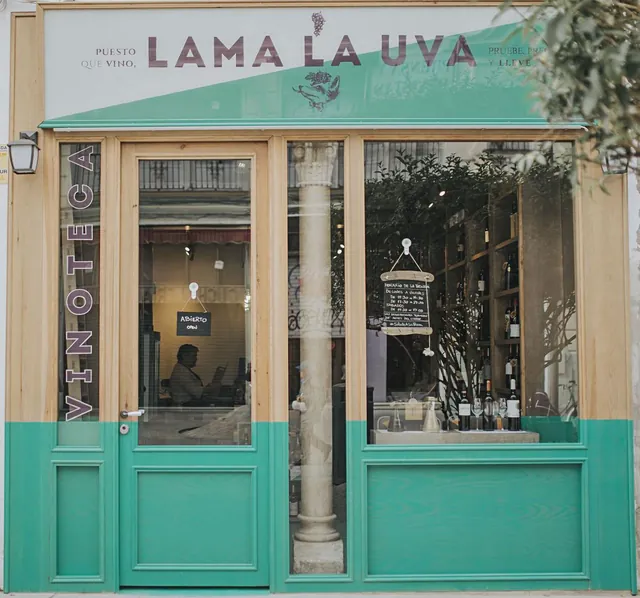
Photo: the shop’s official page An independent wine shop and tasting bar behind Metropol Parasol on Calle Regina 1, run by WSET-certified Ana. Wooden shelves hold small-producer Spanish and low-intervention wines served alongside Iberian charcuterie, cheeses and tinned seafood; closed Mondays.
Tue–Wed 11:30–14:30, 19:00–0:00; Thu 11:30–16:30, 19:00–0:00; Fri–Sat 11:30–0:00; Sun 12:30–16:30, 20:00–0:00 · Closed: Mondays
Why the editors chose itA wine shop and tasting bar where WSET-certified Ana pairs low-intervention Spanish bottles with cheese and charcuterie.
Triana
Casa Orzáez
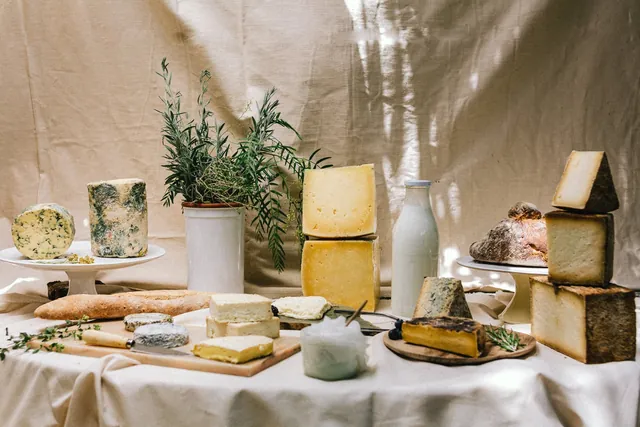
Photo: the shop’s official page An artisan cheese shop, sourdough bakery and morning café along Triana’s Calle Betis 67, showcasing Mare Nostrum raw-milk goat cheeses alongside wild ferments, seasonal preserves and natural wines. Open Wednesday to Sunday 09:00–14:00; closed Monday and Tuesday.
Why the editors chose itA cheese-workshop storefront open 9:00–14:00 for raw-milk goat cheeses, house sourdough and ferments.
Arenal
Bodeguita Romero
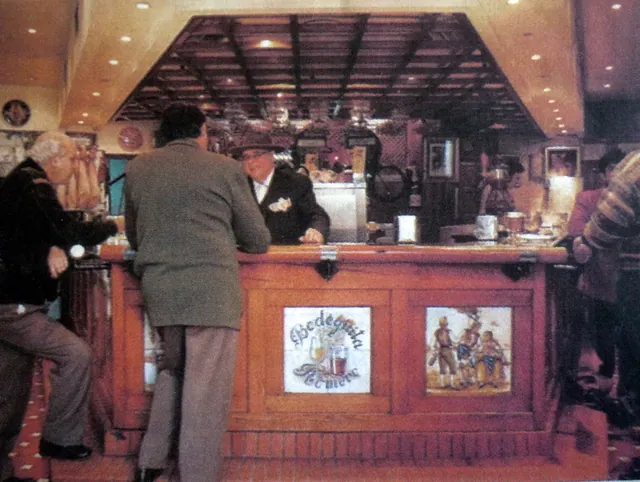
Photo: the shop’s official page A family-run tapas bar founded in 1939 and situated at Calle Harinas 10 in Arenal since 1977, renowned for its montadito de pringá alongside classic Andalusian dishes and sherries from the Jerez triangle. Closed Sunday evenings and Mondays.
Tue–Fri 9:00–17:00, 20:00–00:00; Sat 12:00–17:00, 20:00–00:00; Sun 12:00–17:00 · Closed: Sunday evenings and Mondays
Why the editors chose itA 1939 Arenal tapas bar famous for its warm montadito de pringá paired with Jerez sherries.
El Porvenir
Sobretablas
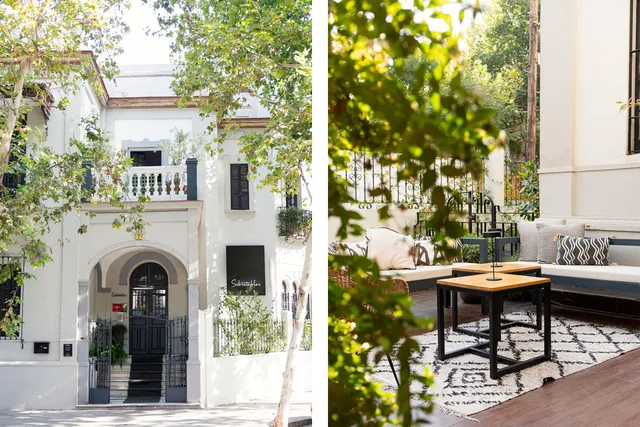
Photo: the shop’s official page Opened in October 2018 by chef Camila Ferraro and sommelier Robert Tetas in a chalet at Calle Colombia 7 in El Porvenir, featuring connected dining rooms designed like a lived-in home. It serves à la carte and tasting menus reinterpreting classic Andalusian dishes alongside a 1,200-reference cellar centered on Marco de Jerez fortified wines; open Tuesday to Saturday for lunch at 13:45 and dinner at 20:15, closed Sunday and Monday.
Why the editors chose itSet in a lived-in chalet, pairing reimagined Andalusian cuisine with a 1,200-reference cellar centered on Jerez wines.
Alameda
MUY Coffee
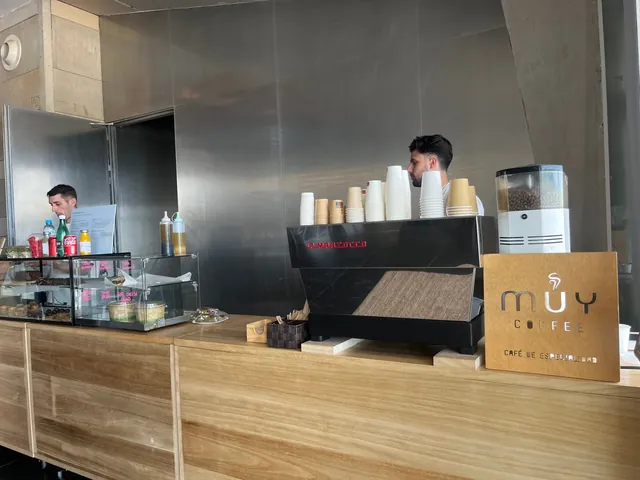
Photo: the shop’s official page A minimalist specialty coffee counter at Calle Correduría 14 between the Alameda and Las Setas. It pours V60 and batch-brew filter coffees alongside flat whites using beans from local roaster Ineffable, and sells retail bags; open daily year-round.
Why the editors chose itPouring V60 filter coffees and flat whites from local roaster Ineffable, with retail bags to take home.
Alameda
Parcería Café
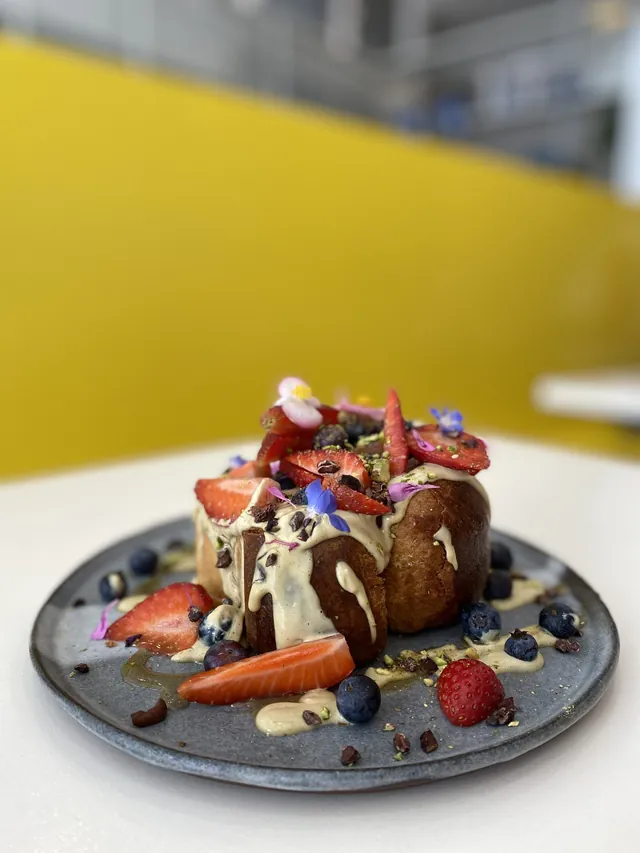
Photo: the shop’s official page A bright café on the quiet square beside the Feria market, pouring Alquimista Coffee Lab beans alongside organic teas, herbal infusions and natural wines from small wineries. Seasonal breakfast plates and waffles are served from a kitchen open 09:00–12:00.
Why the editors chose itBeside the Feria market, serving breakfast plates and waffles from 9:00–12:00 with coffee or natural wine.
Centro
Virgen Coffee
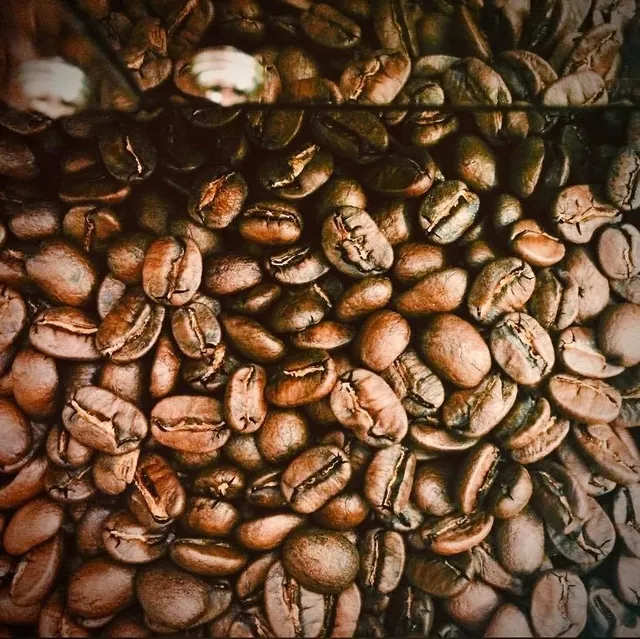
Photo: the shop’s official page A tiny takeaway-style specialty coffee counter at Calle Regina 1 behind Metropol Parasol. Baristas dial in rotating single-origin beans for espresso, filter and espresso tonics and sell retail bags whole or ground; closed Sundays.
Why the editors chose itA tiny takeaway counter dialing in rotating single-origin beans for espresso, filter and retail bags.
Centro
Convento de San Leandro
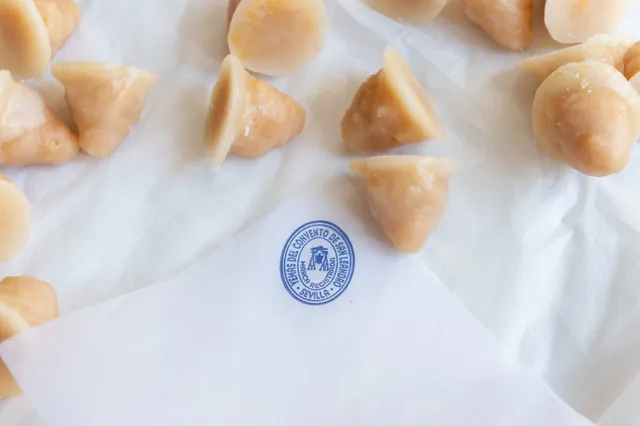
Photo: the shop’s official page A 13th-century cloistered Augustinian convent on Plaza de San Ildefonso 1 where nuns make Yemas de San Leandro, cocadas and pestiños. Visitors ring the bell and buy boxed sweets through a revolving wooden turnstile (torno); bring cash, closed Sundays.
Why the editors chose itA 13th-century convent where ringing the bell brings nun-made Yemas sweets through a wooden turnstile.
Centro
La Cacharrería
A cozy café-bakery operating since 2008 at Calle Regina 14 near Metropol Parasol, serving daily-baked homemade cakes, tarts and artisan bread toasts on mismatched vintage crockery. Open daily 09:00–21:00.
Why the editors chose itA café-bakery since 2008 serving daily-baked homemade cakes and tarts on mismatched vintage crockery.
Triana
Manu Jara Dulcería
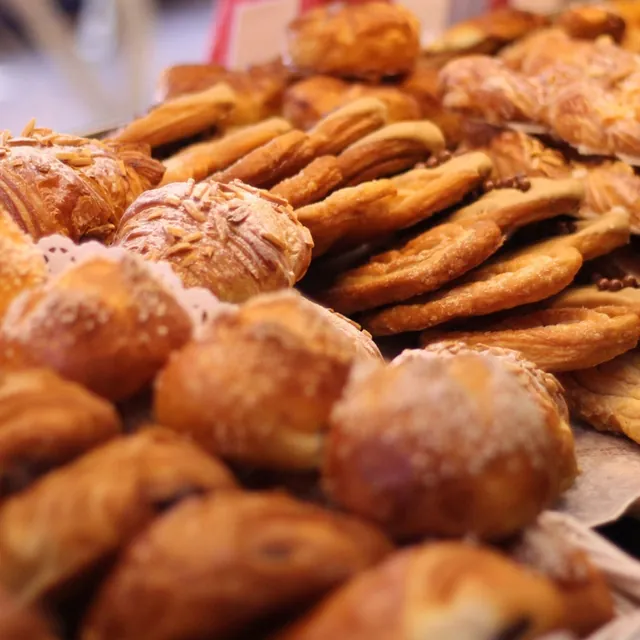
Photo: the shop’s official page A Triana patisserie at Calle Pureza 5 founded by pastry chef Manu Jara, who trained in France at École Cepal and École Nationale Supérieure in Yssingeaux and worked at Michelin-starred François Issautier. It makes French-technique viennoiserie, tarts, biscuits and seasonal Spanish sweets such as El Torrisant (a croissant-torrija hybrid); open Monday to Thursday 09:30–14:30 and 16:30–21:00, and Friday to Sunday 09:30–21:00.
Why the editors chose itA French-trained patisserie crafting viennoiserie and tarts alongside El Torrisant, a croissant-torrija hybrid.
Made in Seville
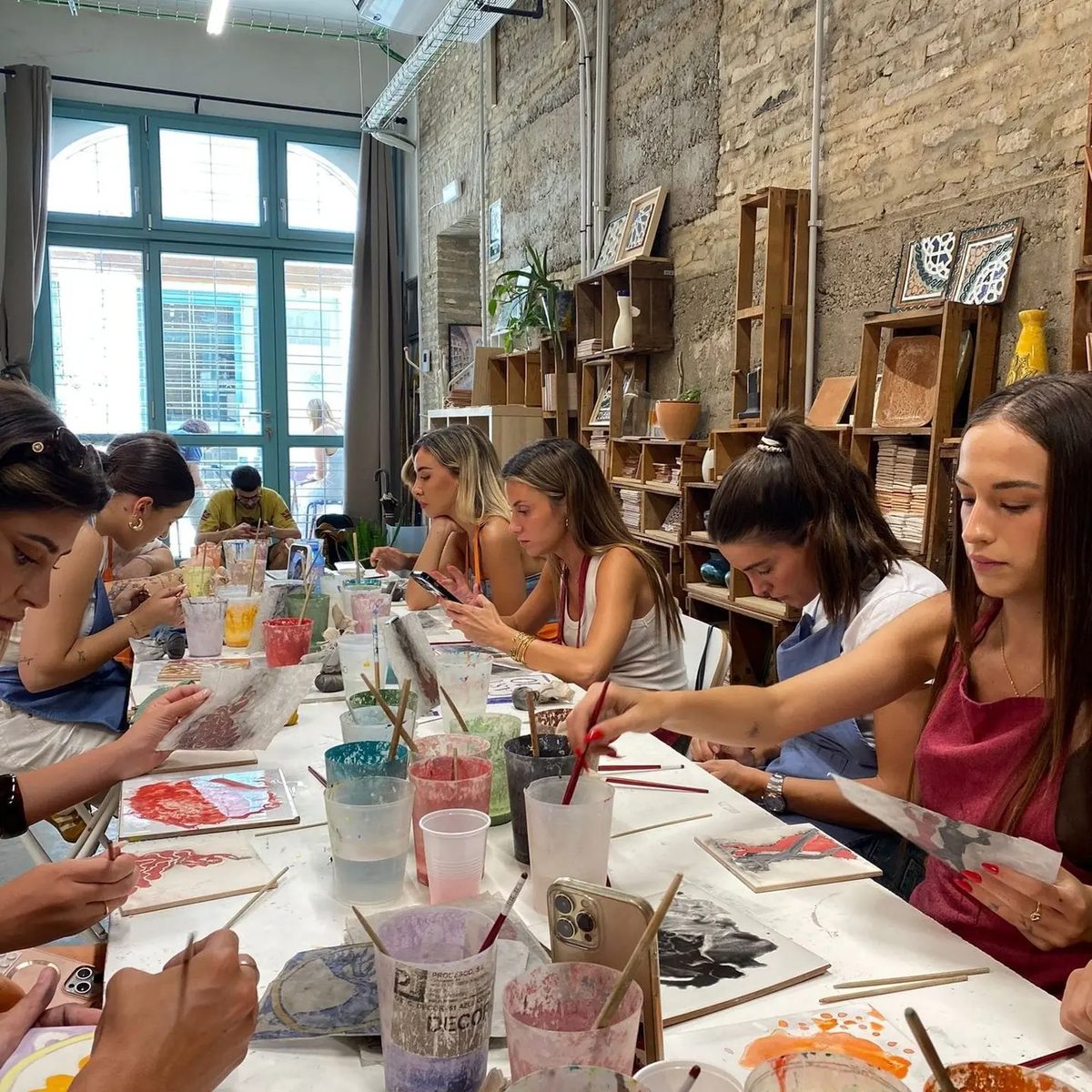
Across the Guadalquivir River, the Triana quarter has fired Seville’s glazed earthenware and hand-painted azulejo tiles for centuries. Family workshops along Calle Alfarería and Calle Pureza still work with traditional techniques such as cuerda seca and arista.
People brush glaze onto ceramic tiles and pottery in a brick workshop.·Photo: BarroAzul (official site)
Triana
BarroAzul
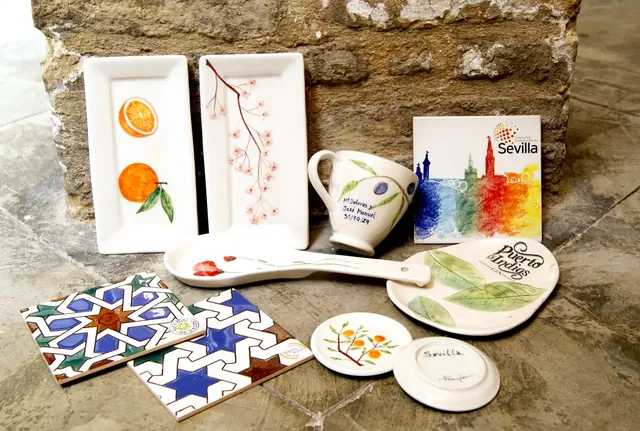
Photo: the shop’s official page A Triana ceramic studio at Calle Covadonga 9 founded by ceramicist-anthropologist Paula Felizón and art historian Antonio Librero. It produces custom hand-painted architectural tiles and pottery and runs workshops in traditional techniques such as cuerda seca and arista.
Why the editors chose itA Triana studio making hand-painted tiles and hosting cuerda seca and arista ceramic workshops.
Triana
Cerámicas Santa Isabel
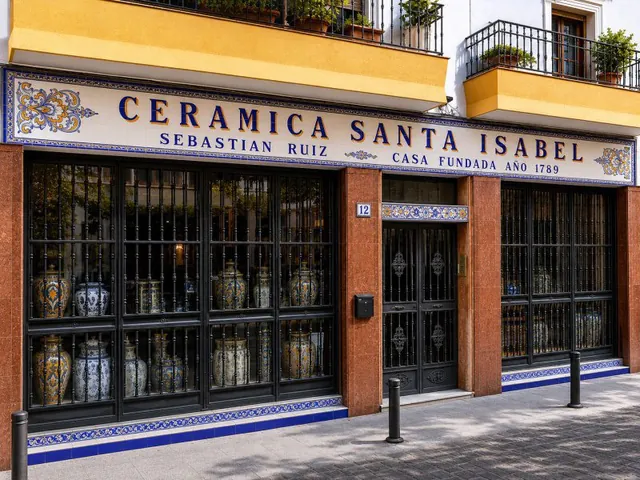
Photo: the shop’s official page A family workshop at Calle Alfarería 12 in Triana, founded in 1939 on a kiln site active since 1789. Artisans throw, glaze and paint large planters, traditional tinaja jars, basins and custom azulejo murals by hand; open Mon–Fri and Sat mornings, closed Sundays.
Mon–Fri 10:00–14:00, 17:00–20:00; Sat 10:00–14:00 · Closed: Sundays
Why the editors chose itA 1939 family workshop on a 1789 kiln site hand-throwing and painting planters, jars and azulejos.
Made in Seville
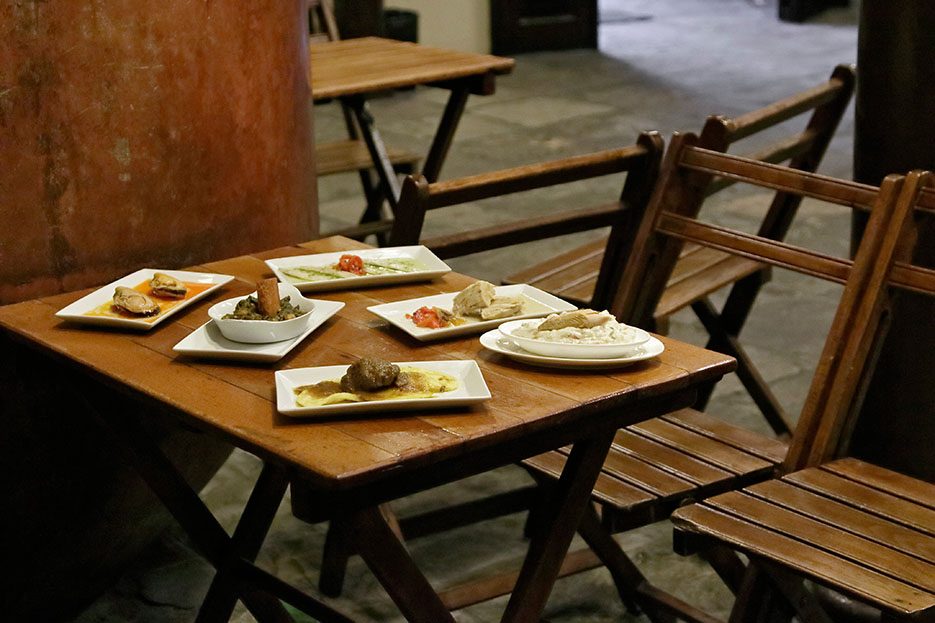
Seville’s oldest taverns and abacerías (grocer-bars) keep everyday staples such as espinacas con garbanzos, montaditos and sherry poured straight from the cask. Many still stand in rooms from the seventeenth to nineteenth centuries, lined with clay wine jars and tiled walls.
Small plates of tapas are spread across a wooden tavern table.·Photo: Casa Morales (official site)
Arenal
Casa Morales
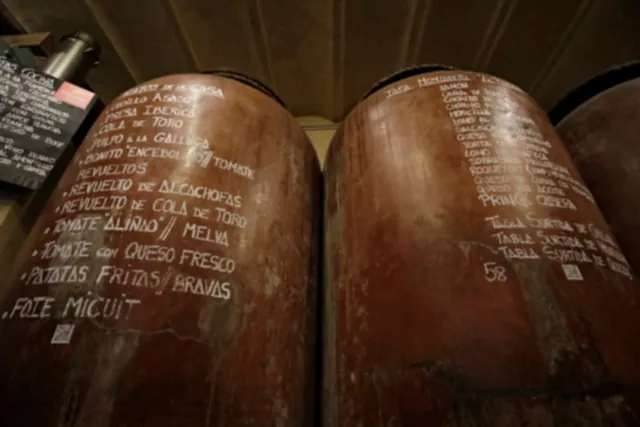
Photo: the shop’s official page Founded in 1850 near the Cathedral on Calle García de Vinuesa 11, this family-run tavern pairs a lively front bar with a back room lined with giant clay wine jars (tinajas). Open Monday to Saturday 12:00–16:00 and 20:00–24:00, and Sunday 12:00–16:00.
Mon–Sat 12:00–16:00, 20:00–24:00; Sun 12:00–16:00
Why the editors chose itAn 1850 family tavern where sherry from the cask is poured alongside giant clay wine jars.
Arenal
Casa Moreno
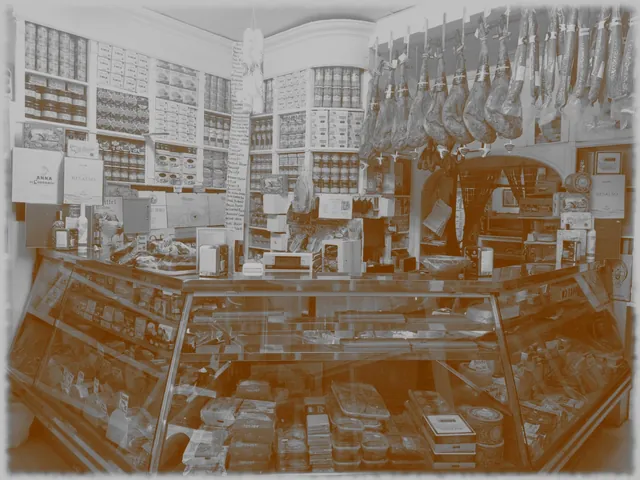
Photo: the shop’s official page A 1940s ultramarinos grocery storefront on Calle Gamazo 7 hiding a tiny standing-only back-room tapas bar behind shelves of tins and cured meats. Serves warm montaditos, aged cheeses and vermouth; closed Sundays.
Why the editors chose itA 1940s grocery storefront hiding a standing-only back bar serving warm montaditos, cheese and vermouth.
Centro
Juan Foronda
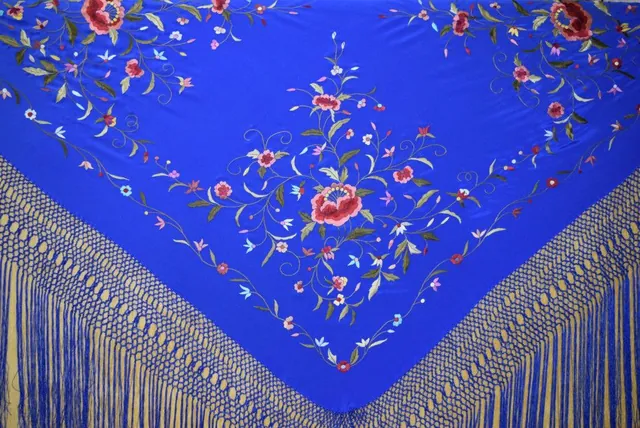
Photo: the shop’s official page Founded in Seville in 1923, this historic house at Calle Sierpes 33 specializes in hand-embroidered silk mantones de Manila with knotted fringes, lace mantillas and fans. Closed Sundays.
Why the editors chose itA historic 1923 house specializing in hand-embroidered silk mantones de Manila, lace mantillas and fans.
Centro
Tienda Hecho en Sevilla
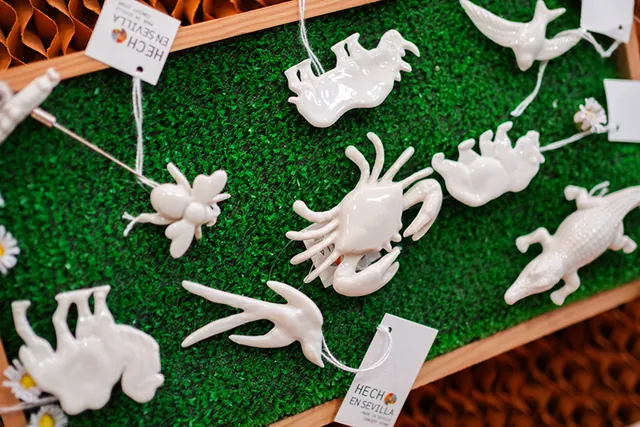
Photo: the shop’s official page The permanent concept store of the Federación Artesanal de Sevilla at Calle Chapineros 1, Local 2 near Plaza del Salvador, stocking small-batch ceramics, pressed flowers, jewelry, silk textiles, ironwork and leather goods by local Seville makers. Open daily year-round.
Why the editors chose itThe Seville artisans' federation store gathering ceramics, pressed flowers, textiles and leather goods from local workshops.
Centro
VivasCarrión Artmilliners

Photo: the shop’s official page VivasCarrión
A millinery atelier at Calle Monsalves 35 in central Seville, run for over 20 years by Felipe Vivas and Manuel Carrión (formerly Tolentino Hats). Every bespoke hat and headpiece—worn by Luke Evans at the 2026 Met Gala and by Rossy de Palma—is blocked, hand-sewn and trimmed with feathers, flowers and veils in the workshop, with mirror fittings held by appointment.
Why the editors chose itA 20-year millinery studio crafting bespoke hats entirely by hand from wood-blocking to appointment fittings.
Sights in Seville
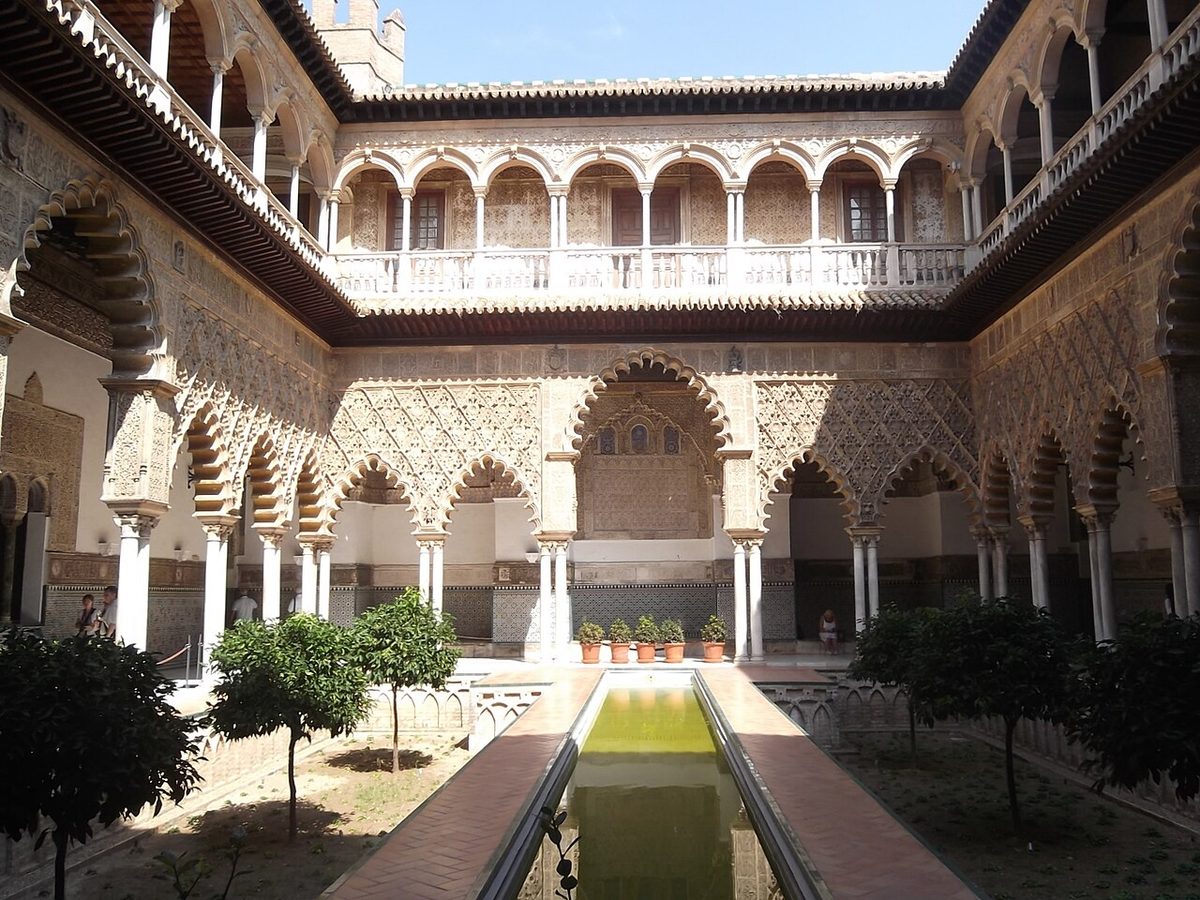
Photo: لا روسا / CC BY-SA 3.0 (Wikimedia Commons) Europe’s oldest royal palace still in use, with origins in the 11th century, combining Mudéjar tilework, Gothic halls and terraced gardens.
Winter hours (Oct–Mar) 9:30–17:00 (until 19:00 Apr–Sep). Closed Jan 1, Jan 6, Good Friday and Dec 25. On-site gift shops are temporarily closed during a management transition.
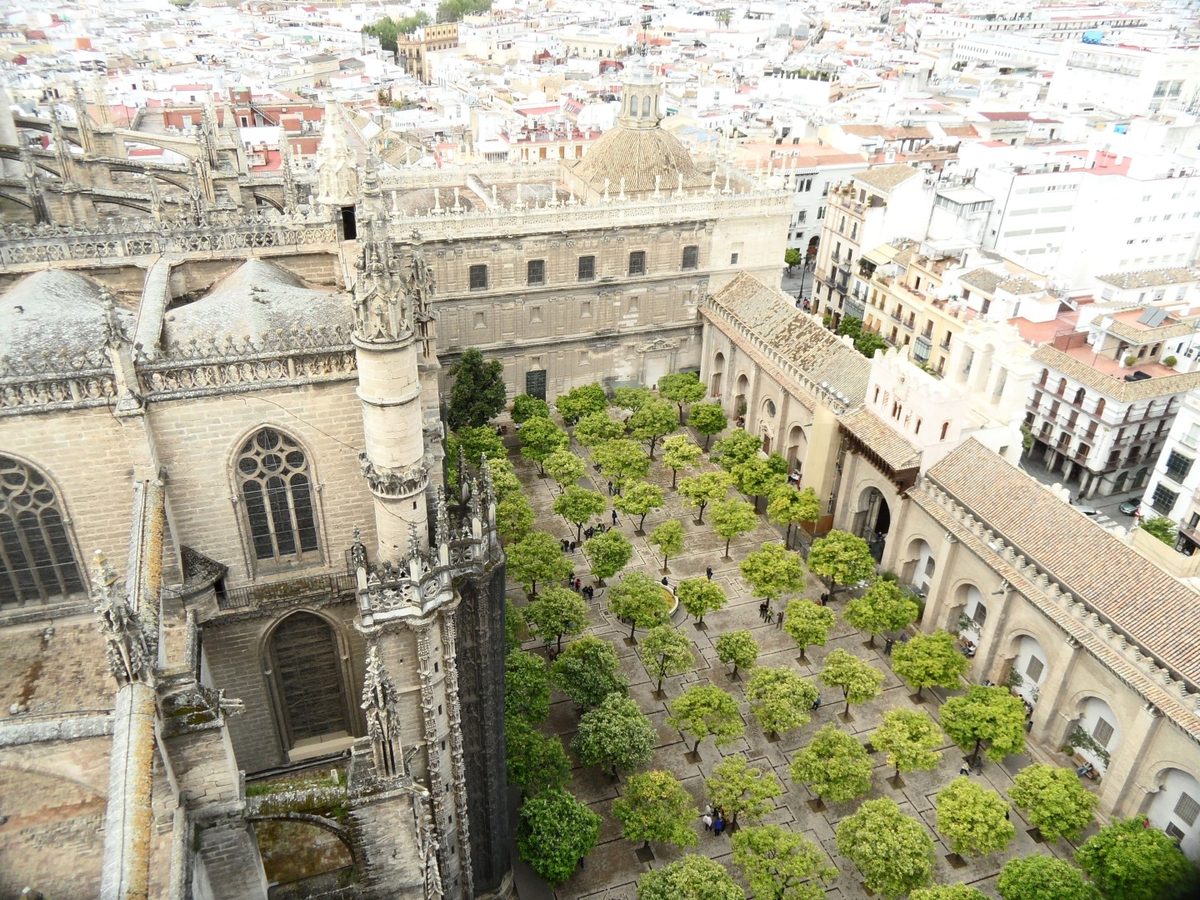
Photo: skymuss / CC BY-SA 3.0 (Wikimedia Commons) Catedral de Sevilla y La Giralda
A monumental Gothic cathedral paired with the Almohad-era Giralda bell tower and the orange-planted Patio de los Naranjos.
Cultural visits Mon–Sat 10:45–18:00 (ticket desk closes 17:00), Sun 14:30–19:00 (ticket desk closes 18:00). Visits begin at the Giralda tower and hours may change for liturgical services.
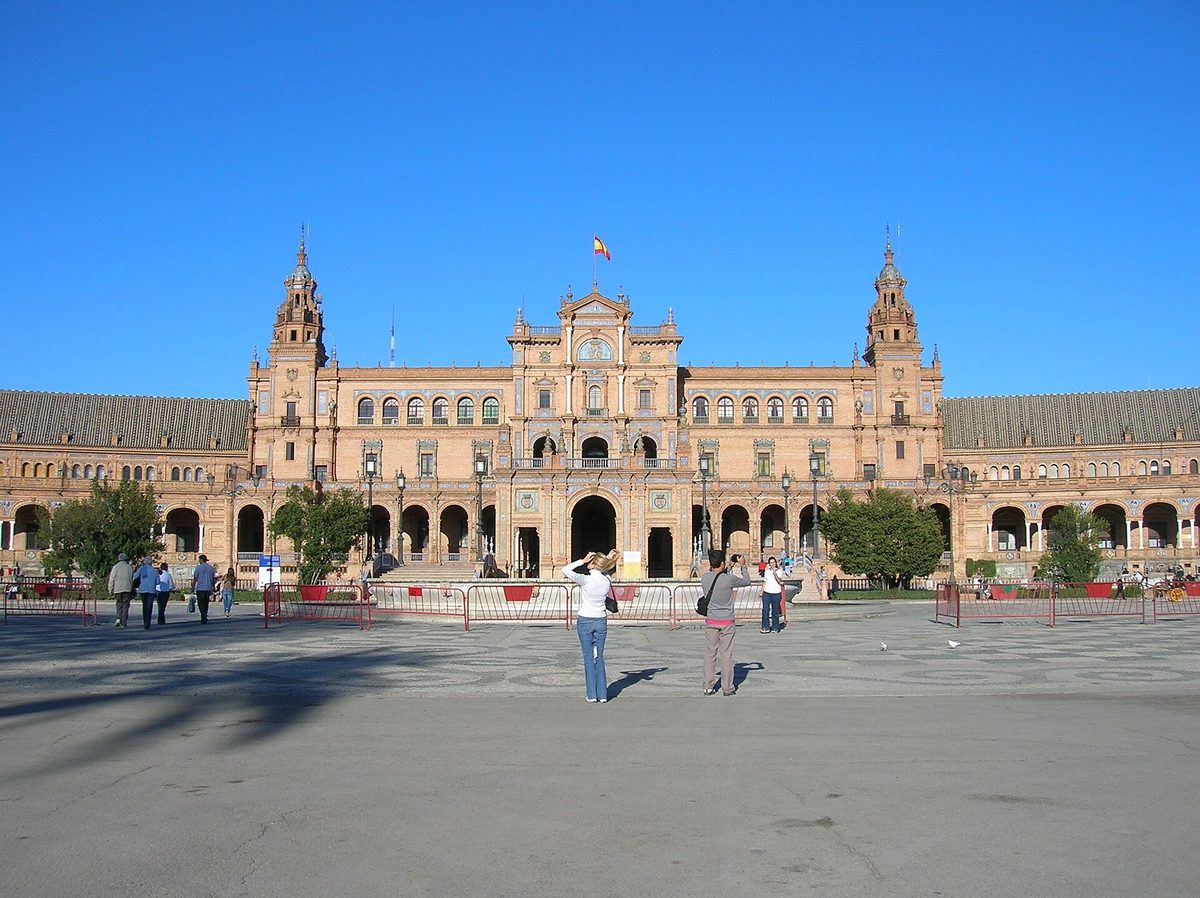
Photo: fadda domenico ange… / CC BY-SA 3.0 (Wikimedia Commons) Aníbal González’s monumental semicircular square built for the 1929 Ibero-American Exposition alongside María Luisa Park, framed by a 515 m canal, four bridges and painted ceramic alcoves for each Spanish province.
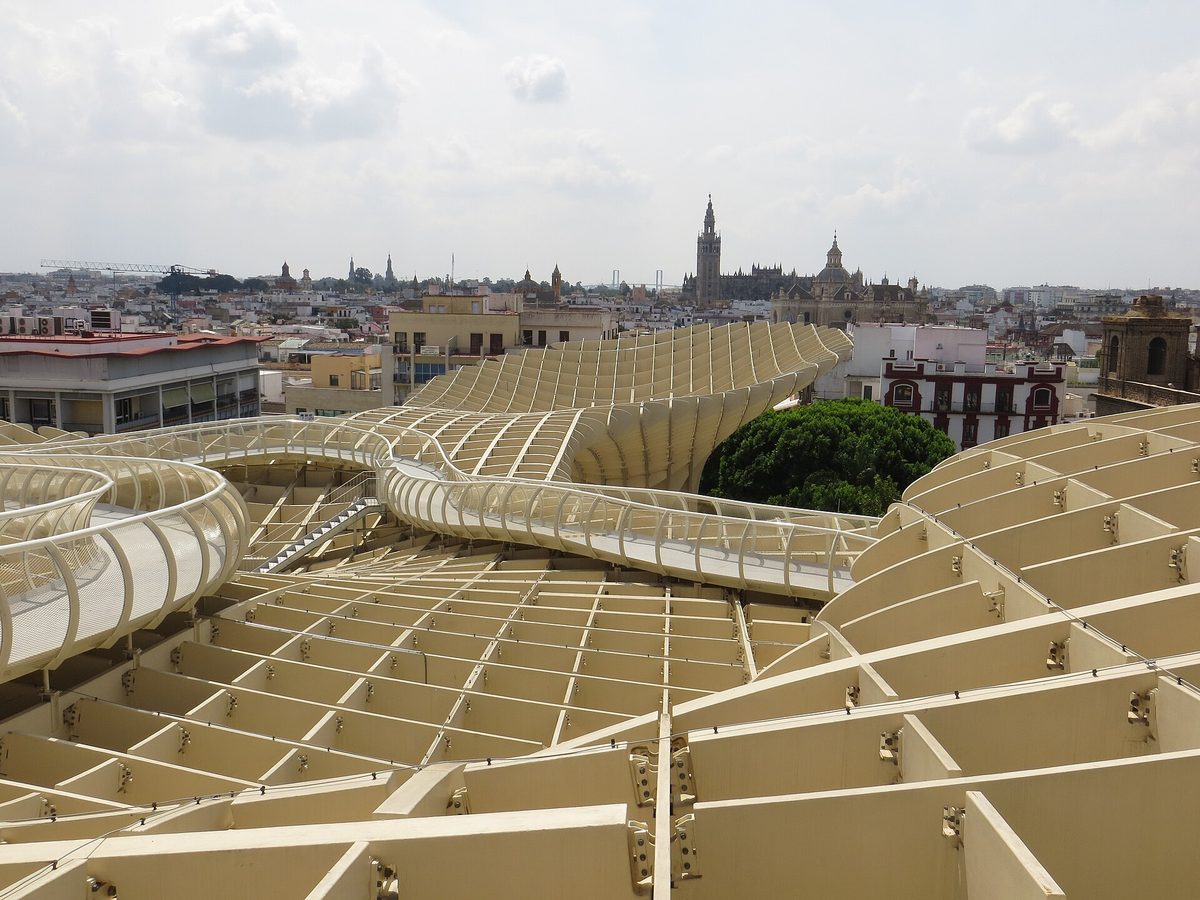
Photo: Helmeczi Magdi / CC BY-SA 3.0 (Wikimedia Commons) A sweeping timber-lattice canopy rising over Plaza de la Encarnación (Metropol Parasol), with an elevated rooftop walkway reached from the basement level overlooking Seville’s rooftops.
Open daily from 09:30; closes at 00:00 in winter (01:00 in summer, last entry 30 minutes before closing). The Aurora light show begins around sunset (approx. 18:00 in winter).
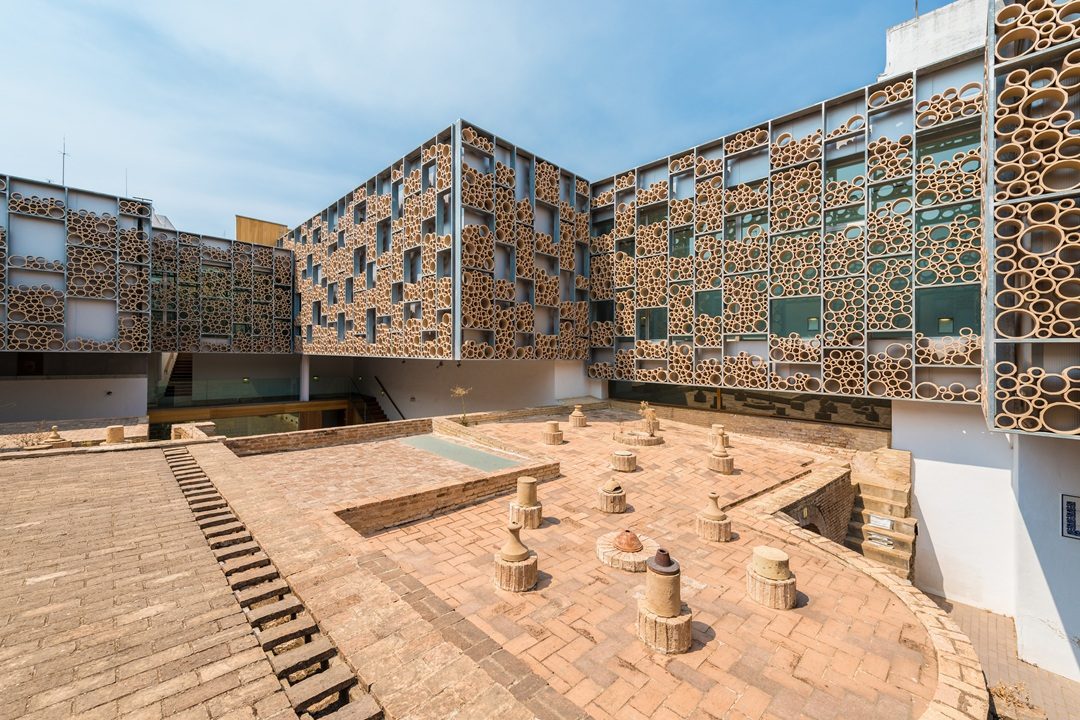
Photo: official site A museum inside the former Santa Ana pottery factory preserving original kilns, moulds and tools, tracing Triana’s ceramic and tile-making tradition from the Muslim period to today.
Open Tuesday to Sunday (closed Mondays). Closed Dec 25, Jan 1, Jan 6, Maundy Thursday and Good Friday; reduced hours on Dec 24, Dec 31, Jan 5, Semana Santa and Feria de Abril.
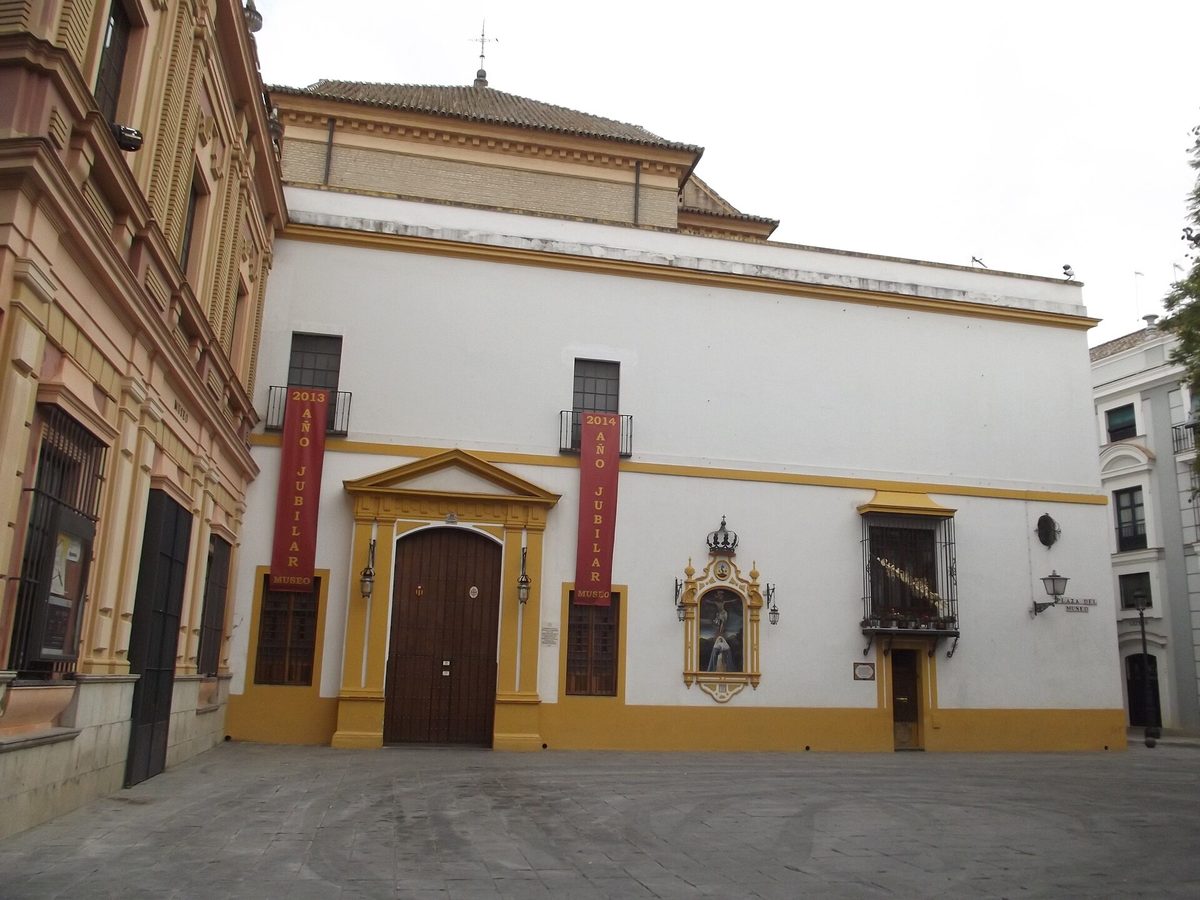
Photo: Elliott Brown from Birmingham, United Kingdom / CC BY-SA 2.0 (Wikimedia Commons) Museo de Bellas Artes de Sevilla
Established in 1835 and housed in the 17th-century former Convent of La Merced Calzada, Spain’s second-largest fine arts collection showcases Sevillian Baroque works by Murillo and Zurbarán.
Open Tue–Sat 09:00–21:00, Sun & holidays 09:00–15:00 (Aug Tue–Sun 09:00–15:00). Closed Mondays except eve-of-holiday Mondays (such as Dec 7, 2026); closed Jan 1, Jan 6, May 1 and Dec 24, 25 and 31.
These are local landmarks. Each was checked to be open on its official site (checked 2026-11-12). Please confirm hours before you go.
Questions people ask
- Where can I eat Seville's local dishes?
Espinacas con garbanzos (spinach with chickpeas): Casa Morales (Arenal)
Montadito de pringá (shredded stew-meat roll): Bodeguita Romero (Arenal), Casa Moreno (Arenal), Casa Morales (Arenal)
Yemas de San Leandro (convent egg-yolk sweets): Convento de San Leandro (Centro)
- Where can I see or buy Triana Ceramics, Craft in Seville?
Triana Ceramics: BarroAzul (Triana), Cerámicas Santa Isabel (Triana)
Craft: Juan Foronda (Centro), Tienda Hecho en Sevilla (Centro), VivasCarrión Artmilliners (Centro)
- What can I visit on foot around Centro?
Food: Lama la Uva
Sweets: Convento de San Leandro, La Cacharrería
Cafés: Virgen Coffee
Craft: Juan Foronda, Tienda Hecho en Sevilla, VivasCarrión Artmilliners
Every place was checked to be open in November 2026. Hours can change, so please check the official site before you go.
If you like Seville
- Porto
Porto, Portugal
For example, Cerámicas Santa Isabel here, and Ó! Cerâmica in Porto.
- Trieste
Friuli Venezia Giulia, Italy
For example, Tienda Hecho en Sevilla here, and Combiné in Trieste.
- Graz
Styria, Austria
For example, Cerámicas Santa Isabel here, and DA LOAM in Graz.
Chosen by how close the towns and their places are in what they make and serve.