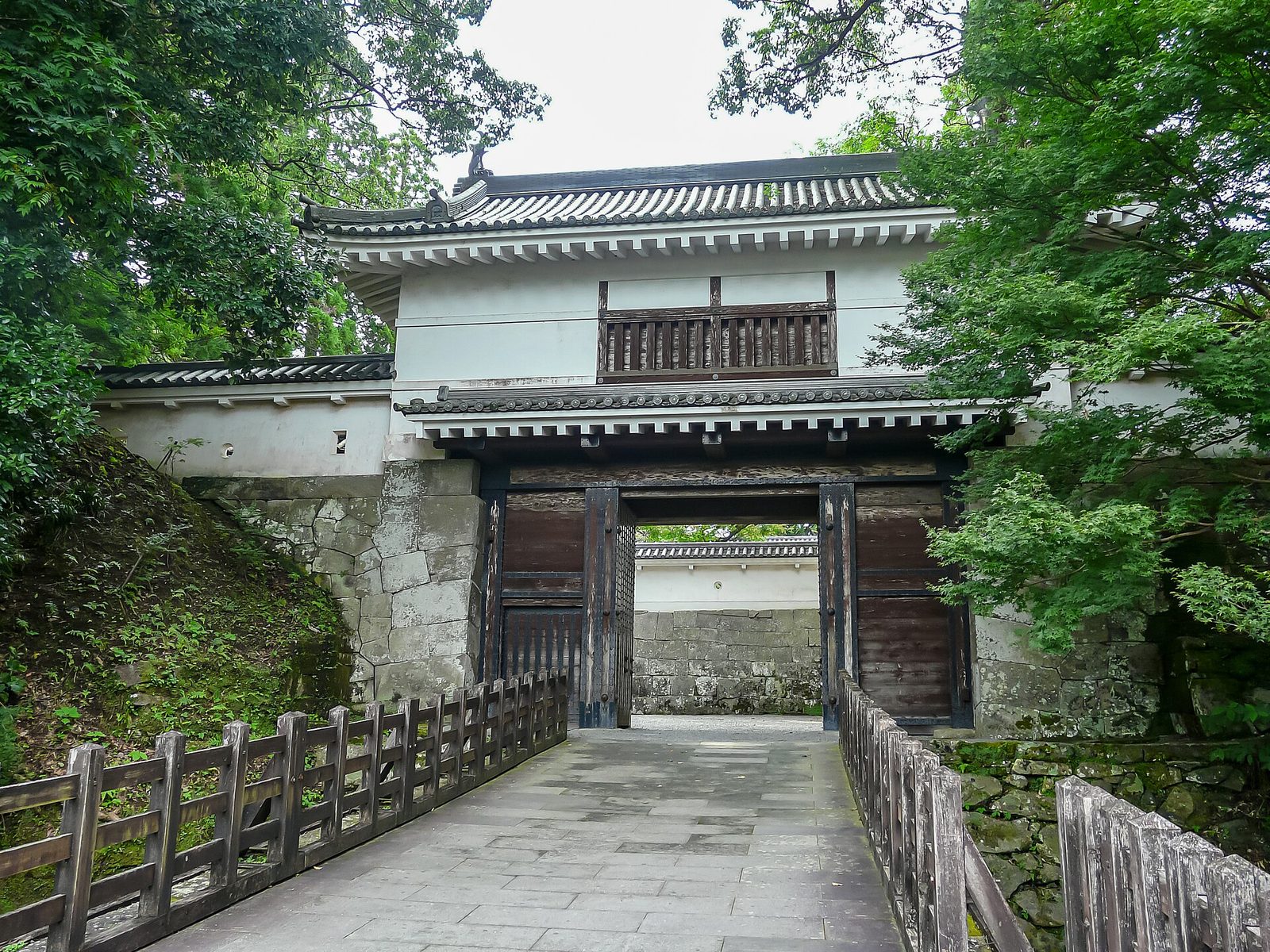
31.6° N
Nichinan
Miyazaki, Japan
A town on the Hyuga-nada coast of southern Miyazaki. Obi cedar woodwork and shochu breweries, plus bread, seafood and coffee across Obi's castle town and the ports of Aburatsu and Nango: the editors’ picks.
Nichinan, on film
4 sights and 13 places, each checked open in 2026, in 42 seconds.
Found somewhere you like? The map and the list below have the address, hours and official site.
Tap for sound
What to eat in Nichinan
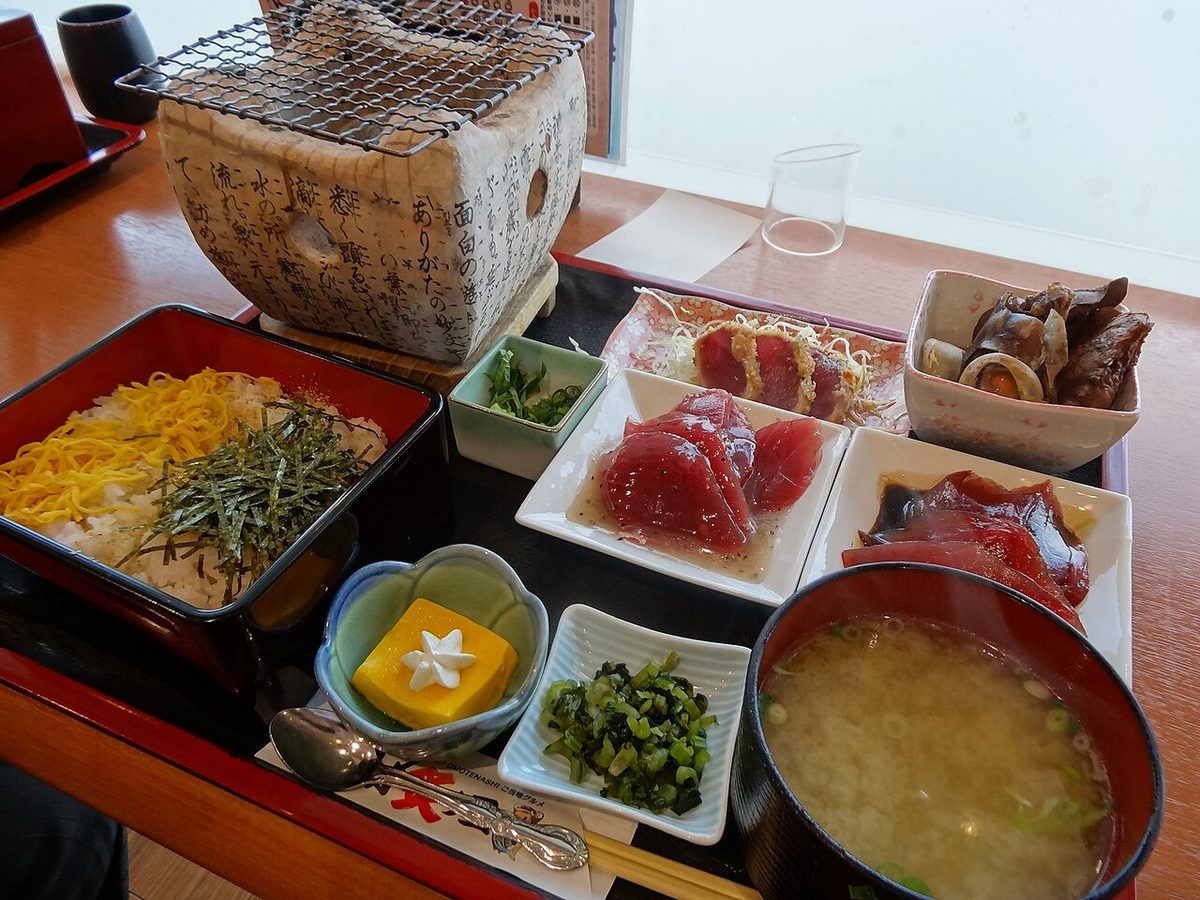
Photo: ja:User:Sanjo / CC BY-SA 3.0 (Wikimedia Commons) Nichinan Katsuo Aburi-ju (charcoal-seared skipjack over rice)
日南一本釣りカツオ炙り重
Fresh pole-and-line skipjack tuna marinated in two sauces is seared tableside over a charcoal brazier and served over Miyazaki rice. Nichinan leads Japan in coastal pole-and-line skipjack landings, and local restaurants created this dish in 2010 to highlight the fishery.
Eaten as a set meal in three stages: raw like sashimi, lightly seared on one side over charcoal, and finished with hot dashi as ochazuke.
Where to eat it
- Bibinya ↓
- Minato no Eki Meitsu ↓
- Gallery KodamaWebsiteMap
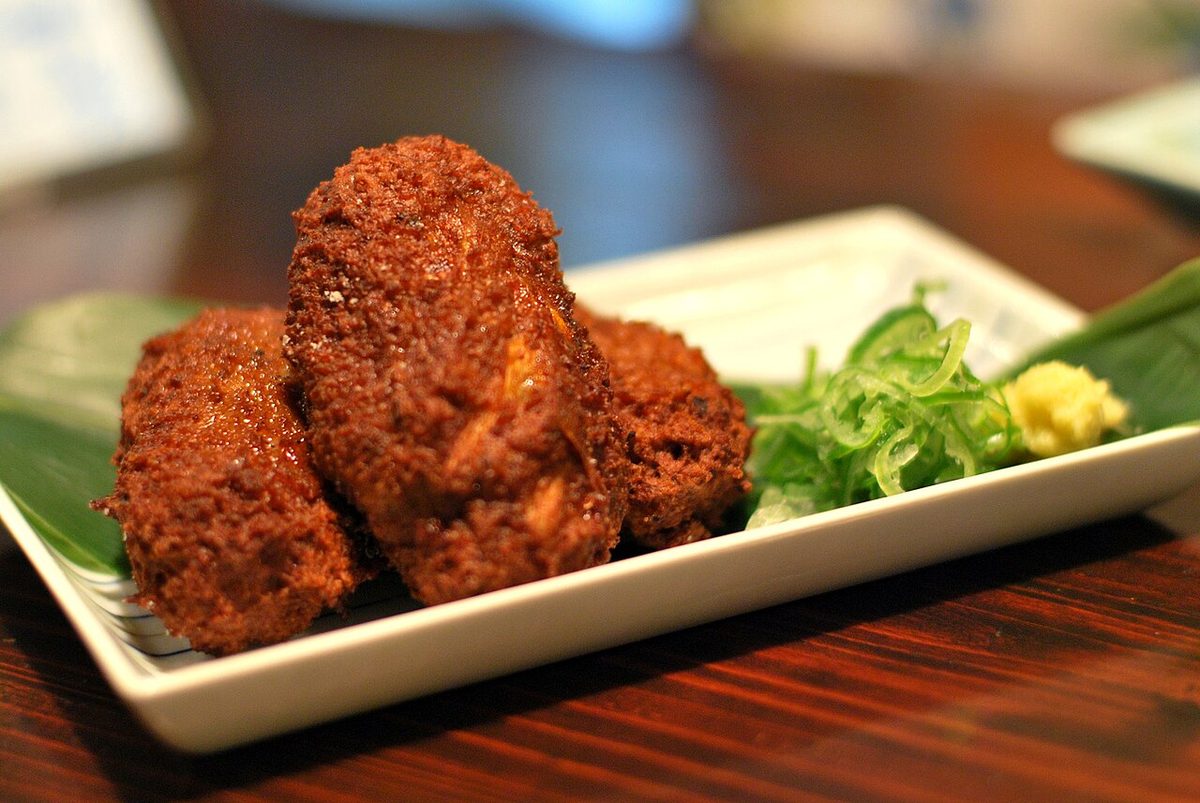
Photo: [puamelia] / CC BY-SA 2.0 (Wikimedia Commons) Obiten (Obi fried tofu-and-fish cake)
おび天
A soft, slightly sweet fried fish cake made from minced local whitefish kneaded with tofu, miso, soy sauce, and brown sugar. It has been handed down in Obi's castle town since the Edo period, using coastal Hyuga-nada fish.
Bought freshly fried from shopfront griddles to eat while walking around Obi, or served warm in local set meals.
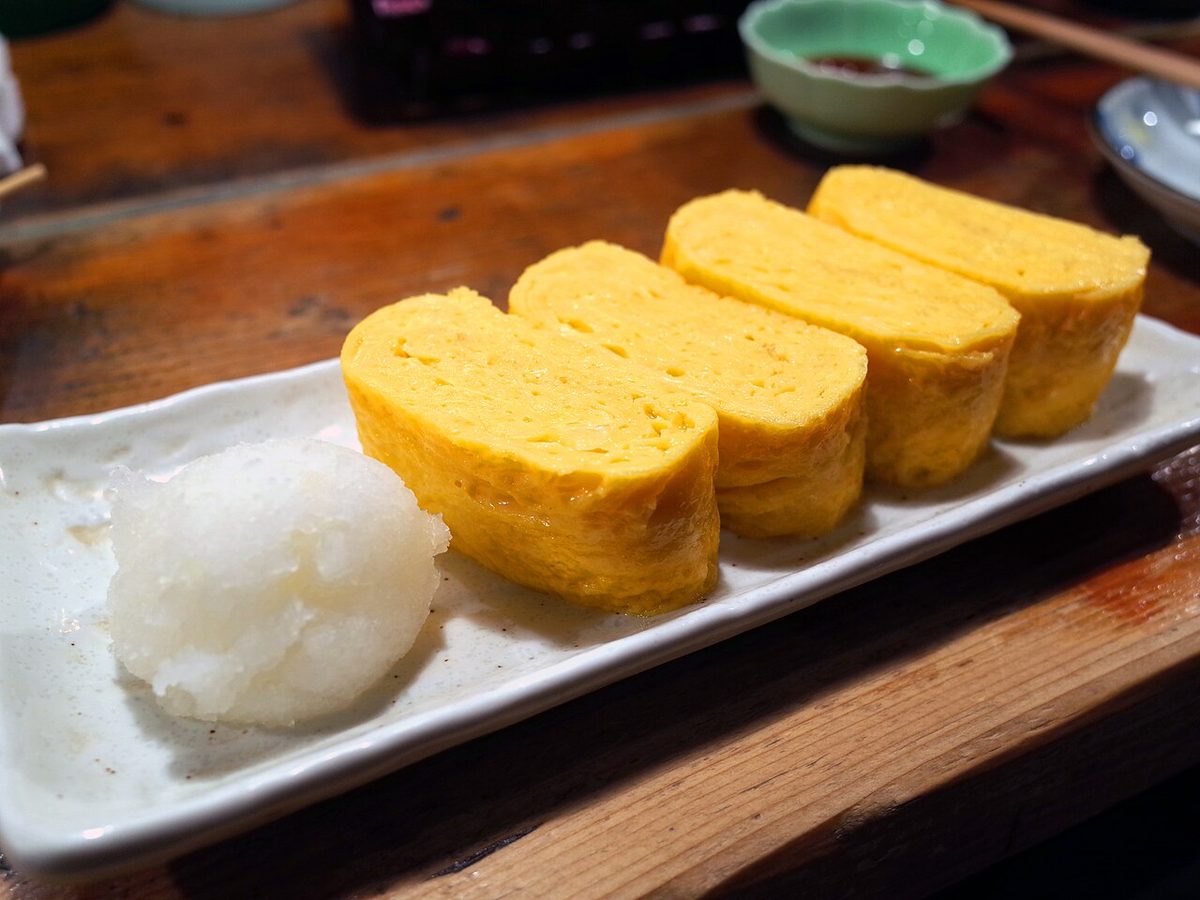
Photo: 極地狐 / CC BY 2.0 (Wikimedia Commons) Obi Atsuyaki Tamago (sweet custard-like baked egg)
厚焼卵
A thick, sweet baked egg made by slow-cooking beaten eggs with sugar and mirin in a covered pot heated from both above and below with charcoal until smooth like custard. Historically presented to the lords of the Obi domain since the Edo period, it remains an Obi celebratory and castle-town specialty.
Eaten chilled in small slices with tea while strolling Obi, or served alongside local set meals.
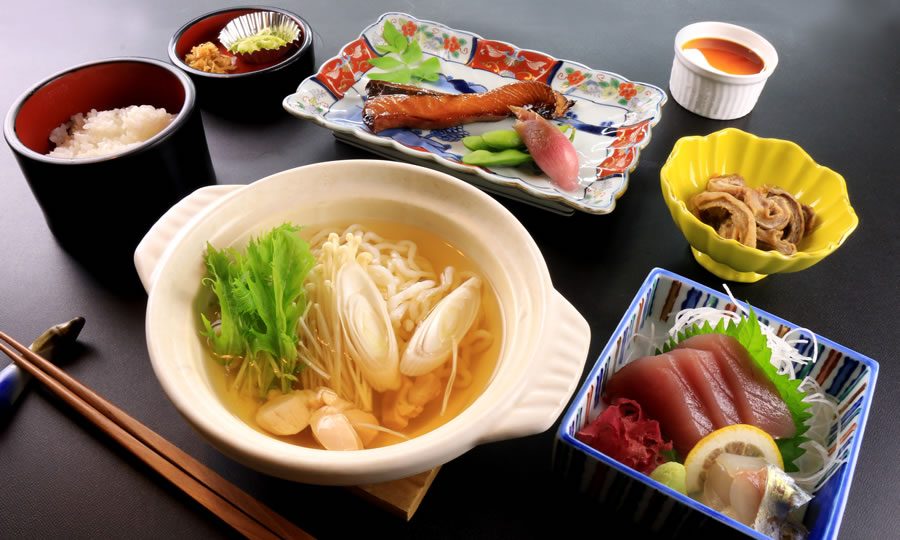
Photo: めいつ丸万 (Meitsu Maruman) (official site) Gyoudon (Nichinan fish-paste udon)
魚うどん
Noodles made without wheat flour by kneading minced local whitefish or flying fish with potato starch. Created in Nichinan during wartime grain shortages using abundant port catches, it was later revived as a regional dish.
Simmered and served hot in fish broth, either as a single bowl or paired with katsuo-meshi in a set meal.
The LATITUDE editors’ 13 picks in Nichinan
Our editors verified that these places were open (checked 2026-11-12). Check the official site for hours and closing days before visiting. Sponsored listings are marked.
Save places to your trip list and revisit them in this browser. No account needed.
Editors’ picks on the map — or build your own route
Tap a mark to see the place; squares are museums and sights (landmarks). Use “Build your own route” to make a walk of your own.
Loading the map
Map data © OpenStreetMap contributors
Browse by category
1 / 15
Obi
Samurai House Itotei
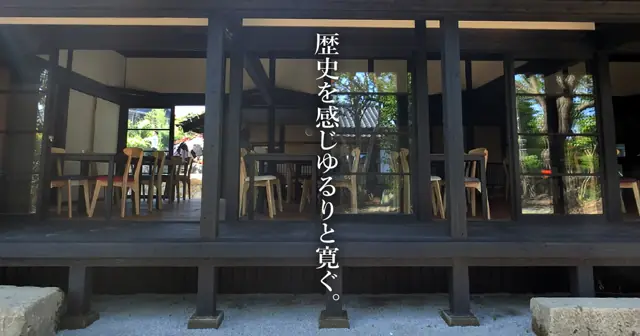
Photo: the shop’s official page 武家屋敷 伊東邸
A restaurant and tearoom in a restored samurai residence of a branch of the Obi domain's Ito family, serving meals with rice cooked in an iron hagama pot and matcha. Open 11 am to 5 pm; closed Tuesdays.
11:00–17:00 (lunch 11:00–15:00, dinner by reservation only) · Closed: Tuesdays (closed the following day on public holidays and cruise ship days)
Why the editors chose itDine on iron-pot cooked rice and matcha inside a restored samurai residence of the Ito family.
Aburatsu
Bibinya
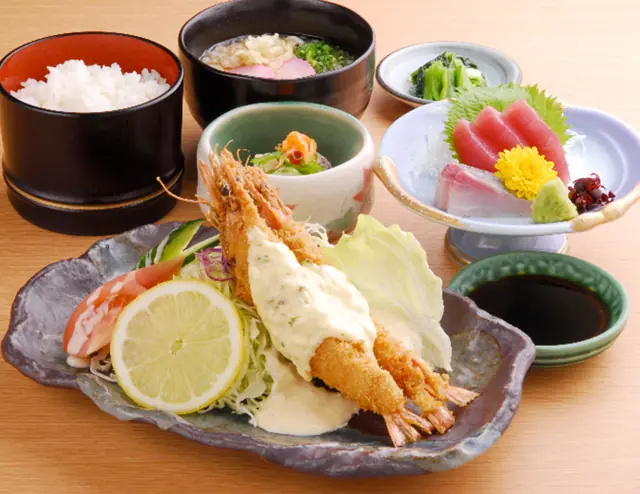
Photo: the shop’s official page 魚料理 びびんや
A seafood dining room across from the Aburatsu fishing cooperative, serving local fish and tuna sets alongside its signature gyo-udon noodles made from minced fish. Open 11 am to 3 pm; closed Mondays.
11:00–15:00 (last order 14:30) · Closed: Mondays (closed the following day on public holidays)checked Nov 2026
Why the editors chose itAcross from Aburatsu fishing co-op, serving local tuna sets and noodles made from minced fish.
Nango
Minato no Eki Meitsu
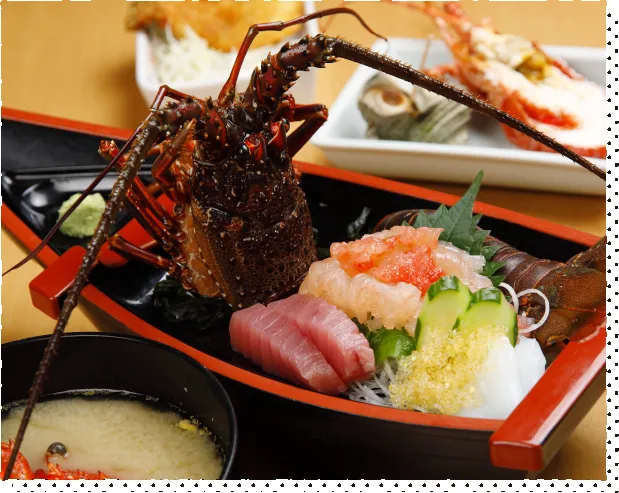
Photo: the shop’s official page 港の駅めいつ
A dining hall and market overlooking Meitsu Port, known for its katsuo-meshi set of soy-marinated skipjack served plain and with dashi broth. Dining 10:30 am to 3 pm; closed Mondays.
9:30–17:00 (Bussan Museum); 10:30–15:00 (Restaurant) · Closed: Mondays (following day if public holiday); 3rd Tuesday (Bussan Museum)
Why the editors chose itOverlooking Meitsu Port, serving katsuo-meshi of soy-marinated skipjack eaten plain and with broth.
Obi
Negura Coffee
塒珈琲
A house-roasting coffee shop in Obi. Open 10 am to 6 pm; closed Wednesdays and the third and fourth Thursdays.
Why the editors chose itA house-roasting coffee shop in Obi pouring beans roasted right on site.
Aburatsu
Dear COFFEE ROASTERS
A backstreet coffee stand in Aburatsu roasting beans in-house, serving caffe lattes and espresso alongside hard cookies, bagels and baked cheesecake.
Why the editors chose itA backstreet Aburatsu coffee stand roasting beans in-house alongside hard cookies, bagels, and cheesecake.
Nango
sanga
A café on the grounds of an old house in Tsuyano, Nango, serving house-baked toasties, brown-rice bowls and caramel slice. Open Thursdays, Fridays and Saturdays only.
Why the editors chose itOpen Thursday to Saturday only on old-house grounds, serving house-baked toasties and brown-rice bowls.
Obi
Bakery OBI ni TASUKI
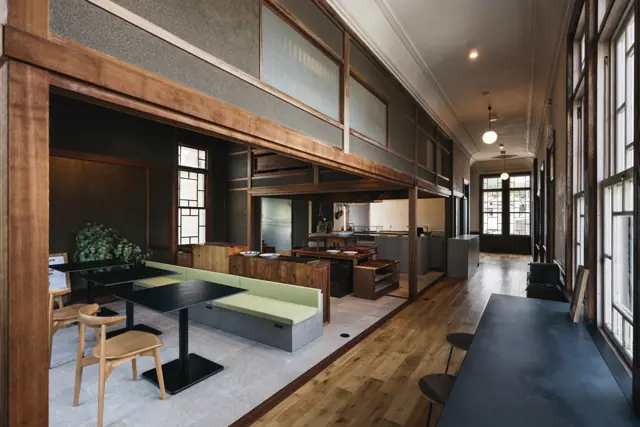
Photo: the shop’s official page ベーカリーおびにたすき
A bakery in a restored 100-year-old Western-style house in Obi's castle town. It bakes around thirty kinds of bread from English, French and croissant doughs. Open 7:30 am to 3 pm; closed Wednesdays and Thursdays.
7:30–15:00 (until sold out) · Closed: Wednesdays and Thursdayschecked Nov 2026
Why the editors chose itSet in a 100-year-old Western-style house in Obi, baking around 30 breads from 7:30 am.
Obi
HINA MUFFIN

Photo: the shop’s official page A New York-style muffin shop in Obi, handmade from scratch with Japanese butter. Matcha, chocolate and salted red-bean muffins sit in the antique showcase. Open 10:30 am to 3 pm; irregular days off.
10:30–15:00 (until sold out) · Closed: Irregular holidays
Why the editors chose itHandmade New York-style muffins baked from scratch with Japanese butter, including salted red-bean and matcha.
Agata
Orange-tei
おれんじ亭
A fruit café in Todaka, Nichinan, serving sweets and juices made with seasonal fruit including citrus from its own orchard, plus old-fashioned egg doughnuts. Open 10 am to 6 pm; closed Mondays.
Why the editors chose itA fruit café using citrus from its own orchard for seasonal sweets alongside classic egg doughnuts.
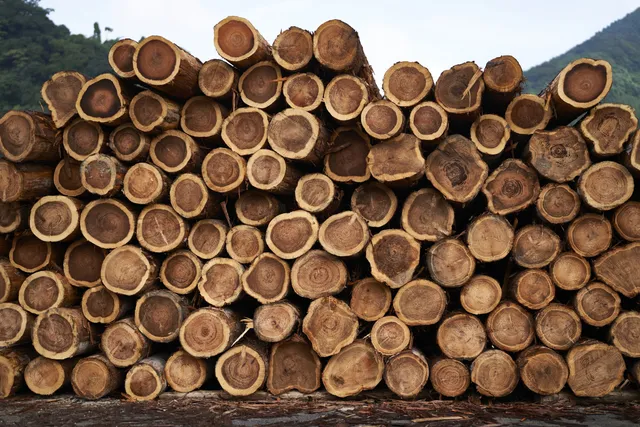
Made in Nichinan
Obi cedar has been planted in the Obi area since the Edo period as timber for wooden ships, rich in resin and resistant to rot. Today local sawmills and studios shape it into everyday tableware, lunchboxes and furniture.
Stacked Obi cedar logs at Kawaso Honten·Photo: Kawaso Honten (official site)
Obi
Obidaraly
Photo: the shop’s official page オビダラリー
A shop in Obi selling wooden goods made from local Obi cedar. Open 1 pm to 5 pm on weekdays (closed Mondays and Thursdays), and 10 am to 5 pm on weekends.
Why the editors chose itA shop in Obi dedicated to wooden goods crafted from local Obi cedar.
Aburatsu
Kawaso Honten
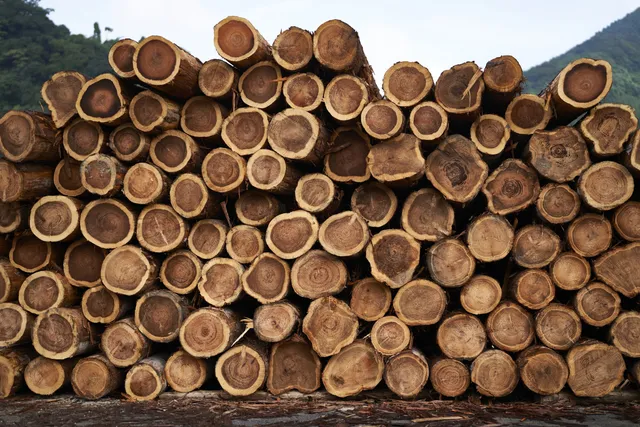
Photo: the shop’s official page 河宗本店
An Obi cedar sawmill with its office in Sonoda, producing and selling the KAWAMOKU line of cedar lunchboxes (SUGI_BAKO) and stools (NEJI_ISU) with local makers.
Why the editors chose itAn Obi cedar sawmill collaborating with local makers on cedar lunchboxes and wooden stools.
Made in Nichinan
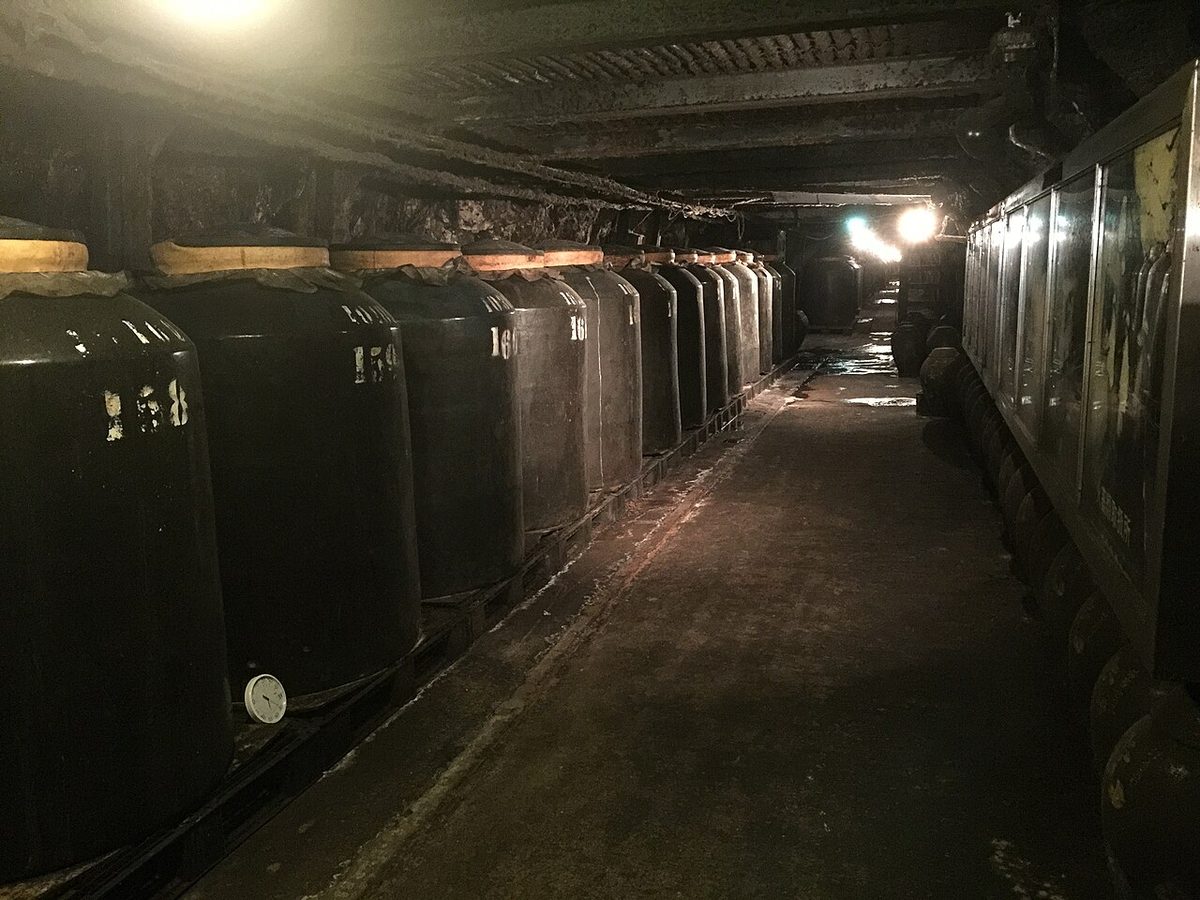
Nichinan's castle town and port districts are home to historic shochu breweries. Breweries such as Kyoya Shuzo, founded in 1834, still ferment sweet potatoes in large earthen kame jars buried in the floor.
Nichinan Honkaku Shochu·Photo: メルビル / CC BY-SA 4.0 (Wikimedia Commons)
Aburatsu
Kyoya Shuzo
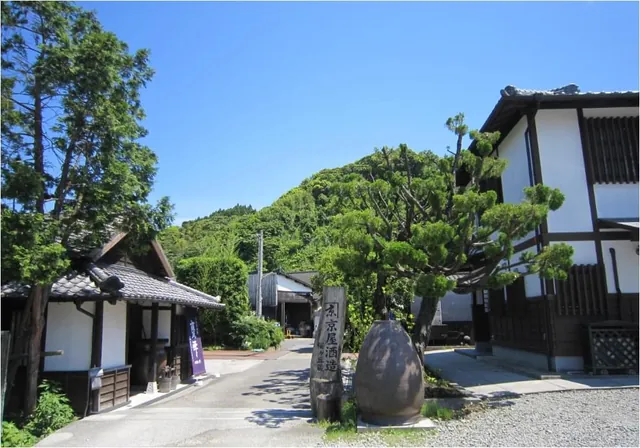
Photo: the shop’s official page 有限会社京屋酒造
A shochu brewery founded in 1834, fermenting sweet-potato shochu such as Kameshizuku in 800-liter earthen jars buried in the floor. Tours by reservation; closed Sundays and holidays.
Weekday 9:00–17:00 (Inquiries) · Closed: Saturdays, Sundays, Public Holidays
Why the editors chose itFounded in 1834, offering booked tours of its shochu fermenting in buried 800-liter earthen jars.
Obi
PAAK STOCK
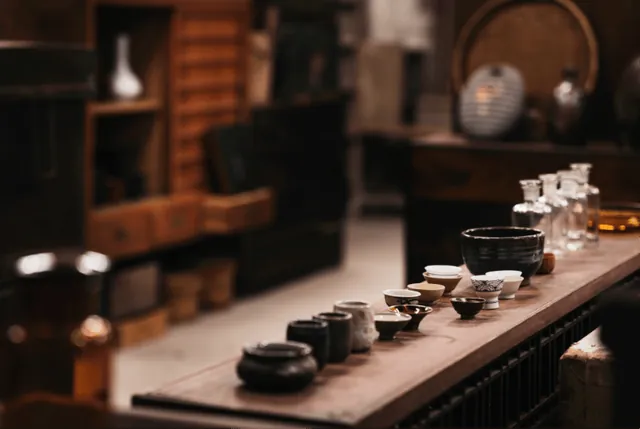
Photo: the shop’s official page An architectural salvage and vintage tool shop in Obi, with a dried-flower shop alongside. Open mainly on Tuesdays and weekends.
Why the editors chose itAn Obi salvage and vintage tool shop paired with an adjoining dried-flower boutique.
Sights in Nichinan
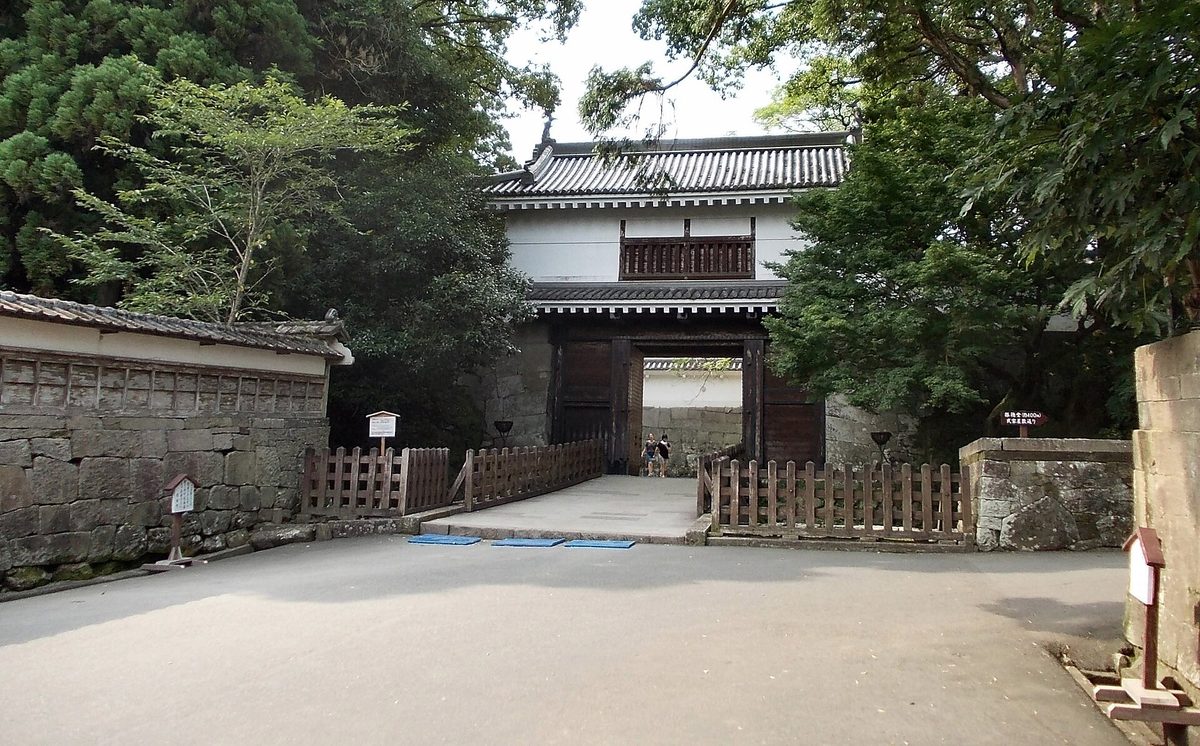
Photo: STA3816 / CC BY-SA 3.0 (Wikimedia Commons) The site of Obi Castle, ruled by the Ito clan from 1588.
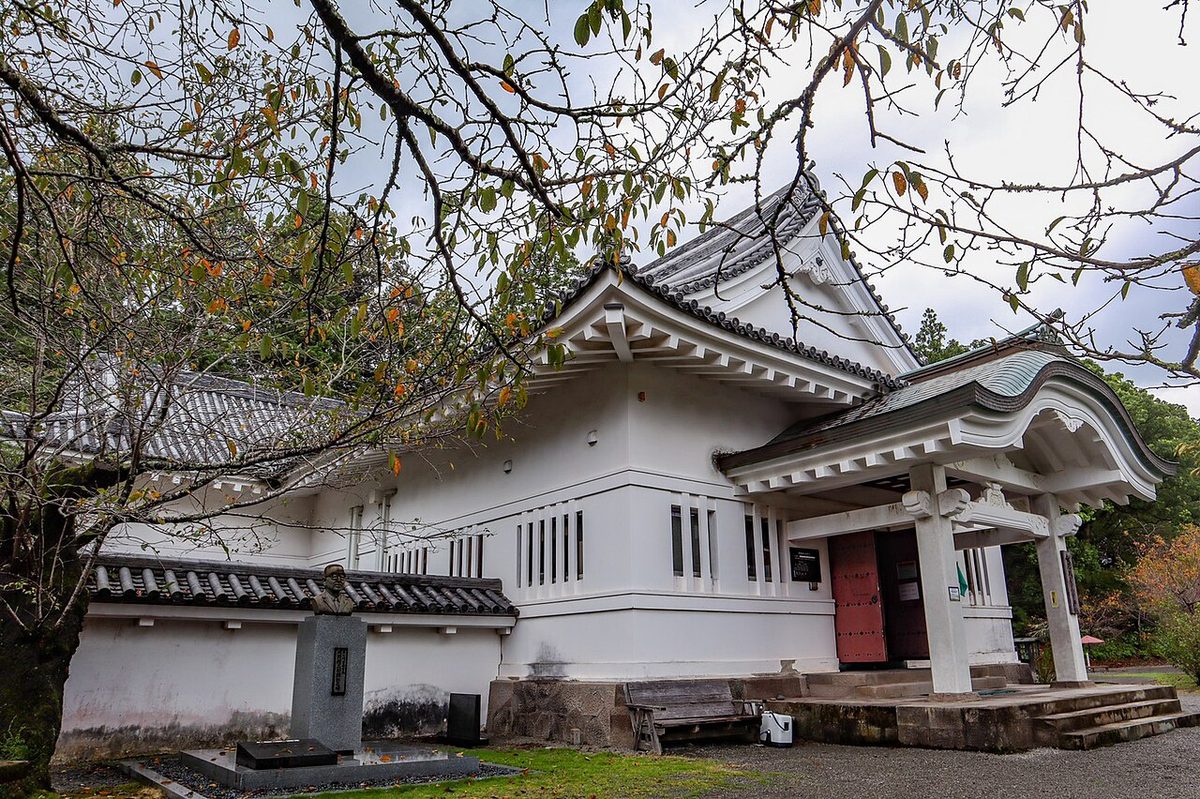
Photo: Kthrk25 / CC BY-SA 4.0 (Wikimedia Commons) A history museum on the Obi Castle grounds displaying materials from the Ito clan of the Obi domain; a joint ticket also admits visitors to Yoshokan and other historic buildings nearby.
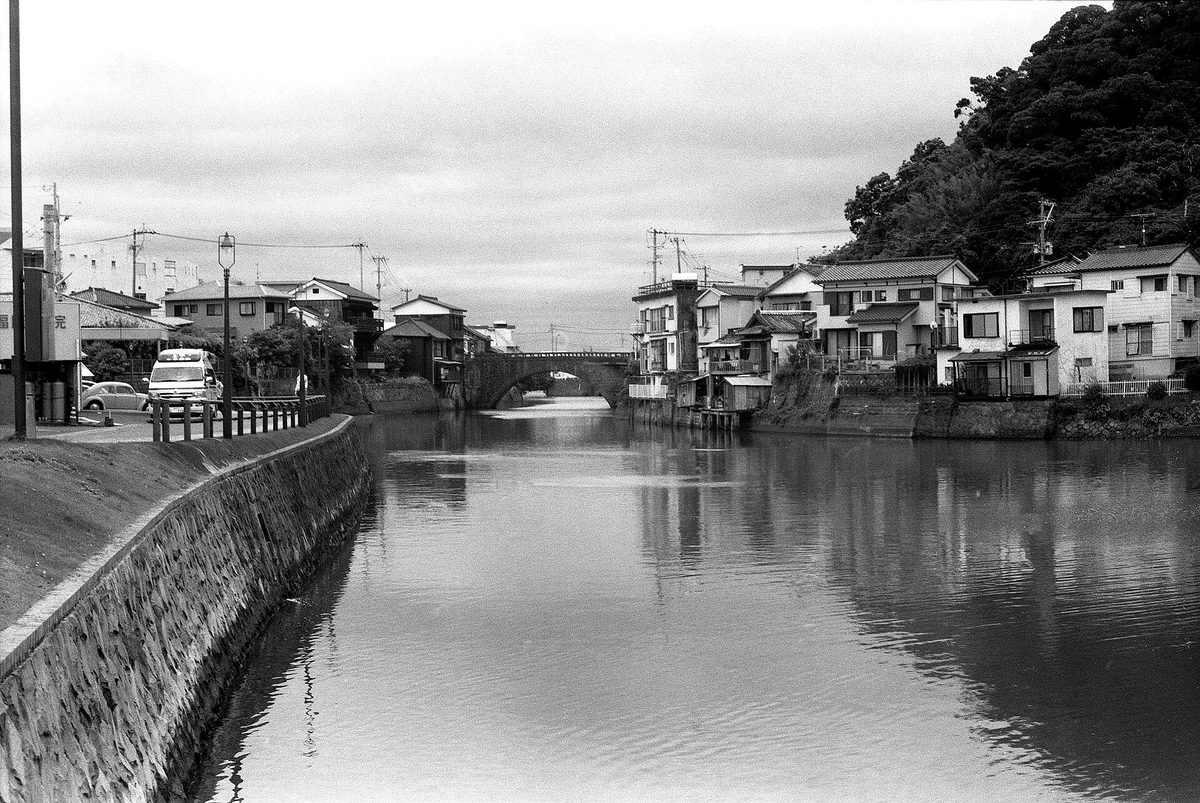
Photo: shikabane taro / CC BY 3.0 (Wikimedia Commons) A 1,450-meter canal linking the mouth of the Hiroto River to Aburatsu Port, built in 1686 under Obi lord Ito Sukezane to transport Obi cedar.
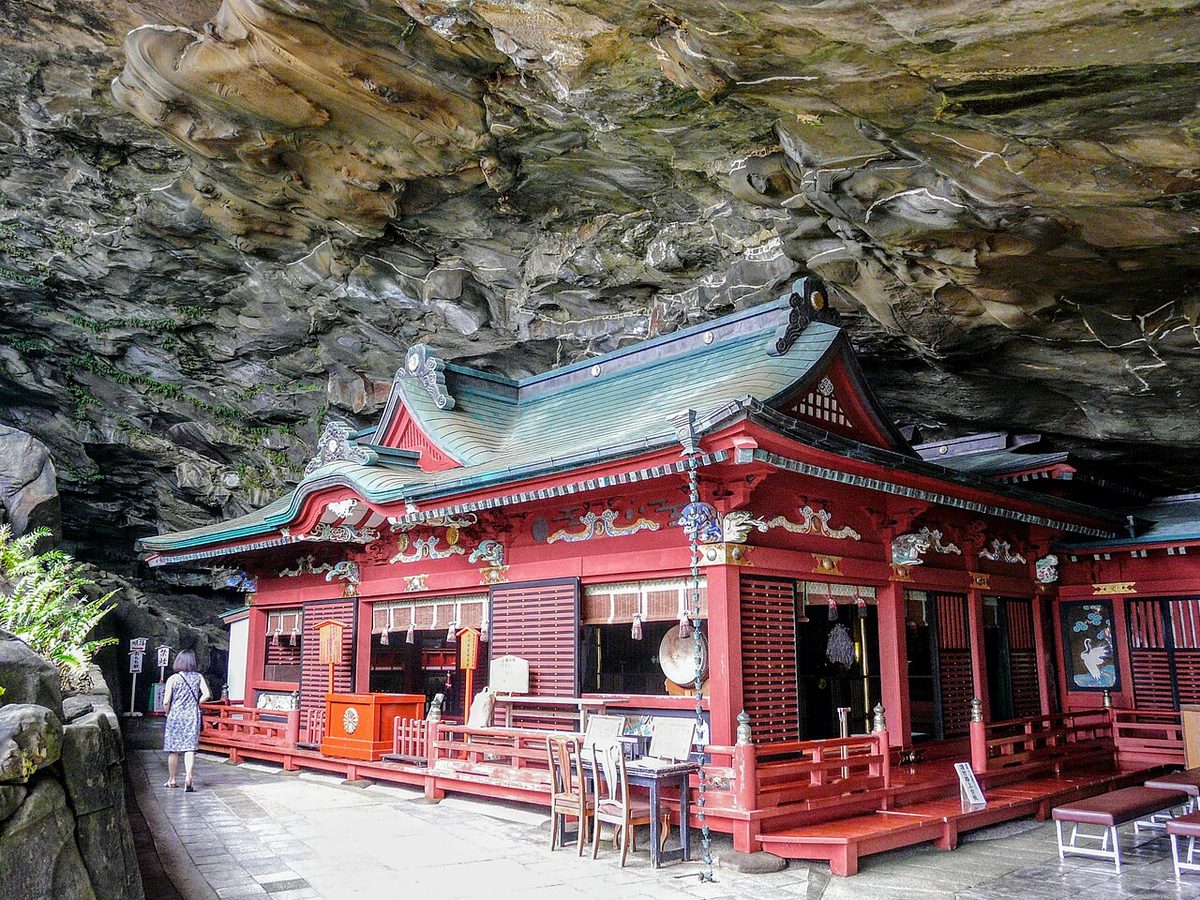
Photo: Naokijp / CC BY-SA 4.0 (Wikimedia Commons) A shrine on the Nichinan coast whose main hall sits inside a sea-cliff cave, known for throwing undama luck stones at the turtle rock.
These are local landmarks. Each was checked to be open on its official site (checked 2026-11-12). Please confirm hours before you go.
Beyond Nichinan
1 / 4
 Nichinan · 11 km
Udo Jingu →
A unique shrine located inside a cave along the coast.
 Kushima · 29 km
Cape Toi (Misaki Wild Horses) →
A dramatic grassy headland overlooking the Pacific where native Misaki horses—a National Natural Monument—have roamed completely wild for over 300 years.
 Miyakonojo · 36 km
Sekinoo Falls →
A 40-meter-wide waterfall in Miyakonojo paired with one of the world's largest fields of river-carved bedrock potholes stretching 600 meters upstream.
 高千穂町 · 119 km
Takachiho Gorge →
This gorge in Miyazaki, formed by volcanic activity from Mt. Aso, features a river flowing between steep cliffs, creating a mystical landscape.


Distances are straight-line from the town centre. Each page has how to get there and a suggested day.
Questions people ask
- Where can I eat Nichinan's local dishes?
Nichinan Katsuo Aburi-ju (charcoal-seared skipjack over rice): Bibinya (Aburatsu), Minato no Eki Meitsu (Nango)
Gyoudon (Nichinan fish-paste udon): Bibinya (Aburatsu)
- Where can I see or buy Obi Cedar Woodworking, Nichinan Honkaku Shochu, Craft in Nichinan?
Obi Cedar Woodworking: Obidaraly (Obi), Kawaso Honten (Aburatsu)
Nichinan Honkaku Shochu: Kyoya Shuzo (Aburatsu)
Craft: PAAK STOCK (Obi)
- What can I visit on foot around Obi?
Sweets: Bakery OBI ni TASUKI, HINA MUFFIN
Food: Samurai House Itotei
Cafés: Negura Coffee
Craft: PAAK STOCK
Obi Cedar Woodworking: Obidaraly
Every place was checked to be open in November 2026. Hours can change, so please check the official site before you go.
If you like Nichinan
- Nagano
Nagano, Japan
For example, Kyoya Shuzo here, and Fujikian in Nagano.
- Kinosaki Onsen
Hyogo, Japan
For example, Kyoya Shuzo here, and Minatoya in Kinosaki Onsen.
- Kochi
Kochi, Japan
For example, Kawaso Honten here, and TAKETO in Kochi.
Chosen by how close the towns and their places are in what they make and serve.